10 Best Dog Breeds for First-Time Owners With Allergies (2026 Guide)
Quick Answer
The best dog breeds for first-time owners with allergies are low-shedding, easy-to-train, and forgiving of beginner mistakes. The Bichon Frise, Poodle, Maltese, Havanese, and Shih Tzu top the list, since they pair a low-dander coat with a gentle, people-pleasing temperament. The right pick depends on your energy level, grooming budget, and home size.
What you need to know about choosing a hypoallergenic breed as a beginner:
- No dog is 100% hypoallergenic — only lower-dander
- Coat type matters more than size for allergy sufferers
- Beginner-friendly breeds need moderate exercise and patience
- Grooming costs rise fast with low-shedding coats
Choose your breed by lifestyle:
- Small apartment, low energy → Maltese or Shih Tzu
- Active household, more exercise time → Poodle or Portuguese Water Dog
- Kids in the home → Havanese or Bichon Frise
Your eyes are watering before the dog even reaches the door. Your chest feels tight. You want a dog so badly it hurts — but every breed you research seems to trigger your allergies.
I’m Thomas Cutter, and I’ve spent years researching and writing about dog breeds for new owners. Most allergy guides only talk about shedding. They skip the part that matters just as much: whether a breed is patient enough for a first-time owner who’s still learning the ropes.
This guide covers both. You’ll find nine breeds that pair a lower-dander coat with a forgiving, beginner-friendly temperament. If you want a wider beginner overview first, our guide to the best dog breeds for first-time owners covers breeds beyond this allergy-focused list. By the end, you’ll know exactly which breed fits your life.
- No dog is truly hypoallergenic, but low-shedding breeds carry less dander
- Temperament matters as much as coat type for a first dog
- The Bichon Frise, Poodle, and Havanese are the top all-around picks
- Grooming costs are the hidden expense most new owners miss
- A 2-week test visit beats any “hypoallergenic” label


What Makes a Dog Breed Good for Allergy Sufferers and First-Time Owners?
A breed works well for allergy sufferers and beginners when it sheds very little and has a calm, easy-to-train nature. Low-shedding coats trap dander instead of scattering it through your home. A gentle, biddable temperament means fewer behavior problems while you’re still learning. Together, these two traits make the first year of ownership far less stressful.
Here’s the thing — dander, not fur, is the real allergy trigger. Dander is tiny flecks of dead skin that cling to hair and float through the air. The American Kennel Club confirms there’s no such thing as a 100% non-allergenic dog, but breeds with curly, wool-type, or continuously growing coats shed less hair, so less dander ends up on your couch, your clothes, and your hands. According to the Asthma and Allergy Foundation of America, allergies to cats and dogs affect 10% to 20% of the world’s population, so you’re far from alone in this search.
For first-time owners, you also want a breed that’s slow to anger, eager to please, and small enough to manage while you build confidence. Most experts agree that a calm, trainable temperament does more for a smooth first year than any single grooming routine. If your household includes kids or other pets, our guide to dog breeds for families with allergies digs deeper into multi-person households.
Never adopt sight unseen if you have allergies. Spend at least 20 minutes with the actual dog first — reactions vary by individual, not just by breed.
The 9 Best Dog Breeds for First-Time Owners With Allergies — Ranked and Reviewed
These nine breeds combine a low-shedding coat with a temperament that’s genuinely easy to live with as a beginner. Each one is ranked on real owner experience, AKC breed standards, and how forgiving they are of a learning curve. We cover size, energy, grooming load, and the honest trade-offs of each breed below.
Bichon Frise — “The Powder-Puff People-Pleaser”
 Save
Save| Weight | 12–18 lb |
| Height | 9.5–11.5 in |
| Lifespan | 14–15 years |
| Energy Level | Moderate |
| Grooming Need | High — every 4–6 weeks |
| Shedding | Minimal |
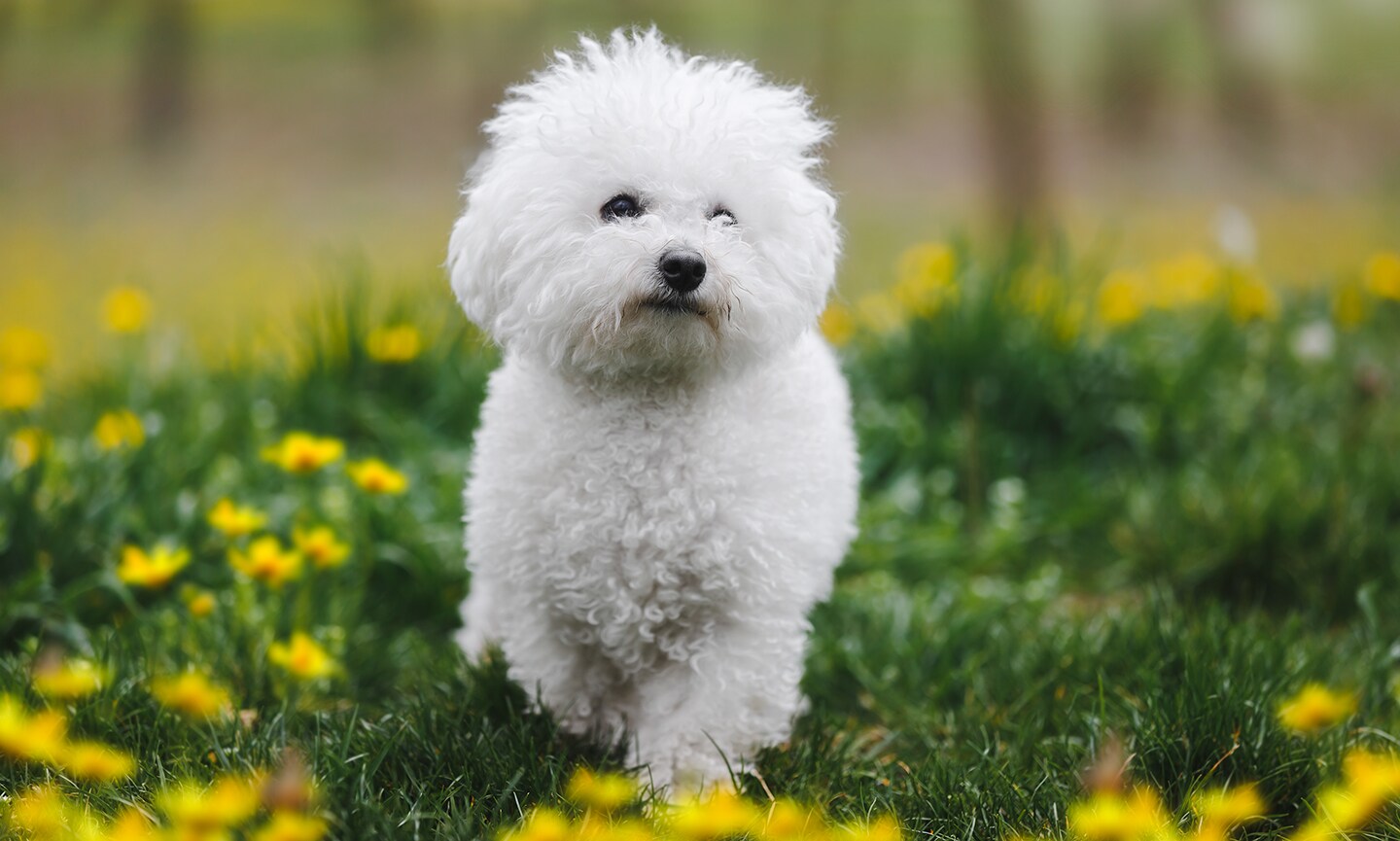
The Bichon Frise is a small, curly-coated companion breed known for its cheerful, affectionate nature. It weighs 12 to 18 pounds and rarely sheds, thanks to a dense, non-shedding double coat. Bichons are playful, gentle with kids, and eager to please. They make an ideal first dog for allergy-prone apartment dwellers.
Their coat forms a soft, rounded “powder puff” around the face that needs regular brushing to stay tangle-free. Underneath that fluff is a sturdy little body built for play, not show.
Bichons greet strangers like long-lost friends, then settle into your lap the moment guests leave. They’ll follow you from room to room, narrating the day with quiet little grumbles. You might be thinking a dog this cheerful must be hard to train. Here’s why that’s not true — Bichons are food-motivated and eager to please, which makes basic training fast for beginners.
“My allergist told me to avoid dogs entirely. Three years with my Bichon and I haven’t needed an inhaler once.”
— Karen D., Bichon Frise owner for 3 years
- Rarely sheds or barks excessively
- Great with kids and other pets
- Fast learner for new owners
- Coat mats fast without brushing
- Prone to separation anxiety
- Professional grooming gets pricey
Best for: Apartment dwellers · Families with kids · First-time owners who want a cuddly dog
→ Best small dog breeds for families
Poodle — “The Genius in a Curly Coat”
| Weight | 10–15 lb (Miniature) |
| Height | 10–15 in |
| Lifespan | 12–15 years |
| Energy Level | Moderate–High |
| Grooming Need | High — every 4–6 weeks |
| Shedding | Minimal |
The Poodle is a highly intelligent companion breed prized for its curly, low-shedding coat and quick mind. Miniature Poodles weigh 10 to 15 pounds and stand 10 to 15 inches tall. They’re athletic, eager learners that respond well to positive training. Poodles suit allergy-prone owners who want a dog as smart as it is low-dander.
Their tight curls grow continuously instead of shedding seasonally, which is why Poodles top nearly every allergy-friendly breed list. Under the curls is a lean, athletic frame built for swimming and agility.
Poodles rank among the smartest dog breeds, and that brain needs a job. Give them puzzle toys or short training sessions, and they thrive. Leave them bored, and they’ll find their own entertainment — usually your shoes. You might be thinking smart dogs are harder to manage as a beginner. The good news is their intelligence makes training faster, not slower, once you stay consistent.
“He learned ‘sit,’ ‘stay,’ and ‘roll over’ in one weekend. I’ve never owned a dog before — he made it easy.”
— Marcus T., Miniature Poodle owner for 2 years
- Extremely trainable for beginners
- Near-zero shedding coat
- Comes in 3 sizes to fit any home
- Needs daily mental stimulation
- Grooming bills add up quickly
- Can bond too closely to one person
Best for: Active beginners · Owners who want a trainable dog · Households without a yard
Maltese — “The Tiny Snow-White Shadow”
| Weight | Under 7 lb |
| Height | 7–9 in |
| Lifespan | 12–15 years |
| Energy Level | Moderate |
| Grooming Need | High — daily brushing |
| Shedding | Minimal |
The Maltese is a toy breed under 7 pounds with a long, silky, single-layer coat that sheds very little. Maltese dogs are affectionate, alert, and surprisingly bold for their size. They bond tightly with their owner and adapt well to small spaces. This breed suits allergy-prone owners who want a low-shedding lap dog.
Their pure white coat hangs straight and silky, almost like human hair, which is part of why it produces less dander buildup than a double coat.
Don’t let the size fool you — Maltese dogs carry themselves with real confidence. They’ll bark at a delivery truck like it’s a home invasion. That’s the surprising part: this tiny breed acts as a genuine watchdog, alerting you to anything unusual long before a bigger dog would notice.
“She’s 6 pounds of pure sass. The mail carrier is terrified of her, and I love every second of it.”
— Priya N., Maltese owner for 4 years
- Tiny size fits any apartment
- Low shedding, low dander
- Long lifespan, 12 to 15 years
- Daily brushing is non-negotiable
- Fragile around rough play
- Prone to separation anxiety
Best for: Apartment living · Owners home most of the day · Singles or seniors
Havanese — “The Velcro Dog Who Never Stops Smiling”
| Weight | 7–13 lb |
| Height | 8.5–11.5 in |
| Lifespan | 14–16 years |
| Energy Level | Moderate |
| Grooming Need | Moderate–High |
| Shedding | Minimal |
The Havanese is a small, silky-coated companion breed bred for centuries to be a lapdog. It weighs 7 to 13 pounds and rarely sheds. Havanese dogs are playful, social, and famously easygoing with kids and strangers. This breed fits allergy-prone, first-time owners who want a dog that’s happiest by your side.
Their long, soft coat falls in loose waves rather than tight curls, giving them a relaxed, slightly tousled look.
Havanese dogs follow their owner from room to room — hence the “Velcro dog” nickname. They genuinely dislike being left alone for long stretches. So if you work from home or have a flexible schedule, this trait becomes a feature instead of a flaw.
“He sits outside the bathroom door every single time. Annoying at first. Now I’d miss it if he stopped.”
— Daniel R., Havanese owner for 5 years
- Excellent with kids and strangers
- Low shedding, allergy-friendly
- Adapts well to apartment life
- Struggles with long alone time
- Coat needs brushing 3 times a week
- Can be vocal when bored
Best for: Work-from-home owners · Families with kids · Owners wanting a constant companion
Shih Tzu — “The Couch-Loving Companion”
 Save
Save| Weight | 9–16 lb |
| Height | 9–10.5 in |
| Lifespan | 10–16 years |
| Energy Level | Low–Moderate |
| Grooming Need | High |
| Shedding | Minimal |
The Shih Tzu is a small, sturdy companion breed built for indoor living and low daily exercise. It weighs 9 to 16 pounds and carries a long, flowing, low-shedding coat. Shih Tzus are friendly, calm, and rarely destructive. This breed fits allergy-prone owners who want a relaxed, low-energy first dog.
Their flat face and big, round eyes give them an expressive, almost human-like look that wins people over fast.
Shih Tzus are content with a short walk and a long nap. They were bred as palace companions in ancient China, not working dogs, and that history still shows. That makes them one of the most forgiving breeds for owners short on time or yard space.
“I have asthma and a bad back. She needs two short walks and the rest is naps with me. Perfect match.”
— Linda S., Shih Tzu owner for 6 years
- Low exercise needs fit busy schedules
- Calm, rarely destructive indoors
- Friendly with strangers and kids
- Flat face means heat sensitivity
- Daily face and eye cleaning needed
- Can be stubborn during training
Best for: Low-energy households · Seniors · Owners with limited outdoor time
Miniature Schnauzer — “The Pint-Sized Watchdog”
| Weight | 11–20 lb |
| Height | 12–14 in |
| Lifespan | 12–14 years |
| Energy Level | Moderate–High |
| Grooming Need | Moderate — clipping needed |
| Shedding | Minimal |
The Miniature Schnauzer is a sturdy, wiry-coated terrier weighing 11 to 20 pounds. Its double coat sheds very little, making it a solid allergy-friendly pick. Schnauzers are alert, loyal, and naturally protective without being aggressive. This breed suits first-time owners who want a sharp little watchdog with a low-dander coat.
Their signature bushy eyebrows and beard give them a permanently wise, slightly grumpy expression that owners adore.
Schnauzers take their watchdog role seriously, but they’re not yappy for no reason — they bark with purpose. Here’s why that matters: a Schnauzer learns quickly which sounds deserve a bark and which don’t, so the noise tends to settle down fast with consistent training.
“20 pounds of pure attitude. He once stared down a delivery driver until the guy backed off the porch.”
— Robert K., Miniature Schnauzer owner for 7 years
- Sturdy build, good with active families
- Naturally alert watchdog instincts
- Lower grooming cost than coated breeds
- Can be stubborn without firm training
- Prone to barking at noises
- High prey drive around small animals
Best for: Active beginners · Owners who want a watchdog · Households without small pets
Portuguese Water Dog — “The Athlete With a Heart of Gold”
| Weight | 35–60 lb |
| Height | 17–23 in |
| Lifespan | 11–15 years |
| Energy Level | High |
| Grooming Need | High |
| Shedding | Minimal |
The Portuguese Water Dog is a medium-sized, curly-coated breed built for swimming and hard work. It weighs 35 to 60 pounds and sheds very little. PWDs are intelligent, loyal, and full of energy. This breed suits active, allergy-prone first-time owners who can commit to daily exercise.
Their dense, waterproof curls were bred for icy Atlantic waters, which is why the coat resists shedding even in heavy use.
This is not a couch breed. A bored Portuguese Water Dog will redecorate your living room with chewed furniture. As a result, daily exercise isn’t optional here — it’s the price of admission for this breed’s good behavior.
“First dog ever, and I run marathons. He keeps up with my training and never sheds on my running gear.”
— Amanda P., Portuguese Water Dog owner for 3 years
- Very low shedding for a larger dog
- Loyal and eager to please owners
- Excellent for active lifestyles
- Needs 60+ minutes of exercise daily
- Not ideal for small apartments
- Grooming requires real time commitment
Best for: Active owners · Houses with yards · Beginners who enjoy daily exercise
Soft Coated Wheaten Terrier — “The Irish Farm Dog With a Gentle Soul”
 Save
Save| Weight | 30–40 lb |
| Height | 17–19 in |
| Lifespan | 12–14 years |
| Energy Level | Moderate–High |
| Grooming Need | High |
| Shedding | Minimal |
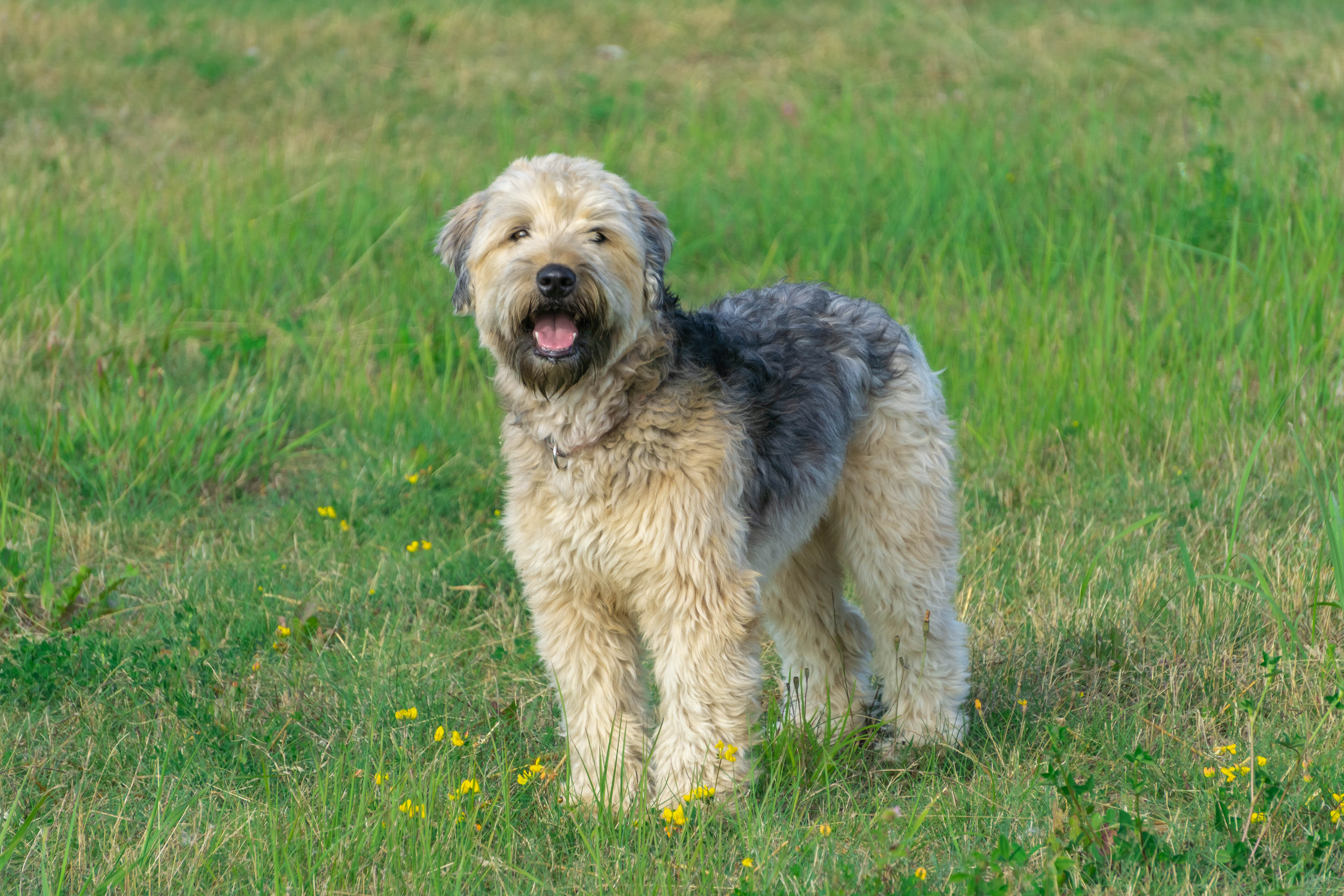
The Soft Coated Wheaten Terrier is a medium-sized farm-bred terrier with a silky, low-shedding coat. It weighs 30 to 40 pounds and stands 17 to 19 inches tall. Wheatens are friendly, bouncy, and good with children. This breed fits active first-time owners who want a larger dog without heavy shedding.
Their wheat-gold coat falls in soft waves, lacking the harsh undercoat that triggers allergies in many other terriers.
Wheatens greet everyone — family, strangers, the mail carrier — with the same bouncy enthusiasm, a trait owners nickname the “Wheaten greeting.” It’s an adorable trait. So if you want a calm front door, this probably isn’t the breed for you.
“She greets every guest like they’ve been gone for a decade. Full body wags, every single time.”
— Megan O., Soft Coated Wheaten Terrier owner for 4 years
- Friendly with kids and visitors
- Low-shedding coat for a larger dog
- Sturdy, adaptable to active homes
- Jumpy greeting habit needs training
- Coat needs brushing several times a week
- Needs daily exercise to stay calm
Best for: Families with kids · Owners who want a medium-sized dog · Active beginners
Comparison Table — All 10 Breeds Side by Side
If you’re comparing breeds at a glance, this table lines up weight, energy, grooming, and shedding for every breed on this list. Use it to shortlist 2 or 3 breeds before reading the full entries above in detail.
| Breed | Weight | Energy | Grooming |
|---|---|---|---|
| Bichon Frise | 12–18 lb | Moderate | High |
| Poodle (Miniature) | 10–15 lb | Moderate–High | High |
| Maltese | Under 7 lb | Moderate | High |
| Havanese | 7–13 lb | Moderate | Moderate–High |
| Shih Tzu | 9–16 lb | Low–Moderate | High |
| Miniature Schnauzer | 11–20 lb | Moderate–High | Moderate |
| Portuguese Water Dog | 35–60 lb | High | High |
| Soft Coated Wheaten Terrier | 30–40 lb | Moderate–High | High |
Which Hypoallergenic Breed Is Right for You?
The right breed depends on three things: your living space, your energy level, and how much grooming time you can give every week. A small apartment calls for a different breed than a house with a yard. Below are four common situations and the breed that fits each one best.
- If you live in a small apartment and want low energy → the Maltese or Shih Tzu fit best.
- If you’re active and want a workout partner → the Poodle or Portuguese Water Dog will serve you better.
- If you have kids at home → consider the Havanese or Bichon Frise first.
- If you want a watchdog with less grooming hassle → the Miniature Schnauzer is worth a closer look.
This article covers hypoallergenic breeds for first-time owners specifically. If you’re choosing between a hypoallergenic dog and a cat, or weighing a breed not on this list, our broader first-time dog owner guide may need to be your next stop.
Allergy and Grooming Essentials Every New Owner Should Know
Managing allergies with a low-shedding dog takes more than picking the right breed. Weekly grooming, regular bathing, and a clean home environment all reduce dander buildup. Most experts agree that consistent grooming matters more than the breed label itself for keeping symptoms under control.
When I brought home my first low-shedding dog, I assumed the coat alone would keep my allergies quiet. That taught me grooming routine matters just as much as breed choice — skipping even one week of brushing let dander build up fast.
Bathe your dog every 1 to 2 weeks and vacuum with a HEPA filter weekly to cut airborne dander, according to the American Lung Association.
If you’re still building your routine, our guide to beginner-friendly dog breeds covers basic care schedules new owners often overlook.
What Most People Get Wrong About “Hypoallergenic” Dogs
Most new owners assume a hypoallergenic dog means zero allergy symptoms. That’s the biggest misconception on this topic, and it sets people up for disappointment. So if you’ve read elsewhere that certain breeds are “allergy-proof,” here’s the correction: lower-shedding only means lower exposure, not zero exposure.
- Skipping a trial visit before adopting
- Assuming puppy coats predict adult shedding
- Letting the dog sleep in the bedroom too soon
- Stopping grooming once symptoms improve
Frequently Asked Questions
Are hypoallergenic dogs really allergy-free?
No, hypoallergenic dogs are not allergy-free. No breed produces zero allergens. Low-shedding breeds simply spread less dander around your home than heavy-shedding breeds, which often makes symptoms easier to manage day to day.
What is the best small dog breed for allergies and first-time owners?
The Bichon Frise and Maltese are top picks for small, low-shedding, beginner-friendly dogs. Both breeds are affectionate, easy to train, and well-suited to apartment living, which makes them a strong starting point.
How often should I groom a hypoallergenic dog?
Most hypoallergenic breeds need brushing 3 to 5 times a week and professional grooming every 4 to 6 weeks. Regular grooming removes loose hair and dander before it spreads through your home and triggers symptoms.
Can I test my allergies before adopting a specific dog?
Yes, spend time with the actual dog before committing. Visit a breeder, foster, or shelter dog for at least 20 to 30 minutes over several visits. Individual reactions vary, even within the same breed.
Are bigger hypoallergenic breeds harder for first-time owners?
Larger hypoallergenic breeds like the Portuguese Water Dog need more exercise and training consistency. They’re not harder to manage, but they do require more daily commitment than a small lapdog breed.
Conclusion: Your Next Step
You don’t have to choose between your health and a dog. The right low-shedding breed, paired with a steady grooming routine, makes both possible. Start small, stay consistent, and your allergies and your new dog can coexist.

Thomas Cutter is a lifelong dog owner and the founder of FindOutAboutDogs.com. With over 10 years of hands-on experience owning multiple breeds, Thomas created this site to provide honest, research-based dog advice that real owners can actually trust.
