10 Best Hypoallergenic Dog Breeds for Kids (Vet-Backed Picks for 2026)
Quick Answer
The best hypoallergenic dogs for kids depend on your child’s age and your home size. Poodles, Bichon Frises, Portuguese Water Dogs, and Cockapoos top most vet lists for low dander and gentle temperaments. No dog is 100% allergen-free, so the right pick always balances coat type, energy level, and grooming time against your family’s daily routine.
What to weigh before you choose:
- Coat type matters more than breed name — curly or single coats shed less dander
- Small breeds suit apartments; sporting breeds need a yard and daily exercise
- Every “hypoallergenic” breed still needs regular grooming to keep dander down
- Always meet the specific puppy before committing if anyone in the home has allergies
Choose based on your situation:
- Small space, first family dog → Bichon Frise or Cockapoo
- Active household, older kids → Standard Poodle or Portuguese Water Dog
- Toddlers underfoot → Miniature Schnauzer or Coton de Tulear
Your daughter sneezes every time the neighbor’s dog walks by. Your son hasn’t stopped asking for a puppy since spring. I’m Thomas Cutter, and I spend most of my time digging through AKC breed standards and veterinary coat-care guides so families don’t have to guess. After comparing grooming needs, energy levels, and dander output across dozens of breeds, ten options keep coming out on top for households with kids and allergies. Here’s exactly which ones, and why.
- No dog breed is truly 100% hypoallergenic — low-dander coats just lower the risk
- Poodles, Bichon Frises, and Portuguese Water Dogs are the most consistently recommended for kids
- Doodle mixes (Cockapoo, Labradoodle, Goldendoodle) trade coat predictability for friendlier price tags
- Grooming schedule matters as much as breed choice for keeping dander under control
- Always have an allergic child spend time with the actual puppy before bringing one home


What Does “Hypoallergenic” Actually Mean for a Family Dog?
A hypoallergenic dog is one that produces less of the protein that triggers allergies, not one that produces none at all. That protein, called Can f 1, lives in a dog’s dander, saliva, and urine — not in the hair itself. Breeds with curly or single-layer coats trap loose dander instead of releasing it into the air. This lowers your exposure, but it never erases it completely.
This matters because plenty of parents buy a “hypoallergenic” puppy expecting zero symptoms, then panic when their child still sneezes. According to the American Kennel Club’s hypoallergenic dog guide, no breed or mixed-breed dog is allergen-free. The same point is confirmed by allergy specialists at the Asthma and Allergy Foundation of America, who note that coat length doesn’t change how much allergen a dog produces nearly as much as coat type and grooming habits do.
So what does that mean for your search? It means you’re not looking for a magic breed. You’re looking for a coat type — curly, wiry, or continuously growing hair — paired with a grooming routine your family will actually keep up with.
This article covers the 10 breeds with the strongest track record for low dander and good behavior around kids. If your child has a severe, diagnosed dog allergy rather than mild sensitivity, talk to an allergist before adopting any breed — even the ones on this list.
The 10 Best Hypoallergenic Dog Breeds for Kids, Ranked and Reviewed
Every breed below made the cut for three reasons: a low-shedding or non-shedding coat, a temperament that genuinely tolerates kids, and a manageable size or energy level for a typical family home. Read the stats box first, then the longer notes if you want the full picture.
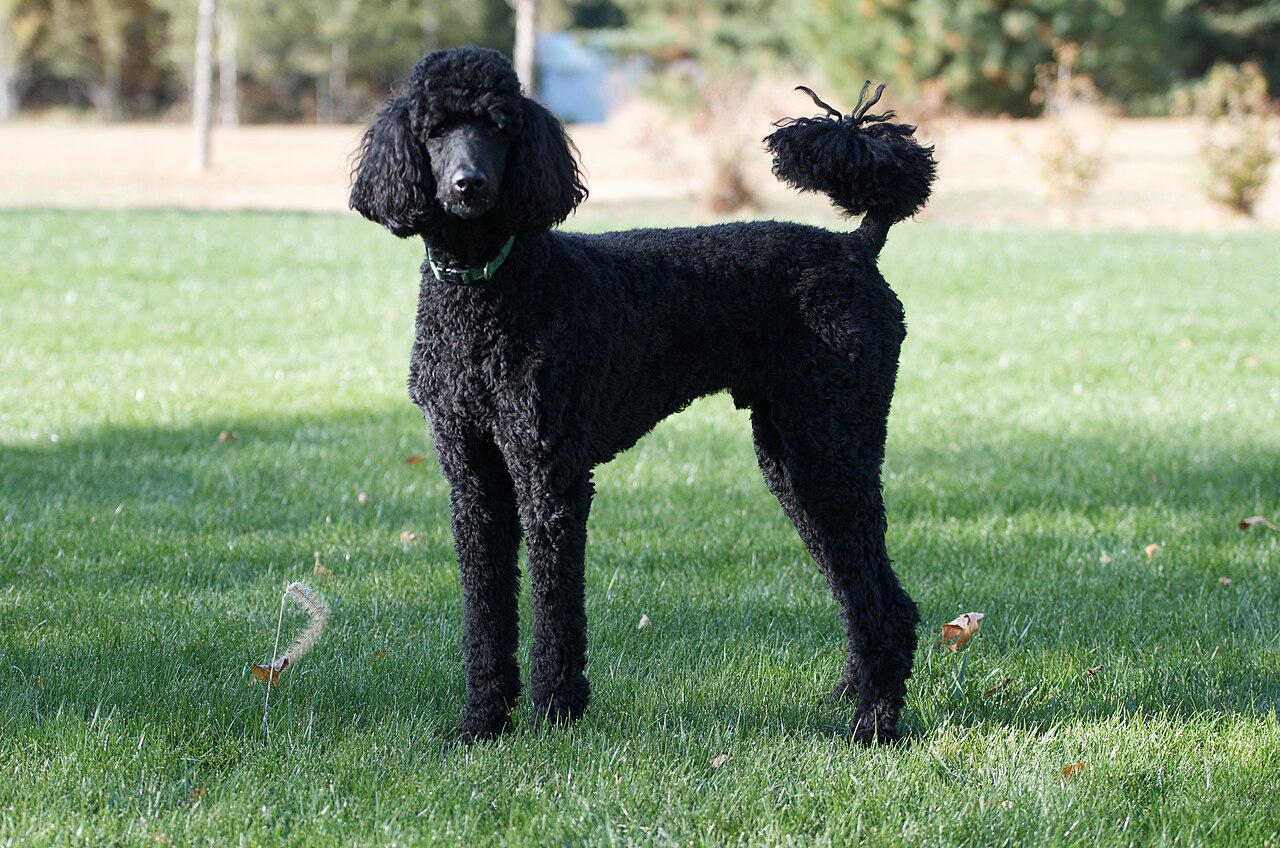
1. Standard Poodle — “The Genius in a Curly Coat”
 Save
Save| Weight | 45–70 lb |
| Height | over 15 in |
| Lifespan | 12–15 years |
| Energy Level | High |
| Grooming Need | High — every 4–6 weeks |
| Shedding | Minimal |
The Standard Poodle is a large, curly-coated dog known for sharp intelligence and an easygoing nature with kids. It stands over 22 inches tall and weighs up to 70 pounds. Poodles learn commands fast and rarely show aggression. Active families with room to run get the most out of this breed.
A Standard Poodle’s tight curls look elegant, but they serve a real purpose. The coat traps shed hair and dander close to the skin instead of letting it float through your living room.
Most people picture Poodles as fragile show dogs. In reality, they were bred as water retrievers and have real stamina. The surprising part? Poodles consistently rank among the most trainable breeds in the country, which makes them easier — not harder — for kids to handle on a leash.
- Learns new commands in 5–10 reps
- Patient with rough toddler handling
- Comes in three sizes for any home
- Professional grooming gets pricey
- Needs 45+ minutes of exercise daily
- Can develop separation anxiety alone
Best for: Active families · Kids old enough for daily walks · Homes with a grooming budget
2. Bichon Frise — “The Cotton Ball with a Big Personality”
| Weight | 12–18 lb |
| Height | 9.5–11.5 in |
| Lifespan | 14–15 years |
| Energy Level | Moderate–High |
| Grooming Need | High — brushing most days |
| Shedding | Minimal |
The Bichon Frise is a small, white powder-puff dog built for cuddling and play in equal measure. It weighs under 18 pounds and rarely tops 12 inches tall. Bichons are naturally cheerful and bounce back fast from rough play. Apartment families and first-time dog owners both do well with this breed.
Under that fluffy coat is a surprisingly sturdy little body. Bichons were bred as circus and companion dogs, so they’re tougher than their teddy-bear looks suggest.
People expect a lapdog that naps all day. What they get is a clown that performs tricks for attention. The real surprise: Bichons are so people-focused that they often follow toddlers from room to room like a second shadow.
- Small enough for any apartment
- Bounces back fast from rough play
- Rarely shows aggression toward kids
- White coat shows dirt easily
- Prone to separation-related barking
- Mats quickly without daily brushing
Best for: Apartment living · First-time dog owners · Families with young kids
3. Portuguese Water Dog — “The Athlete with a Wave-Proof Coat”
| Weight | 35–60 lb |
| Height | 17–23 in |
| Lifespan | 11–13 years |
| Energy Level | High |
| Grooming Need | High — clipped every 6–8 weeks |
| Shedding | Minimal |
The Portuguese Water Dog is a medium, muscular breed built to swim and retrieve for hours. It carries a waterproof, curly single coat and weighs up to 60 pounds. The breed is famous as a White House family pet and known for patience with kids. Active outdoor families get the best results.
This breed’s curly coat resembles a Poodle’s, but feels coarser and oilier — a trait that helped it swim in cold Atlantic water for fishermen centuries ago.
Most people only know this breed from news photos of presidential pets. What they don’t know is how much exercise it actually needs. You might be thinking a calm-looking dog means a calm energy level. Here’s why that’s wrong: this breed was bred to work all day and gets restless fast without a real outlet.
- Loves water and outdoor play
- Gentle, patient temperament with kids
- Generally healthy, sturdy build
- Needs 60+ minutes of exercise daily
- Coat mats fast if left ungroomed
- Can be stubborn during training
Best for: Outdoor and water-loving families · Older kids · Active households with a yard
4. Soft Coated Wheaten Terrier — “The Steady Family Companion”
| Weight | 30–40 lb |
| Height | 17–19 in |
| Lifespan | 12–14 years |
| Energy Level | High |
| Grooming Need | High — brushing several times a week |
| Shedding | Minimal |
The Soft Coated Wheaten Terrier is a medium-sized, wheat-colored breed with a silky, wavy coat. It weighs 30 to 40 pounds and stands under 19 inches tall. Wheatens greet everyone, including kids, with bouncy enthusiasm. Families wanting a playful but not oversized dog tend to love this breed.
The Wheaten’s coat looks soft, almost human-like in texture, and that softness is exactly where the breed gets its name.
Terriers have a reputation for being scrappy and independent. Wheatens break that mold. The thing few people expect: this terrier was bred as an all-purpose farm dog, which makes it far more biddable and people-oriented than its terrier cousins.
- Friendly with strangers and kids
- Mid-size fits most homes
- Generally low-shedding coat
- Jumps and bounces when excited
- Needs daily brushing to avoid mats
- Prone to a few kidney conditions
Best for: Families wanting a mid-size dog · Kids who enjoy playful energy · Active suburban homes
5. Cockapoo — “The Easygoing Mix Bred for Families”
 Save
Save| Weight | 12–24 lb |
| Height | 10–15 in |
| Lifespan | 14–18 years |
| Energy Level | Moderate–High |
| Grooming Need | Moderate–High |
| Shedding | Low |
The Cockapoo is a small Cocker Spaniel and Poodle mix prized for its soft, wavy coat and cuddly size. It usually weighs under 24 pounds and lives well past 14 years. Cockapoos are eager to please and adapt fast to busy households. First-time owners with younger kids often pick this breed.
Coat texture varies by litter since this is a mixed breed, but most Cockapoos grow soft, loosely curled hair that sheds very little once mature.
People assume mixed breeds are unpredictable. Cockapoos have been bred deliberately for decades now, which gives them a fairly consistent temperament. The genuinely surprising part: this breed often ranks higher for trainability than either parent breed alone.
- Compact size fits small homes
- Eager to please, easy to train
- Long lifespan for a small dog
- Coat type varies between puppies
- Can develop clingy, anxious habits
- Not officially recognized by the AKC
Best for: First-time owners · Small living spaces · Families with younger kids
6. Labradoodle — “The Friendly Giant in a Curly Coat”
| Weight | 30–65 lb |
| Height | 14–24 in |
| Lifespan | 12–14 years |
| Energy Level | High |
| Grooming Need | Moderate–High |
| Shedding | Low to moderate, depends on coat type |
The Labradoodle blends Labrador friendliness with Poodle coat texture and intelligence. Sizes range widely, from 30 to 65 pounds depending on the parent lines. Labradoodles are social, food-motivated, and patient with energetic kids. Families with a yard and an active lifestyle suit this breed best.
Coat type swings from loose waves to tight curls within this breed, so a low-dander result isn’t guaranteed unless you check the parents’ coat type first.
Most people picture a Labradoodle as a guaranteed non-shedder. That’s not always true. So what does that mean for you? If allergies are a real concern, ask the breeder about the specific coat generation before you commit, since first-generation pups shed more than later generations.
- Friendly, social with kids of all ages
- Sizes available for most home types
- Smart and food-motivated for training
- Coat predictability varies by generation
- Larger sizes need real exercise space
- Can gain weight without daily activity
Best for: Families with a yard · Active older kids · Homes wanting a larger, friendly dog
7. Goldendoodle — “The Crowd-Pleaser with a Wavy Coat”
| Weight | 50–90 lb |
| Height | 17–24 in |
| Lifespan | 10–15 years |
| Energy Level | High |
| Grooming Need | High — every 6–8 weeks |
| Shedding | Low |
The Goldendoodle pairs Golden Retriever warmth with a Poodle’s lower-shedding coat. Standard-size dogs reach up to 90 pounds and stand nearly 2 feet tall. Goldendoodles are famously gentle, patient, and eager to be near their family. Larger homes with active kids fit this breed well.
The wavy-to-curly coat needs real upkeep, but in exchange it sheds noticeably less than a purebred Golden Retriever’s double coat.
Everyone expects a Goldendoodle to be friendly. What surprises new owners is just how much this breed craves physical closeness. Here’s why that matters: a Goldendoodle left alone too often can develop real separation anxiety, not just mild whining.
- Extremely patient with young kids
- Lower shedding than a purebred Golden
- Eager to please, easy to train
- Large size needs real living space
- Prone to separation anxiety alone
- Frequent professional grooming required
Best for: Families with space · Kids wanting a big, gentle dog · Households that are home often
8. Miniature Schnauzer — “The Small Dog with a Big Bark”
| Weight | 11–20 lb |
| Height | 12–14 in |
| Lifespan | 12–15 years |
| Energy Level | Moderate–High |
| Grooming Need | High — clipped or hand-stripped |
| Shedding | Minimal |
The Miniature Schnauzer is a sturdy, wiry-coated small dog with a famously alert personality. It weighs under 20 pounds and rarely exceeds 14 inches tall. Schnauzers are loyal watchdogs that bond closely with the whole family. Households wanting a small but confident dog often choose this breed.
Its wiry double coat looks rough to the touch but actually sheds very little, especially when hand-stripped instead of clipped.
Most small dogs get labeled as fragile or nervous. Miniature Schnauzers are neither. The thing that catches new owners off guard: this breed will bark at every doorbell, delivery truck, and squirrel, which makes early training non-negotiable around toddlers.
- Compact, sturdy build for toddlers
- Generally healthy, long-lived breed
- Loyal and protective of the family
- Barks frequently at noise and visitors
- Coat needs professional clipping regularly
- Can be stubborn without early training
Best for: Households wanting a watchdog · Toddlers and young kids · Smaller homes
9. Maltese — “The Tiny Lapdog with a Silk Coat”
| Weight | under 7 lb |
| Height | 7–9 in |
| Lifespan | 12–15 years |
| Energy Level | Moderate |
| Grooming Need | High — daily brushing |
| Shedding | Minimal |
The Maltese is a toy breed under 7 pounds with long, silky white hair and no undercoat. It stands under 9 inches tall and is gentle by nature. Maltese dogs bond tightly with their household and enjoy calm, predictable routines. Families with older, gentler kids fit this breed best.
Its single, flowing coat has no undercoat at all, which is exactly why it sheds and produces dander at such low levels.
People assume tiny dogs are too delicate for kids. That’s mostly true here, since the Maltese’s small frame doesn’t handle rough toddler handling well. The detail most parents miss: this breed startles easily, so calmer, older kids are a far better match than energetic toddlers.
- Very low dander and shedding
- Tiny size suits any living space
- Gentle, affectionate temperament
- Too fragile for rough toddler play
- Coat needs daily brushing time
- Can develop small-dog separation stress
Best for: Calmer, older kids · Small apartments · Owners home most of the day
10. Coton de Tulear — “The Royal Dog with a Cotton Coat”
 Save
Save| Weight | 8–15 lb |
| Height | 9–11 in |
| Lifespan | 14–16 years |
| Energy Level | Moderate |
| Grooming Need | High — daily brushing |
| Shedding | Minimal |
The Coton de Tulear is a small breed from Madagascar with a soft, cotton-like coat. It typically weighs under 15 pounds and stands around 10 inches tall. The breed is famous for getting along well with both kids and other dogs. Calm, family-oriented households fit this breed especially well.
Its coat earns the breed’s name — soft, fluffy, and closer to cotton fiber than typical dog hair, which keeps dander unusually low.
Few people outside breed circles have heard of this dog, since it stayed rare for decades. The surprising part once you meet one: Cotons are famous for walking on their hind legs to greet people, a quirky habit kids find endlessly entertaining.
- Gentle with kids and other dogs
- Low dander, soft cotton coat
- Adapts well to apartment living
- Harder to find a reputable breeder
- Daily brushing prevents matting
- Small size limits rough toddler play
Best for: Calm family households · Multi-dog homes · Apartment or small-house living
Hypoallergenic Dog Breed Comparison Table
Scanning ten full entries takes time, so here’s the short version. This table lines up all 10 breeds by size, energy, and grooming so you can compare at a glance. Smaller breeds suit tighter living spaces. Higher-energy breeds need a real exercise plan, not just a backyard. Use it to shortlist two or three breeds before reading their full entries above again.
| Breed | Weight | Energy | Grooming | Best For |
| Standard Poodle | 45–70 lb | High | High | Active families |
| Bichon Frise | 12–18 lb | Mod–High | High | Apartments |
| Portuguese Water Dog | 35–60 lb | High | High | Outdoor families |
| Soft Coated Wheaten Terrier | 30–40 lb | High | High | Playful kids |
| Cockapoo | 12–24 lb | Mod–High | Mod–High | First-time owners |
| Labradoodle | 30–65 lb | High | Mod–High | Homes with a yard |
| Goldendoodle | 50–90 lb | High | High | Larger homes |
| Miniature Schnauzer | 11–20 lb | Mod–High | High | Toddlers |
| Maltese | under 7 lb | Moderate | High | Older, gentler kids |
| Coton de Tulear | 8–15 lb | Moderate | High | Calm households |
Which Hypoallergenic Breed Is Right for Your Family?
The right breed depends less on the dog and more on your specific household right now. A family with toddlers needs a sturdier, calmer dog than a family with teenagers. A first dog for a small apartment looks nothing like the right pick for a house with a yard. Match your situation below before falling for a breed based on looks alone.
- If you have toddlers who grab and pull, a Miniature Schnauzer or Coton de Tulear tolerates handling better than a fragile toy breed. For more size-specific picks, see this guide to dog breeds that do well with toddlers.
- If you’re bringing home a new baby, a calmer, lower-energy breed like a Maltese or Bichon Frise adjusts more easily than a high-drive sporting dog. This roundup of dog breeds for families with babies goes deeper on the adjustment period.
- If you already have a cat at home, Cockapoos and Cotons de Tulear tend to settle into multi-pet households faster than independent terriers. Check this list of dog breeds that get along with cats for more matches.
- If allergies aren’t your only concern and you want the full range of family-friendly temperaments, this guide to the best family dog breeds for kids covers options beyond just low-dander coats.
Hypoallergenic Dog Care Essentials Every New Owner Needs to Know
Choosing a low-dander breed is step one. Keeping dander low day to day is step two, and it matters just as much. Regular grooming, clean bedding, and good airflow reduce allergen buildup far more than breed choice alone. Skipping grooming for even a few weeks lets dander accumulate fast, no matter how “hypoallergenic” the breed.
Brush your dog outside whenever possible. It keeps loose dander from settling into carpets and furniture indoors.
Wash your dog’s bedding weekly in hot water, and wipe down hard floors a few times a week instead of relying only on carpet vacuuming. As the Asthma and Allergy Foundation of America explains, pet allergens cling to walls, fabric furniture, and clothing, and can linger for months after a pet leaves a room. So if your child has even mild sensitivity, keeping the dog off beds and soft furniture makes a real difference.
Never skip a planned grooming appointment for a curly or wiry-coated breed. Matted fur traps dander and bacteria close to the skin.
What Most Families Get Wrong About “Hypoallergenic” Dogs
The biggest misconception is simple: many parents think hypoallergenic means allergen-free. It doesn’t. According to allergists at the American College of Allergy, Asthma & Immunology, a 2011 study found that dog allergen levels in homes with “hypoallergenic” breeds didn’t differ meaningfully from homes with other breeds. Coat type still helps reduce airborne dander, but it isn’t a guarantee.
The fix is straightforward, even if it isn’t exciting: visit the actual puppy or adult dog before adopting, not just the breed listing. Let your child spend 20 to 30 minutes petting and playing with that specific dog. Real-world exposure tells you far more than any breed label, since individual dogs within the same breed can still vary in how much allergen they produce, according to the American College of Allergy, Asthma & Immunology.
One Thing to Do Right Now
Pick two breeds from this list that match your home size and your kids’ ages. Then book a visit with a local breeder, shelter, or breed-specific rescue to meet a real dog from that breed before you decide anything else. That one visit will tell you more than another hour of scrolling ever will.
Allergies don’t have to mean no dog at all. With the right breed and a steady grooming routine, most families land on a dog that fits — sneeze-free or close to it. I’m Thomas Cutter, and if there’s one thing breed data makes clear, it’s that the “perfect” hypoallergenic dog is really the one whose coat, size, and energy match your actual day-to-day life.
Frequently Asked Questions
Are hypoallergenic dogs really safe for kids with allergies?
Hypoallergenic breeds lower allergen exposure but don’t eliminate it completely. Kids with mild sensitivity often do fine, but those with diagnosed severe allergies should see an allergist and spend time with the specific dog first.
What is the best hypoallergenic dog for a small apartment?
The Bichon Frise and Cockapoo both suit apartments well. They’re under 24 pounds, need less daily exercise space than sporting breeds, and adapt easily to indoor routines with regular walks.
Do hypoallergenic dogs need more grooming than other dogs?
Yes, almost always. Their hair grows continuously instead of shedding in cycles, so it needs regular brushing and professional trims every four to eight weeks to prevent matting and dander buildup.
Can a Labradoodle or Goldendoodle still trigger allergies?
Yes. Coat type varies between individual puppies in mixed breeds, so shedding and dander levels aren’t fully predictable. Ask about the specific parents’ coat type before committing if allergies are a concern.
What’s the most kid-friendly hypoallergenic breed overall?
The Standard Poodle and Bichon Frise are the most frequently recommended by trainers and vets for general kid-friendliness, thanks to their patience, trainability, and low tendency toward aggression.

Thomas Cutter is a lifelong dog owner and the founder of FindOutAboutDogs.com. With over 10 years of hands-on experience owning multiple breeds, Thomas created this site to provide honest, research-based dog advice that real owners can actually trust.
