Which Brush Is Best for Double-Coated Dogs?
Quick Answer
The best brush for most double-coated dogs is an undercoat rake paired with a slicker brush. The rake reaches loose hair beneath the outer coat, while the slicker removes remaining fur, separates the coat, and handles light tangles. For a breed-specific example, see my guide to choosing a brush for a Husky.
Best tools for a double coat
- Undercoat rake: Best for reaching and lifting loose, dead undercoat during shedding.
- Long-pin slicker: Useful for routine brushing, finishing, and light tangles.
- Steel comb: Helps check whether dense areas have been brushed through completely.
- Rounded teeth: Smooth tips reduce the chance of scratching or dragging across skin.
- Correct pin length: Teeth need enough reach for your dog’s coat depth.
My simple rule
- Use the rake for loose undercoat, finish with the slicker, then test thick areas gently with a metal comb.
Choosing a brush for a double-coated dog gets confusing fast. Shelves are full of slickers, rakes, blades, pin brushes, combs, and tools promising mountains of removed fur.
I focus on something simpler: which layer of the coat am I trying to reach? Once you understand that, choosing the right brush becomes much easier.


What Is a Double Coat on a Dog?
A double coat is a coat made from two distinct layers: a softer undercoat and a tougher outer layer of guard hairs. Each layer performs a different job.
The American Kennel Club’s double-coat guidance describes the undercoat as soft and dense, while the outer hairs are longer and more protective.
- Undercoat: Soft, dense hair underneath the visible coat.
- Topcoat: Longer guard hairs that help protect the skin and underlying fur.
- Loose undercoat: Dead hair that often comes away heavily during seasonal shedding.
- Coat blow: A period when a large amount of undercoat loosens over a relatively short time.
Common double-coated dogs include Siberian Huskies, Golden Retrievers, German Shepherds, Border Collies, Australian Shepherds, Newfoundlands, Pomeranians, and Labrador Retrievers.
Coat length still varies enormously. A Labrador and a Newfoundland can both have double coats while needing different pin lengths and grooming techniques.
Which Brush Is Best for Double-Coated Dogs?
For most double-coated dogs, I prefer an undercoat rake plus a slicker brush rather than relying on one tool. The rake handles deeper loose coat, while the slicker handles finishing and routine maintenance.
The AKC’s guide to dog brush types also identifies undercoat rakes as tools designed to penetrate through the outer coat and remove loose undercoat.
| Tool | Best Use | Undercoat Reach | Main Caution |
|---|---|---|---|
| Undercoat rake | Loose seasonal undercoat | High | Don’t dig into the skin |
| Long-pin slicker | Finishing and light tangles | Medium to high | Excess pressure can irritate skin |
| Steel comb | Checking your work | Medium | Never yank through resistance |
| Pin brush | Long outer coats and finishing | Medium | May miss dense undercoat |
| Rubber brush | Surface hair on short coats | Low | Usually insufficient for dense coats |
Is an Undercoat Rake Better Than a Slicker Brush?
An undercoat rake is better for deep loose undercoat, while a slicker is better for finishing, separating hair, and removing loose fur nearer the surface. I don’t consider them true substitutes.
During heavy shedding, I usually start with the rake. That lets me remove loose undercoat without repeatedly scraping the same area with a finishing brush.
When I reach for an undercoat rake
- Large tufts of soft undercoat are coming free.
- The coat feels packed beneath the guard hairs.
- A normal brush skims over the surface.
- The dog is going through a seasonal coat blow.
When I reach for a slicker brush
- I am doing ordinary maintenance between heavy sheds.
- I need to collect loosened fur after using a rake.
- The outer coat has small tangles or uneven sections.
- I am line-brushing longer fur in controlled sections.
If you’re dealing specifically with a Siberian Husky, my guide on managing Husky shedding shows how I combine the tools during a coat blow.
How Do You Brush a Double-Coated Dog Correctly?
 Save
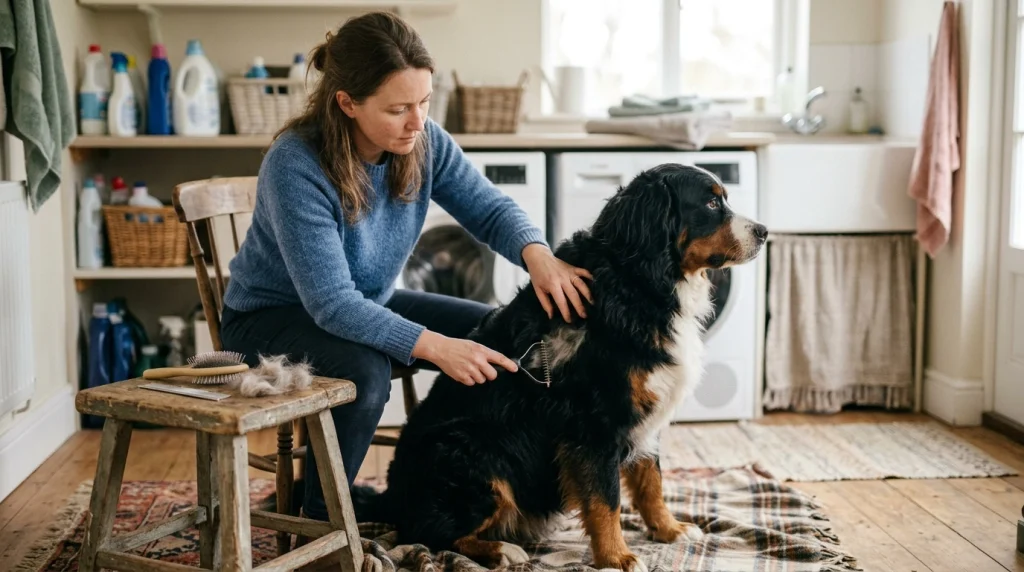
SaveBrush a double-coated dog in sections using gentle strokes that follow the direction of hair growth. Your goal is to remove loose hair, not strip healthy attached coat.
I like to separate the coat with one hand before each pass. That lets me see whether the tool is reaching fur or dragging against skin.
- Inspect the skin first. Look for redness, sores, burrs, mats, or painful areas.
- Separate a small section. Lift the outer coat so you can see the layer underneath.
- Use the rake gently. Make short strokes in the direction of hair growth.
- Clear the rake often. Packed teeth lose their effectiveness quickly.
- Follow with a slicker. Collect loose hair and separate the outer coat.
- Check with a comb. A metal comb should move through without being forced.
- Stop before irritation starts. You can finish another section later.
The AKC’s double-coat grooming advice recommends regular brushing and warns against pressing a brush into the skin.
That matches what I look for during a session. A productive grooming session should make the coat feel freer without leaving red skin behind.
How Often Should You Brush a Double-Coated Dog?
Many double-coated dogs do well with at least weekly brushing, but frequency should increase when loose undercoat becomes heavy. Some dogs need several short sessions each week during shedding season.
Veterinary guidance from VCA Animal Hospitals also emphasizes regular brushing for double-coated breeds, especially when shedding increases.
- Normal shedding: Start around once weekly and adjust to the individual coat.
- Heavy coat blow: Short sessions daily or every few days may be easier.
- Long double coats: Check behind ears, legs, tail, ruff, and trousers more often.
- After outdoor activity: Inspect for seeds, burrs, moisture, and tangles.
I would rather brush for ten comfortable minutes on several days than force one exhausting hour-long session. Dogs usually tolerate the shorter approach better.
What Pin Length Should You Choose?
 Save
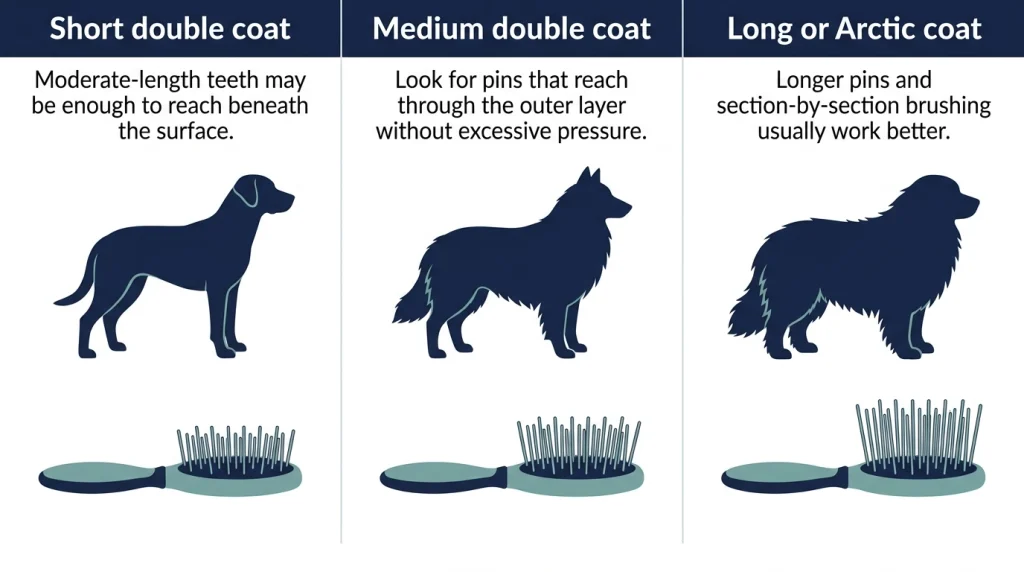
SaveThe right pin or tooth length depends on coat depth. A tool that barely touches the surface cannot remove loose undercoat effectively.
This becomes obvious when moving from a short-coated Labrador to a heavily coated Newfoundland. Both are double-coated, but the same short slicker may perform very differently.
- Short double coat: Moderate-length teeth may be enough to reach beneath the surface.
- Medium double coat: Look for pins that reach through the outer layer without excessive pressure.
- Long or Arctic coat: Longer pins and section-by-section brushing usually work better.
Don’t buy solely by breed name on the package. Feel your individual dog’s coat and choose enough reach for its actual depth.
Should You Use a De-Shedding Blade on a Double Coat?
A de-shedding tool can remove loose undercoat, but I use bladed tools more cautiously than a traditional rounded-pin rake. More hair on the floor does not automatically mean better grooming.
Repeated passes over one area can make the skin uncomfortable. Follow the manufacturer’s directions and stop if you see redness or your dog starts reacting to the tool.
- Use light pressure.
- Avoid repeated scraping over one spot.
- Don’t force the tool through mats.
- Choose the correct size and coat-length version.
- Stop if the skin becomes pink, sore, or sensitive.
Should You Shave a Double-Coated Dog Instead?
Routine shaving is generally not the preferred solution for normal shedding in a healthy double-coated dog. Brushing removes loose hair while leaving the natural coat layers in place.
The AKC notes that shaving can disrupt the relationship between the topcoat and undercoat. Medical clipping or severe matting can be different situations.
If your dog has painful mats, skin disease, sores, or a coat packed tightly against the skin, ask a professional groomer or veterinarian for help. Don’t cut blindly beneath a tight mat.
What Should You Look for When Buying a Brush?
 Save
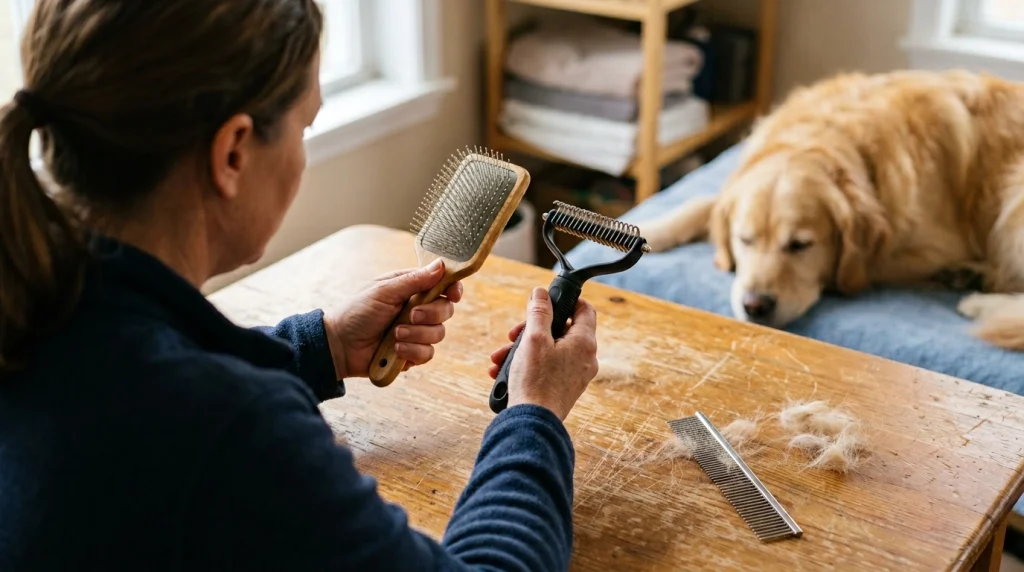
SaveI pay more attention to construction and fit than marketing claims. A dramatic photo of removed hair tells you very little about comfort or control.
- Correct reach: Pins or teeth should penetrate the coat without digging into skin.
- Smooth tips: Rough metal edges can scratch or catch.
- Comfortable handle: Dense coats can require hundreds of repeated strokes.
- Strong construction: Thick undercoat puts resistance on pins and handles.
- Useful head size: Large heads suit body areas, while smaller heads give more control.
- Easy cleaning: A brush clogged with fur quickly becomes inefficient.
My favorite test is simple. I want the tool to remove loose fur while my dog remains relaxed.
If you’re ready to build a basic double-coat grooming kit, these are the three styles I’d consider first:
🏆 Best Overall Undercoat Tool
Maxpower Planet Double-Sided Undercoat Rake
★★★★½
The dual-sided format uses a wider 9-tooth side and finer 17-tooth side. I like this style because it gives me more control when moving from thicker areas to routine loose-undercoat removal.
✨ Best Premium Finisher
Chris Christensen Big G Slicker Brush
★★★★½
This long-pin slicker is designed for dense coats and works well for line brushing and finishing after deeper undercoat work. I would choose it when a short slicker keeps skating over the surface.
💰 Best Simple Rake
Safari Double Row Undercoat Rake
★★★★☆
This traditional double-row rake focuses on one job: reaching loose undercoat. I like this straightforward design for owners who want a dedicated rake without extra cutting or multi-function features.
Frequently Asked Questions
Is a slicker brush good for double-coated dogs?
Yes. A slicker brush is useful for loose hair, light tangles, finishing, and routine maintenance. For a dense coat or heavy seasonal shed, I usually pair it with an undercoat rake because a slicker alone may not reach all the loose hair underneath.
Is an undercoat rake safe for double-coated dogs?
Yes, when the rake fits the coat and you use gentle pressure. Work with the direction of hair growth, stop when the tool catches, and avoid repeatedly scraping the same area. Smooth, rounded teeth are generally easier to control around sensitive skin.
Can I brush a double-coated dog every day?
Short, gentle daily sessions can help during heavy shedding, especially when large amounts of loose undercoat are releasing. Daily aggressive de-shedding is different, so adjust the tool and frequency if you notice redness, sensitivity, or discomfort.
Why does my double-coated dog still shed after brushing?
Brushing removes hair that is loose at that moment, but additional hairs can release afterward as the coat cycle continues. Continued shedding does not mean you should keep brushing one area indefinitely, especially if the skin is becoming irritated.
Can I use a human hairbrush on a double-coated dog?
A human hairbrush may smooth the surface but usually cannot reach dense undercoat effectively. A dog-specific undercoat rake, appropriately sized slicker, and metal comb give you much more control over the different coat layers.
The Best Brush Is Usually a Small Tool Kit
If I had to build a double-coat grooming kit from scratch in 2026, I’d start with an undercoat rake and a good slicker brush. I’d add a steel comb to check whether dense sections are truly finished.
Match the tools to your dog’s actual coat depth, use light pressure, and stop before the skin becomes irritated. Good double-coat grooming is about removing loose hair comfortably, not collecting the biggest pile of fur possible.

Thomas Cutter is a lifelong dog owner and the founder of FindOutAboutDogs.com. With over 10 years of hands-on experience owning multiple breeds, Thomas created this site to provide honest, research-based dog advice that real owners can actually trust.
