What Brush Is Best for a Labrador Retriever?2026 Grooming Guide
Quick Answer
For most Labrador Retrievers, the best main grooming tool is a short-hair de-shedding brush that can remove released undercoat without aggressively scraping the skin. I also like keeping a rubber curry brush for gentler routine grooming, especially if your Lab dislikes metal tools or needs a quick surface-hair cleanup. Labrador owners dealing with heavy coat release should also understand how to brush a thick undercoat safely.
What matters most when choosing a Lab brush
- Undercoat reach: The tool should collect loose hair beneath the short outer coat instead of only polishing the surface.
- Skin comfort: Rounded, flexible, or carefully designed teeth reduce the risk of irritating your Lab during repeated passes.
- Shedding control: A good brush should remove already-loose hair efficiently without encouraging you to overwork one spot.
- Easy cleanup: Hair-release buttons or easy-to-clean rubber designs make frequent brushing less frustrating.
- Dog tolerance: The technically strongest brush is useless if your Labrador hides whenever you pick it up.
My simple starting setup
- Use a de-shedding tool for released undercoat, then a rubber curry brush for a gentle finishing pass.
Labradors look like easy-care dogs because their hair is short. Then shedding season arrives, and the couch suddenly tells a different story.
The key is matching the tool to the Lab’s dense double coat. Below, I’ll show you which brushes work best, when to use them, and which mistakes can make grooming uncomfortable.


What Kind of Coat Does a Labrador Retriever Have?
 Save
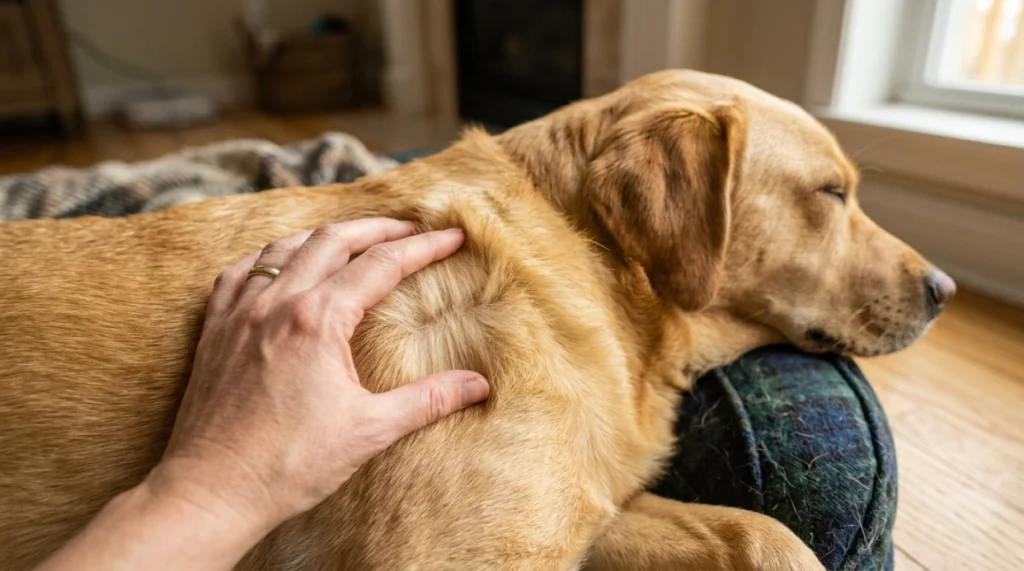
SaveA Labrador Retriever has a short, dense double coat. A softer insulating undercoat sits beneath a tougher, water-resistant outer layer.
The American Kennel Club describes the Labrador’s coat as short, dense, and weather-resistant, and recommends regular grooming rather than clipping it. You can read its Labrador Retriever grooming guidance for the broader routine.
Definition: A double coat is a two-layer coat made up of protective outer guard hairs and a softer undercoat beneath them.
- Outer coat: Short, firmer hairs help protect the skin and repel moisture.
- Undercoat: Softer, denser hair provides insulation and releases heavily at certain times.
- Grooming challenge: A Labrador can look smooth on top while holding plenty of loose hair underneath.
That last point explains why an ordinary soft brush often disappoints Labrador owners. It may make the coat shine without collecting much released undercoat.
What Brush Is Best for a Labrador Retriever?
For shedding control, I would start with a short-hair de-shedding tool designed for dense coats. It reaches loose undercoat more efficiently than a basic bristle brush.
A rubber curry brush is my second choice for regular light grooming. It is especially useful for Labs that enjoy massage-like grooming but dislike metal teeth.
| Brush Type | Best Use on a Labrador | Strength | Main Caution |
|---|---|---|---|
| De-shedding tool | Loose seasonal undercoat | Excellent | Avoid excessive repeated passes |
| Rubber curry brush | Routine brushing and bathing | Very good for surface shedding | May not remove deeper loose coat alone |
| Slicker brush | Loose hair and light debris | Good | Fine pins can irritate skin if pressed hard |
| Bristle brush | Finishing and smoothing | Fair | Limited undercoat removal |
| Grooming glove | Brush-sensitive dogs | Good for loose surface hair | Usually not enough during heavy shedding |
Is a De-Shedding Tool Better Than a Slicker Brush for a Lab?
Usually, yes, if your main problem is heavy loose undercoat. A de-shedding tool is designed specifically to collect shedding hair beneath the surface coat.
A slicker is more of a general-purpose brush. It can remove loose hair and debris, but its fine pins deserve a lighter touch on a Labrador’s short coat.
The AKC’s guide to grooming double-coated dogs also explains why coat type should determine the grooming tools you choose.
Is a Rubber Curry Brush Good for a Labrador?
Yes. A rubber curry brush is one of the most useful secondary tools for a Labrador because flexible rubber fingers loosen surface hair while massaging the skin.
I especially like this style for quick grooming sessions and bath time. It also makes sense for dogs that immediately tense up around metal brushes.
- Choose rubber when: Your Lab has sensitive skin or dislikes pins.
- Choose de-shedding when: Loose undercoat is coming out in noticeable amounts.
- Use both when: You want deeper shedding control followed by a gentler finishing pass.
How Often Should You Brush a Labrador Retriever?
Most Labradors benefit from regular brushing throughout the year, with more frequent sessions when shedding increases. Short sessions are usually more comfortable than waiting until loose hair builds up.
VCA notes that grooming frequency depends on coat type and that regular brushing removes loose hair, debris, and dead skin. Its dog coat-care guide also recommends choosing grooming tools according to the coat.
For a broader starting point, see my dog brushing schedule by coat type. Adjust that schedule when your individual Lab starts releasing more hair.
- Normal weeks: Brush often enough that loose hair does not build up heavily between sessions.
- Heavy shedding: Short daily sessions may be useful while the undercoat is actively releasing.
- After outdoor adventures: Check for burrs, debris, ticks, and irritated areas.
- After swimming: Let the coat dry properly and check the skin and fur before aggressive brushing.
Season and indoor climate can change how much coat a dog releases. My guide to seasonal brushing frequency explains why a fixed year-round schedule does not fit every dog.
How Do You Brush a Labrador Retriever Correctly?
 Save
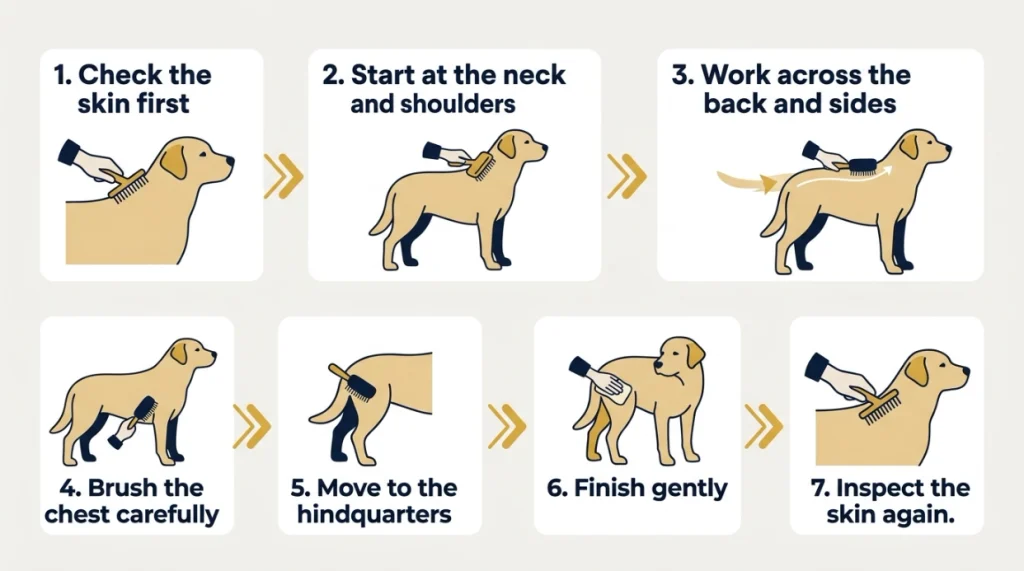
SaveBrush a Labrador with light, controlled strokes in the natural direction of the coat. Your goal is to collect loose hair, not scrape the skin until the tool stops finding fur.
- Check the skin first. Feel for lumps, sores, redness, ticks, or tender areas before using a tool.
- Start at the neck and shoulders. Use gentle strokes in the direction the coat grows.
- Work across the back and sides. Clean accumulated hair from the brush often.
- Brush the chest carefully. Use less pressure where the coat is thinner or the skin is more sensitive.
- Move to the hindquarters. This area can release a surprising amount of undercoat.
- Finish gently. A rubber curry brush can collect remaining loose surface hair and smooth the coat.
- Inspect the skin again. Stop if you see fresh redness or irritation.
If your Lab’s coat feels especially dense, use the section-by-section method in my guide to brushing dogs with dense fur. Working methodically is safer than repeatedly dragging a tool over the same patch.
What Brushing Mistakes Should Labrador Owners Avoid?
The biggest mistake is assuming that more pressure removes more hair. The brush should collect hair that is ready to release without leaving the skin red or sore.
- Brushing one area repeatedly: Move on instead of chasing every last hair from a single patch.
- Using only a soft bristle brush: It may smooth the coat without dealing with much undercoat.
- Pressing a slicker into the skin: Fine pins need controlled, gentle pressure.
- Using a de-shedding edge too aggressively: Follow the tool manufacturer’s directions and stop when the coat is no longer releasing easily.
- Ignoring your dog’s body language: Flinching, turning toward the tool, sitting down, or leaving can mean discomfort.
- Brushing damaged skin: Sores, persistent redness, bald spots, or unexplained irritation deserve veterinary attention.
Another mistake is shaving a healthy Labrador simply to reduce shedding. A Lab’s double coat serves a protective purpose, so routine grooming is normally the better approach.
How Do You Pick the Right Brush for Your Individual Lab?
Start with your dog’s coat and behavior instead of choosing whatever brush has the most aggressive-looking teeth. Two Labradors can shed differently and tolerate grooming differently.
- Heavy shedder: Start with a short-hair de-shedding tool.
- Sensitive skin: Try a flexible rubber curry brush first.
- Brush-resistant dog: Begin with a grooming glove or soft rubber tool.
- Moderate shedding: A gentle slicker or rubber tool may be enough between heavier coat releases.
- Older Labrador: Favor shorter sessions and comfortable footing.
My practical rule is simple: judge the tool by the coat and the dog’s response. A brush that removes slightly less hair but keeps your Lab relaxed can be more useful long term.
Best Brushes for Labrador Retrievers in 2026
 Save
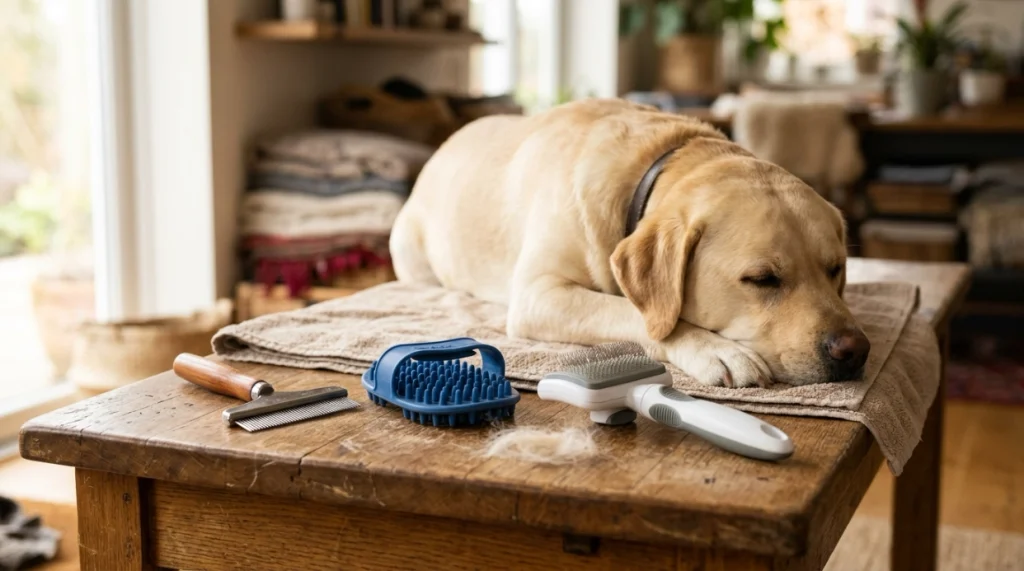
SaveIf you’re ready to pick one, these are the three tools I’d put at the top of the list for different Labrador grooming needs.
🏆 Best Overall for Shedding
FURminator Short Hair Dog deShedding Tool
★★★★☆ 4.7/5
Its stainless de-shedding edge is made to collect loose undercoat beneath short hair, and current retailer reviews average about 4.7/5. This is the one I’d choose when a Lab’s seasonal coat starts coming out faster than an ordinary brush can handle.
🐕 Best for Sensitive Labs
KONG ZoomGroom
★★★★☆ 4.7/5
The flexible rubber fingers loosen surface hair while giving the coat a massage-like pass, and current reviews sit around 4.7/5. I’d pick this for a Lab that dislikes metal brushes or for easy grooming during bath time.
💰 Best Easy-Clean Slicker
Hertzko Self-Cleaning Slicker Brush
★★★★☆ 4.5/5
Retractable pins make collected hair easier to release, and current Amazon-review summaries put it around 4.5/5. I see it as a convenient general brush rather than my first choice for the deepest Labrador undercoat removal.
Frequently Asked Questions
Can I use a slicker brush on a Labrador Retriever?
Yes, you can use a slicker brush on a Labrador if you keep the pressure light. It can collect loose hair and debris, but I would not rely on it as the only tool during heavy undercoat shedding.
Should I brush my Labrador every day?
Daily brushing can be useful during periods of heavy shedding if sessions stay short and gentle. During lighter shedding, your Labrador may need less frequent brushing, so adjust the schedule according to how much loose coat you are finding.
Can I use a FURminator on a Labrador Retriever?
A short-hair FURminator-style de-shedding tool can work well on a Labrador’s dense shedding coat when used according to its directions. Avoid aggressive pressure or repeated passes over the same area, and stop if the skin becomes irritated.
Is a rubber brush enough for a Labrador?
A rubber curry brush may be enough for routine surface grooming on a light-shedding week. During heavier undercoat release, pairing it with an appropriate de-shedding tool usually gives you more complete shedding control.
What should I do if brushing makes my Labrador’s skin red?
Stop brushing the irritated area and check your pressure, brush type, and technique. Persistent redness, sores, unusual hair loss, swelling, or pain should be assessed by a veterinarian rather than treated with more brushing.
Final Takeaway
The best brush for most Labrador Retrievers is a short-hair de-shedding tool, especially when loose undercoat is the main problem. Pair it with a rubber curry brush if you want a gentler tool for routine grooming and finishing.
Keep the pressure light, adjust brushing frequency to your Lab’s actual shedding, and pay attention to the skin. The right brush should leave you with less loose hair and a dog that is still happy to see the grooming kit next time.

Thomas Cutter is a lifelong dog owner and the founder of FindOutAboutDogs.com. With over 10 years of hands-on experience owning multiple breeds, Thomas created this site to provide honest, research-based dog advice that real owners can actually trust.
