How to Brush a Dog With Dense Fur: Step-by-Step Guide
Quick Answer
To brush a dog with dense fur, work in small sections so your brush reaches loose hair beneath the surface without scraping the skin. Start by checking for mats, use a suitable slicker brush or undercoat rake, brush gently with the coat, and finish with a metal comb to find missed tangles. The AKC dog brush guide also stresses matching the tool to the dog’s coat type.
Quick brushing steps
- 1. Inspect first: Feel for knots, mats, sore areas, burrs, and skin irritation before brushing.
- 2. Divide the coat: Lift dense fur and work through one small section at a time.
- 3. Start gently: Brush from the outer coat toward deeper loose hair without pressing hard against the skin.
- 4. Remove undercoat: Use an undercoat rake only when your dog’s coat type calls for one.
- 5. Check with a comb: A metal comb helps reveal tangles the brush left behind.
- 6. Stop before soreness: Take breaks if your dog becomes restless or the skin looks irritated.
Most important rule
- Never compensate for a stubborn tangle by brushing harder. Reduce the section size, loosen the knot gently, or get professional help for a tight mat.
Dense fur can fool you. The surface may look smooth while loose undercoat, tiny knots, and packed hair sit much closer to the skin.
I prefer short, methodical sessions instead of attacking the whole coat at once. This guide shows you the tools, technique, frequency, and safety checks that matter most.


What Does Dense Fur Mean on a Dog?
 Save
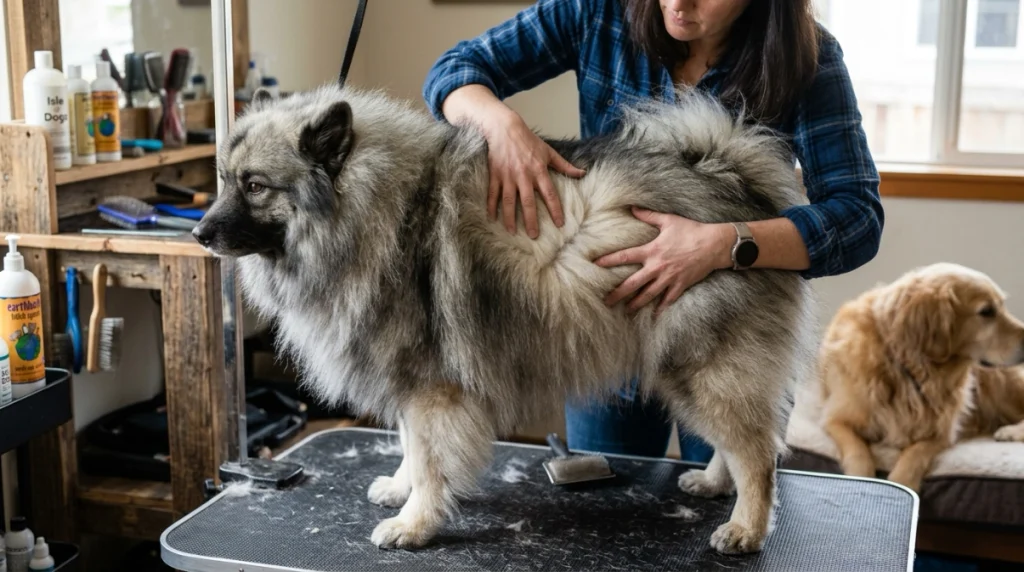
SaveDense fur is a coat with a large amount of hair packed closely together. It may feel plush, thick, or difficult to see through when you part it.
Many dense-coated dogs also have a double coat. That means they have softer undercoat beneath tougher outer guard hairs.
- Short dense coats: Labrador Retriever and similar coats may look simple but can hold substantial loose undercoat.
- Medium double coats: Keeshonds and some shepherd-type dogs can develop packed loose fur below the surface.
- Long dense coats: Newfoundlands and Collies combine coat depth with longer hair that can tangle.
- Dense curly coats: Poodles and similar dogs may trap shed or broken hairs within the coat instead of dropping them freely.
Dense does not automatically mean double-coated. Coat texture, length, growth pattern, and undercoat all change how you should brush.
If you are comparing coat maintenance between breeds, see my guide to how dog breed affects grooming frequency.
What Brush Should You Use for Dense Dog Fur?
The best brush depends on what is hiding inside the coat. A slicker, rake, pin brush, and comb perform different jobs.
One tool rarely does everything well. I usually think in terms of a primary brush plus a finishing check.
| Tool | Best Job | Dense-Coat Use | Watch For |
|---|---|---|---|
| Slicker brush | Loose hair and light tangles | Very useful for many long, curly, or dense coats | Scraping the skin with excessive pressure |
| Undercoat rake | Released undercoat | Especially useful on suitable double coats | Overworking one area |
| Metal comb | Final tangle check | Excellent finishing tool for longer dense coats | Pulling hard when the comb stops |
| Pin brush | Long outer coats and feathering | Useful for surface maintenance and longer hair | Missing packed undercoat below |
| Rubber brush | Loose surface hair | Better for short coats than deep, long fur | Expecting it to penetrate a thick undercoat |
The VCA coat-care guidance recommends choosing brushes according to coat structure and using gentle pressure around tangles.
How Do You Brush a Dog With Dense Fur Step by Step?
Brush dense fur by separating it into manageable layers and removing loose coat gradually. The goal is thoroughness, not force.
1. Set Up Before You Bring Out the Brush
Choose good lighting and secure footing. A non-slip mat can help a dog feel steadier during grooming.
Keep your brush, rake, metal comb, and treats within reach. You do not want to interrupt the session repeatedly.
2. Check the Coat With Your Hands First
Run your fingers through the coat before using a tool. Feel behind the ears, beneath the collar, in the armpits, around the rear legs, and near the tail.
These friction areas can hide knots. My separate guide explains how to check a dog coat for hidden mats before they become harder to manage.
3. Separate the Fur Into Small Sections
Lift the coat with one hand so you can see a narrow strip underneath. Brush that strip before moving to the next one.
This section-by-section method prevents you from polishing only the top layer. Thick fur often looks finished long before the deeper coat is finished.
4. Use Light, Controlled Brush Strokes
Brush in the natural direction of coat growth unless your specific grooming technique calls for otherwise. Let the tool move through the hair instead of pressing its pins into the skin.
- Start where the coat is easiest.
- Use short strokes through crowded sections.
- Support longer hair near a tangle to reduce pulling.
- Clean hair from the brush frequently.
- Watch the skin for redness.
If your dog begins avoiding the brush, shorten the session. The goal is to preserve trust as well as coat condition.
For a nervous dog, follow these gentle brushing desensitization steps rather than holding the dog still and forcing the job.
5. Work Through Loose Undercoat Carefully
A suitable undercoat rake can reach hair that a surface brush misses. Pull it gently with the direction of the coat and lift away released fur.
Do not keep raking the same patch because hair continues coming out. Dense coats can release a surprising amount without needing aggressive pressure.
6. Finish With the Comb Test
My favorite final check is simple. I pass a metal comb through each finished section and pay attention to where it stops.
If the comb snags, I reopen that section instead of pulling harder. A snag usually tells me there is more work beneath the surface.
How Often Should You Brush a Dog With Dense Fur?
 Save
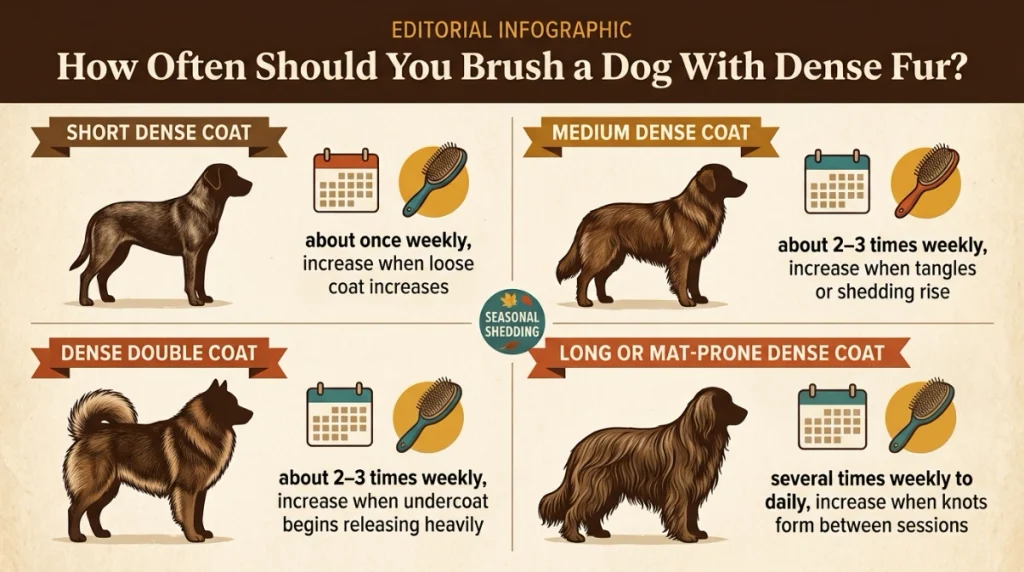
SaveMany dense-coated dogs need brushing several times each week, with more frequent sessions during heavy shedding. The correct schedule depends on coat length, undercoat, activity, and matting risk.
As of 2026, I still recommend starting with the coat rather than following one universal calendar.
| Coat Profile | Practical Starting Schedule | Increase Brushing When |
|---|---|---|
| Short, dense coat | About once weekly | Loose coat increases |
| Medium dense coat | About 2–3 times weekly | Tangles or shedding rise |
| Dense double coat | About 2–3 times weekly | Undercoat begins releasing heavily |
| Long or mat-prone dense coat | Several times weekly to daily | Knots form between sessions |
The ASPCA’s dog grooming guidance likewise changes brushing frequency according to coat type rather than using the same schedule for every dog.
Season matters too. My guide to seasonal dog brushing frequency explains when a normal routine may need temporary adjustment.
What Areas Are Most Likely to Mat?
Mats often develop where hair rubs against hair, equipment, or moving body parts. Thick coats can hide these areas until the knots become tight.
- Behind the ears: Fine hair and constant movement encourage tangling.
- Under the collar or harness: Friction can twist dense fur together.
- Armpits: Leg movement repeatedly rubs the coat.
- Behind the rear legs: Long furnishings can knot quickly.
- Tail and rump: Thick feathering may trap loose coat.
- Belly and groin: Soft fur can be easy to overlook.
Check these locations with your fingers before using a rake. Pulling a metal tool through an unseen mat can hurt.
What Should You Do If the Fur Is Already Matted?
Do not try to overpower a tight mat with repeated brush strokes. Dense matting can sit close to delicate skin.
For a small loose tangle, separate surrounding hair with your fingers and work from the outer edge inward. Stop if the dog shows pain.
- Do not yank a comb through a tight knot.
- Do not press a slicker harder to make it pass.
- Do not use household scissors close to the skin.
- Use a professional groomer for extensive or skin-tight matting.
- Ask a veterinarian about redness, sores, swelling, bald areas, or obvious pain.
VCA specifically warns that scissors can accidentally cut skin hidden inside a mat. Their advice is to seek professional care when tangling becomes severe.
What Brushing Mistakes Damage a Dense Coat?
The most common mistake is brushing only what you can see. A smooth outer coat does not prove the undercoat is free of tangles.
- Brushing too hard: More pressure does not make a brush penetrate safely.
- Repeating one spot: Constant strokes can irritate the skin.
- Skipping the comb check: Hidden tangles can remain below a polished surface.
- Using one tool for everything: A rake, slicker, and comb solve different problems.
- Waiting for a huge grooming day: Short regular sessions are easier on many dense coats.
- Ignoring behavior: Flinching or sudden resistance may signal pulling, skin irritation, or pain.
Another mistake is assuming more shedding means you should simply rake harder. The AKC’s double-coat guidance emphasizes regular coat maintenance and appropriate tools instead.
How Do You Know When the Coat Is Fully Brushed?
A well-brushed dense coat should separate easily, feel consistent, and allow an appropriate comb to pass without repeatedly catching. The skin underneath should not look scraped or red.
I use four final checks before putting the tools away.
- Comb check: The comb passes through each section without force.
- Finger check: Friction areas feel free of small knots.
- Skin check: There is no new redness from brushing.
- Dog check: The dog remains comfortable enough to finish calmly.
That last check matters. A technically perfect coat is not worth turning every future grooming session into a struggle.
Dog Brushes I Recommend for Dense Fur
 Save
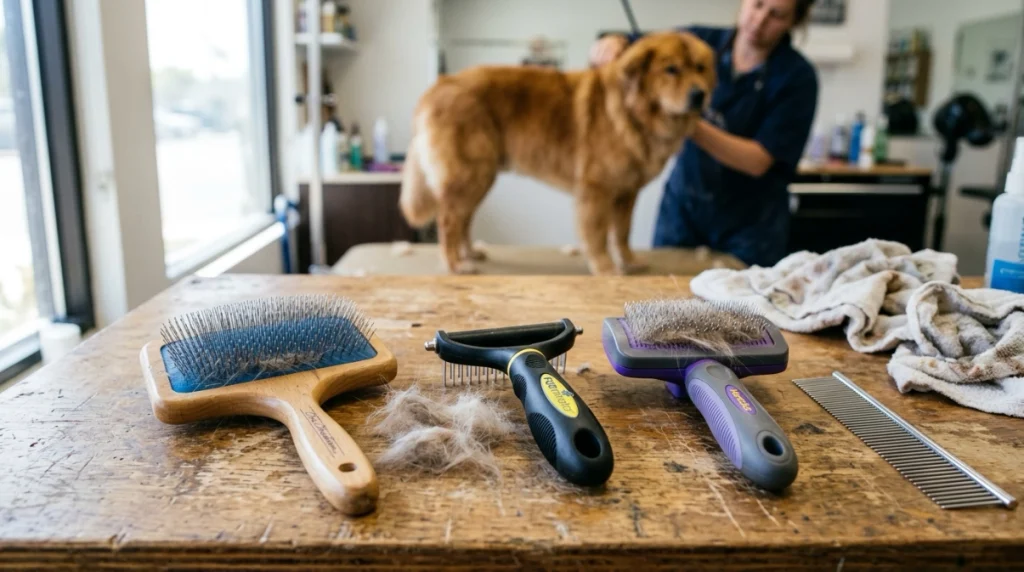
SaveIf you’re ready to choose a tool, these are the three types I would consider first. Each one handles a different part of dense-coat maintenance.
🏆 Best for Deep Dense Coats
Chris Christensen Big G Slicker Brush
★★★★★ 5/5 coat-fit rating
The Big G uses long angled pins designed to work through substantial coat depth. I would pick it for long, curly, or plush dense coats where reaching beyond the surface matters most.
🐕 Best for Loose Undercoat
FURminator Grooming Rake
★★★★☆ 4.7/5 coat-fit rating
Its rotating metal teeth are intended to move through dense fur and collect loose undercoat. I prefer this style for appropriate double coats when seasonal shedding starts filling an ordinary brush quickly.
💰 Easier Hair Cleanup
Hertzko Self-Cleaning Slicker Brush
★★★★☆ 4.5/5 coat-fit rating
The retracting-pin design makes accumulated hair easier to remove between passes. I would consider it when convenience matters and the dog’s coat responds well to a standard slicker.
Frequently Asked Questions
Should you brush dense dog fur wet or dry?
Routine brushing is usually easiest on a dry coat unless a particular grooming product or technique calls for damp hair. Never leave a dense coat wet underneath for long periods. After bathing or swimming, dry the coat thoroughly and check for tangles before they tighten.
Can you brush a dense-coated dog every day?
Yes, some dense-coated dogs benefit from short daily sessions during heavy shedding or when their coat mats easily. However, daily brushing still requires gentle pressure and the correct tool. Stop or change technique if you notice redness, soreness, broken hair, or increasing sensitivity.
Is a slicker brush enough for a double-coated dog?
Sometimes, but not always. A slicker can remove loose hair and tangles, while an undercoat rake may reach released undercoat more efficiently. A metal comb is also useful for checking your work. The best combination depends on the dog’s coat length and density.
Why does my dog’s dense fur still feel lumpy after brushing?
Lumpy areas can mean loose undercoat, small tangles, or mats remain beneath the outer layer. Separate the coat and inspect the area with your fingers. If a comb cannot pass without force, work on a smaller section or ask a groomer for help.
When should I stop brushing and call a groomer or veterinarian?
Get professional help when mats are tight against the skin, your dog shows significant pain, or grooming reveals sores, swelling, bald patches, unusual odor, parasites, or persistent redness. A veterinarian should evaluate suspected skin disease or unexplained coat loss.
Final Takeaway
Learning how to brush a dog with dense fur comes down to three things: small sections, the right tools, and light pressure. Do not judge the job by how smooth the top layer looks.
Check the deeper coat with your fingers and a comb, increase brushing when shedding rises, and stop before grooming becomes painful. Ten calm minutes done regularly can prevent a much harder coat problem later.

Thomas Cutter is a lifelong dog owner and the founder of FindOutAboutDogs.com. With over 10 years of hands-on experience owning multiple breeds, Thomas created this site to provide honest, research-based dog advice that real owners can actually trust.
