10 Best Dog Brush for Norwegian Elkhound in 2026: Ranked for a Dense Double Coat
The best dog brush for Norwegian Elkhound right now is the Hertzko Self-Cleaning Slicker Brush — its retractable pins release packed undercoat with one press. We evaluated 10 brushes and tools against Elkhound coat needs, scoring each on undercoat reach, skin comfort, and ease of cleaning. Most brushes look identical on paper but fail on a dense, twisted undercoat — and that gap shaped our rankings. Whether you need daily upkeep, spring shedding relief, or a gentle option, this guide gives you one clear answer.


Quick Comparison: All 10 Products Ranked
| # | Product | Best For | Rating | Badge | |
|---|---|---|---|---|---|
| 1 | Hertzko Self-Cleaning Slicker Brush | Weekly upkeep and light shedding | 4.7/5 | Best Overall | Buy → |
| 2 | FURminator Undercoat deShedding Tool for Large Dogs | Spring and fall coat blowouts | 4.5/5 | Best for Heavy Shedding | Buy → |
| 3 | Chris Christensen Big G Slicker Brush | Owners wanting a professional-grade slicker | 4.4/5 | Best Premium | Buy → |
| 4 | Andis Steel Comb for Dogs | Checking behind ears, britches, and tail | 4.4/5 | Best Finishing Comb | Buy → |
| 5 | Safari Double Row Undercoat Rake | Dense undercoat before and during sheds | 4.3/5 | Best Undercoat Rake | Buy → |
| 6 | Andis Premium Pin Brush | Gentle weekly brushing and coat finishing | 4.2/5 | Best Pin Brush | Buy → |
| 7 | KONG ZoomGroom Rubber Brush | Bath day and loosening surface dead hair | 4.2/5 | Best Bath-Time Tool | Buy → |
| 8 | DakPets Deshedding Glove | Brush-shy dogs and quick touch-ups | 3.9/5 | Best for Brush-Shy Dogs | Buy → |
| 9 | Safari Professional Slicker Brush for Dogs | Routine weekly brushing with a classic design | 3.9/5 | Best Classic Slicker | Buy → |
| 10 | Hartz Groomer’s Best Combo Dog Brush | First-time owners on a tight budget | 3.8/5 | Best Budget | Buy → |
How We Chose These Brushes
What we assessed
10 brushes, rakes, combs and gloves compared on design, coat reach, materials, and cleaning method. We cross-checked each against owner feedback patterns and breed grooming guidance. These are desk-based evaluations, not lab tests.
Our 3 scoring criteria
Undercoat reach (does it get past the guard hairs), skin comfort (how gentle it is on sensitive skin), and ease of cleaning (how fast thick undercoat clears from the tool). Each is scored out of 5.
Breed guidance used
We leaned on veterinary breed profiles and Norwegian Elkhound club grooming advice: weekly pin or slicker brushing, extra work during two yearly sheds, no shaving, and cool air only when drying.
What we cut, and why
Sharp metal shedding blades and stripping knives, which can cut or thin the guard coat, and heated dryers or cheap bristle-only brushes that skim the surface and miss the undercoat.
What to Look for When Buying a Dog Brush for a Norwegian Elkhound
The Elkhound’s thick double coat punishes the wrong tool and rewards the right combination. These four factors separate brushes that work from brushes that gather dust.
1. Match the Tool to a Double Coat
Norwegian Elkhounds carry a coarse, weather-resistant outer coat over a soft, twisted undercoat, so no single tool does every job. Slickers and pin brushes handle weekly upkeep, rakes and de-shedding tools handle seasonal shedding, and a steel comb checks your work. For a wider look at matching tools to this coat type, see our guide to the best brush for double-coated dogs.
2. Tine Length and Coat Reach
The undercoat sits beneath dense guard hairs, so how deep a tool reaches matters more than how big it is. Short, closely packed bristles skim the surface and leave packed undercoat behind. Widely spaced rake teeth or a fine de-shedding edge go deeper but need more technique.
3. Skin Comfort and Pressure
Breed club guidance notes that Elkhound skin can be sensitive, which is why rounded pin tips, softer pin options and rubber fins feel kinder than sharp edges. Whatever you choose, use light pressure. Stop if the skin looks pink or your dog flinches.
4. Cleaning Ease and Long-Term Durability
Thick undercoat clogs tools quickly, so the cleaning method decides whether you actually enjoy grooming. Self-cleaning slickers and release buttons save minutes each session, while steel tools tend to last longer. Look for solid handles and metal construction, especially with two heavy sheds every year.

Hertzko Self-Cleaning Slicker Brush — Fast weekly upkeep, one-press cleanup
Best for: Weekly upkeep and light shedding
Elkhound owners who brush weekly quickly learn that loose undercoat clogs ordinary slickers within minutes. The Hertzko’s retractable pins solve that annoyance by releasing packed hair with a single press, so one session rarely stalls halfway. Its fine angled pins reach beneath the coarse gray guard hairs, lift loose fluff, and smooth the ruff and britches. Use light pressure, because slicker pins can irritate sensitive skin if pressed hard. It is a maintenance brush, not a heavy shedding tool, so pair it with an undercoat rake or de-shedding tool when your Elkhound blows coat in spring and fall.
- Retractable pins empty hair in one press
- Comfortable handle suits longer sessions
- Handles weekly upkeep on thick coats
- Pins can bend under heavy pressure
- Too shallow for peak shedding weeks
4.5/5
4.6/5
5.0/5

FURminator Undercoat deShedding Tool for Large Dogs — Strongest undercoat removal in shedding season
Best for: Spring and fall coat blowouts
When an Elkhound’s soft, twisted undercoat starts coming off in clumps, a standard brush barely dents it. The FURminator’s fine stainless-steel edge reaches beneath the guard hairs and pulls loose undercoat that would otherwise end up on your floors. Many owners find a few short passes remove more hair than an hour of slicker work. The trade-off is technique: pressing hard or overusing it can thin the guard coat and irritate skin. Choose the size that matches your dog’s weight, and reserve it for shedding periods rather than daily grooming.
- Pulls out loose undercoat fast
- Hair-release button on current models
- Shortens shedding-season grooming sessions
- Overuse can thin or damage guard hairs
- Needs careful sizing and light pressure
5.0/5
4.0/5
4.4/5

Chris Christensen Big G Slicker Brush — Groomer-grade slicker with gentler pin options
Best for: Owners wanting a professional-grade slicker
Professional groomers often reach for Chris Christensen tools, and the Big G slicker shows why. Its wire pins come in different firmness options, which lets you match pressure to an Elkhound’s sensitive skin rather than guessing. The larger head covers the ruff, shoulders and britches quickly, and the pins flex enough to glide through coat without snagging. It costs more than mass-market slickers and, unlike our top pick, it does not self-clean, so you will pull hair out by hand after each session. Buy it if you groom regularly and want a long-lasting tool.
- Pin firmness options suit sensitive skin
- Large head covers the body quickly
- Built for repeated professional-style use
- Not self-cleaning; hair needs hand removal
- Premium cost versus basic slickers
4.6/5
4.7/5
3.9/5

Andis Steel Comb for Dogs — Confirms the coat is truly tangle-free
Best for: Checking behind ears, britches, and tail
A brush can make the top of an Elkhound’s coat look perfect while tangles hide deeper. A steel comb is the quick check that tells you whether you actually reached the skin. The Andis steel comb’s smooth metal teeth glide through the dense ruff, behind the ears, and along the britches, catching only where loose undercoat or a knot remains. It is easy to wipe clean and lasts for years. It does not remove bulk undercoat, so treat it as a finishing partner for your slicker or rake rather than your main grooming tool.
- Smooth steel teeth glide through coat
- Finds hidden tangles and loose fluff
- Durable and easy to wipe clean
- Removes little bulk undercoat
- Teeth feel sharp if pressed hard
4.0/5
4.5/5
4.8/5

Safari Double Row Undercoat Rake — Reaches deep undercoat without cutting coat
Best for: Dense undercoat before and during sheds
An undercoat rake sits between a brush and a de-shedding blade, and that middle ground suits many Elkhound owners. Its two rows of widely spaced teeth slip through the coarse outer coat and comb out dead, twisted undercoat in long strokes rather than scraping it away. Because the teeth are rounded and spaced out, it is less likely than a blade to thin guard hairs when used patiently. Work in sections and follow the direction of the coat. It can snag on tangles if rushed, so detangle first with a slicker, and expect to clear hair by hand.
- Reaches deep into the undercoat
- Teeth spaced to protect guard hairs
- Lets you work section by section
- Snags on tangles if rushed
- Manual cleaning after every session
4.6/5
3.9/5
4.3/5

Andis Premium Pin Brush — Gentle weekly brush for sensitive skin
Best for: Gentle weekly brushing and coat finishing
Veterinary breed guidance points Elkhound owners to a weekly pin brush, and this Andis model fits that role. Its rounded pin tips glide through the outer coat without scratching, while the cushioned pad flexes with the dog’s body. That makes it a comfortable choice for Elkhounds with sensitive skin or owners who dislike aggressive brushing. It smooths the coat, spreads natural oils, and removes surface dust after outdoor play. The limitation is depth: pins rarely reach dense undercoat, so during sheds you will want a rake or de-shedding tool alongside it.
- Rounded pin tips feel gentle on skin
- Cushioned pad flexes with the body
- Clears surface dust after outdoor play
- Rarely reaches dense undercoat
- Hair must be pulled out by hand
3.9/5
4.6/5
4.0/5

KONG ZoomGroom Rubber Brush — Loosens dead hair during baths
Best for: Bath day and loosening surface dead hair
Bath day is one of the best moments to loosen an Elkhound’s dead hair, and a rubber brush makes it easier. The KONG ZoomGroom’s flexible rubber fins work shampoo into the dense coat, massage the skin, and pull away loose hair that has already released. Rinsing the brush is simple, and the soft fins are kind to sensitive skin. It is a supporting tool rather than a primary one. Rubber fins cannot get through a thick undercoat, so follow bath time with a rake or de-shedding tool once the coat is fully dry.
- Flexible fins gentle on sensitive skin
- Works shampoo through dense coat
- Rinses clean in seconds
- Cannot penetrate thick undercoat
- Not a standalone grooming tool
3.3/5
4.8/5
4.4/5
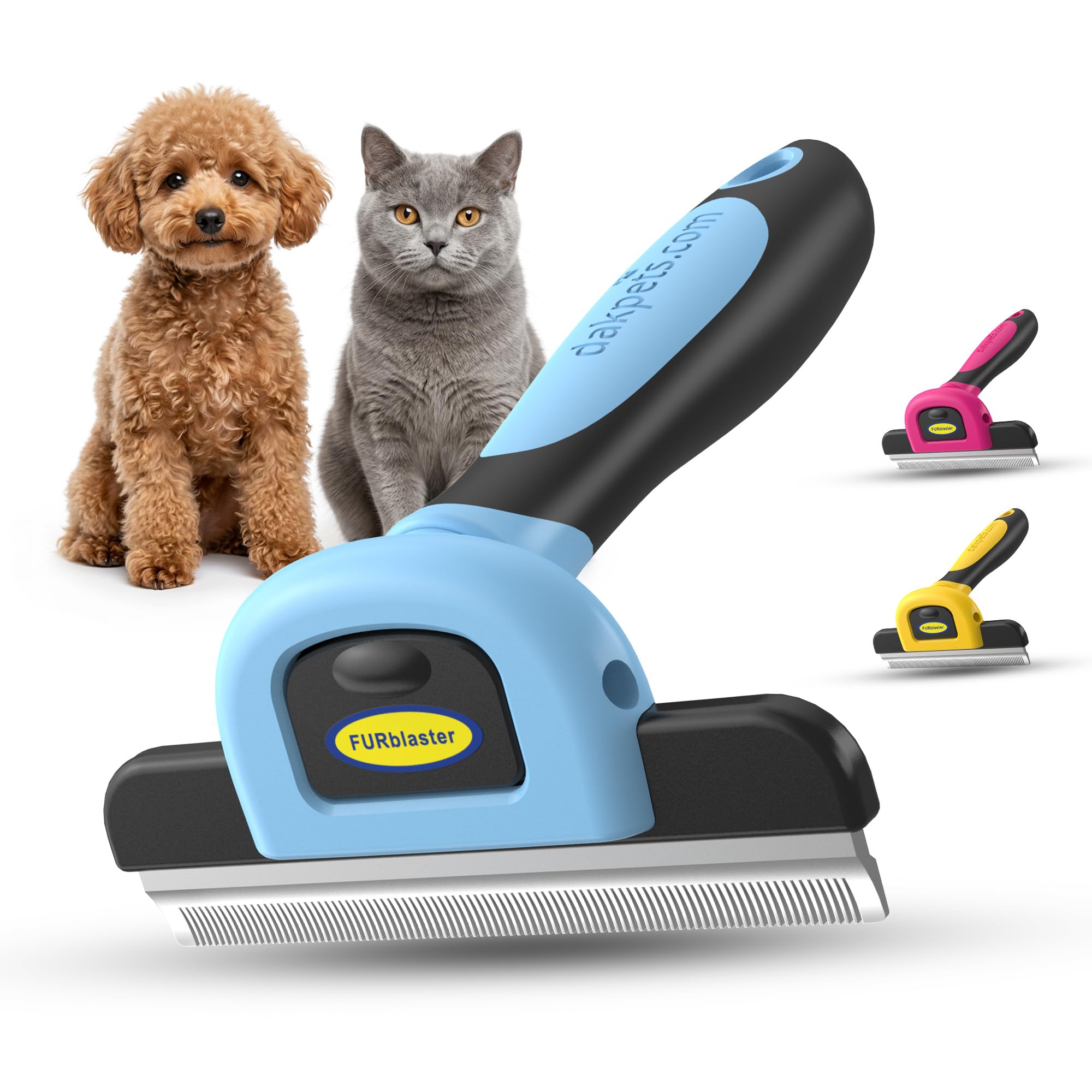
DakPets Deshedding Glove — Petting-style grooming for brush-averse dogs
Best for: Brush-shy dogs and quick touch-ups
Some Elkhounds tolerate petting far better than brushing, and a grooming glove turns maintenance into something that feels like a rub-down. The DakPets glove’s soft rubber nubs collect loose hair from the coat’s surface while massaging the skin, which makes it handy for quick touch-ups between full sessions. It is also easy to use on legs and face, where brushes feel awkward. However, it only reaches the top layer of coat, so it will not manage peak shedding on its own. Treat it as a gentle bridge, not a replacement for a rake or slicker.
- Feels like petting for brush-shy dogs
- Quick touch-ups between sessions
- Easy on legs, face, and belly
- Only reaches surface hair
- Rubber nubs can wear with heavy use
2.9/5
4.9/5
3.8/5
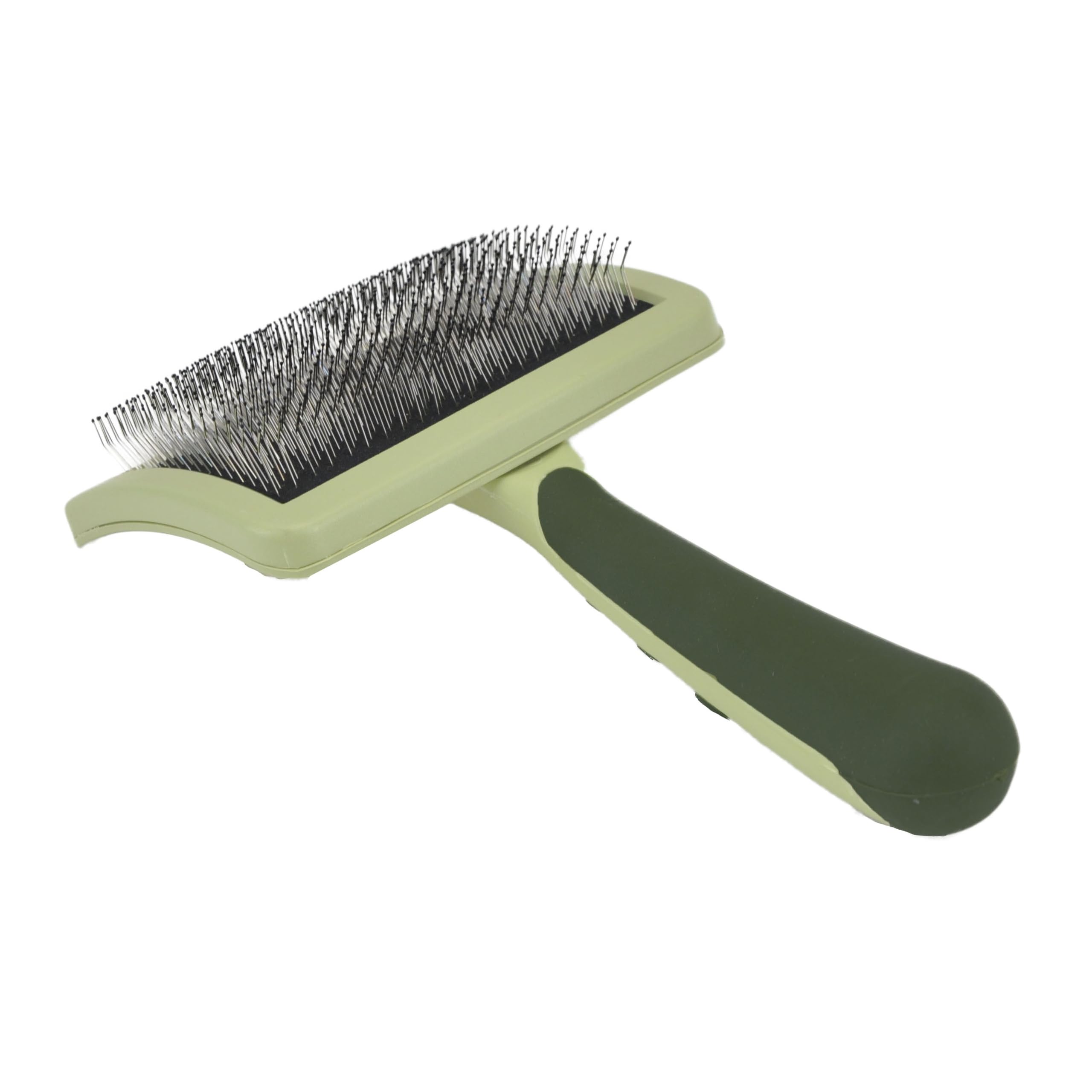
Safari Professional Slicker Brush for Dogs — Reliable traditional slicker for routine brushing
Best for: Routine weekly brushing with a classic design
Plenty of Elkhound owners just want a dependable, no-frills slicker, and Safari’s professional model delivers that. Its angled wire pins pass through the outer coat to catch loose undercoat and fine tangles around the ruff, ears and britches. The ergonomic handle keeps wrist strain down during the longer sessions an Elkhound’s thick coat demands. Compared with a self-cleaning model it takes more effort to clear hair, and the pins need gentle pressure on sensitive skin. It is a solid second slicker, or a sensible first choice if you prefer a traditional design.
- Simple traditional design, easy to use
- Ergonomic handle for longer sessions
- Catches fine tangles near ears and britches
- No self-cleaning; hair removal takes effort
- Pins need light pressure on skin
3.8/5
3.9/5
4.0/5

Hartz Groomer’s Best Combo Dog Brush — Affordable two-sided brush for beginners
Best for: First-time owners on a tight budget
New Elkhound owners often want an inexpensive way to start before investing in specialist tools, and the Hartz Groomer’s Best combo brush fills that gap. One side holds pin-style bristles for smoothing, the other holds softer bristles for polishing, so a single tool covers basic weekly brushing. It is comfortable and forgiving on skin. The limits show up quickly on an Elkhound, though: the bristles skim the surface and will not touch dense undercoat. Plan to add a rake or de-shedding tool before your dog’s first spring blowout.
- Very affordable two-in-one design
- Gentle and forgiving on skin
- Easy to find and replace
- Skims surface, misses dense undercoat
- Not built for heavy shedding
3.6/5
4.2/5
3.6/5
Top 3 Head-to-Head: Hertzko vs FURminator vs Big G Slicker
These three win most final decisions because each leads on a different job: easy cleanup, deep undercoat removal, and gentle professional-grade brushing.
| Feature | #1 Hertzko Slicker | #2 FURminator | #3 Big G Slicker |
|---|---|---|---|
| Undercoat reach | 4.5/5 | 5.0/5 — Best | 4.6/5 |
| Skin comfort | 4.6/5 | 4.0/5 | 4.7/5 — Best |
| Ease of cleaning | 5.0/5 — Best | 4.4/5 | 3.9/5 |
| Choose if… | You want fast weekly upkeep | Your dog is blowing coat | You want a pro-grade slicker |
Who These Brushes Are NOT For
A brush is not a cure for every coat problem, and a few Elkhound owners will need something different.
If your dog has matted fur, skin redness, or hair loss in patches, see a groomer or veterinarian rather than buying another brush. Owners who want a summer shave should know that breed guidance advises against it.
Common Mistakes to Avoid
Most Elkhound grooming frustration comes from technique, not from the tool you own.
Frequently Asked Questions About Dog Brushes for Norwegian Elkhounds
Which brush is best for a Norwegian Elkhound?
A slicker or pin brush works best for weekly upkeep, backed up by an undercoat rake or de-shedding tool during heavy sheds. The Elkhound’s coarse outer coat and soft, twisted undercoat need different tools: the brush smooths and lifts loose hair, while the rake reaches deeper. Finish with a steel comb to confirm no tangles remain near the ears, britches and tail.
How often should you brush a Norwegian Elkhound?
Brush at least once a week, and more often during the two heavy sheds each year. Veterinary breed guidance sets weekly pin-brush sessions as the minimum, and many owners add short daily sessions in spring and fall. Brushing also helps after outdoor play, because the weather-resistant coat sheds dirt that otherwise ends up on your furniture and floors.
Do Norwegian Elkhounds shed a lot?
Yes. Elkhounds shed lightly year-round and heavily twice a year, when the soft undercoat loosens and comes out in clumps. Regular brushing, an occasional bath with thorough drying, and the right undercoat tool keep hair manageable, but no routine eliminates shedding on this breed. Expect the heaviest shedding in spring, with a second round in autumn.
Should you shave a Norwegian Elkhound in summer?
No. Breed club grooming advice recommends against shaving an Elkhound. The double coat helps regulate body temperature, and the coarse guard hairs protect the skin. Shaving can also change how the coat grows back. Instead, remove dead undercoat with a rake, comb or de-shedding tool, and ask your veterinarian or groomer if heat is a concern.
Is a slicker brush or an undercoat rake better for a double coat?
They do different jobs, so most Elkhound owners benefit from both. A slicker handles weekly upkeep and fine tangles near the surface, while a rake reaches the dense undercoat before and during sheds. If you can only buy one for heavy shedding, start with a rake. Here is how an undercoat rake works.
How do you handle a Norwegian Elkhound blowing its coat?
Bathe or thoroughly wet the coat, dry it completely, then work through it with a rake or de-shedding tool in sections. Breed club guidance suggests a forced-air dryer on cool settings, since hot air can bother sensitive skin. Repeat short sessions over a couple of weeks rather than trying to remove everything at once.
Our Final Verdict
Elkhound grooming comes down to two jobs: weekly upkeep and twice-yearly undercoat removal. A self-cleaning slicker handles the first best, while a rake or de-shedding tool handles the second. Owners comparing other breeds can also read our guide to the best dog brushes for hounds.

Thomas Cutter is a lifelong dog owner and the founder of FindOutAboutDogs.com. With over 10 years of hands-on experience owning multiple breeds, Thomas created this site to provide honest, research-based dog advice that real owners can actually trust.
