Dog Brush vs De-Shedding Tool: Which Do You Need?
Quick Answer
A dog brush is the better everyday tool for removing surface hair, preventing tangles, smoothing the coat, and maintaining skin and coat condition. A de-shedding tool is more specialized: it reaches loose undercoat during heavier shedding. For many double-coated dogs, I prefer using both rather than treating them as interchangeable tools. If you own a heavy double-coated breed, this guide to choosing a Husky brush shows why different grooming jobs often need different tools.
The key differences
- Routine grooming: Use a regular brush for frequent coat maintenance, loose surface hair, and light tangles.
- Heavy shedding: Use a suitable de-shedding tool when loose undercoat is coming out in larger amounts.
- Short coats: Bristle brushes and grooming gloves often work well for smooth, short-haired dogs.
- Double coats: Undercoat rakes, suitable slickers, and de-shedding tools can reach hair beneath the outer coat.
- Matted coats: Neither tool should be forced through a tight mat; work gently or get professional help.
- Sensitive skin: Use lighter pressure and stop if you see redness, pulling, or discomfort.
My simple rule
- Start with the gentlest brush that handles your dog’s coat, then add a de-shedding tool only when loose undercoat makes it useful.
Dog brushes and de-shedding tools can look similar on a store shelf, but they don’t do exactly the same job.
I choose between them based on the coat in front of me. The amount of loose hair matters, but coat type, tangles, skin sensitivity, and grooming frequency matter just as much.


What Is the Difference Between a Dog Brush and a De-Shedding Tool?
A dog brush is a general grooming tool used to remove loose surface hair, separate the coat, smooth fur, and help prevent tangles. A de-shedding tool is designed mainly to remove loose shedding hair, particularly undercoat that sits beneath the visible topcoat.
That difference sounds small. In practice, it changes when and how I use each tool.
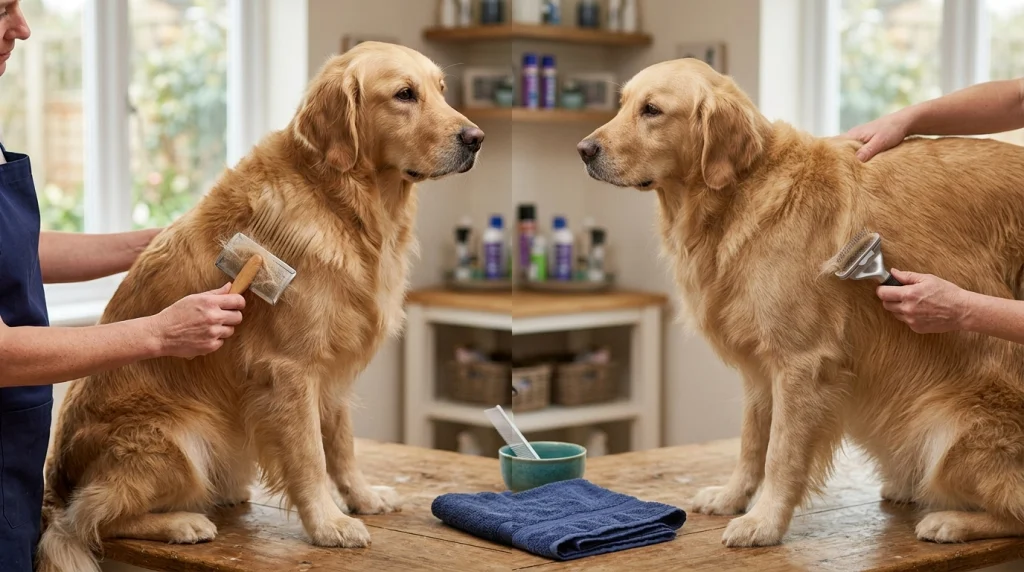
- Slicker brush: Uses many fine pins to separate hair, collect loose fur, and work through light tangles.
- Bristle brush: Works mainly on the coat surface and suits many smooth or short coats.
- Pin brush: Helps smooth longer hair and provides a gentler finishing pass.
- Grooming glove: Loosens surface hair while providing a massage-like grooming action.
- Undercoat rake: Reaches farther into thick coats to collect loose undercoat.
- De-shedding edge: Passes through the topcoat to remove loose undercoat when used correctly.
The American Kennel Club’s dog brush guide also separates brushes by coat type and intended grooming job.
Dog Brush vs De-Shedding Tool: Side-by-Side Comparison
 Save
SaveA normal dog brush is the more versatile choice for routine maintenance. A de-shedding tool becomes more useful when your dog’s main problem is loose undercoat rather than tangling or surface debris.
| Feature | Regular Dog Brush | De-Shedding Tool |
|---|---|---|
| Main purpose | Routine coat maintenance | Removing loose shedding hair or undercoat |
| Best frequency | Often suitable for regular use | Usually used less frequently and according to coat condition |
| Surface hair | Excellent | Good, but not its main job |
| Loose undercoat | Varies by brush type | Usually stronger |
| Light tangles | Slickers and combs can help | Not normally the primary purpose |
| Heavy seasonal shedding | Helpful but may be slower | Often the better specialized option |
| Risk from overuse | Skin irritation if used roughly | Higher need for controlled pressure and limited repeated passes |
When Should You Use a Regular Dog Brush?
Use a regular brush when your main goal is consistent coat maintenance rather than intensive undercoat removal. For many dogs, this should be the foundation of the grooming routine.
The specific brush still needs to match the coat.
- Short, smooth coat: Try a bristle brush, rubber brush, or grooming glove.
- Medium coat: A slicker, bristle brush, or comb may work depending on density.
- Long coat: Use longer pins or a comb that can reach through the coat without pulling.
- Curly coat: A slicker brush and comb are commonly used to separate curls and find tangles.
- Double coat: A long-pin slicker can handle routine grooming, while a rake or de-shedding tool may help during heavier shedding.
VCA Animal Hospitals’ grooming guidance similarly recommends choosing brushes according to coat type rather than assuming one brush works for every dog.
Why I prefer a brush as the first tool
A regular brush gives me more flexibility. I can see how the coat responds before reaching for a more aggressive undercoat-removal tool.
It also makes grooming easier to repeat consistently. That matters because frequent gentle maintenance can prevent a larger grooming problem later.
When Do You Need a De-Shedding Tool?
You need a de-shedding tool when loose undercoat is the main problem and a standard surface brush isn’t removing enough of it. This is especially common in double-coated breeds during heavier shedding periods.
Think of it as a specialized tool, not an upgraded version of every dog brush.
- Seasonal coat blow: Large amounts of soft undercoat are loosening at once.
- Dense double coat: Surface brushing leaves obvious loose hair underneath.
- Hair around the home: Your dog keeps releasing large amounts of loose coat despite regular brushing.
- Post-brushing undercoat: A slicker collects surface fur but deeper loose hair remains.
The AKC notes that coat rakes and shedding tools can be useful when shedding becomes heavier in double-coated dogs. Its dog shedding guidance also stresses gentle technique and matching the tool to the coat.
What a de-shedding tool should not do
A de-shedding tool should remove hair that is already loose. It should not require you to scrape repeatedly across the skin or force the tool through resistance.
If your dog flinches, develops redness, or the tool catches hard, stop and inspect the area.
Can You Use a Dog Brush and De-Shedding Tool Together?
 Save
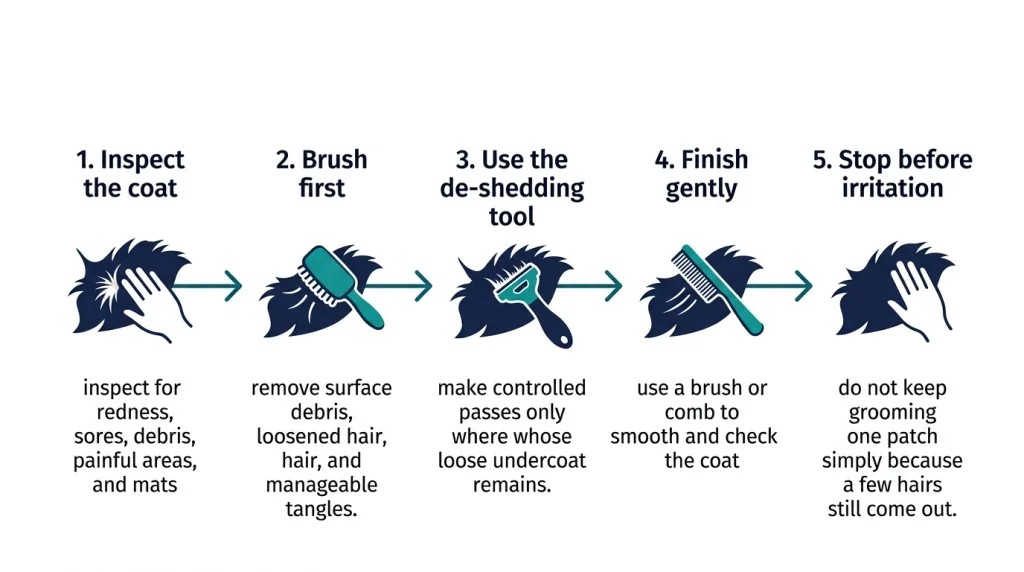
SaveYes. For many shedding dogs, using both is more effective than choosing only one because each tool handles a different stage of grooming.
I usually think in terms of a grooming sequence rather than a single miracle tool.
- Inspect the coat. Check for redness, sores, debris, painful areas, and mats.
- Brush first. Remove surface debris, loosened hair, and manageable tangles.
- Use the de-shedding tool. Make controlled passes only where loose undercoat remains.
- Finish gently. Use a brush or comb to smooth the coat and check your work.
- Stop before irritation. Don’t keep grooming one patch simply because a few hairs still come out.
This approach works especially well with heavy double coats. You can see the same principle in my guide on managing Siberian Husky shedding.
Which Tool Is Better for Short-Haired Dogs?
For most short-haired dogs, I would start with a regular brush, bristle brush, rubber grooming tool, or grooming glove. These tools can remove loose surface hair without adding more intensity than the coat needs.
A short-haired dog can still shed heavily. Coat density matters more than hair length alone.
- Boxer-type smooth coat: A grooming glove or short-bristle brush may be enough.
- Beagle-type coat: A bristle or rubber tool can collect frequent loose hair.
- Short double coat: A correctly sized de-shedding tool may help when undercoat release becomes heavy.
I wouldn’t buy a sharp-looking shedding tool simply because the dog sheds. First determine whether the loose hair is sitting mostly on the surface or deeper in the coat.
Which Tool Is Better for Double-Coated Dogs?
Double-coated dogs are where de-shedding tools and undercoat rakes become most useful. Their soft undercoat can loosen beneath guard hairs where a shallow brush may not reach effectively.
That doesn’t make the regular brush unnecessary.
- Undercoat rake: Useful for loosening and collecting soft undercoat.
- De-shedding edge: Useful for controlled removal of loose undercoat when appropriate for the coat.
- Long-pin slicker: Useful for separating hair and collecting loosened fur.
- Steel comb: Useful for checking whether dense sections have been brushed through.
My preferred setup for a dense coat is usually two or three simple tools that perform different jobs. I don’t need three products doing the same thing.
Can a De-Shedding Tool Damage a Dog’s Coat?
Any grooming tool can irritate skin or damage hair when used with excessive pressure, repeated scraping, or poor technique. De-shedding tools deserve extra care because some designs use close-set metal teeth or edges.
The manufacturer of the FURminator Undercoat deShedding Tool, for example, instructs owners to use gentle strokes and avoid excessive repeated passes over one area.
- Use light pressure: Don’t push the teeth into the skin.
- Follow hair growth: Controlled strokes reduce pulling.
- Untangle first: Don’t drag a shedding edge through mats.
- Check the skin: Stop if redness or irritation appears.
- Choose the right version: Tool size and coat-length design should suit the dog.
A bigger pile of fur isn’t always evidence of better grooming. Comfort and coat condition are better stopping signals.
How Often Should You Use Each Tool?
There isn’t one schedule that fits every dog. Coat type, shedding cycle, skin condition, environment, and tool design all affect frequency.
I use the coat itself as the guide.
| Coat Situation | Tool to Start With | Practical Approach |
|---|---|---|
| Normal weekly maintenance | Regular dog brush | Brush according to coat needs and tolerance |
| Heavy seasonal shedding | Brush plus undercoat/de-shedding tool | Use shorter controlled sessions more frequently as needed |
| Light surface shedding | Bristle, rubber brush, or grooming glove | Avoid overcomplicating the routine |
| Dense loose undercoat | Undercoat rake or suitable de-shedding tool | Work section by section with light pressure |
As of 2026, my advice remains simple: don’t turn grooming frequency into a competition. Gentle consistency beats aggressive marathon sessions.
What Should You Buy First?
 Save
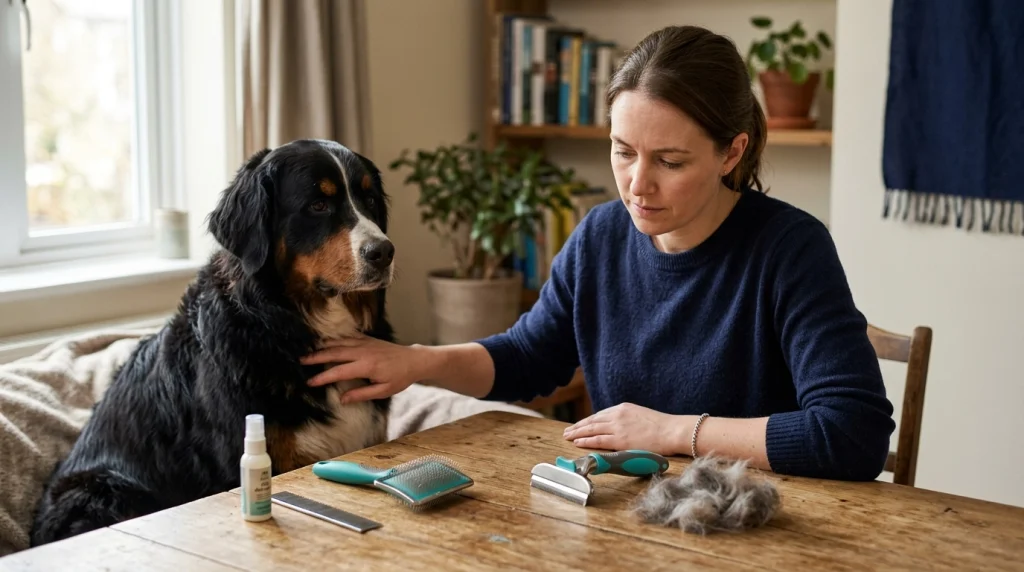
SaveIf you’re buying your first grooming tool, I would usually buy a coat-appropriate brush first. Add a de-shedding tool when your dog’s coat proves that you need one.
- Buy a brush first: Your dog needs routine grooming, smoothing, or light tangle prevention.
- Buy a de-shedding tool first: You already know your dog has a dense shedding undercoat and loose fur is the main problem.
- Buy both: You have a double-coated dog that needs routine brushing plus seasonal undercoat removal.
This keeps the grooming kit useful without filling a drawer with overlapping tools.
If you’re ready to pick one, these are three tool styles I would consider for different grooming needs:
🏆 Best for Controlled De-Shedding
FURminator Undercoat deShedding Tool
★★★★½
Its stainless-steel edge is designed to reach loose undercoat beneath the topcoat, while the FURejector button clears collected hair. I like it as a specialized shedding tool when the correct size and coat-length version is used with light pressure.
🐾 Best Simple Undercoat Rake
Safari Double Row Undercoat Rake
★★★★☆
The double-row rake format is designed to reach loose undercoat rather than simply skim surface fur. I like this style for owners who want a straightforward tool for dense coats without relying on an edged de-shedding design.
✨ Best for Routine Dense-Coat Brushing
Chris Christensen Big G Slicker Brush
★★★★½
The Big G is a long-pin slicker made for working through substantial coats rather than acting as a dedicated de-shedding edge. I see it as a strong routine and finishing option when shallow brushes barely reach through dense fur.
Frequently Asked Questions
Is a de-shedding tool better than a dog brush?
Not universally. A de-shedding tool is better for removing loose undercoat, while a normal brush is usually more versatile for regular coat maintenance, smoothing, light tangles, and surface hair. Many double-coated dogs benefit from having both tools available.
Can I use a de-shedding tool every day?
I wouldn’t automatically use an edged de-shedding tool every day. Follow the manufacturer’s directions, watch your dog’s skin, and use only enough passes to remove loose coat comfortably. A regular brush is usually better suited to frequent maintenance.
Does a slicker brush count as a de-shedding tool?
A slicker can remove plenty of loose hair, but it isn’t identical to a dedicated de-shedding edge. Slickers are useful for separating the coat, light tangles, and loose fur, while specialized de-shedding tools focus more directly on loose undercoat.
Do short-haired dogs need de-shedding tools?
Some do, especially short-haired dogs with dense shedding undercoats. However, many smooth-coated dogs can be maintained effectively with a bristle brush, rubber grooming brush, or grooming glove. Start with the gentlest tool that handles the coat well.
How do I know if I’m de-shedding too much?
Stop if you notice redness, sensitivity, repeated pulling, discomfort, or excessive thinning in one area. You don’t need to keep working until the tool comes away completely hair-free. The goal is comfortable removal of loose coat, not stripping healthy attached hair.
Dog Brush or De-Shedding Tool: The Final Takeaway
Choose a regular dog brush when you need an everyday grooming tool. Choose a de-shedding tool when loose undercoat is the specific problem you’re trying to solve.
For a heavy-shedding double-coated dog, I wouldn’t force myself to choose between them. I would brush routinely, add controlled undercoat removal when needed, and let the dog’s coat and skin tell me when the session is finished.
Start gently. The best grooming routine is the one that keeps the coat manageable without making your dog dread the next session.

Thomas Cutter is a lifelong dog owner and the founder of FindOutAboutDogs.com. With over 10 years of hands-on experience owning multiple breeds, Thomas created this site to provide honest, research-based dog advice that real owners can actually trust.
