Can One Dog Use Multiple Brush Types? Yes—Here’s How to Choose
Quick Answer
Yes, one dog can use multiple brush types, and many dogs benefit from it. Each tool performs a different job, so combining a slicker, undercoat rake, pin brush, bristle brush, comb, or rubber grooming brush can make coat care easier. The key is choosing tools for your dog’s coat rather than buying every brush available. This AKC guide to dog brush types explains how brush choice changes with coat length and texture.
When multiple brushes make sense
- Double coats: An undercoat rake can lift loose undercoat while a slicker or pin brush finishes the outer coat.
- Long coats: A slicker can tackle tangles while a metal comb checks whether hidden knots remain.
- Short coats: A rubber curry brush can loosen hair before a bristle brush smooths the coat.
- Curly coats: A slicker can separate the coat while a comb helps confirm you reached through it.
- Seasonal shedding: A shedding-focused tool may be useful during heavy coat drop but unnecessary every day.
The simplest rule
- Give each brush a specific job, use a light touch, and stop if your dog’s skin becomes red or uncomfortable.
I don’t think of a dog’s grooming kit as choosing one “perfect” brush. I think of it as choosing the smallest set of tools that solves that dog’s actual coat problems.
That distinction matters. A brush that removes loose undercoat may be poor at finishing long hair, while a gentle finishing brush may barely reach dense undercoat.


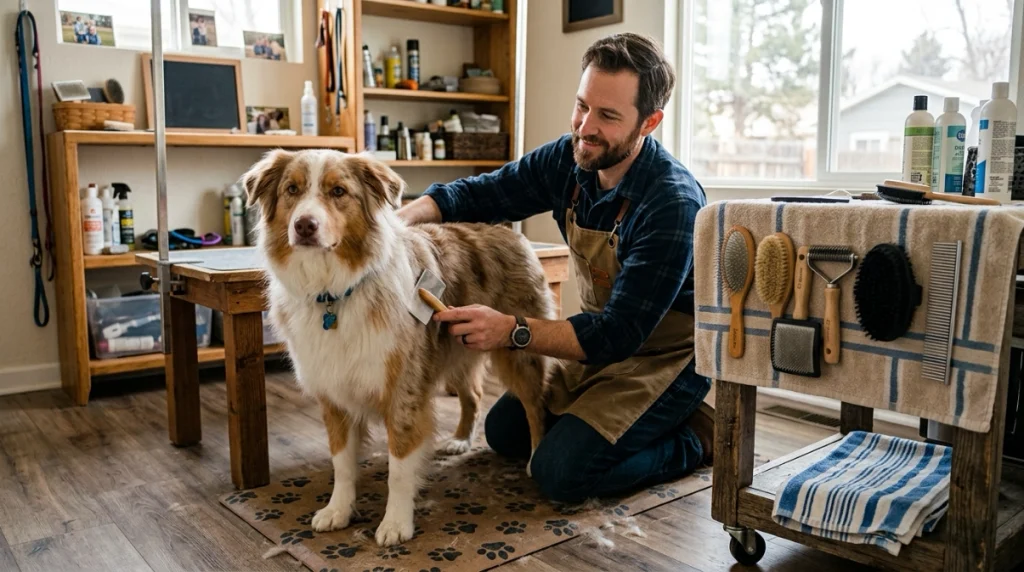
Can One Dog Use Multiple Brush Types Safely?
 Save
SaveYes. Using several brush types on one dog is normal when the tools suit the dog’s coat and each one has a clear purpose.
A dog brush system is simply a combination of grooming tools selected for separate jobs, such as detangling, removing loose undercoat, smoothing the topcoat, or checking for hidden knots.
- Slicker brushes help remove loose hair and work through minor tangles.
- Pin brushes help smooth and maintain many medium or long coats.
- Bristle brushes work especially well for short or smooth coats and finishing work.
- Undercoat rakes reach loose hair beneath the outer coat of many double-coated dogs.
- Rubber curry brushes loosen dead hair on many short-coated dogs and can massage the skin.
- Metal combs help find tangles a brush can glide over without removing.
The important part isn’t the number of tools. It’s whether every tool fits the coat in front of you.
Which Dog Brush Types Work Best Together?
The best brush combination depends on coat structure. Two tools that perform different jobs are usually more useful than two brushes that do nearly the same thing.
| Tool | Typical Design | Best Main Job | Often Paired With | Common Coat Fit |
|---|---|---|---|---|
| Slicker brush | Closely spaced angled wire pins | Loose hair and tangles | Metal comb or undercoat rake | Medium, long, curly, dense |
| Pin brush | Longer, widely spaced pins | Smoothing and routine maintenance | Slicker or comb | Medium and long coats |
| Bristle brush | Natural or synthetic bristles | Surface hair and finishing | Rubber curry brush | Short and smooth coats |
| Undercoat rake | One or two rows of longer metal pins | Loose undercoat | Slicker or pin brush | Double coats |
| Rubber curry brush | Flexible rubber or TPE fingers | Loosening short dead hair | Bristle brush | Short and smooth coats |
For long or curly coats
I usually want a tool that separates and detangles the coat, followed by something that checks the result. That often means a slicker brush plus a sturdy metal comb.
The comb is useful because it can expose small tangles that brushing the surface missed. Never force either tool through a stubborn knot.
For double-coated dogs
A double coat contains an outer coat and a softer undercoat. One brush may not handle both layers effectively.
- Use an undercoat rake when loose undercoat needs removal.
- Follow with a slicker or pin brush to tidy the outer coat.
- Use gentle strokes rather than repeatedly scraping one area.
This coat-based approach also matches professional grooming guidance, which emphasizes choosing tools according to their intended purpose and the animal’s coat type. The AKC professional grooming standards specifically address appropriate tool selection and undercoat removal.
For short, smooth coats
A rubber grooming brush and bristle brush make a simple combination. The rubber tool loosens hair, while the bristles pick up surface debris and smooth the coat.
This is one case where more aggressive metal tools may add little benefit. Keep the kit simple.
How Do You Choose Multiple Brushes for Your Dog’s Coat?
Start with coat type, then identify the specific grooming problem you need to solve. Don’t start by buying a brush because its packaging says it works for every dog.
- Short and smooth: Start with a rubber grooming brush or short bristle brush.
- Medium and shedding: Consider a bristle brush, slicker, or suitable comb depending on density.
- Long and silky: Consider a pin brush, slicker, and metal comb.
- Curly: A slicker and comb often make a practical pair for separating the coat and checking tangles.
- Dense double coat: Consider an undercoat rake plus an appropriate finishing brush.
- Wire coat: Ask a groomer about breed-appropriate coat maintenance because brushing isn’t always the entire grooming process.
Veterinary guidance makes the same basic point. VCA Animal Hospitals’ coat-care guidance recommends different brush styles for curly, smooth, medium, and long coats.
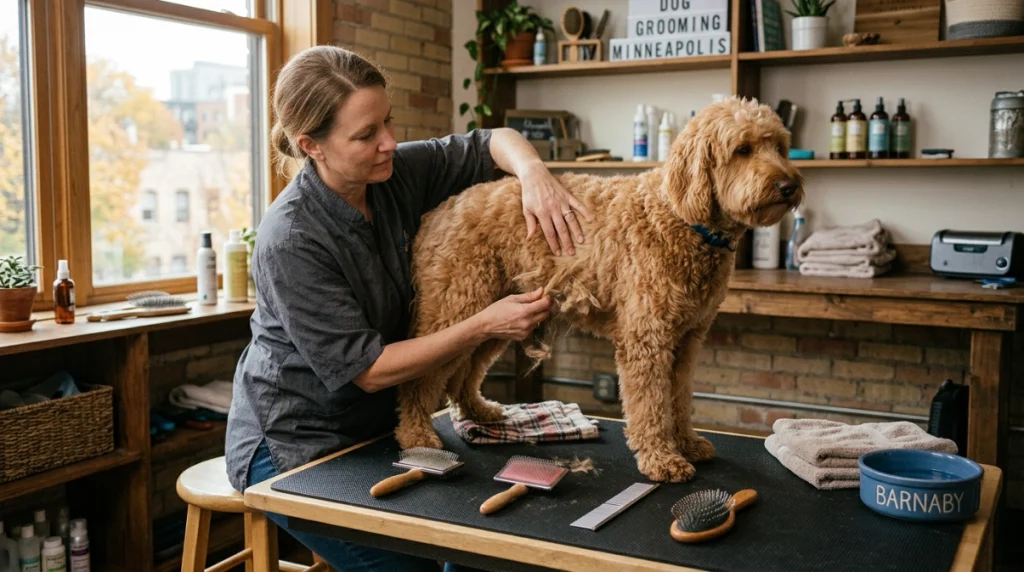
In What Order Should You Use Different Dog Brushes?
 Save
SaveUse the tool that solves the deeper coat problem first, then finish with the gentler surface tool. The exact order changes with coat type.
- Inspect with your hands first. Feel for mats, sore areas, bumps, burrs, or irritated skin before brushing.
- Work on loose undercoat or tangles. Choose the rake, slicker, or other appropriate tool and work in small areas.
- Check your progress. For longer coats, use a comb gently to see whether hidden knots remain.
- Finish the outer coat. Use a pin or bristle brush when appropriate to smooth loose surface hair.
- Check the skin again. Look for redness and stop if your dog appears sore or unusually sensitive.
My practical rule: A grooming session shouldn’t become a contest between the brush and the dog. If you’re pulling harder because the tool isn’t working, change your technique or tool instead.
Can Using Too Many Brush Types Hurt a Dog?
Yes, if you overbrush or use the wrong tool. Owning several brushes isn’t harmful, but repeated aggressive passes can irritate skin or damage hair.
A tool designed to reach dense undercoat can be unnecessary on a thin, smooth coat. Likewise, pressing a slicker hard against the skin can make an otherwise useful tool uncomfortable.
- Don’t press harder for better results. Let the tool do the work.
- Don’t repeatedly scrape one spot. Move methodically through the coat.
- Don’t yank through mats. Tight mats can sit close to delicate skin.
- Don’t assume shedding means endless brushing. Stop once the tool is collecting little loose hair.
- Don’t use damaged brushes. Bent, sharp, or broken pins can scratch the skin.
Severe matting needs extra care because skin can become trapped within the mat. PetMD’s guidance on handling matted coats is a useful reference when ordinary gentle brushing isn’t enough.
How Often Should You Switch Between Brush Types?
You don’t need every tool during every session. Use each brush when its specific job exists.
| Situation | Tool Priority | What You’re Looking For |
|---|---|---|
| Normal maintenance | Regular coat-appropriate brush | Loose hair, debris, early tangles |
| Heavy seasonal shedding | Undercoat or shedding tool if appropriate | Loose undercoat releasing easily |
| Long-coat tangle check | Slicker followed by comb | Comb passing without snagging |
| Bath time on a short coat | Wet-safe rubber grooming brush | Loose hair and dirt lifting gently |
As of 2026, I still prefer this job-based approach over rigid schedules. Coat condition, season, activity, and the individual dog matter more than a universal brushing calendar.
Do Puppies and Sensitive Dogs Need Different Brushes?
Usually, yes. Puppies and dogs that dislike grooming often do better with softer tools, short sessions, and gradual handling practice.
The goal at first is cooperation rather than maximum hair removal. A gentle session that ends well is more useful than pushing until the dog fights the brush.
- Let the dog smell the tool before starting.
- Begin on an easy area such as the shoulder or back.
- Use light strokes and watch body language.
- Keep early sessions brief.
- Reward calm behavior.
- Increase grooming time gradually.
For puppies, AKC grooming guidance recommends beginning early and using a soft brush while the puppy learns to accept handling. That foundation can make a multi-tool grooming routine much easier later.
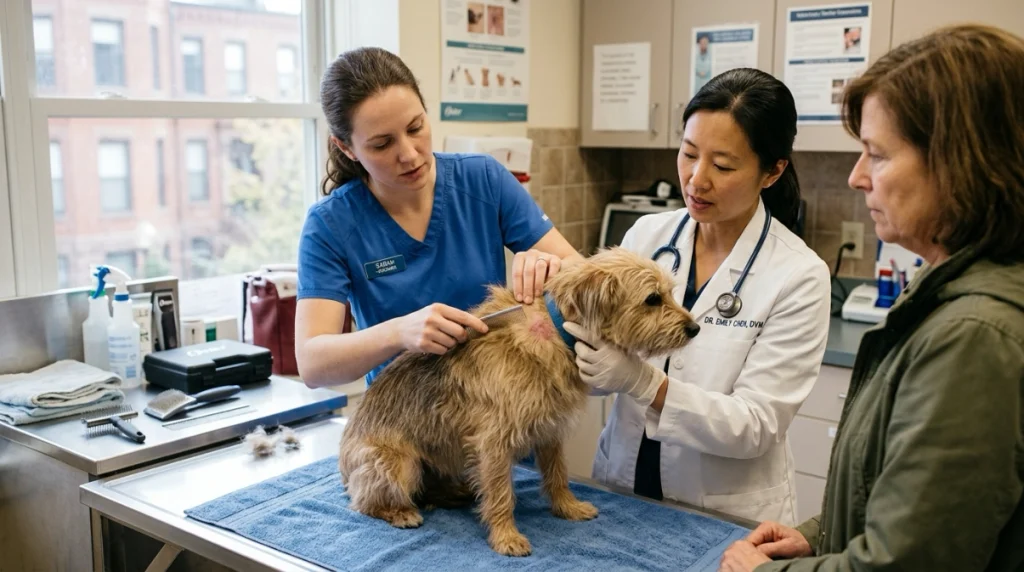
When Should You Ask a Groomer or Veterinarian for Help?
 Save
SaveStop home brushing when the problem looks bigger than routine coat maintenance. Pain, inflamed skin, or tight matting deserves more caution.
- See a professional groomer for extensive mats, breed-specific coat techniques, or a coat you can’t safely work through.
- Contact your veterinarian if brushing reveals sores, strong redness, swelling, unusual hair loss, parasites, or painful skin.
- Get tool advice if you’re unsure whether your dog’s coat is single, double, curly, wire, or another specialized type.
One useful habit is checking the skin whenever you groom. Brushing is not only about removing hair; it also gives you a regular chance to notice changes.
If you’re ready to build a small multi-brush grooming kit, these are three tools I’d consider for distinctly different jobs:
🏆 Best Everyday Slicker
Hertzko Self-Cleaning Slicker Brush
★★★★☆ 4.4/5
Fine angled pins pick up loose hair and help with routine detangling, while the push-button mechanism retracts the pins for easier cleanup. I like this style when convenience matters and a dog’s coat calls for a traditional slicker.
🛁 Best for Short Coats & Baths
KONG ZoomGroom
★★★★★ 4.7/5
Flexible rubber fingers loosen hair while providing a massaging action, and KONG specifies the tool for both dry grooming and shampooing. I’d choose it over a metal brush when working on a short, smooth coat that mainly needs loose-hair removal.
🐕 Best for Loose Undercoat
Safari by Coastal Dog Undercoat Rake
★★★★☆ 4.5/5
Its longer metal pins are designed to reach into medium and long coats and work on loose undercoat and tangles. I’d keep a rake like this for the deeper coat job, then switch to a slicker or pin brush for finishing.
Frequently Asked Questions
Can I use a slicker brush and an undercoat rake on the same dog?
Yes, if your dog’s coat suits both tools. An undercoat rake can remove loose undercoat, while a slicker can work through loose hair and minor tangles in the outer coat. Use gentle pressure and don’t keep raking an area once loose hair stops releasing.
Can I use a pin brush and slicker brush together?
Yes. This combination can work well on many medium and long coats because the slicker handles loose hair and tangles while the pin brush helps smooth the coat. A metal comb can also be useful for checking whether deeper tangles remain.
Do short-haired dogs need more than one brush?
Not always. Many short-haired dogs do well with one rubber grooming brush, short-bristle brush, or grooming mitt. A second finishing brush can help, but adding more tools isn’t necessary unless each one performs a useful job.
Should I use an undercoat rake every time I brush my dog?
No. An undercoat rake is most useful when a suitable double or dense coat contains loose undercoat. Your regular maintenance sessions may need only a gentler brush, especially once heavy seasonal shedding has slowed.
How do I know if I’m brushing my dog too hard?
Watch for redness, flinching, repeated attempts to move away, sudden sensitivity, or irritation after grooming. Brush pressure should stay light and controlled. If a tangle requires force, stop pulling and use a safer method or ask a professional groomer for help.
Final Takeaway: Build a Brush Kit Around the Coat
One dog can absolutely use multiple brush types. In many cases, two complementary tools work better than expecting one brush to detangle, remove undercoat, smooth hair, and finish the coat equally well.
Start with your dog’s coat type and the job that needs doing. Add another brush only when it solves a different problem, and keep every grooming session comfortable.
If you’re unsure, bring your current brushes to your next grooming appointment. Ask which one should touch the undercoat, which should finish the coat, and which one can stay in the drawer.

Thomas Cutter is a lifelong dog owner and the founder of FindOutAboutDogs.com. With over 10 years of hands-on experience owning multiple breeds, Thomas created this site to provide honest, research-based dog advice that real owners can actually trust.
