Dog Brush vs Grooming Glove: What’s the Difference?
Quick Answer
A dog brush is usually better for detangling, reaching through thick coats, removing undercoat, and dealing with mats. A grooming glove is softer and feels more like petting, making it useful for loose surface hair, short coats, bathing, and dogs that dislike conventional brushes. For dense double coats, I usually pair a glove with a more suitable dog brush for thick undercoats rather than relying on the glove alone.
Dog Brush vs Grooming Glove at a Glance
- Deep grooming: A suitable brush can reach deeper into medium, long, or double coats.
- Loose surface hair: Grooming gloves work well for collecting loose fur from many short-haired dogs.
- Detangling: Brushes such as slickers and pin brushes handle tangles better than rubber gloves.
- Sensitive dogs: Gloves can feel less intimidating because your hand stays in contact with the dog.
- Bathing: Rubber-nubbed gloves can massage shampoo through a wet coat while loosening hair.
- Best overall approach: Many dogs benefit from both tools rather than choosing only one.
My Simple Rule
- Choose the tool for your dog’s coat and grooming job, not simply the tool that removes the biggest pile of hair.
Dog brushes and grooming gloves can look like competing tools, but I don’t see them that way. They solve different grooming problems.
Once you understand where each tool works best, choosing between them becomes much easier.


What Is the Difference Between a Dog Brush and a Grooming Glove?
 Save
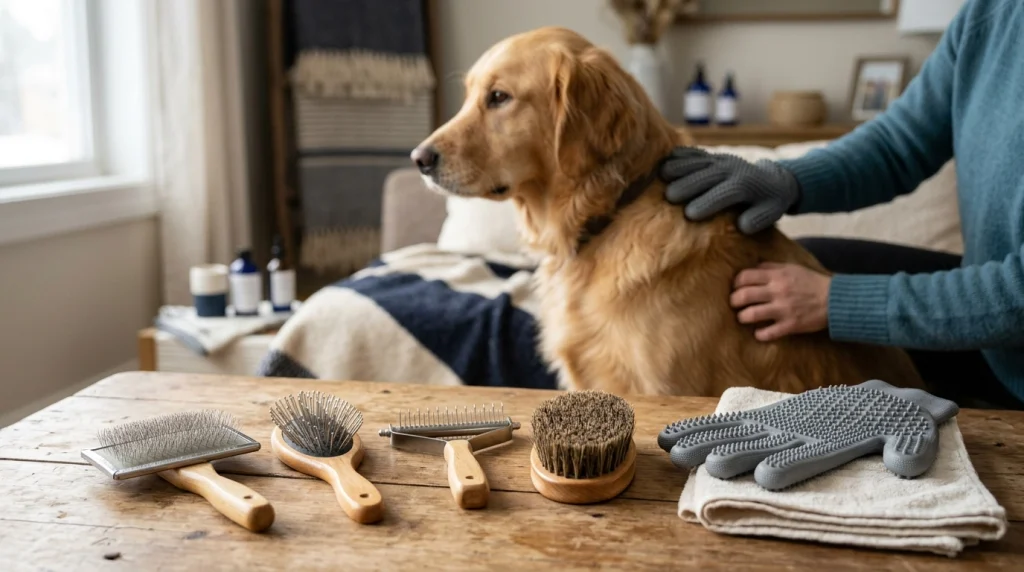
SaveA dog brush uses bristles, pins, wires, teeth, or similar grooming surfaces to work through the coat. A grooming glove fits over your hand and usually uses flexible rubber or silicone-style nodules to collect loose hair while you stroke the dog.
The difference affects how deeply each tool can work.
Definition: A grooming glove is a hand-worn grooming tool with textured projections that loosen dirt and hair as you stroke or massage a dog’s coat.
- Slicker brush: Fine pins help separate hair and work through light tangles.
- Pin brush: Longer pins can move through medium or longer coats.
- Undercoat rake: Longer teeth reach loose hair beneath the outer coat.
- Bristle brush: Shorter bristles can remove surface debris and smooth many short coats.
- Grooming glove: Flexible rubber nodules lift loose surface fur while your hand follows the dog’s body.
The ASPCA’s dog grooming guidance recommends matching brushing technique and frequency to coat type. That’s the principle I use when comparing these tools.
Dog Brush vs Grooming Glove: Which Removes More Hair?
The answer depends on where the loose hair sits. A grooming glove can collect an impressive amount of surface fur, while a suitable brush can reach loose hair deeper in the coat.
This matters most on dense or double-coated breeds.
| Feature | Dog Brush | Grooming Glove |
|---|---|---|
| Surface loose hair | Good to excellent, depending on brush type | Excellent on many short coats |
| Undercoat reach | High with an appropriate rake or long-pin tool | Usually low |
| Detangling | Good with the correct brush | Limited |
| Comfort for nervous dogs | Depends on tool and technique | Often excellent |
| Bath use | Usually not the main purpose | Excellent with wet/dry models |
| Body contour contact | Moderate | Excellent |
I sometimes see owners judge a grooming tool by the mound of fur left beside them. That can be misleading.
A tool should remove hair that’s ready to come out without making the skin sore or damaging healthy coat.
Are Grooming Gloves Better for Short-Haired Dogs?
Grooming gloves are particularly useful on many smooth and short coats because loose hair sits relatively close to the surface. The flexible nubs can grab that hair while massaging the skin.
The ASPCA specifically mentions rubber grooming tools for smooth, short coats.
- Boxers: A glove can collect loose short hairs without requiring deep coat penetration.
- Beagles: Rubber grooming tools can work well for routine surface shedding.
- French Bulldogs: A flexible glove can follow compact body contours easily.
- Great Danes: A glove lets you cover a large smooth-coated body quickly.
- Short-haired mixed breeds: They often respond well when the glove feels like normal petting.
I particularly like gloves when a dog keeps turning around to inspect a traditional brush. A fitted glove changes the feel of the session because I’m touching the dog with my whole hand.
That doesn’t mean every short-haired dog needs only a glove.
Is a Dog Brush Better for Long, Thick, or Double Coats?
Yes, a suitable dog brush is usually more useful when you need to reach through long hair, separate tangles, or remove loose undercoat. A grooming glove often works mainly on the outer surface.
The American Kennel Club’s grooming-tool guidance recommends different tools according to coat length and type.
For example, a Siberian Husky has dense undercoat beneath its outer coat. Surface rubbing won’t replace a tool designed to reach that layer.
If heavy shedding is your main problem, my guide on managing Siberian Husky shedding explains why undercoat removal needs a more targeted approach.
When I Would Choose a Brush First
- Loose undercoat: Use a coat-appropriate undercoat tool.
- Long hair: Choose enough pin length to work through the coat.
- Light tangles: A slicker or pin brush offers more separation than a glove.
- Finishing: Brushes and combs help check whether the coat is fully worked through.
- Mat-prone areas: Use controlled grooming tools rather than rubbing over the surface.
Never force a brush through resistance. A tight mat can pull painfully against the skin.
Are Grooming Gloves Better for Dogs That Hate Brushing?
 Save
SaveThey can be. A grooming glove can feel closer to normal petting than a tool approaching the dog’s body on a handle.
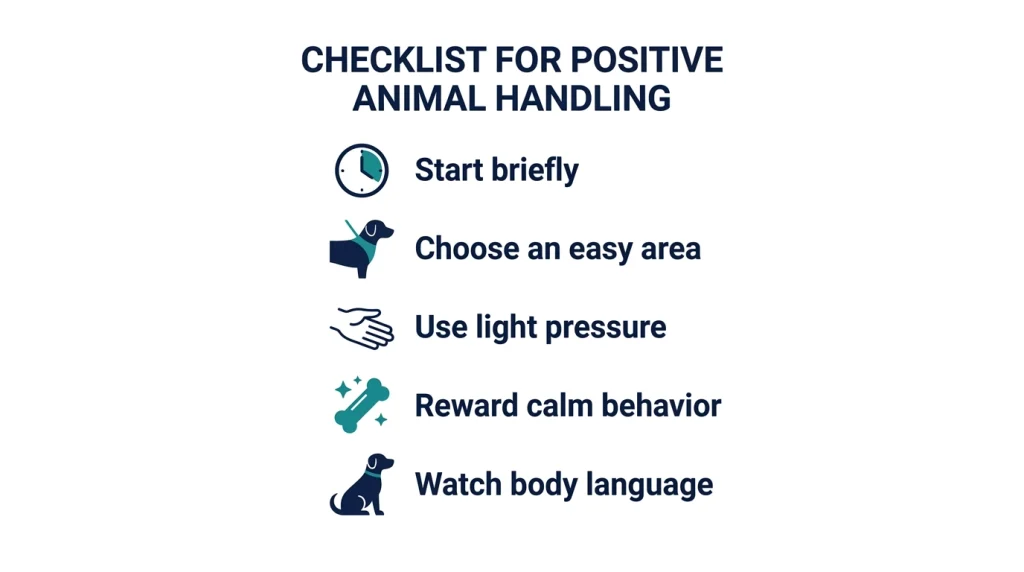
The AKC specifically suggests trying a grooming glove when a dog reacts poorly to a brush in its guidance on dogs that dislike brushing.
- Start briefly: Try a few calm strokes instead of attempting the whole dog.
- Choose an easy area: Begin where your dog already enjoys being touched.
- Use light pressure: More pressure doesn’t automatically remove more useful hair.
- Reward calm behavior: Treats can help build a positive grooming association.
- Watch body language: Stop if your dog repeatedly flinches, moves away, or becomes distressed.
I’ve found that shorter sessions usually beat wrestling through a complete grooming session. The dog learns that grooming has a predictable ending.
Can a Grooming Glove Remove Mats and Tangles?
A grooming glove isn’t a proper mat-removal tool. Its flexible surface is designed mainly for loose hair, massage, bathing, and surface grooming.
A glove may glide over a tangle without addressing what is happening underneath.
| Grooming Job | Tool I Would Reach for First |
|---|---|
| Loose hair on a smooth coat | Rubber grooming glove or rubber brush |
| Light tangles in medium or long hair | Appropriate slicker or pin brush |
| Loose double-coat undercoat | Undercoat rake or suitable deshedding tool |
| Checking your finished work | Coat-appropriate metal comb |
| Bath massage and loose surface fur | Wet/dry grooming glove |
If you find a dense mat close to the skin, don’t blindly cut into it with scissors. Dog skin can be pulled up inside tight mats.
The AKC’s guidance on grooming challenges also emphasizes patient handling of tangles and mats.
Can You Use a Grooming Glove During a Bath?
Yes, if the manufacturer labels the glove for wet use. This is one area where grooming gloves can be more convenient than conventional brushes.
You can massage shampoo through the coat while the rubber nodules loosen dirt and already-loose hair.
- Brush out obvious tangles before getting the coat wet.
- Wet the dog thoroughly with lukewarm water.
- Apply dog shampoo as directed.
- Massage gently with the grooming glove.
- Rinse the coat completely.
- Dry the coat before doing any deeper post-bath brushing.
I like this approach on smooth coats because one tool handles both scrubbing and loose-hair collection.
Should You Own Both a Dog Brush and a Grooming Glove?
 Save
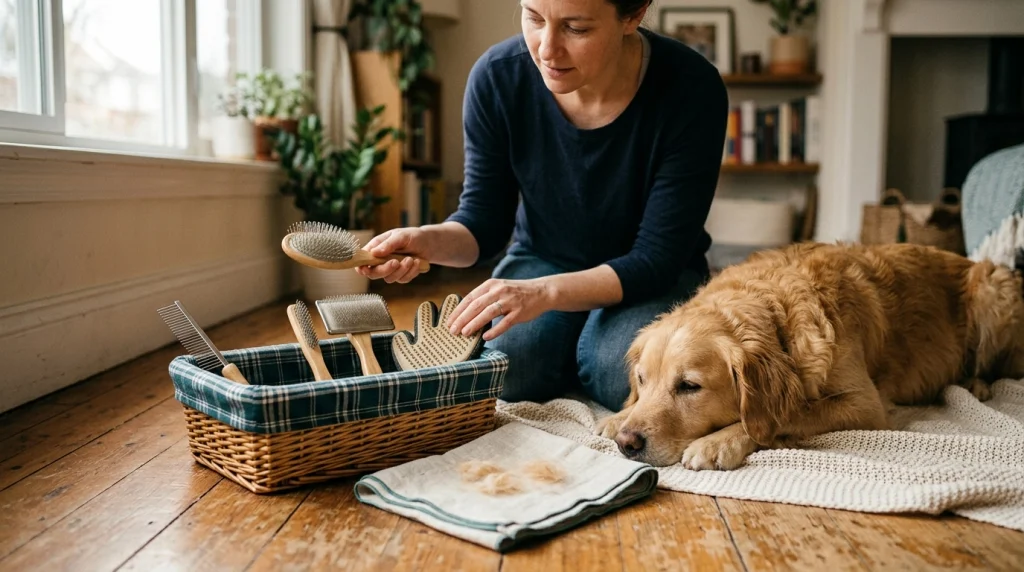
SaveFor many households, yes. A glove can handle comfortable surface grooming while the brush tackles deeper coat maintenance.
You don’t need a huge box of grooming tools, though.
- Short smooth coat: Grooming glove plus a simple bristle or rubber brush may be enough.
- Medium coat: Slicker or pin brush plus a grooming glove can cover most routine jobs.
- Long coat: Use an appropriate brush and comb first; consider the glove an optional finishing tool.
- Double coat: Prioritize an undercoat tool and finishing brush before buying a glove.
- Brush-sensitive dog: Start with the glove and gradually introduce other tools if the coat requires them.
As of 2026, that’s still the most practical way I think about the dog brush vs grooming glove question. Choose by coat depth and grooming task.
If you’re ready to pick one, here are three products I’d consider for different situations:
HandsOn Animal Gloves
★★★★½
These fitted gloves use flexible rubber nodules across the fingers and palms and can be used wet or dry. I’d choose them for hands-on shedding control, bathing, and dogs that respond better to petting-style grooming.
🛁 Best for Short Coats & Baths
KONG ZoomGroom Dog Brush
★★★★☆
This flexible rubber grooming tool is designed to loosen hair and can also be used while shampooing. I like this style for short coats when massage, bathing, and surface shedding matter more than detangling.
✨ Best for Detangling
AKC Self-Cleaning Pet Grooming Slicker Brush
★★★★☆
This slicker-style brush is designed to remove loose fur and work through tangles, with a self-cleaning design for easier hair removal. I’d choose a brush like this when coat separation matters more than the petting feel of a glove.
Frequently Asked Questions
Do dog grooming gloves actually work?
Yes. Grooming gloves can work well for loosening and collecting surface hair, especially on short or smooth coats. They can also be useful during bathing and for dogs that dislike conventional brushes, but they usually don’t replace deeper grooming tools for dense, long, or tangled coats.
Is a grooming glove better than a slicker brush?
Neither is universally better. A grooming glove is better suited to massage, surface shedding, bathing, and gentle handling, while a slicker brush is better for separating hair, removing loose fur from deeper areas, and working through light tangles in suitable coat types.
Can I use a grooming glove every day?
Gentle daily use can be reasonable for many dogs if the skin stays comfortable and the glove doesn’t cause irritation. Keep sessions short, use light pressure, and reduce the frequency if you notice redness, sensitivity, or your dog trying to avoid grooming.
What type of dog brush is best for shedding?
The right brush depends on the coat. Rubber tools can work well on smooth short coats, while dense double coats may need an undercoat rake or another coat-appropriate deshedding tool. Long coats often benefit from suitable slicker or pin brushes plus a comb.
Do grooming gloves work on double-coated dogs?
They can remove some loose surface hair, but they usually don’t reach enough undercoat to serve as the main shedding tool. For breeds such as Huskies, I prefer an appropriate undercoat tool first and use a glove only as an optional finishing or massage tool.
Dog Brush or Grooming Glove: My Final Takeaway
A grooming glove is the easier choice for short coats, bathing, surface shedding, and dogs that prefer being petted. A dog brush becomes more important when you need detangling, deeper coat penetration, or undercoat removal.
I wouldn’t choose based on which tool looks more impressive after one grooming session. Match the tool to your dog’s coat, use gentle pressure, and make comfort part of the result.
For many dogs, the best answer isn’t brush or glove. It’s using each one for the job it handles best.

Thomas Cutter is a lifelong dog owner and the founder of FindOutAboutDogs.com. With over 10 years of hands-on experience owning multiple breeds, Thomas created this site to provide honest, research-based dog advice that real owners can actually trust.
