What Type of Coat Does a German Shepherd Have?
Quick Answer
A German Shepherd typically has a double coat: a protective outer layer over a soft, insulating undercoat. The American Kennel Club breed standard describes the ideal coat as medium-length, dense, and close-fitting.
Key coat features
- Outer guard hairs: These feel firmer than the soft hair underneath.
- Soft undercoat: Fine, dense hair sits closer to the skin.
- Length variations: German Shepherds can have standard or long double coats.
- Regular shedding: Expect loose hair throughout the year, with heavier seasonal periods.
Quick check: Gently part the shoulder fur to look for softer hair beneath the longer outer strands.
If you’re looking at a fluffy German Shepherd and wondering which brush belongs in your hand, start with the coat layers. I’ll explain the differences that matter for grooming, including why a smooth-looking surface can hide loose hair underneath.


What does a double coat mean?
 Save
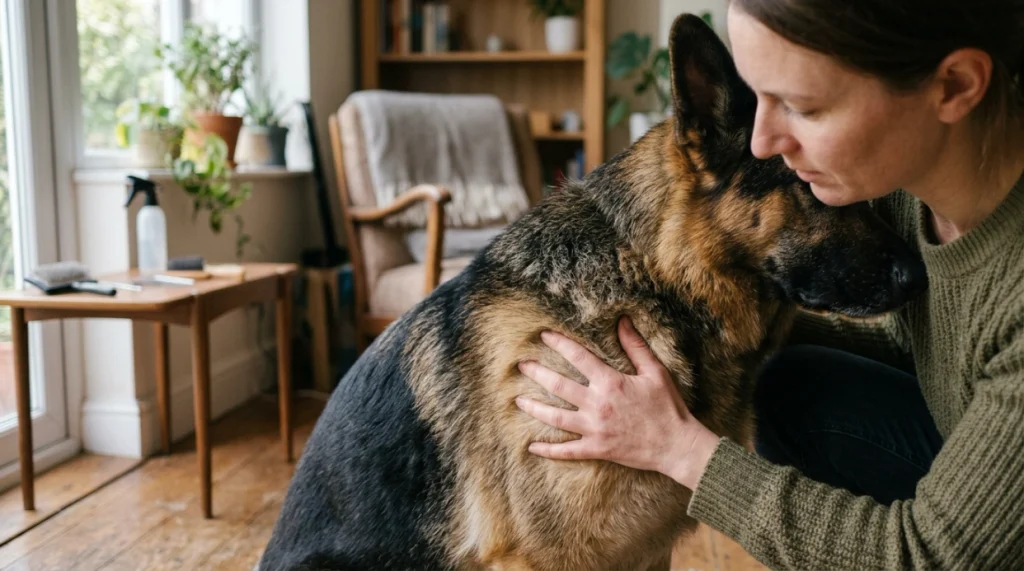
SaveA double coat is a coat with two distinct layers: outer guard hairs and a finer undercoat. The layers differ in texture and serve different protective roles.
- Guard hairs: The longer outer strands form the coat’s visible surface.
- Undercoat: Shorter, softer hairs create a dense layer near the skin.
For brush shopping, I think of these as two separate grooming jobs. The surface needs tidying, while loose hair underneath needs gentle removal.
A brush that glides across the back may only touch the outer layer. That doesn’t automatically mean the whole coat is clear.
How can you check the layers at home?
Examine a small section when your dog is relaxed and the coat is dry. Good daylight makes the different hair textures easier to see.
- Choose an easy area, such as the shoulder or side.
- Separate the longer hair gently with your fingertips.
- Look for finer, softer hair closer to the skin.
- Stop if your dog seems uncomfortable or the skin looks sore.
Undercoat thickness varies between dogs and across seasons. A thinner-looking layer after heavy shedding doesn’t prove your dog has a single coat.
Do long-haired German Shepherds have a double coat?
Long-haired German Shepherds can have a double coat. Long hair alone doesn’t mean the undercoat is missing.
The Fédération Cynologique Internationale breed standard recognizes standard and long double coats, both with undercoat. It also distinguishes long hair without undercoat as outside that standard.
- Standard coat: A closer-fitting outline with firmer outer hair.
- Long double coat: Softer, longer outer hair with more obvious feathering.
- Individual variation: A dog’s actual coat needs inspection, especially when breed history is uncertain.
Feathering means the longer hair around areas such as the ears and legs. That extra length gives tangles more places to form.
Standard coat versus long coat: grooming comparison
| Feature | Standard double coat | Long double coat |
|---|---|---|
| Layers | 2: outer coat and undercoat | 2: outer coat and undercoat |
| Outer texture | Firm and close-fitting | Longer, softer, less close-fitting |
| Extra-length areas | Neck and backs of legs | Ears, neck, legs, and bushy tail |
| Grooming emphasis | Removing loose undercoat | Removing loose undercoat and checking feathering |
| Useful tool combination | Suitable rake and checking comb | Slicker, suitable rake, and checking comb |
Neither coat variety is a low-shedding option. Choose tools for your dog’s actual density and length, rather than the label alone.
Why do German Shepherds shed so much?
German Shepherds shed as old hairs leave the coat and new growth replaces them. Their dense undercoat makes that normal process especially noticeable.
A heavier seasonal release is often called blowing coat. Soft tufts may become easier to lift out during these periods.
- Between seasonal sheds: Some loose hair around the home remains normal.
- During heavier shedding: Short, more frequent grooming sessions can help manage loose fur.
- After brushing: More hair can appear later because grooming doesn’t stop the growth cycle.
I wouldn’t judge a brushing session by the size of the pile on the floor. A comfortable dog and a coat that separates easily are more useful goals.
When is shedding a reason to call the vet?
Shedding alongside skin changes deserves closer attention. Don’t treat patchy hair loss as a reason to use a stronger brush.
- Bald patches or areas that are becoming visibly thinner.
- Persistent scratching, chewing, or licking.
- Redness, sores, crusts, or an unusual smell.
- A sudden coat change alongside reduced energy or appetite.
Veterinary guidance on healthy skin and coat appearance explains that nutrition and illness can affect fur quality. Arrange a veterinary assessment when shedding comes with these changes.
What type of brush does a German Shepherd need?
 Save
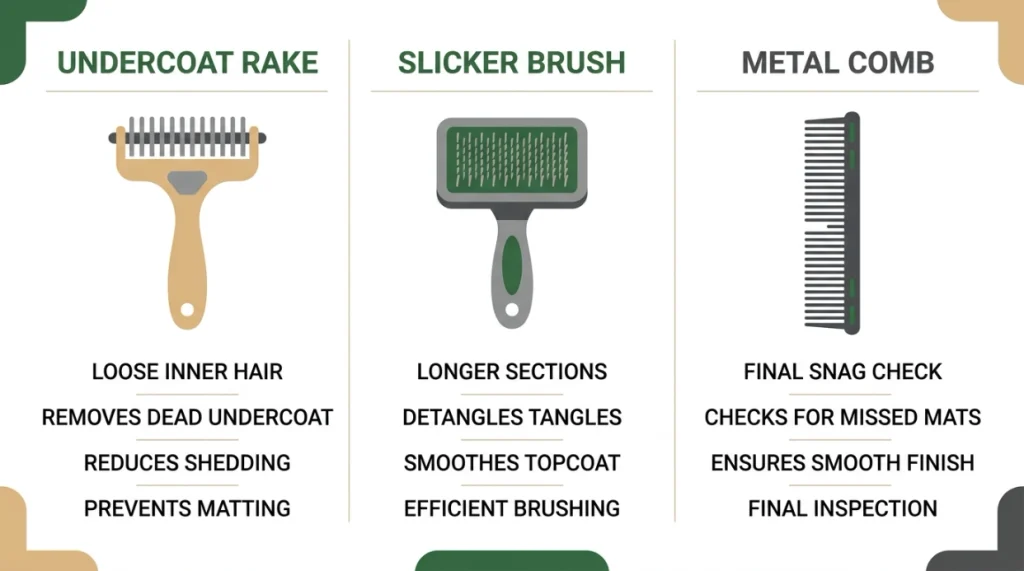
SaveA suitable undercoat rake can help with loose inner hair, while a slicker helps manage longer sections. A metal comb provides a useful final check for remaining snags.
As you compare brushes in 2026, focus on tooth design and comfortable handling before self-cleaning features. A convenient release button can’t compensate for poor coat reach.
- Undercoat rake: Choose teeth suited to the coat depth, without needing to press against the skin.
- Slicker brush: Fine pins help separate longer hair when used with a light hand.
- Metal comb: Use the wider spacing first to check small, already-brushed sections.
- Soft bristle brush: Useful for a surface finish, but limited for dense undercoat work.
Is an undercoat rake the same as a deshedding tool?
These names overlap in shops, but the designs can differ. A pin-style rake isn’t the same tool as a toothed deshedding edge.
Some products also have curved cutting teeth intended for dematting. Read the description carefully before putting any tool through your dog’s coat.
- Check whether the tool uses pins, an edge, or cutting teeth.
- Follow the maker’s directions for coat length and frequency.
- Ask a groomer to demonstrate unfamiliar tools.
- Stop if you see broken hairs, redness, or discomfort.
I would start with the least aggressive tool that completes the job comfortably. More hair removal isn’t automatically better grooming.
How often should you brush a German Shepherd?
Brushing every other day is a reasonable starting point for many German Shepherds. Adjust that routine to shedding, tangles, and your dog’s tolerance.
The American Kennel Club’s German Shepherd grooming guide describes different breeder routines, including more frequent care during heavy shedding. There isn’t one schedule that suits every coat.
- Manageable coat: Begin with brief sessions every other day.
- Heavy shedding: Consider a gentle daily check and targeted brushing.
- Long feathering: Check friction areas between full grooming sessions.
- Sensitive skin: Ask your vet or groomer to help adapt the routine.
Frequent brushing doesn’t mean daily use of every tool. A deshedding edge may have different instructions from a simple brush or comb.
A gentle brushing routine to follow
Work in small sections so you can see what the brush is doing. Keep the first session short enough that your dog stays relaxed.
- Set up securely: Use a stable, nonslip surface and keep treats within reach.
- Check the skin: Look for sore areas before brushing.
- Part a section: Lift the upper hair gently to expose a small layer beneath.
- Brush lightly: Follow the direction of growth without scraping the skin.
- Check with a comb: Stop at resistance rather than pulling through it.
- Move or pause: Change sections once the hair moves freely, and offer breaks.
My practical rule is to let resistance guide the next step. If a comb catches behind an ear, work on that small area gently instead of repeating full-body strokes.
For example, a smooth back and a snagging tail call for different attention. Spend the remaining grooming time where the coat needs it.
Which areas are easiest to miss?
Longer hair and areas exposed to rubbing deserve deliberate checks. They can need attention even when the rest of the coat looks tidy.
- Behind the ears.
- Under a collar or harness.
- Around the armpits.
- Along the backs of the thighs.
- Through the longer tail hair.
Don’t cut a tight mat with scissors near the skin. Ask a professional groomer to assess mats that won’t separate gently.
Should you shave a German Shepherd in summer?
 Save
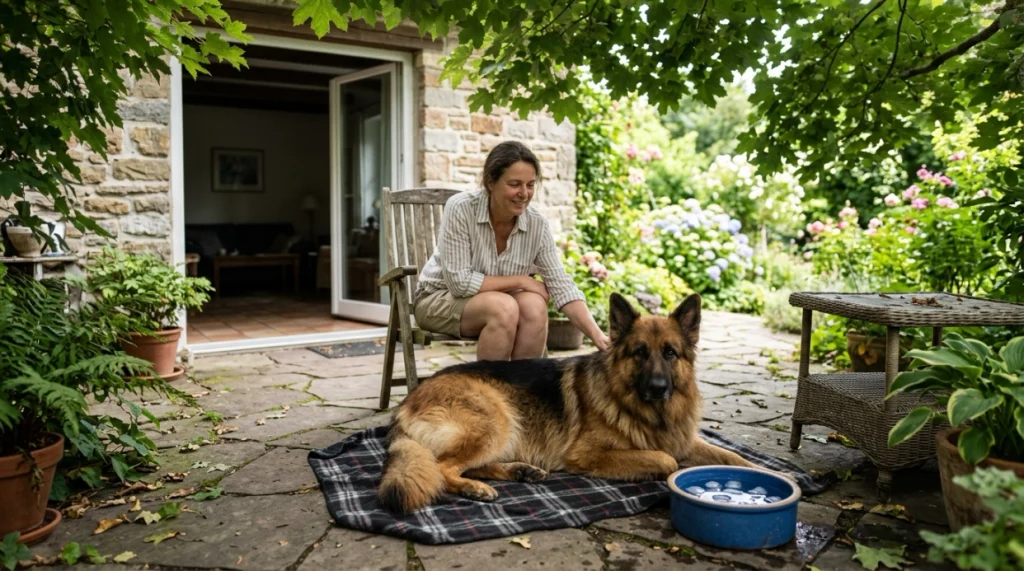
SaveRoutine shaving isn’t recommended for a German Shepherd’s double coat. It removes protective hair and can lead to uneven regrowth.
The American Kennel Club’s guidance on summer shaving explains the risks for double-coated dogs. Necessary clipping for medical treatment or severe matting is a separate decision.
- Keep loose undercoat from building up.
- Provide shade and fresh drinking water.
- Choose cooler times for exercise.
- Use cool indoor space during hot weather.
A double coat doesn’t make a dog immune to overheating. Grooming supports comfort, but it cannot replace sensible heat management.
Does a German Shepherd need regular haircuts?
A healthy German Shepherd usually needs brushing more than all-over trimming. Ask a groomer about any small hygiene trims your individual dog requires.
Before booking an appointment, explain the goal clearly. “Bath, brush, and remove loose undercoat” describes a different service from a short haircut.
- Discuss any mats before work starts.
- Explain areas your dog dislikes having handled.
- Ask which tools the groomer recommends for home maintenance.
Brush options for a German Shepherd’s coat
If you’re building a grooming kit, these two tools address different jobs. I’d choose based on the coat section that needs help.
The scores below are editorial suitability ratings based on design, not customer averages or hands-on test results. Neither tool should be forced through tight mats.
Affiliate disclosure: As an Amazon Associate, I earn from qualifying purchases.
🪮 For loose undercoat
FURminator Grooming Rake
★★★★☆ — Editorial suitability: 4/5
Rotating metal teeth target loose undercoat in thicker fur. I’d consider this rake for dense body sections, while checking that its teeth suit the individual coat.
Trade-off: This isn’t the brand’s edged deshedding tool, and it won’t replace careful work around small tangles.
🧹 For easy brush cleanup
Hertzko Self-Cleaning Slicker Brush
★★★☆☆ — Editorial suitability: 3/5
Retractable bristles make collected hair easier to remove from the brush. I’d consider it for light brushing and longer sections, then check the coat with a comb.
Trade-off: Its usefulness depends on coat depth, and the fine pins require light pressure.
Frequently asked questions
Do short-haired German Shepherds have an undercoat?
A standard-coated German Shepherd normally has an undercoat, even when the outer hair looks relatively short. Check for the softer layer beneath the guard hairs rather than assuming a neat outline means a single coat.
Does a black German Shepherd have a different coat type?
Black describes coat color, not the number of coat layers. Choose grooming tools by checking the dog’s hair length, density, and texture; a black coat doesn’t require a special brush simply because of its color.
Can you brush a German Shepherd too much?
Yes, repeated strokes or heavy pressure can irritate the skin and damage hair. Stop when a section moves freely, and follow the tool’s instructions instead of continuing until no more fur comes out.
Can a slicker brush replace an undercoat rake?
A slicker may handle much of the brushing on some German Shepherds, but coat depth affects its reach. Check brushed sections with a comb, and ask a groomer whether another tool would help if loose undercoat remains trapped.
Will brushing stop German Shepherd shedding?
Brushing removes loose hair before some of it reaches your furniture, but it won’t stop normal shedding. Aim for manageable maintenance and comfortable skin rather than a hair-free house, especially during heavier seasonal coat changes.
Start with the layers, then choose the brush
A German Shepherd’s coat needs care at the surface and underneath. Start by parting a small section and checking its texture.
- Match the tool to the coat’s depth.
- Use light pressure and short sessions.
- Check longer sections for hidden tangles.
- Get help with tight mats or unhealthy skin.
For your next grooming session, focus on one comfortable, snag-free section at a time. That gives you a clear goal without chasing every last loose hair.

Thomas Cutter is a lifelong dog owner and the founder of FindOutAboutDogs.com. With over 10 years of hands-on experience owning multiple breeds, Thomas created this site to provide honest, research-based dog advice that real owners can actually trust.
