How Does Dog Brushing Benefit Dogs? 6 Key Benefits
Quick Answer
Dog brushing benefits dogs by removing loose hair and debris, reducing tangles, helping prevent mats, and giving you a regular chance to inspect the skin and coat. The exact benefit depends on coat type, which is why a consistent dog brushing schedule matched to the coat is more useful than following one routine for every dog.
The main benefits of brushing
- Loose hair control: Brushing collects shed hair before more of it ends up in the coat or around your home.
- Tangle prevention: Regular grooming can catch small knots before they tighten into difficult mats.
- Skin checks: Parting and brushing the coat makes it easier to notice bumps, irritation, debris, or other changes.
- Coat maintenance: The right brush helps keep the coat separated, cleaner-looking, and easier to manage.
- Routine handling: Calm, gentle sessions can help many dogs become more comfortable with regular grooming.
A practical tip
- Match the tool to the coat: A slicker, pin brush, bristle brush, rubber brush, comb, and undercoat tool do different jobs.
Brushing often gets treated as a simple way to remove dog hair from furniture. After years of living with dogs and working through different coat types, I see it as much more useful than that.
A good brushing routine is regular preventive care. It helps you manage loose coat, spot problems earlier, and keep small tangles from becoming painful grooming projects.


What Does Dog Brushing Actually Do?
Dog brushing is the process of using a coat-appropriate grooming tool to remove loose hair, separate the coat, loosen minor tangles, and inspect the dog from the outside. The best results come from gentle technique rather than force.
Brushing does not perform exactly the same job on every dog. A rubber grooming brush may work mainly on loose surface hair, while a slicker and comb may be part of a much deeper routine for a curly or long coat.
- Short coats: Brushing often focuses on loose hair, surface debris, and regular skin checks.
- Long coats: The routine can help separate hair and prevent developing tangles.
- Curly coats: Frequent brushing may stop shed hairs from remaining trapped and forming mats.
- Double coats: Brushing helps manage loose outer hair and seasonal undercoat.
- Dense coats: The correct tool can reach farther through the coat than a basic surface brush.
That difference matters. Choosing a brush based only on a dog’s size or a product’s marketing claims can make grooming less effective and less comfortable.
How Does Brushing Help Remove Loose Hair?
One of the clearest benefits of dog brushing is loose-hair removal. Dogs naturally shed as old hairs are released and new growth continues.
A suitable brush catches some of that hair before it spreads through the home or becomes trapped within a longer coat. This is especially noticeable during heavier seasonal shedding.
For short-haired dogs, I often prefer a rubber curry-style tool or grooming mitt because it can loosen surface hair without needing rows of fine metal pins. A bristle brush can also help smooth the coat afterward.
Dense double coats usually need a different approach. Loose undercoat can build beneath the visible outer layer, so the grooming tool needs to suit that coat structure.
| Coat Type | Main Brushing Benefit | Useful Starting Tool | Main Thing to Watch |
|---|---|---|---|
| Short and smooth | Loose surface hair and debris | Rubber brush or grooming mitt | Using unnecessarily harsh pins |
| Medium or dense | Loose coat and small tangles | Suitable slicker or pin brush | Repeated brushing over one spot |
| Long or silky | Tangle prevention and coat separation | Pin brush plus comb | Hidden knots near the skin |
| Curly or woolly | Preventing trapped loose hair and mats | Slicker plus metal comb | Only brushing the surface |
| Double coat | Managing loose seasonal coat | Coat-appropriate brush and undercoat tool | Excessive pressure on the skin |
Can Regular Brushing Help Prevent Mats and Tangles?
 Save
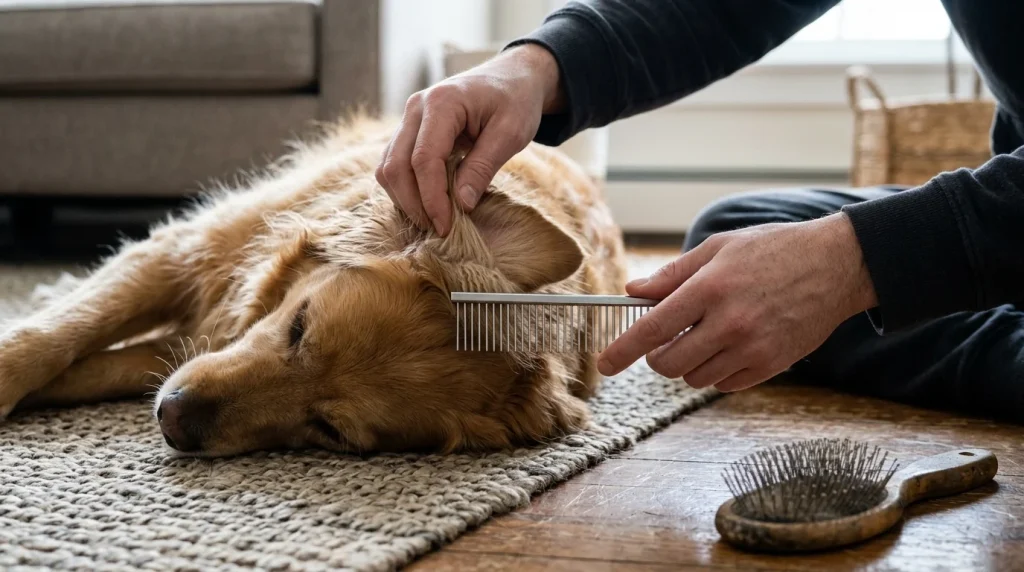
Yes. Regular brushing can help prevent many small tangles from becoming tighter, larger mats.
Loose hairs, friction, moisture, outdoor debris, and coat movement can all contribute to knots. Longer and curly coats are especially likely to trap shed hair instead of simply dropping it.
I pay extra attention to places where friction happens repeatedly. Behind the ears, under the front legs, around collars, and along feathered legs can develop trouble surprisingly quickly.
A useful habit is to check the coat in sections instead of only brushing the visible top layer. A dog can look perfectly brushed while a knot remains closer to the skin.
For many longer coats, a metal comb works well as a final check after brushing. If it repeatedly catches in one place, slow down rather than pulling harder.
For a more detailed inspection routine, our guide on checking a dog coat for hidden mats explains where small tangles commonly hide.
Does Brushing Help You Notice Skin and Coat Problems?
Regular brushing gives you a reason to look closely at areas you might otherwise miss. That is one of the benefits I consider most valuable.
As the coat separates, you may notice changes such as unusual debris, irritated patches, bumps, tenderness, or a section of coat that suddenly feels different. Brushing is not a veterinary diagnosis, but it can help you notice that something deserves attention.
- Check the skin: Look for unusual redness, sores, or irritation while parting the coat.
- Feel for changes: Notice new bumps, tender areas, or unusual thickened spots.
- Watch the dog: Flinching or sudden discomfort may mean the area needs a closer look.
- Inspect problem zones: Check under collars, harnesses, ears, legs, and other friction areas.
If your dog suddenly becomes sensitive to brushing, do not assume the brush is the only problem. Pain, skin issues, or another physical problem can also make normal handling uncomfortable.
Stop if brushing appears painful and seek professional advice when you notice significant skin changes, sores, severe matting, or unexplained sensitivity.
Does Dog Brushing Improve Comfort?
For many dogs, proper brushing improves comfort simply by removing loose material and preventing coat problems from getting worse. The key word is proper.
A gentle, suitable brush can make routine grooming feel predictable. An unsuitable tool or aggressive technique can do the opposite.
I never judge a successful session by how much hair came out. I judge it by whether the dog stayed comfortable and whether the coat was properly checked.
Gentle brushing matters more than aggressive brushing.
If your dog repeatedly flinches, turns toward the tool, tries to leave, or becomes tense, reduce pressure and reassess the brush and technique.
Short sessions can also be easier for dogs that dislike grooming. Ending before frustration builds often produces better long-term cooperation than trying to finish every part of the coat in one sitting.
Can Brushing Become a Positive Routine for Dogs?
 Save
It can. Calm brushing gives dogs repeated practice with being touched, handled, and groomed in a predictable way.
That does not mean every dog will automatically enjoy brushing. Some dogs need a slow introduction before they can relax around a grooming tool.
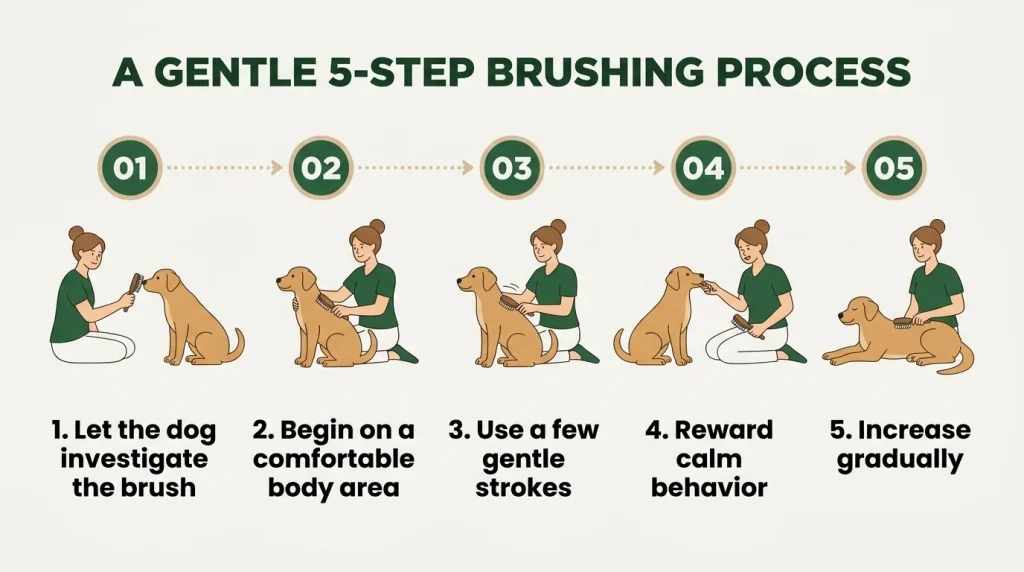
Start with simple steps:
- Let the dog investigate the brush without immediately using it.
- Begin on a comfortable body area such as the shoulder or back.
- Use a few gentle strokes instead of starting with a long session.
- Reward calm behavior with praise or an appropriate reward.
- Increase gradually as the dog becomes more comfortable.
Dogs that have never been groomed may need extra patience. Our guide on how to brush a dog that has never been groomed covers a gradual approach.
Which Dog Brush Gives the Most Benefits?
There is no single best brush for every dog. The most beneficial brush is usually the one that matches the dog’s coat and the job you need to do.
Slicker brush
A slicker brush is often useful for medium, long, curly, dense, or tangle-prone coats. Its fine pins can help separate hair and collect loose coat.
It requires a light hand. Repeatedly scraping fine pins against the skin can cause irritation.
Pin brush
A pin brush is commonly useful for longer, flowing coats and routine coat maintenance. It can be a gentler everyday option for some dogs when used correctly.
It may not be enough by itself for every dense coat or hidden tangle. A comb can provide a useful finishing check.
Bristle brush
Bristle brushes are generally better suited to shorter or smoother coats. They can help collect surface hair and tidy the outer coat.
They usually do not replace a detangling tool for a long or curly coat. Tool choice should follow coat structure.
Rubber grooming brush
Rubber brushes and grooming mitts are popular starting points for many short-coated dogs. Flexible teeth can loosen shed hair with broad contact.
They are not designed to solve serious tangles. A different tool may be needed when the coat becomes more complex.
Metal comb
A comb is often less about collecting piles of loose hair and more about checking your work. It can reveal tangles that remain after the outer coat looks smooth.
Never force a comb through a tight mat. Resistance is a signal to stop and deal with the problem carefully.
How Often Should You Brush Your Dog?
Brushing frequency depends mainly on coat length, texture, density, shedding, and how quickly tangles form. There is no universal schedule that works for every dog.
As a practical 2026 starting point, many short smooth coats can be brushed about once or twice weekly. Long, curly, silky, or easily matted coats may need attention several times weekly or even daily.
- Short smooth coat: Often starts around one or two sessions each week.
- Medium shedding coat: Often benefits from two or three sessions weekly.
- Long silky coat: Usually needs more frequent checks for developing tangles.
- Curly coat: May require frequent brushing and combing because shed hairs can remain trapped.
- Double coat: Often needs more grooming during heavy seasonal shedding.
Adjust the routine based on what you actually see. If tangles form between sessions, the schedule needs to change.
Breed names can provide clues, but coat type is the better starting point. You can also learn more about how breed and coat characteristics affect grooming frequency.
What Are the Biggest Mistakes When Brushing a Dog?
 Save
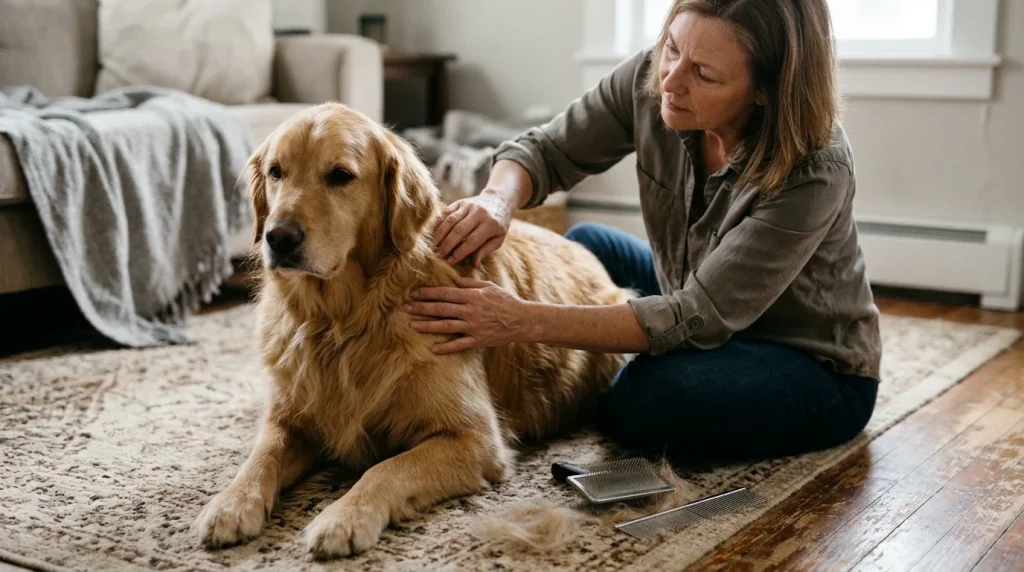
Most brushing problems come from using too much force, the wrong tool, or an inconsistent routine. Fortunately, the common mistakes are usually easy to correct.
- Brushing too hard: More pressure does not make a grooming tool more effective.
- Using one brush for everything: Some dogs benefit from different tools for different jobs.
- Only brushing the surface: Longer coats can hide tangles underneath a smooth-looking outer layer.
- Ignoring warning signs: Flinching and repeated discomfort should never be brushed aside.
- Waiting too long: Small tangles are usually easier to manage than mature mats.
- Forcing through resistance: Pulling harder can hurt the dog and make future grooming more difficult.
I also avoid turning brushing into a battle. A shorter, calmer session is usually more productive than trying to finish everything while the dog is frightened or uncomfortable.
Dog Brushes I Would Consider for a Simple Grooming Routine
If you’re ready to choose a tool, I would keep the decision simple: match the brush to your dog’s coat and avoid buying several tools that do exactly the same job.
Best for curly and tangle-prone coats
Hertzko Self-Cleaning Slicker Brush
★★★★☆
Fine wire pins and a retractable-pin cleaning design make this style useful for collecting loose hair and working through suitable medium or longer coats. I would choose this type when easy cleanup and regular slicker use are priorities.
Best finishing comb
Andis Steel Pet Comb
★★★★★
A steel comb is useful for checking whether longer hair is truly detangled after brushing. I like adding one to a grooming kit because it can reveal hidden resistance that a surface brush misses.
Best for short-coat grooming
KONG ZoomGroom
★★★★☆
Flexible rubber teeth make this style a straightforward option for loosening loose hair on many short-coated dogs. I would consider it when you want broad, simple grooming contact without relying on fine metal pins.
Frequently Asked Questions About Dog Brushing
Does brushing a dog make its coat healthier?
Brushing helps maintain the coat by removing loose hair, separating strands, and preventing some tangles and debris from building up. It does not replace proper nutrition, veterinary care, or treatment for an underlying skin or coat condition.
Do short-haired dogs still need brushing?
Yes. Short-haired dogs still shed and can benefit from routine loose-hair removal and skin checks. A rubber grooming tool, mitt, or suitable bristle brush is often a better starting choice than a harsh detangling brush.
Can brushing reduce dog hair around the house?
Regular brushing can collect loose hair before some of it ends up on floors, furniture, and clothing. It will not stop normal shedding completely, but increasing brushing during heavier shedding periods can help manage the amount of loose coat.
Can you brush a dog too much?
Yes, excessive or aggressive brushing can irritate the skin or damage the coat. The right frequency depends on coat type, and repeatedly brushing the same area with too much pressure is more likely to cause problems.
Should I brush my dog before or after a bath?
Checking for tangles before bathing is often useful because water can make existing mats more difficult to manage. The best routine still depends on the dog’s coat type and condition, especially when significant tangling is already present.
Final Thoughts: Why Brushing Is Worth Making a Routine
So, how does dog brushing benefit dogs? At its best, brushing removes loose hair, helps prevent tangles and mats, supports regular skin and coat checks, and makes routine grooming easier to manage.
The biggest lesson is simple: consistency beats force. Choose a brush that suits your dog’s coat, use gentle pressure, and deal with small coat problems before they become difficult ones.
A few calm minutes on the right schedule can do more for a dog’s grooming routine than an occasional marathon session. Watch your dog’s coat, adjust when shedding or tangling changes, and let the coat—not a rigid rule—guide your routine.

Thomas Cutter is a lifelong dog owner and the founder of FindOutAboutDogs.com. With over 10 years of hands-on experience owning multiple breeds, Thomas created this site to provide honest, research-based dog advice that real owners can actually trust.
