How to Brush a Dog That Has Never Been Groomed
Quick Answer
To brush a dog that has never been groomed, start by teaching the dog that the brush predicts something pleasant. Let your dog investigate the tool, pair gentle contact with treats, then progress from one short stroke to several comfortable strokes over multiple sessions. The gradual grooming-handling approach from Best Friends Animal Society follows this same basic progression.
Quick steps for the first brushing sessions
- Choose a calm moment: Start when your dog is relaxed rather than excited, hungry, or ready to play.
- Introduce the brush: Put it nearby and reward calm sniffing or investigation.
- Touch before brushing: Briefly touch the brush to the shoulder, then give a small treat.
- Try one stroke: Make one gentle stroke in the direction the coat grows and reward immediately.
- Add strokes slowly: Progress only while your dog stays comfortable.
- Stop before resistance: A short successful session is better than forcing a full-body brushing.
Most important rule
- Never hold the dog down just to finish brushing. If the coat is tightly matted or your dog may bite, get help from a veterinarian or experienced professional groomer.
If your dog has reached adulthood without regular grooming, the brush itself may feel strange or threatening. I treat that first session as a training exercise, not a coat-cleaning mission.
The goal is simple: create enough trust that proper brushing becomes possible later. Here’s how to do that without turning grooming into a wrestling match.


What Does It Mean to Brush a Dog That Has Never Been Groomed?
 Save
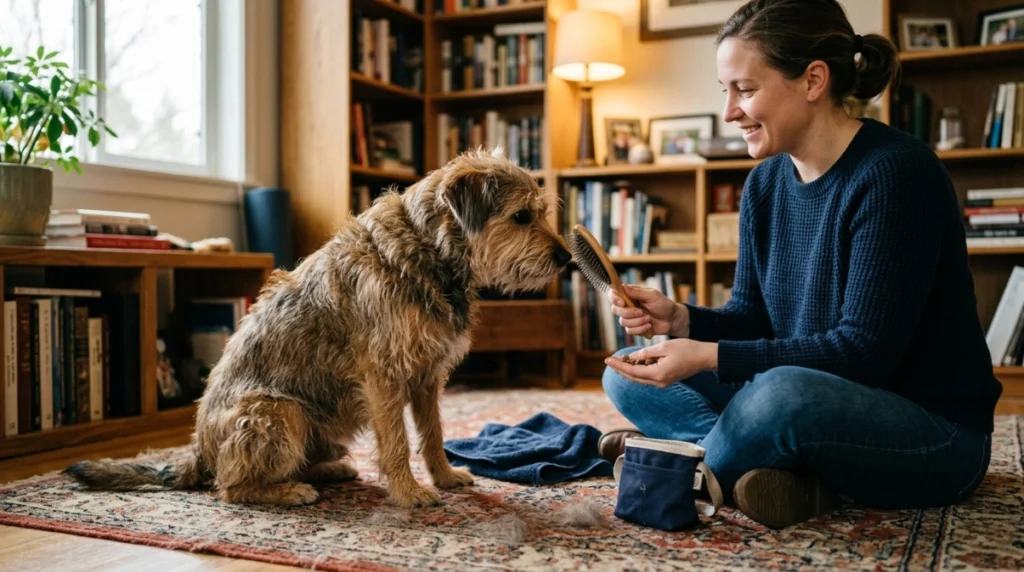
SaveBrushing a grooming-naive dog means introducing coat care in small, tolerable steps before expecting a normal grooming session. The first priority is teaching comfort with handling, the brush, and gentle coat movement.
A dog can dislike brushing even when the brush itself does not hurt. Unfamiliar restraint, pulling sensations, sensitive areas, previous discomfort, or simple lack of exposure can all make grooming difficult.
Grooming desensitization is the process of exposing a dog to grooming sensations gradually enough that the dog can remain comfortable. You pair those small exposures with something the dog values, such as food or calm praise.
- Desensitization: Introduce the brush in small, manageable stages.
- Positive association: Pair the brush with treats, praise, or another reward.
- Gradual progression: Increase touching, strokes, body areas, and session length slowly.
- Choice and comfort: Stop when the dog becomes too worried instead of pushing through resistance.
How Do You Brush a Dog for the First Time?
Start with a brush introduction, not a complete grooming session. Your first few sessions may contain only seconds of actual brushing.
1. Pick a quiet place and a relaxed time
Choose a familiar room with good footing and little noise. Avoid starting immediately after exciting play, visitors, or another stressful event.
Keep several tiny treats within reach. You want rewards close enough that you can reinforce calm behavior immediately.
2. Let your dog see and sniff the brush
Hold the brush at a comfortable distance or place it on the floor. Let your dog approach without pushing the brush toward the face.
- Look at the brush calmly → reward.
- Move toward the brush → reward.
- Sniff the brush → reward.
- Stay relaxed while you pick it up → reward.
Do not worry if that is all you accomplish on day one. A dog that willingly investigates the brush has already made progress.
3. Touch the dog with the back of the brush
Before pulling bristles through the coat, gently touch the smooth side of the brush to an easy area such as the shoulder. Remove it and reward.
Repeat only a few times. If your dog stays loose and interested in the reward, move to the next stage.
4. Make one short brushing stroke
Use almost no pressure and brush in the direction the hair naturally lies. Make one short stroke, lift the brush away, and reward.
I would rather finish after three relaxed strokes than force thirty nervous ones. Early success makes the next session much easier.
5. Increase the number of strokes gradually
Once one stroke is easy, try two. Later, try three or four before giving the reward.
- One short stroke and reward.
- One longer stroke and reward.
- Two comfortable strokes and reward.
- Several strokes across one easy body area.
- Slowly add new areas during later sessions.
This gradual progression closely matches handling guidance used for dogs learning to tolerate grooming and veterinary care.
Which Dog Brush Should a Beginner Use?
 Save
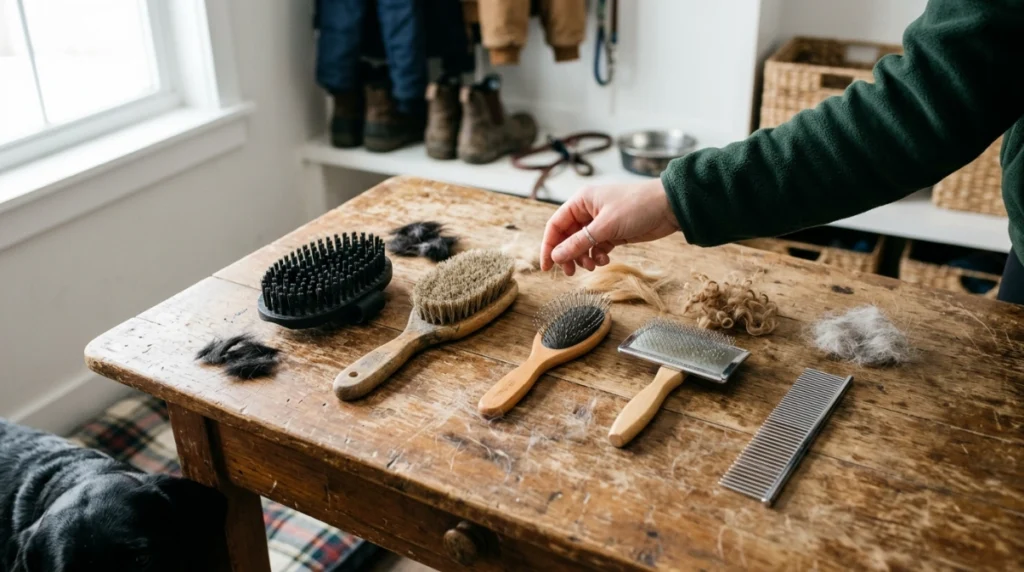
SaveThe best first brush depends on coat type and sensitivity. A tool that works beautifully on a Labrador may be frustrating on a Poodle or long-coated spaniel.
The American Kennel Club notes that brush choice should match the dog’s coat. Regular brushing also gives you a chance to notice skin problems, cuts, or sore areas while removing loose hair and debris.
For a detailed overview of brush types, see the AKC guide to choosing a dog brush.
| Coat Type | Good Starting Tool | Typical Starting Routine | Main Goal |
|---|---|---|---|
| Short, smooth coat | Rubber curry brush or soft bristle brush | About weekly for many dogs | Lift loose hair and dirt gently |
| Long or silky coat | Pin brush or gentle slicker plus comb | Often daily or near-daily | Prevent tangles and mats |
| Curly coat | Slicker brush plus metal comb | Frequent brushing, often daily | Reach through curls before tangles tighten |
| Double coat | Regular brush plus appropriate undercoat tool | Regular brushing plus periodic undercoat work | Remove loose undercoat without scraping skin |
These frequencies are starting points rather than universal rules. Coat length, thickness, shedding, lifestyle, and breed all change how often an individual dog needs brushing.
The Humane World home-grooming guide gives similar coat-specific recommendations, including more frequent care for long, curly, and silky coats.
Where Should You Start Brushing a Nervous Dog?
Start on the body area your dog already tolerates well. For many dogs, that means the shoulder, upper back, chest side, or another area they enjoy having touched.
Leave sensitive zones until the dog understands the routine. Feet, legs, tail, belly, ears, rear end, and areas containing tangles can require more patience.
- Start easy: Brush an area the dog already likes being touched.
- Follow the coat: Brush in the direction of hair growth at first.
- Use light pressure: The goal is comfort, not maximum hair removal.
- Work in sections: Finish one small area before expanding.
- Reward often: Early sessions should feel unusually easy for the dog.
ASPCA grooming guidance also recommends choosing grooming tools according to coat type. Their dog grooming tips provide useful coat-care basics for owners building a routine.
How Long Should the First Brushing Session Be?
The first session should end while your dog is still coping well. For some dogs, that may mean less than a minute of brushing.
Do not set a target such as “I must brush for ten minutes.” Let the dog’s comfort determine the pace.
- End after a few calm strokes during the earliest sessions.
- Increase duration only after the dog stays relaxed at the current level.
- Use more than one short session instead of one long confrontation.
- Finish with an easy success whenever possible.
A useful test is whether your dog willingly returns when the brush appears again. If the dog starts leaving the room as soon as you pick it up, the previous sessions probably progressed too quickly.
What If Your Dog Hates Being Brushed?
If your dog moves away, freezes, growls, snaps, or repeatedly tries to escape, reduce the difficulty. Do not punish the warning behavior or force the dog to remain still.
Go back to an easier stage where the dog can succeed. That may mean showing the brush without touching the coat, touching for one second, or brushing only one familiar area.
Try this reset routine
- Put the brush several feet away.
- Reward calm behavior around it.
- Pick up the brush briefly and reward.
- Touch the shoulder with the back of the brush and reward.
- Try one gentle stroke only after those steps are easy.
Best Friends Animal Society recommends this same general idea of pairing brush contact and individual strokes with rewards before building toward longer brushing.
If fear is intense, a qualified reward-based trainer or veterinary behavior professional can help. Pain should also be ruled out when a dog suddenly becomes defensive about handling.
How Do You Brush a Dog With Tangled or Matted Hair?
 Save
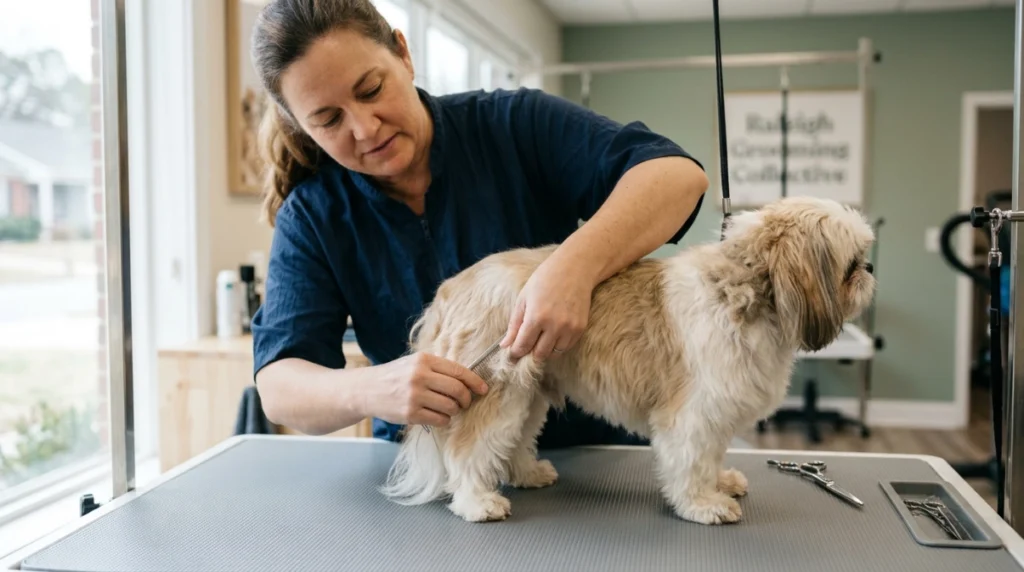
SaveDo not treat a tight mat like ordinary loose hair. Pulling hard on a mat also pulls the skin underneath it, which can make an already nervous dog distrust brushing even more.
Small, loose tangles may be worked gently from the ends while supporting the hair closer to the skin. Stop if you cannot separate the tangle without significant pulling.
- Do not yank: Repeated pulling can make grooming painful.
- Do not dig into skin: Slicker pins and dematting tools need controlled pressure.
- Be cautious with scissors: Dog skin can be pulled up inside a tight mat.
- Get professional help: Large, tight, skin-level mats may need clipping by an experienced groomer or veterinary team.
If your dog’s coat is severely matted, the safest first grooming session may not involve home brushing at all. Removing painful mats professionally can give you a clean starting point for future maintenance.
How Often Should You Brush After Your Dog Gets Used to Grooming?
Once your dog accepts brushing, build a routine that matches the coat instead of waiting for knots. Prevention is much easier than introducing a nervous dog to brushing while also fighting established mats.
Short, smooth coats often need less frequent brushing than long, curly, silky, or dense double coats. Seasonal shedding can also increase the amount of coat care needed.
- Short smooth coats: Weekly brushing is enough for many dogs.
- Long or silky coats: Check for tangles frequently and brush much more often.
- Curly coats: Regular comb-throughs help catch tangles before they tighten.
- Double coats: Brush both the visible coat and loose undercoat with suitable tools.
In 2026, my practical advice remains simple: choose a schedule you can maintain consistently. Five calm minutes on a routine basis beats an exhausting rescue session after weeks of neglect.
Common First-Time Dog Brushing Mistakes
Most early grooming problems come from moving faster than the dog can handle. The second major problem is using the wrong tool or too much pressure.
- Trying to finish the whole dog: Your first goal is trust, not completeness.
- Holding the dog down: Forced restraint can make the next session harder.
- Starting on a painful mat: Begin in an easy, comfortable area.
- Using long sessions: Keep early practice brief and predictable.
- Brushing too aggressively: Light pressure is enough during training.
- Ignoring coat type: Choose tools based on the hair in front of you.
- Waiting until tangles appear: Consistent maintenance prevents bigger problems.
Think of brushing as both grooming and cooperative handling practice. That mindset changes the question from “How do I make the dog stay still?” to “How do I make staying here easier?”
Dog Brushes I Would Consider for a Beginner
If you’re ready to pick a brush, I would match the tool to your dog’s coat and sensitivity rather than buying the most aggressive deshedding tool first.
🏆 Best Versatile Starter
Hartz Groomer’s Best Combo Dog Brush
★★★★☆ Editorial fit: 4.6/5
This two-sided brush combines metal pins with softer nylon bristles. I like the softer side for early brush training, while the pin side gives you more flexibility once the dog accepts grooming.
🐕 Best for Short Coats
KONG ZoomGroom Dog Brush
★★★★☆ Editorial fit: 4.7/5
Its flexible rubber-style grooming surface can feel less intimidating than a metal-pin brush for some short-haired dogs. It is especially useful when your priority is gentle loose-hair removal and massage-like contact.
✨ Best for Longer Coats
Hertzko Self Cleaning Slicker Brush
★★★★☆ Editorial fit: 4.5/5
The retractable slicker design collects loose coat and makes cleanup simple. I would introduce it with light pressure and short sessions, especially on a dog that has never experienced wire-style bristles.
Frequently Asked Questions
How do I groom a dog that has never been groomed before?
Start with handling and brush introductions before attempting a complete groom. Reward your dog for seeing, sniffing, and being gently touched by the brush, then add individual strokes gradually. If the coat is severely matted or the dog shows serious fear or aggression, seek professional help.
Should I brush my dog before or after a bath?
Loose tangles are usually easier to identify before bathing, but coat type and condition matter. Do not aggressively brush tight mats before or after a bath. If you cannot work through a tangle comfortably, ask a professional groomer how it should be removed.
What is the easiest brush for a dog that hates brushing?
A soft bristle brush or flexible rubber grooming brush can be an easier introduction for some short-coated dogs because the sensation is gentler. Long, curly, or dense coats may still require a slicker, pin brush, comb, or undercoat tool once the dog accepts handling.
How can I keep my dog still while brushing?
Instead of forcing stillness, reward the behavior you want. Begin with short sessions, comfortable body areas, secure footing, and frequent rewards. Increase brushing time gradually so remaining in place becomes predictable and worthwhile for the dog.
When should I take my dog to a professional groomer?
Get professional help when mats sit tightly against the skin, your dog may bite, grooming causes obvious pain, or you cannot safely handle the required tools. A veterinarian should evaluate skin sores, unexplained tenderness, sudden grooming intolerance, or other signs that pain may be involved.
Final Takeaway
Learning how to brush a dog that has never been groomed is more about trust than technique. Introduce the brush slowly, reward small wins, choose the right tool, and stop before your dog becomes overwhelmed.
Once brushing feels safe and predictable, build a coat-specific maintenance routine. That steady approach gives you a better chance of creating a dog that cooperates willingly instead of merely tolerating grooming.

Thomas Cutter is a lifelong dog owner and the founder of FindOutAboutDogs.com. With over 10 years of hands-on experience owning multiple breeds, Thomas created this site to provide honest, research-based dog advice that real owners can actually trust.
