How Often to Brush a Double-Coated Dog: Grooming Guide
Quick Answer
Most double-coated dogs should be brushed two to three times per week, although some breeds do well with weekly grooming when their coats remain clean and tangle-free. During heavy seasonal shedding, you may need to brush daily to remove loose undercoat. Use a suitable slicker brush or undercoat rake gently, and check your work with a metal comb to make sure you reach beneath the outer coat.
A Practical Brushing Schedule
- Normal maintenance: Start with two or three sessions per week and adjust to your dog’s coat.
- Heavy shedding: Increase to short daily sessions when loose undercoat builds up quickly.
- Long, thick coats: Check for hidden tangles more frequently, especially behind the ears and under the legs.
- Short double coats: Weekly brushing may be enough for some dogs, but increase the frequency when shedding picks up.
- Gentle technique: Work in small sections without scraping the skin or repeatedly pulling through the same spot.
- Warning signs: Stop if brushing causes pain, redness, sores, or unusual hair breakage.
If you live with a Golden Retriever, Husky, German Shepherd, or another double-coated breed, you probably know how quickly loose fur can collect around your home.
As Thomas Cutter, I approach coat care by looking at the dog’s coat length, shedding pattern, and condition rather than following one rigid schedule. This guide explains how often to brush, when to increase grooming, which tools help, and how to avoid damaging healthy fur.


What Is a Double-Coated Dog?
 Save
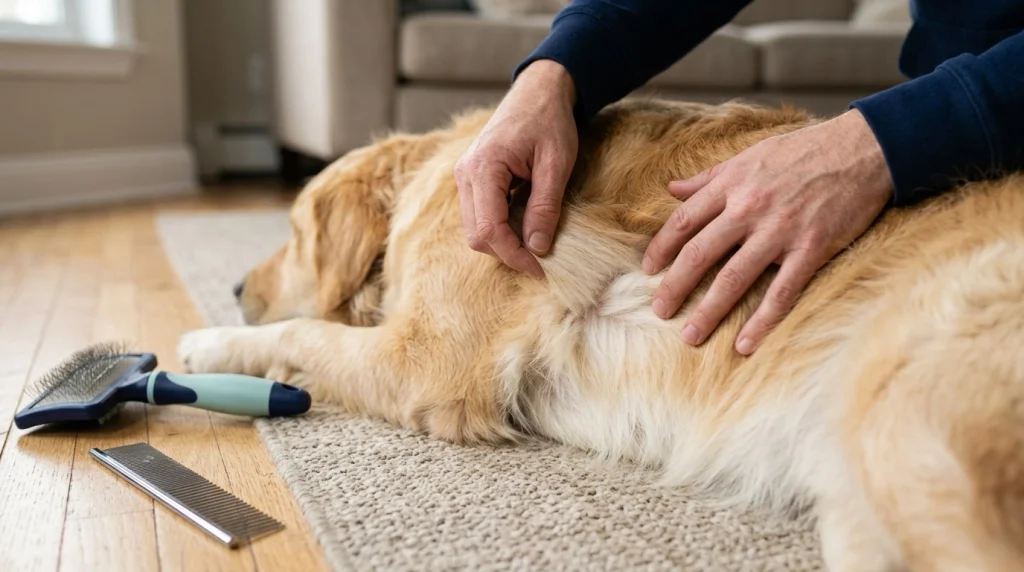
SaveA double-coated dog has two layers of fur: a protective outer coat and a softer undercoat beneath it. The outer layer helps shield the skin from environmental elements, while the undercoat provides insulation.
These layers work together, but they don’t always shed at the same rate. The undercoat often releases large amounts of loose hair during seasonal coat changes, which makes regular brushing particularly important.
Common double-coated breeds include:
- Golden Retriever: A medium-to-long coat with feathering and a dense undercoat.
- Siberian Husky: A thick coat with substantial seasonal undercoat shedding.
- German Shepherd: A double coat that can release considerable loose hair throughout the year.
- Australian Shepherd: A medium-length coat that benefits from regular brushing and attention to friction areas.
- Pomeranian: A compact breed with a particularly dense, fluffy coat.
- Border Collie: Depending on the variety, a smooth or rough double coat with different grooming demands.
The American Kennel Club explains that double coats vary in length, density, and texture, so grooming requirements differ between breeds. Its guide to double-coated dog breeds provides useful background on these differences.
How Often Should You Brush a Double-Coated Dog?
For many double-coated dogs, brushing two or three times per week is a useful starting point. Some shorter-coated breeds need less frequent sessions, while long-coated dogs and heavy shedders may require more.
Don’t judge the schedule by breed alone. If the coat stays loose, clean, and free of tangles between sessions, your routine may be working well.
Weekly brushing for lighter maintenance
Some double-coated dogs can maintain a healthy coat with a thorough weekly brushing outside their heavier shedding periods. This may suit dogs with shorter coats or relatively low grooming demands.
Weekly grooming should still include a quick check between sessions. Loose hair, small knots, and trapped debris can develop before the next planned brushing day.
Two or three sessions per week for regular care
This schedule works well as a starting routine for many medium- and long-coated double-coated dogs. It gives you regular opportunities to remove loose fur before it becomes tangled or compacted.
You can divide the work across Monday, Wednesday, and Saturday, for example. Short, calm sessions are often easier than waiting until the coat needs a lengthy grooming session.
Daily brushing during heavy shedding
When your dog starts releasing large amounts of undercoat, daily brushing may help keep loose fur under control. You don’t necessarily need a long session every day; the goal is to remove loose hair without irritating the skin.
Some dogs shed heavily in spring and fall, while others shed more continuously depending on their breed, environment, and coat cycle. Indoor living and warmer climates can also influence when you notice shedding.
The American Kennel Club’s dog-shedding guidance explains why some dogs need more frequent brushing during periods of heavier hair loss.
Double-Coated Dog Brushing Schedule by Breed
The following table provides practical starting points rather than strict breed-wide rules. Adjust the frequency based on coat length, tangles, skin condition, and how much loose undercoat your dog releases.
| Breed | Regular Schedule | During Heavy Shedding | Main Focus |
|---|---|---|---|
| Golden Retriever | 1–3 times weekly | Daily if needed | Feathering, tail, chest, and loose undercoat |
| Siberian Husky | Weekly or more often | Daily as needed | Dense undercoat and seasonal shedding |
| German Shepherd | Every 2–3 days | Daily if needed | Back, sides, hindquarters, and undercoat |
| Australian Shepherd | 1–3 times weekly | Every day or two as needed | Behind ears, leg feathering, and tail |
| Pomeranian | At least weekly | More frequent checks and brushing | Dense coat, friction areas, and hidden tangles |
| Border Collie | 1–2 times weekly | Daily if needed | Coat length, feathering, and loose hair |
These ranges are not guarantees for every dog within a breed. For a more specific routine, follow breed-appropriate advice from your veterinarian or groomer and adjust according to what you find during brushing.
What Factors Change How Often You Should Brush?
Your dog’s coat condition matters more than sticking to a calendar. Several everyday factors can make additional grooming necessary.
- Coat length: Longer coats and feathered areas can trap loose hair and develop tangles more easily.
- Undercoat density: A thick undercoat may need more attention when it begins to loosen.
- Activity level: Hiking, playing outdoors, and running through vegetation can introduce dirt and debris.
- Harnesses and collars: Repeated friction can create knots around the neck, chest, and armpits.
- Weather and living conditions: Climate and indoor living may influence the shedding pattern you observe.
- Age and comfort: Puppies need gentle introductions, while older dogs may require shorter sessions if standing becomes uncomfortable.
One useful habit is to run your fingers gently through the coat before reaching for a brush. If you feel compacted fur, small knots, or debris, spend extra time checking those areas instead of brushing the entire body more aggressively.
How Do You Brush a Double-Coated Dog Correctly?
 Save
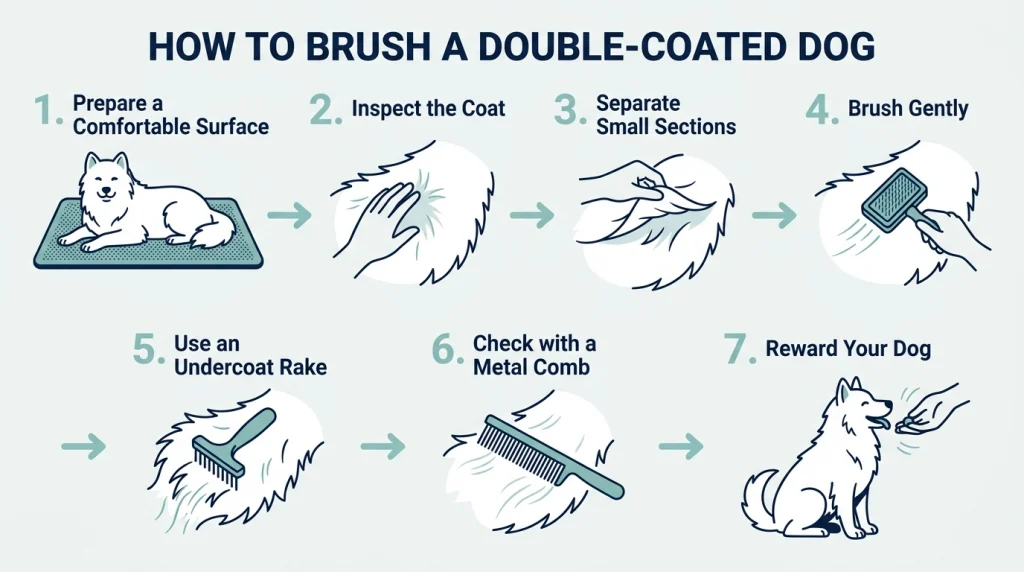
SaveBrush in small sections, reach through the coat without scraping the skin, and finish with a comb check. This helps you remove loose undercoat while protecting healthy guard hairs.
- Choose a comfortable location. Use a nonslip surface and let your dog settle before starting.
- Inspect the coat. Look for mats, skin irritation, sores, or areas that seem painful.
- Separate the fur. Work through small sections so you can see where the undercoat begins.
- Brush gently. Use a suitable slicker brush with controlled strokes, following the coat’s natural direction.
- Use an undercoat rake when appropriate. Move it gently through loose undercoat without pressing hard or repeatedly working one patch.
- Check with a metal comb. Test thicker areas and feathering to identify tangles the brush may have missed.
- Reward your dog. Use praise and treats to help create a positive grooming routine.
Don’t force a brush or comb through a tight mat. Pulling can hurt the skin, and repeated strokes in one area may cause irritation or hair breakage.
If the coat contains widespread mats or brushing causes pain, arrange help from a professional groomer. A veterinarian should assess any skin wounds, persistent redness, or unexplained discomfort.
Which Brush Is Best for a Double-Coated Dog?
 Save
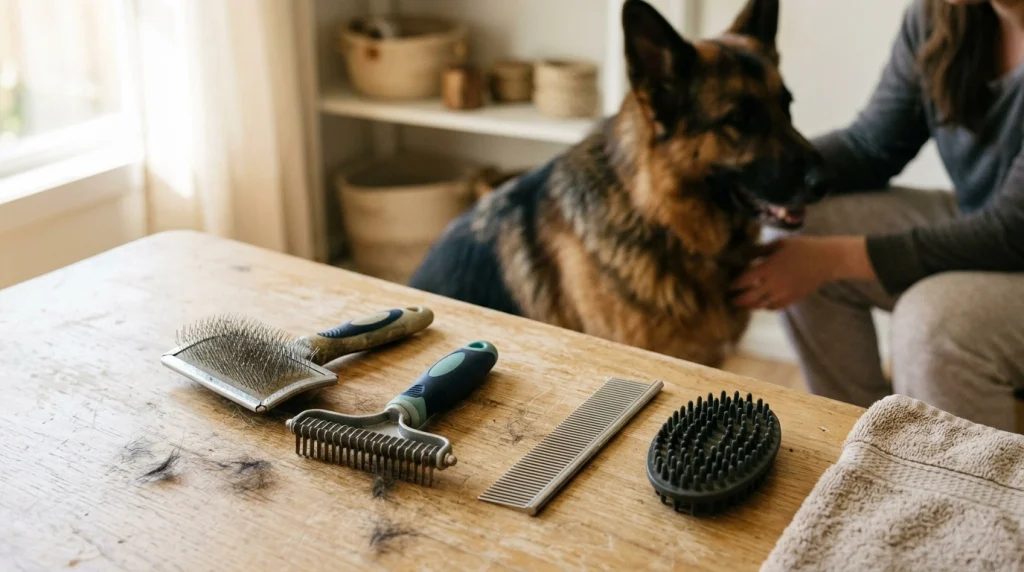
SaveThe right brush depends on what you’re trying to remove. A slicker brush helps separate fur and collect loose hair, while an undercoat rake targets loose hair deeper in a dense coat.
A metal comb is useful for checking your work, especially around the ears, legs, chest, and tail. You may not need every tool for every dog, so start with the tool that suits your dog’s coat.
| Tool | Best Use | Main Caution |
|---|---|---|
| Slicker brush | Separating fur and removing loose hair | Excess pressure can scratch the skin |
| Undercoat rake | Removing loose undercoat from dense coats | Avoid digging into the skin or forcing it through mats |
| Metal comb | Finding hidden tangles and checking grooming results | Stop if the teeth catch or pull |
| Rubber grooming brush | Collecting surface hair on suitable short coats | May not reach a thick undercoat |
For more guidance on choosing a tool, see this article about the best brush for a Husky. Its advice is particularly relevant to owners dealing with dense undercoats and seasonal shedding.
How Long Should You Brush a Double-Coated Dog?
Start with a short session of about five to ten minutes and extend it only if your dog remains comfortable and the coat needs more attention. A heavily shedding or long-coated dog may need longer sessions to cover every area carefully.
There’s no need to finish the entire coat in one sitting if your dog becomes restless. You can groom the body first and return later to the tail, legs, or other sensitive areas.
Watch your dog’s body language throughout the process. Repeatedly turning away, licking the lips, pulling a leg back, or trying to escape may indicate stress or discomfort.
Make the experience easier by pairing gentle brushing with rewards and taking breaks. If your dog consistently reacts painfully to one area, stop and check for mats, skin problems, or other causes before continuing.
How Can You Tell If You’re Brushing Enough?
A well-maintained coat should feel reasonably smooth, with no tight tangles or compacted clumps beneath the surface. You should also be able to move an appropriate comb through the coat without repeatedly catching or pulling.
Use these checks between grooming sessions:
- Loose fur: A little shedding is normal, but large amounts of trapped hair may mean your schedule needs adjusting.
- Hidden tangles: Check behind the ears, beneath the collar, around the armpits, and between the hind legs.
- Skin condition: Look for redness, scabs, unusual flakes, sores, or bald patches.
- Brushing comfort: Your dog should tolerate gentle strokes without repeatedly flinching or trying to escape.
- Coat texture: Watch for new rough patches, unusual breakage, or changes in how the fur grows.
A smooth-looking outer coat doesn’t always mean the undercoat is free of tangles. Check below the surface rather than judging the results by appearance alone.
For a closer inspection routine, read this guide on checking a dog’s coat for hidden mats.
Can You Brush a Double-Coated Dog Too Often?
Frequent, gentle brushing is usually fine when you use an appropriate tool and stop before the skin becomes irritated. However, brushing harder or repeatedly scraping the same area can cause discomfort, break healthy hairs, and damage the coat’s appearance.
The goal is to remove hair that has already loosened, not to pull healthy undercoat or guard hairs out by force. A deshedding tool should never be treated as something you must repeatedly run over the entire dog until no more hair appears.
Reduce the pressure and shorten the session if you notice:
- Redness or visible irritation after grooming.
- Broken hairs or thinning patches in brushed areas.
- Repeated flinching or signs of pain.
- A dog becoming increasingly fearful of the brush.
If these problems continue, stop using the tool and ask your veterinarian or groomer to check your technique and the condition of the coat.
Should You Brush More Often Instead of Shaving?
For most double-coated dogs, adjusting the brushing routine is a better first step than shaving the coat to control shedding. The two coat layers serve protective functions, and removing them can affect the coat’s normal appearance and regrowth.
Shaving also doesn’t stop hair from growing or eliminate the need for grooming. Ask a veterinarian or experienced groomer for advice if severe matting, a medical procedure, or another specific condition makes clipping necessary.
During warm weather, focus on regular coat care, access to shade, fresh water, and avoiding strenuous activity during the hottest part of the day. A properly maintained coat is not a substitute for sensible heat management.
The American Kennel Club’s double-coat grooming guide offers additional advice about maintaining the coat and recognizing when professional grooming may help.
Recommended Brushes for Double-Coated Dogs
If you’re choosing grooming equipment, prioritize comfort, suitable pin length, and a design that matches your dog’s coat. These three options cover common grooming needs, but none should replace careful technique.
BEST FOR DENSE COATS
Safari De-Matting Comb
★★★★☆
A comb-style grooming tool to consider for localized tangles and compacted fur. I would use it only where the coat allows gentle movement, never to force apart tight mats.
BEST FOR ROUTINE BRUSHING
Hertzko Self-Cleaning Slicker Brush
★★★★☆
Its fine wire pins and retractable cleaning mechanism make it an option for collecting loose fur and separating suitable coats. Use light pressure and check that the pins don’t irritate your dog’s skin.
BEST FOR UNDERCOAT SHEDDING
FURminator Undercoat Deshedding Tool
★★★★☆
This tool is designed to remove loose undercoat from suitable shedding dogs. Choose the correct size and coat version, follow the manufacturer’s directions, and avoid excessive passes that could damage healthy hair.
These are product options to compare, not the results of a hands-on test or a guarantee that each tool suits every double coat. Check the product’s size and coat compatibility before purchasing.
Frequently Asked Questions
Can I brush my double-coated dog every day?
Yes, daily brushing can be appropriate during heavy shedding or when your dog’s coat tangles easily. Use gentle strokes and a suitable tool, and stop when the coat is clear rather than repeatedly brushing the same area to remove every last loose hair.
Is once a week enough for a double-coated dog?
Weekly brushing may be enough for some dogs with shorter coats and modest grooming needs outside heavy shedding periods. Long-coated dogs and heavy shedders often need more frequent attention, so check the undercoat and increase brushing if loose fur or tangles build up.
Should I use an undercoat rake every time I brush?
Not necessarily. An undercoat rake is useful when a suitable double coat contains loose undercoat, especially during shedding season, but a slicker brush and metal comb may be more appropriate for other tasks. Avoid aggressive or excessive raking because it can damage healthy hair and irritate the skin.
How do I know if my double-coated dog needs more brushing?
Look for loose undercoat collecting in clumps, tangles behind the ears or under the legs, and fur that feels compacted beneath the surface. If a suitable comb repeatedly catches, adjust your routine and investigate the problem gently rather than pulling it through the coat.
Does brushing a double-coated dog reduce shedding?
Brushing helps collect loose hair before it falls onto furniture, clothing, and floors. It won’t stop normal shedding, but consistent grooming can make loose fur easier to manage and help you notice skin or coat changes earlier.
Can brushing damage a double coat?
Yes, brushing can cause damage when you use excessive pressure, repeatedly scrape one area, or force tools through tight mats. Select a suitable brush, work in small sections, and stop if you notice redness, pain, or unusual hair breakage.
Final Takeaway: Build a Routine Around Your Dog’s Coat
For most double-coated dogs, two or three brushing sessions per week provide a sensible starting point, with more frequent grooming when loose undercoat builds up. Some dogs need only weekly maintenance, while others benefit from short daily sessions during heavy shedding.
Start with a suitable brush, use a gentle technique, and check beneath the outer coat rather than judging it by appearance alone. Most importantly, adjust your routine to your dog’s comfort and coat condition instead of brushing more aggressively when shedding increases.
If your dog develops painful mats, persistent skin irritation, bald patches, or unexplained changes in shedding, consult your veterinarian or a qualified groomer. A consistent, comfortable grooming routine will help you manage loose fur while keeping your dog’s coat in good condition.

Thomas Cutter is a lifelong dog owner and the founder of FindOutAboutDogs.com. With over 10 years of hands-on experience owning multiple breeds, Thomas created this site to provide honest, research-based dog advice that real owners can actually trust.
