How Often Should You Brush a German Shepherd?
Quick Answer
Brush most German Shepherds every other day, increasing to gentle daily brushing during heavy shedding or when longer fur tangles easily. This starting schedule follows German Shepherd grooming advice from the American Kennel Club; dedicated deshedding tools need their own manufacturer-guided schedule.
Your starting routine
- Normal shedding: Aim for three or four gentle brushing sessions each week.
- Heavy shedding: Switch to short daily sessions while loose undercoat builds up.
- Longer coats: Check tangle-prone areas daily and brush as needed.
- Tool limits: Daily brushing does not mean daily intensive deshedding.
Check before you continue
- Comfort first: Stop if brushing causes pain, redness, or repeated pulling away.
A German Shepherd can leave fur on the floor even when you keep a sensible grooming schedule. I’d judge the routine by coat comfort and manageable tangles, rather than expecting a hair-free home.
This guide explains how to adjust brushing frequency and choose tools without overworking the coat. You’ll also find a simple weekly plan.


What brushing schedule should you start with?
 Save
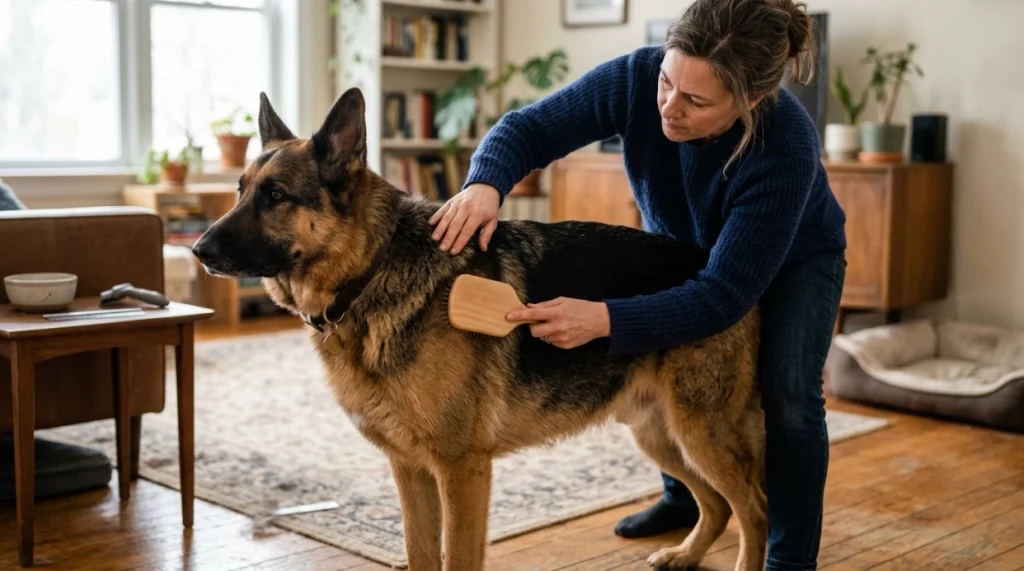
SaveStart with every-other-day brushing for an adult German Shepherd with healthy skin and an untangled coat. Adjust the routine when shedding increases or specific areas start catching.
The table below gives practical starting points, not fixed medical rules. Your dog’s comfort should always override the calendar.
| Coat or situation | Starting frequency | Main focus |
|---|---|---|
| Adult, ordinary shedding | Every other day | Loose hair and gentle coat checks |
| Heavy seasonal shedding | Gentle brushing daily | Loose undercoat without repeated scraping |
| Long coat with easy tangling | Daily checks; brush affected areas as needed | Behind ears, leg feathering, and collar area |
| Puppy learning grooming | Brief daily practice | Calm handling and rewards |
| Painful skin or tight mats | Pause brushing over affected areas | Veterinary or professional grooming assessment |
For a first attempt, set aside five minutes and assess progress before extending the session. That’s a planning suggestion, not a required treatment duration.
A relaxed dog with more coat to cover may tolerate longer. A restless dog may need several smaller sessions.
A simple weekly plan
I’d begin with this example schedule and adjust it after checking the coat between sessions. The aim is a routine you can maintain.
- Monday: Brush gently across the body and check longer areas with a comb.
- Wednesday: Repeat, paying attention to any spots that caught on Monday.
- Friday: Brush and inspect beneath the collar or harness.
- Sunday: Review the coat and decide whether next week needs more frequent attention.
On other days, a brief hands-on check may be enough. After muddy walks or time in brush, inspect for trapped debris.
Why does a German Shepherd need regular brushing?
A double coat is a coat with an outer layer of guard hairs and a softer undercoat. German Shepherds have this layered coat, which needs attention below the visible surface.
A smooth-looking back doesn’t tell you whether longer areas have begun tangling. Check the coat in sections.
- Outer coat: Look for dirt and loose surface hair.
- Undercoat: Check for loose fluff collecting beneath the outer hairs.
- Friction areas: Feel around the collar and behind the legs for catches.
My practical rule is to judge the finish by how comfortably the coat separates. The size of the collected fur pile is a poor target.
Trying to produce another handful can turn an adequate session into unnecessary brushing. More hair isn’t always better.
Should you brush a German Shepherd every day during shedding season?
 Save
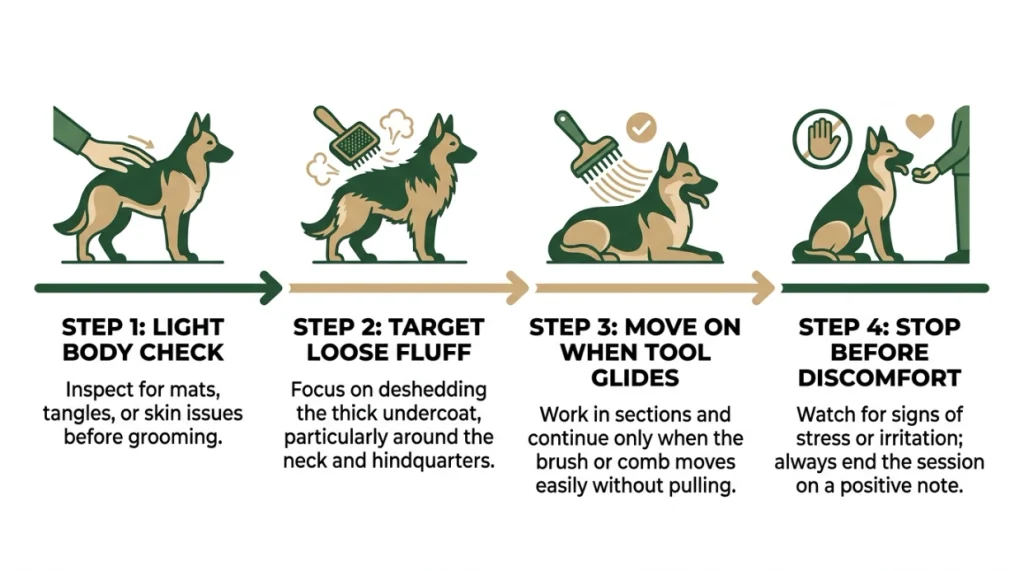
SaveGentle daily brushing can help during heavy shedding, provided the skin stays comfortable. You don’t need to work every area equally at every session.
Let the coat guide your attention. An area that releases little loose hair doesn’t need repeated passes.
- Begin with a light check over the body.
- Spend extra time only where loose fluff remains accessible.
- Move on when the tool glides without collecting much hair.
- End the session before your dog becomes uncomfortable.
Seasonal changes can affect the routine, but the exact timing varies. Keep checking the coat instead of changing frequency on a fixed date.
For help reaching beneath the surface, see this guide to brushing a dog’s thick undercoat.
Brushing and deshedding have different schedules
Routine brushing and using a dedicated deshedding edge are different tasks. Don’t apply the same frequency automatically to both.
For example, FURminator’s tool instructions recommend its undercoat deshedding tool one or two times weekly, typically for 10–20 minutes. The manufacturer says duration varies with the individual coat.
- Follow the instructions for your exact tool.
- Remove tangles before using a deshedding edge.
- Use light strokes without lingering on one patch.
- Stop sooner if your dog shows discomfort.
A suggested duration is not a quota. You don’t need to keep brushing until the timer runs out.
Which brush should you use for a German Shepherd?
Choose a brush that moves through your dog’s coat without scraping or tugging. Coat length and sensitivity matter more than a tool’s popularity.
You may find two simple tools easier to manage than one aggressive tool. Each should have a clear purpose.
- Pin brush: Consider it for gentle brushing through longer outer hair.
- Slicker brush: Use an appropriately sized model with light pressure for loose hair and minor tangles.
- Rounded-pin rake: Consider it for accessible loose undercoat, with tooth length suited to the coat.
- Metal comb: Use it gently to find missed catches after brushing.
- Deshedding tool: Reserve it for suitable coats and follow its specific instructions.
Some tools sold as “rakes” have cutting blades, while others have simple pins. Check the working edge before buying.
Our guide to the best brush for a German Shepherd provides a useful next step when comparing options.
How do you brush a German Shepherd without pulling?
 Save
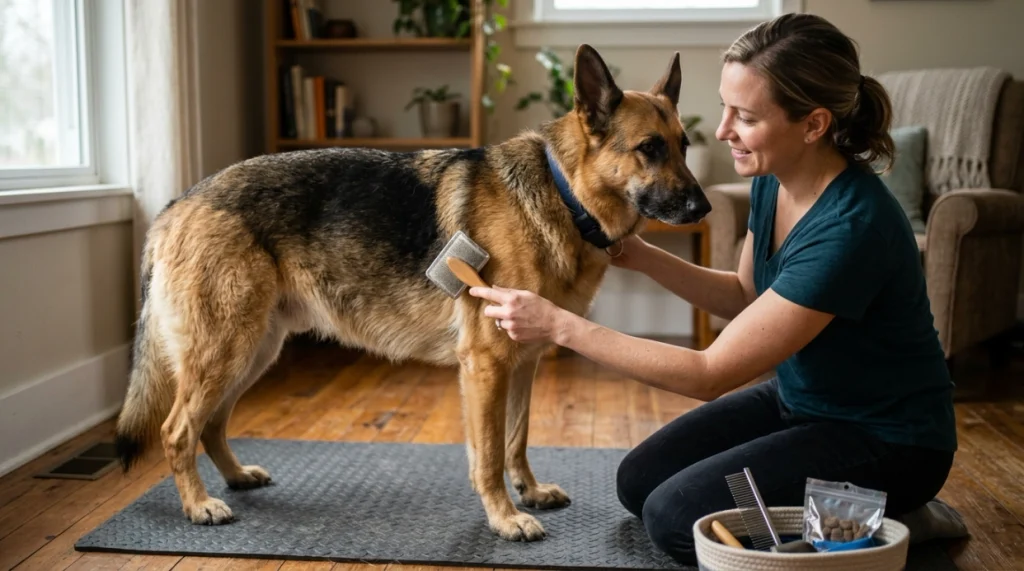
SaveWork in small sections and follow the direction of hair growth. If the tool catches, stop and inspect the area instead of pulling harder.
For ordinary home grooming, start with a dry coat and good lighting. Keep the first session simple.
- Choose a stable spot. Use a nonslip surface where your dog can stand or rest comfortably.
- Inspect before brushing. Look for tender areas and feel for tight tangles.
- Start somewhere easy. Try a few light strokes along the shoulder or side.
- Separate small sections. Lift longer hair gently so you can check what lies beneath.
- Brush with the coat. Keep strokes controlled and avoid dragging the tool across skin.
- Check with a comb. Test small areas without forcing the teeth through resistance.
- Reward and finish. End while your dog remains willing to participate.
For a fuller walkthrough, follow these steps on how to brush a German Shepherd.
Give awkward areas their own session
You don’t have to finish every sensitive area in one sitting. A small brush or comb may offer better control than a broad tool.
- Support longer hair gently when checking behind the ears.
- Keep the tail in a natural position.
- Avoid making your dog balance awkwardly for access.
- Leave any painful or tightly matted area for professional assessment.
I’d separate “body brushing” from “small-area checks” on a busy evening. That makes it easier to notice discomfort before rushing through it.
Can you brush a German Shepherd too much?
Yes, especially when repeated strokes or excessive pressure irritate the skin. Frequency alone doesn’t determine whether brushing is gentle.
A short, careful session differs from repeatedly scraping the same patch. Watch your dog’s response throughout.
- Skin changes: Stop if you see new redness or abrasions.
- Repeated avoidance: Pause when your dog keeps turning away or moving off.
- Persistent snagging: Reassess the tool or tangle instead of adding pressure.
- Unexpected pain: Seek veterinary advice, especially when discomfort is new.
The American Kennel Club’s home grooming guidance recommends getting help choosing suitable grooming tools. A groomer can demonstrate pressure and technique on your dog’s coat.
What if your dog dislikes the brush?
Begin with a smaller task than a full grooming session. Let your dog become comfortable with the brush before asking for sustained handling.
- Show the brush and offer a small reward.
- Touch a comfortable area briefly with the back of the brush.
- Try one gentle stroke, then pause.
- Add strokes gradually while your dog remains relaxed.
For a slower training plan, see how to brush a dog without forcing. Sudden resistance deserves a pain check before you treat it as a training issue.
When should you get help with the coat?
Seek help when mats sit close to the skin or brushing causes pain. Bald patches and persistent skin irritation also need veterinary attention.
VCA’s veterinary coat-care guidance recommends professional care for severe tangles and warns against using scissors to remove mats. Hidden skin is easy to injure.
- Groomer: Ask for help with coat maintenance and difficult tangles when the skin appears comfortable.
- Veterinarian: Arrange an assessment for sores, pain, or unexplained hair loss.
- Before bathing: Address tangles first, since bathing can make them harder to remove.
Routine shaving isn’t a substitute for brushing a German Shepherd. Discuss necessary clipping for a medical problem or severe matting with a professional.
Brushes worth considering for your routine
If you’re choosing equipment in 2026, I’d start with the job your current tool cannot comfortably handle. These options serve different purposes.
The scores below are editorial suitability judgments based on published features, not customer ratings or hands-on test results. Fit and technique still matter.
As an Amazon Associate, I earn from qualifying purchases.
🪮 For longer coats
Chris Christensen Big G Slicker Brush
★★★★☆ — Editorial suitability: 4/5
This slicker has 27 mm stainless steel pins and a flexible cushion pad. I’d consider it for a longer coat, while choosing a less substantial brush for shorter or sensitive areas.
🧹 For occasional deshedding
FURminator Undercoat deShedding Tool for Dogs
★★★☆☆ — Editorial suitability: 3/5
This tool targets loose undercoat and requires a tangle-free coat before use. I’d treat it as an optional supplement because it needs more careful scheduling than a routine brush.
Frequently asked questions
Is brushing a German Shepherd once a week enough?
Once weekly is often less frequent than a useful starting routine for a German Shepherd. Try every-other-day brushing, then adjust according to loose hair and tangles; longer coats and heavy shedding may need daily attention.
How often should you brush a German Shepherd puppy?
Offer brief daily grooming practice to help a German Shepherd puppy become comfortable with handling. Start with a few gentle strokes and rewards, then increase gradually; you don’t need an adult deshedding routine simply because you’re practicing daily.
Should you brush a German Shepherd before or after bathing?
Gently remove loose hair and manageable tangles before bathing a German Shepherd. Once the coat has dried, check it again and brush as needed; leave tight mats to a professional rather than trying to wash or pull them loose.
Will daily brushing stop German Shepherd shedding?
Daily brushing can collect loose hair, but it won’t stop the natural shedding process. Keep expectations realistic and avoid brushing until no hair remains; a comfortable, manageable coat is a better goal than completely eliminating fur around the house.
Start with a schedule you can maintain
Brush your German Shepherd every other day, then add gentle sessions when the coat needs them. Keep dedicated deshedding tools on their own instruction-based schedule.
For the coming week, set three or four brushing reminders and check the coat between them. Adjust from what you find, keeping comfort first.

Thomas Cutter is a lifelong dog owner and the founder of FindOutAboutDogs.com. With over 10 years of hands-on experience owning multiple breeds, Thomas created this site to provide honest, research-based dog advice that real owners can actually trust.
