How Often Should You Brush a Labrador Retriever?
Quick Answer
You should usually brush a Labrador Retriever two to three times per week. During heavy seasonal shedding, gentle daily brushing can help remove loose undercoat before it lands around your home. Labs have short coats, but their dense double coat sheds more than many new owners expect. If you’re still comparing their care needs with other dogs, see these easy-going dog breeds.
A simple Labrador brushing schedule
- Normal weeks: Brush two or three times to collect loose hair and surface debris.
- Heavy shedding: Use a gentle brush daily or almost daily until the coat settles.
- Undercoat tools: Use them carefully once or twice weekly rather than repeatedly scraping the same area.
- After swimming: Let the coat dry, then brush out loose hair and check the skin.
- Watch the skin: Stop if brushing causes redness, soreness, or obvious discomfort.
Best rule to remember
- Brush often enough to remove loose fur, but gently enough that the skin and protective topcoat stay comfortable.
A Labrador looks like an easy dog to groom because the coat is short. Then shedding season arrives, and suddenly that short hair seems to be everywhere.
The good news is that Labrador coat care stays simple once you follow the right schedule. You don’t need marathon grooming sessions or daily aggressive deshedding.


How Often Should You Brush a Labrador Retriever During a Normal Week?
For most healthy adult Labradors, two to three brushing sessions per week is a practical routine. It removes loose hair while giving you regular chances to check the skin and coat.
Some Labs can stay tidy with one thorough weekly session. Others shed enough year-round that three shorter sessions work better.
- Low-shedding week: 1–2 thorough brushing sessions may be enough.
- Typical week: Aim for 2–3 sessions.
- Heavy-shedding week: Gentle daily brushing can help.
- Muddy or outdoor dog: Add a quick brush whenever dried dirt or debris collects.
Veterinary and breed-care guidance varies slightly because every dog is different. The important pattern is consistent brushing, with more frequent grooming when shedding increases.
That approach also matches the Labrador’s reputation as a relatively simple coat-care breed. Our guide to friendly family dog breeds shows why Labs can be easy to live with even though their shedding is substantial.
Why Does a Short-Haired Labrador Need So Much Brushing?
A Labrador Retriever has a double coat. That means the dog has a protective outer coat plus a softer, insulating layer underneath.
The short length can fool you. There is still a surprising amount of hair packed close to the skin.
Definition: A double coat is a two-layer coat made from a protective topcoat and a softer undercoat. Labradors use this dense coat as insulation and protection from water and weather.
The American Kennel Club’s Labrador grooming guidance describes the breed’s coat as short, dense, and weather-resistant. It also recommends increased grooming when the dog is shedding heavily.
Brushing helps remove hair that has already loosened. It doesn’t stop the natural shedding cycle itself.
How Often Should You Brush a Labrador During Shedding Season?
 Save
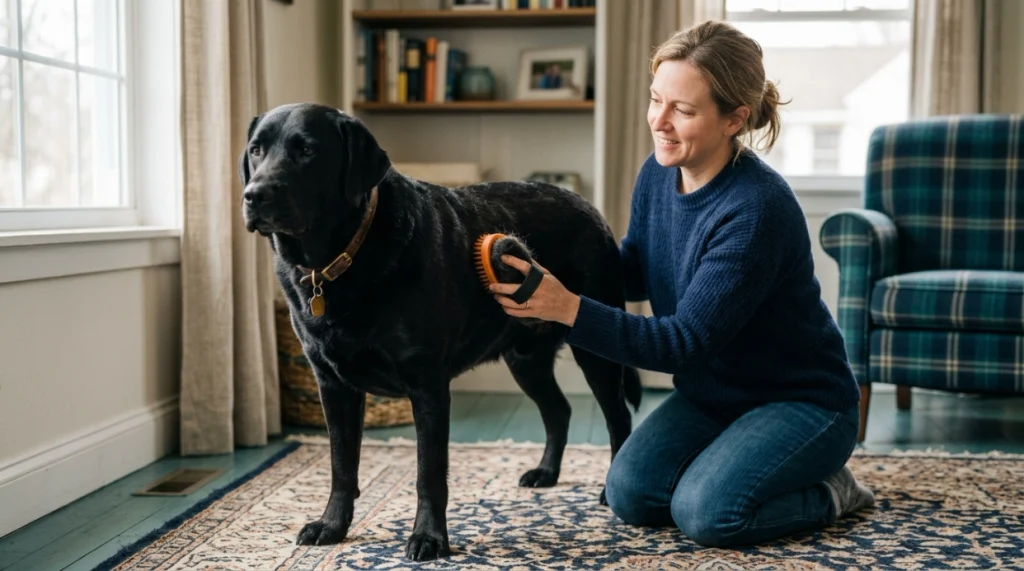
SaveDuring a heavy coat shed, I would increase the schedule to daily or near-daily gentle brushing. Keep those sessions short and comfortable.
The goal is not to strip out as much hair as possible in one sitting. You’re gradually collecting loose undercoat as it releases.
| Situation | Brushing Frequency | Useful Tool | Main Goal |
|---|---|---|---|
| Normal shedding | 2–3 times weekly | Rubber curry or grooming brush | Remove loose surface hair |
| Heavy seasonal shedding | Daily or near-daily | Rubber curry plus occasional deshedding tool | Lift releasing undercoat |
| After swimming or bathing | Once coat is dry | Rubber grooming brush | Remove loosened hair and debris |
| Sensitive skin | As tolerated | Soft rubber or gentle bristle tool | Comfort first |
The AKC’s shedding guidance also notes that heavily shedding dogs may need grooming several times per week or daily during peak periods.
Don’t confuse daily brushing with daily use of an aggressive undercoat blade. Those are different jobs.
What Is the Best Brush for a Labrador Retriever?
A rubber curry-style brush is one of the easiest tools for regular Labrador grooming. It catches loose short hairs while remaining comfortable for frequent use.
For heavier shedding, an undercoat deshedding tool can reach deeper. Use light pressure and avoid repeatedly working the same patch of skin.
- Rubber curry brush: Best for frequent maintenance and loose surface hair.
- Deshedding tool: Best for controlled removal of loose undercoat during heavier shedding.
- Bristle brush: Useful for finishing the coat and picking up remaining loose hairs.
- Grooming glove: Helpful for Labs that dislike traditional brushes.
I prefer thinking in terms of tool intensity. The gentlest tool should do most of your routine work.
A more aggressive deshedding tool is something I would save for when the undercoat is actively releasing. That keeps grooming simple and reduces the temptation to overwork the coat.
Can You Brush a Labrador Too Much?
Yes. You can brush a Labrador too aggressively or use a deshedding blade too frequently, especially if you keep scraping the same area.
The problem is usually technique rather than the number of minutes alone. A soft rubber brush used gently is different from repeated pressure with a metal undercoat edge.
- Stop if the skin becomes pink or irritated.
- Don’t press hard enough to scratch the skin.
- Don’t keep brushing one spot after loose hair stops coming out.
- Never treat a deshedding edge like a razor.
- Check for sores, bumps, scabs, or tender areas before grooming.
FURminator’s instructions for its short-hair undercoat tool recommend gentle strokes in the direction of hair growth. The manufacturer also advises stopping if redness or irritation develops.
For that type of tool, one or two sessions per week is generally more sensible than using it aggressively every day.
How Should You Brush a Labrador Retriever Properly?
 Save
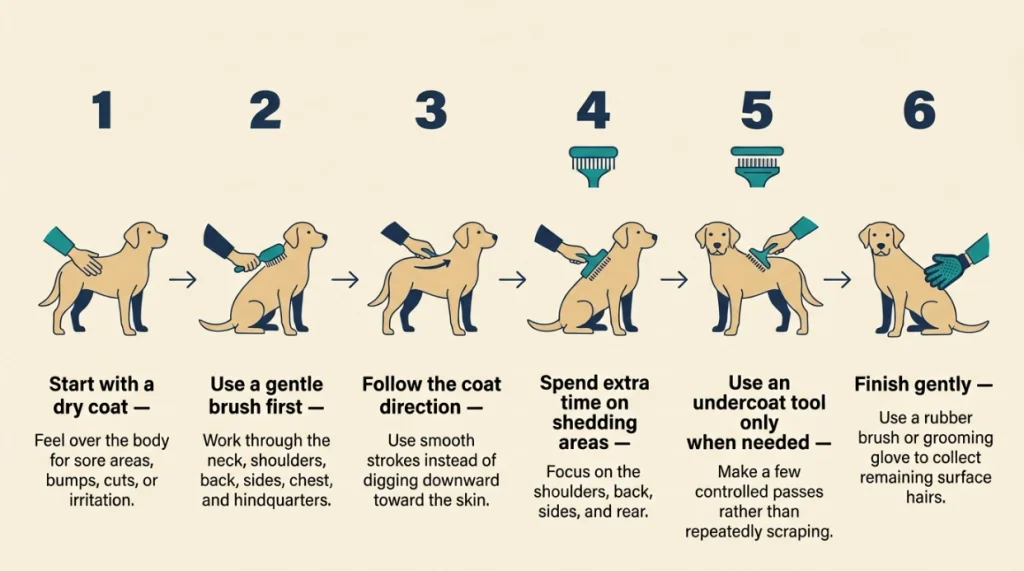
SaveA Labrador brushing session can be simple. I focus on consistency, light pressure, and checking the skin as I work.
- Start with a dry coat. Feel over the body for sore areas, bumps, cuts, or irritation.
- Use a gentle brush first. Work through the neck, shoulders, back, sides, chest, and hindquarters.
- Follow the coat direction. Use smooth strokes instead of digging downward toward the skin.
- Spend extra time on shedding areas. The shoulders, back, sides, and rear can release a lot of hair.
- Use an undercoat tool only when needed. Make a few controlled passes rather than repeatedly scraping.
- Finish gently. A rubber brush or grooming glove can collect remaining surface hairs.
Five to fifteen minutes is often enough for normal maintenance. A heavy shedding session may take longer, but comfort matters more than reaching a specific time.
If children help groom the family Lab, give them the gentlest tool and supervise their pressure. Families comparing Labs with other child-friendly breeds can also review our guide to dog breeds for families with babies.
Should You Brush a Labrador Before or After a Bath?
Brushing before a bath removes loose fur and debris before the coat gets wet. Brushing again after the dog is completely dry can collect hair loosened during washing.
This combination can be especially useful during a heavy coat shed.
- Before bathing: Remove obvious loose hair, dirt, and debris.
- During bathing: Use dog-safe shampoo and rinse thoroughly.
- After bathing: Dry the dense coat properly.
- Once dry: Give the coat another gentle brushing.
Labs often love water, but dampness can stay close to the skin under that dense coat. Make sure your dog dries properly after swimming or bathing.
PetMD’s Labrador care guidance also recommends regular brushing and emphasizes drying Labradors fully after swimming and baths.
Does Brushing a Labrador Reduce Shedding?
Brushing can significantly reduce the amount of loose hair that ends up on your floors, furniture, and clothes. It does not make a Labrador stop shedding.
Think of the brush as a controlled collection point. The hair was going to release anyway.
Labradors remain substantial shedders despite their short coat. If low household hair is a major priority, that matters when choosing the breed.
Our guide to dog breeds for 9 to 12 year olds also highlights the Labrador’s heavy shedding alongside its family-friendly qualities.
When Is Labrador Shedding a Reason to Call the Vet?
Normal Labrador shedding should still leave an even-looking coat. Sudden bald patches, inflamed skin, or intense itching deserve more attention.
Don’t assume every coat change is normal seasonal shedding.
- Bald or noticeably thinning patches
- Red, inflamed, crusty, or painful skin
- Constant scratching, chewing, or licking
- A sudden major increase in hair loss
- Strong odor, sores, or discharge
- Hair loss combined with other changes in health or behavior
If you notice those signs, stop aggressive grooming and contact your veterinarian. A brush cannot fix an underlying skin or health problem.
VCA Animal Hospitals describes weekly brushing as useful basic Labrador coat care, with extra grooming during seasonal shedding.
My Practical Labrador Brushing Routine for 2026
 Save
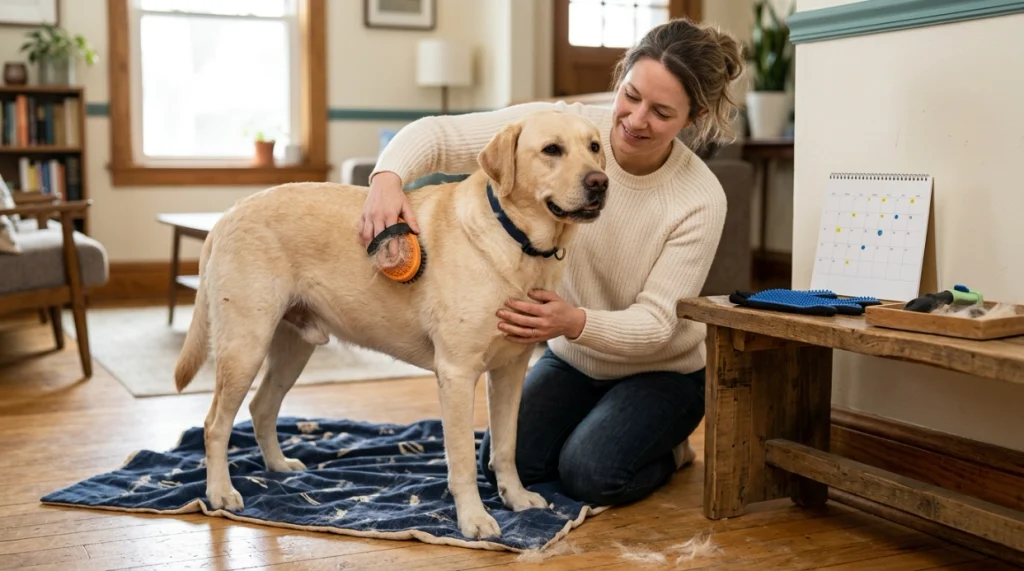
SaveMy rule is simple: use the least aggressive tool that gets the job done. That keeps regular grooming comfortable and repeatable.
For a typical Labrador household, I would start with this schedule and adjust based on the individual dog.
- Tuesday: 5–10 minutes with a rubber curry brush.
- Thursday: Quick coat and skin check, followed by gentle brushing.
- Weekend: More thorough 10–15 minute grooming session.
- Heavy shedding: Add short daily rubber-brush sessions.
- Undercoat tool: Use once or twice weekly during active shedding if needed.
This schedule is easy to remember. More importantly, it gives you frequent chances to notice changes in your dog’s skin, coat, lumps, or tender areas.
Consistency beats one aggressive grooming session every few weeks.
Best Brushes I Would Consider for a Labrador Retriever
If you’re ready to pick a grooming tool, these are the types I would consider first for a Labrador’s short, dense double coat:
🏆 Best Everyday Pick
KONG ZoomGroom
★★★★★ 4.8/5 editorial fit
Soft rubber fingers collect loose short hair and can be used on a dry or wet coat. I like this style for routine Labrador brushing because it is gentle enough for frequent sessions.
🍂 Best for Heavy Shedding
FURminator Undercoat deShedding Tool for Large Dogs, Short Hair
★★★★☆ 4.7/5 editorial fit
Its stainless-steel edge is designed to reach loose undercoat beneath short topcoat. I would reserve this one for controlled deshedding instead of treating it as an everyday brush.
💰 Simple Alternative
SleekEZ Original Medium Grooming Tool
★★★★☆ 4.6/5 editorial fit
The compact shedding edge is designed to lift loose hair without clipping the coat. I like the simple shape, but light pressure is still important on a short-coated Labrador.
Frequently Asked Questions
Should I brush my Labrador every day?
You can brush a Labrador every day during heavy shedding if you use a gentle tool and light pressure. During normal weeks, two or three sessions are usually enough. Avoid aggressive daily use of sharp or metal deshedding edges because repeated passes can irritate the skin.
How long should I brush my Labrador?
Most routine Labrador brushing sessions can take about five to fifteen minutes. Stop when you’re no longer collecting much loose hair or your dog becomes uncomfortable. Heavy shedding may require longer sessions, but several short sessions are often easier than one aggressive grooming marathon.
What brush is best for a Labrador’s short coat?
A rubber curry brush is an excellent everyday choice because it loosens short shed hairs without harsh scraping. During a heavy shed, you can add a properly sized undercoat deshedding tool once or twice weekly. Always use gentle pressure and follow the manufacturer’s instructions.
Do Labradors shed all year?
Yes. Labradors can shed throughout the year, with periods when hair loss becomes much heavier. Indoor temperature, daylight, climate, and the individual dog’s coat can affect how obvious those changes feel. Regular brushing makes the loose hair easier to control inside your home.
Should I shave my Labrador to stop shedding?
No. A Labrador’s short coat is still a functional double coat, and shaving is not a normal solution for shedding. Manage loose hair with brushing, bathing when needed, and appropriate deshedding tools. Ask your veterinarian or professional groomer before making major changes to the coat.
Final Takeaway
For most Labradors, start with two to three brushing sessions each week. Increase to gentle daily brushing when the undercoat is shedding heavily.
Use a soft rubber tool for most routine work and save stronger deshedding tools for when they’re genuinely needed. Your Labrador gets a healthier grooming routine, and far more loose hair ends up in the brush instead of on your sofa.
Start with one short brushing session today. Check the skin, use light pressure, and let your dog’s coat tell you how often the next session needs to happen.

Thomas Cutter is a lifelong dog owner and the founder of FindOutAboutDogs.com. With over 10 years of hands-on experience owning multiple breeds, Thomas created this site to provide honest, research-based dog advice that real owners can actually trust.
