How to Brush a Doodle Coat: A Gentle Step-by-Step Guide
Quick Answer
To brush a Doodle coat, part the hair into narrow layers and use a slicker brush with light strokes from near the skin outward. Check each section with a stainless-steel comb before moving on. This method, called line brushing, catches hidden tangles without dragging through them. Start with a brush suited to your dog’s curls; this curly coat brush guide explains the options.
Six quick brushing steps
- Check the skin: Find knots, soreness, or tight mats before brushing.
- Prepare your tools: Use a suitable slicker brush, steel comb, and treats.
- Lift one layer: Expose a narrow line of hair near the skin.
- Brush gently outward: Make short strokes without scraping the skin.
- Test with comb: Stop and rework any section that snags.
- Check trouble spots: Inspect ears, armpits, collar area, and legs.
One safety rule
- Never force a mat: Tight or painful mats need professional grooming, not scissors or harder brushing.
A Doodle can look fluffy after brushing while hiding a tight knot next to the skin. That’s why technique matters more than simply sweeping a brush across the top.
I’ll show you a repeatable home routine for Goldendoodles, Labradoodles, Bernedoodles, and other Poodle mixes. You’ll also learn how to adapt it to different coat textures.


Why Does a Doodle Coat Need Special Brushing?
Doodle coats can combine Poodle-like curls with the softer or straighter hair of another breed. Their thickness, curl, and shedding patterns vary from dog to dog.
A mat is a dense clump of intertwined hair that ordinary brushing cannot easily separate. Trapped loose strands and repeated friction can turn small tangles into painful mats.
- Curly coats: Often hold loose hairs within dense curls and may need daily attention.
- Wavy or fleece coats: Can look smooth outside while knots collect near the roots.
- Looser, straighter coats: May shed more visibly but still tangle around feathering and friction areas.
- Long coats: Require more sectioning and comb checks than short, maintained trims.
Brushing also gives you a chance to inspect the skin for redness, parasites, and debris. VCA Animal Hospitals’ coat-care guidance explains why tool selection and gentle handling matter.
What Tools Do You Need to Brush a Doodle Coat?
For most Doodles, start with a suitable slicker brush and a steel comb. A grooming spray and a few treats are useful extras, not replacements for technique.
A slicker brush for loosening hair
Slicker brushes have many closely spaced, angled pins that separate curls and gather loose hair. Longer pins can help with thick, longer coats, provided you use gentle pressure.
Choose a brush head your dog can tolerate around the legs and body. The AKC’s brush selection guide stresses matching the tool to coat type.
A stainless-steel comb for checking your work
A comb is the easiest way to detect knots that a slicker may miss. Pass it carefully through a small brushed section without pulling against resistance.
I treat the comb as the final check, rather than assuming a fluffy-looking section is finished. The brush versus comb comparison explains why both tools belong in the kit.
Optional extras that make grooming easier
- Dog-safe detangling spray: Lightly mist dry-feeling hair according to its instructions; avoid eyes.
- Non-slip floor mat: Helps your dog stand comfortably without worrying about sliding.
- Soft treats: Reward relaxed behavior and make short sessions more pleasant.
- Good lighting: Makes hidden tangles, irritated spots, and debris easier to identify.
How Do You Line Brush a Doodle Coat Step by Step?
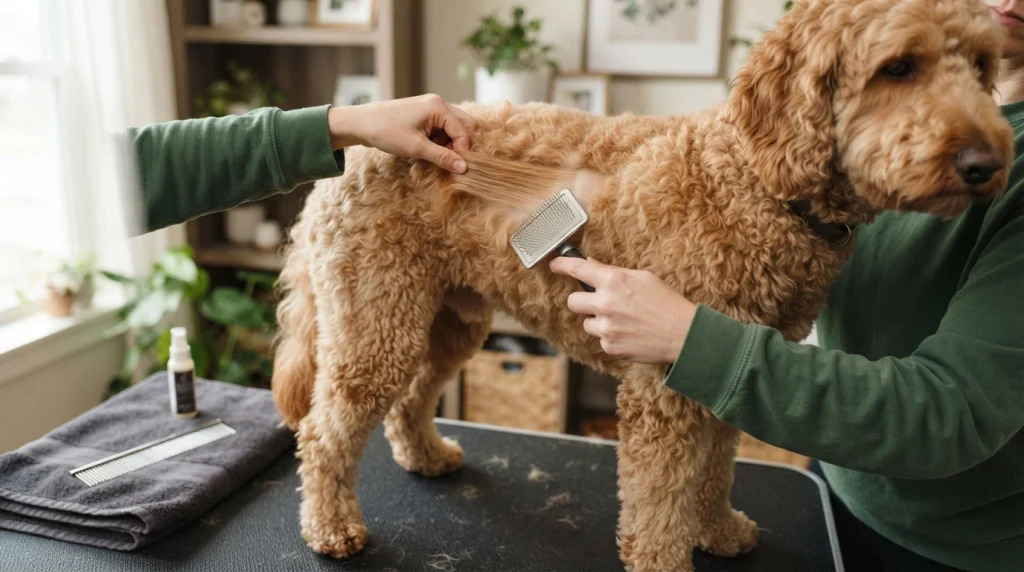 Save
SaveLine brushing means exposing one narrow layer of coat at a time, brushing it carefully, and checking it with a comb. This reaches the deeper coat that surface brushing often misses.
Step 1: Check the coat and your dog’s comfort
Let your dog stand or lie comfortably on a stable, non-slip surface. Run your fingertips through the coat, looking for tight knots, sore skin, or trapped debris.
Do not begin with an area that already hurts. Ask a groomer about skin-tight mats before trying to detangle them.
Step 2: Start with an easy section
Pick a calm, accessible area, such as the outside of a lower leg or shoulder. Use your free hand to lift the hair above a small horizontal part.
You should be able to see the skin along the part without pulling hair tightly. Starting with an easy patch makes the process less stressful.
Step 3: Brush the exposed hair gently
Use short, controlled slicker strokes, working through the hair from near the roots toward the ends. Let the pins separate the curls; avoid pushing them into skin.
If the brush catches, stop and reduce the section size. Hold the hair near its base to limit uncomfortable tugging.
Step 4: Move up one layer at a time
Release a narrow strip of hair above your first part. Brush this newly exposed layer before opening the next one.
Work through one leg, side, or body area methodically. Skipping hidden layers defeats the purpose of line brushing.
Step 5: Follow every section with a comb
Gently pass the comb from near the skin through the ends of each completed section. Use the wider teeth first if your comb has two tooth spacings.
When the comb snags, stop instead of yanking. Recheck the knot, loosen a small tangle carefully, and test again.
Step 6: Finish sensitive areas and reward your dog
Check the ear bases, armpits, collar line, chest, groin, and tail base with extra care. Smaller brush strokes help around delicate skin.
End with praise or a treat before your dog becomes restless. A comfortable five-minute practice session beats a long struggle.
Which Doodle Areas Mat the Fastest?
Areas that experience rubbing, moisture, or movement usually need extra checks. You can use this quick map after walks and during longer brushing sessions.
- Behind the ears: Check where soft hair folds and rubs against the head.
- Under the collar: Remove the collar when safe and inspect the hidden hair beneath it.
- Armpits and chest: Harness straps and leg movement can encourage knots.
- Inner thighs and groin: Work carefully around thin, sensitive skin.
- Tail base: Lift longer hair and examine the roots, not only the fluffy tip.
- Paws and lower legs: Watch for damp hair, burrs, and dirt after outdoor play.
I recommend choosing two trouble spots for each quick daily check, then rotating through the rest. For more detail on individual knots, see this slicker brush and comb guide.
How Often Should You Brush a Doodle Coat?
Many long, curly Doodles benefit from daily brushing, while shorter, well-maintained coats may need less. Your actual schedule should follow coat length, density, activity, and how fast tangles appear.
The table offers practical starting points, not guaranteed intervals. Check the coat often and increase brushing whenever the comb begins catching.
| Coat situation | Starting routine | Priority check |
|---|---|---|
| Long, dense curls | Daily section brushing | Comb to the roots |
| Medium wavy coat | Daily checks; thorough brushing several times weekly | Ears and harness line |
| Short, professionally maintained trim | Frequent checks; brush as needed, often several times weekly | Legs and friction points |
| Changing puppy coat | Check daily; increase brushing as tangles develop | Hidden loose puppy hair |
If you’re busy, prioritize a brief comb check over a rushed surface-only brush. For a longer coat, schedule a full section-by-section session when you can work patiently.
How Do You Remove Small Tangles Without Hurting Your Doodle?
Only attempt small, loose tangles that lift easily away from the skin. Work slowly, and stop immediately if the hair pulls or your dog shows discomfort.
- Identify whether the knot is loose or tight against the skin.
- Support the hair close to the skin with your fingers to reduce pulling.
- Lightly apply a dog-safe detangler if suitable for the product and coat.
- Gently tease the outer edges with your fingers, then a comb or slicker.
- Stop if the knot resists, the skin reddens, or the dog becomes distressed.
Never cut a close-to-skin mat with household scissors. Hair can conceal folds of skin, making accidental cuts surprisingly easy.
PetMD’s veterinary-reviewed matting guide advises professional help for stubborn or extensive mats. A veterinarian should assess redness, wounds, odor, or suspected infection.
Should You Brush a Doodle Before or After a Bath?
 Save
SaveBrush and comb your Doodle before bathing, especially when tangles are present. Wetting an already knotted coat can make it harder to manage.
After washing, dry the coat thoroughly using a dog-appropriate method and comfortable temperature. Ask your groomer to show you safe drying techniques for dense curls.
- Before water: Remove loose tangles and check for any mat that needs professional help.
- During washing: Follow dog-shampoo directions and avoid aggressive rubbing.
- After washing: Dry carefully and check sections with the comb as the coat dries.
- After swimming: Inspect collar, chest, and leg hair once your dog is safely dry.
How Do You Get a Puppy Used to Brushing?
Begin with gentle handling before attempting a complete coat session. Touch the shoulders, paws, ears, and legs briefly, rewarding calm behavior each time.
A soft, appropriately sized brush may be more comfortable for a young puppy. Keep the sessions positive rather than trying to finish everything at once.
- First sessions: Let the puppy see and sniff the brush, then reward calm interest.
- Next sessions: Add a few light strokes in an easy area.
- Build duration: Increase slowly while practicing the gentle comb check.
- Stop early: Pause when the puppy squirms, flinches, or seems overwhelmed.
As the puppy coat changes, a previously simple brushing routine may suddenly need more attention. The same careful technique also applies to a Poodle coat grooming routine.
What Brushing Mistakes Should Doodle Owners Avoid?
The most common error is brushing only the visible surface. A coat can feel soft above a knot that keeps tightening underneath.
- Using excessive pressure: Slicker pins should move through hair, not scrape skin.
- Skipping the comb: Surface appearance cannot confirm that deeper hair is clear.
- Pulling through knots: Pain makes future brushing harder and risks skin injury.
- Ignoring sensitive zones: Ears and armpits can mat even when the back looks perfect.
- Bathing over mats: Deal with knots safely before washing.
- Waiting too long: Small tangles are easier to address before they compact.
In 2026, there are plenty of grooming gadgets to choose from, but better results still start with careful sections. A reliable slicker-and-comb routine matters more than collecting extra tools.
When Should You Choose a Professional Groomer?
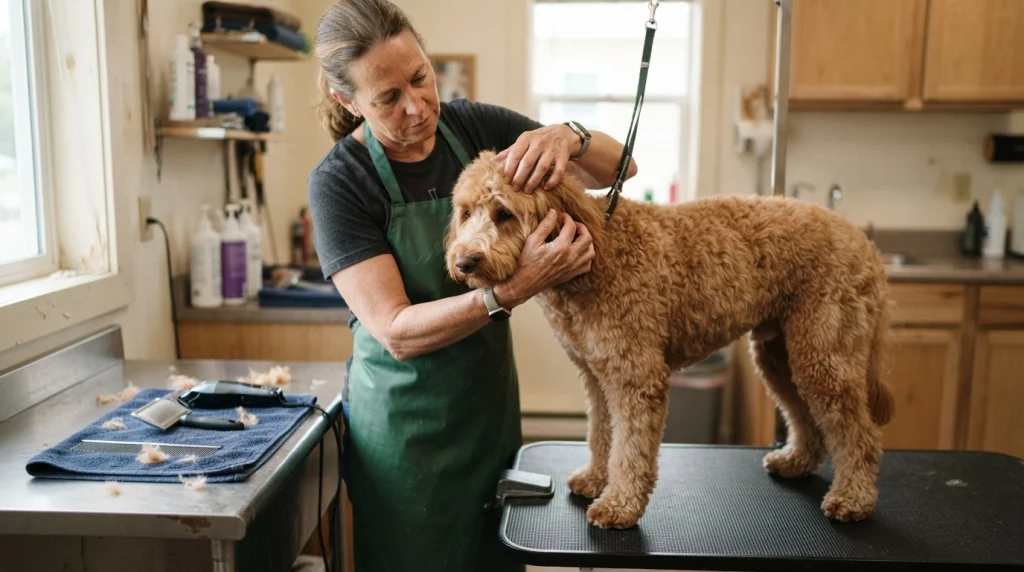 Save
SaveSeek professional help when mats sit tight against the skin, cover large areas, or cause pain. Groomers can assess whether safe clipping is kinder than detangling.
Call your veterinarian if you notice broken skin, swelling, discharge, strong odor, or persistent discomfort. For general grooming and warning signs, see the AKC’s at-home grooming guidance.
Ask your groomer what coat length fits your available brushing time. A shorter trim can make daily care easier without sacrificing your dog’s comfort.
Which Grooming Tools Are Worth Considering?
If you are building a simple grooming kit, these three real tools cover distinct needs. The suitability scores below are editorial assessments of features, not customer review ratings or claims of hands-on testing.
Affiliate disclosure: As an Amazon Associate, this site may earn from qualifying purchases.
🏆 Best for dense, long coats
Chris Christensen Big G Slicker Brush
★★★★☆ 4.0/5 editorial fit
The manufacturer’s 27 mm stainless-steel pins and flexible cushion are built for dense, longer coats. I’d consider it for a heavily curled Doodle, provided the head size fits and the owner can brush gently.
💰 Easy-cleaning option
Andis Self-Cleaning Slicker Brush
★★★☆☆ 3.0/5 editorial fit
The self-cleaning mechanism releases collected hair, making routine cleanup simpler. I’d reserve it for loose hair and light tangles, rather than relying on it for thick, deeply matted curls.
🐾 Essential finishing check
Andis 7.5-Inch Steel Comb
★★★★★ 5.0/5 editorial fit
This 7.5-inch steel comb has coarse and fine tooth spacing for checking and finishing. I’d pair it with any appropriate slicker brush to find hidden snags before they become mats.
Frequently Asked Questions
Can I brush my Doodle every day?
Yes, many long or curly Doodle coats benefit from daily gentle brushing. Use light strokes and check for irritation rather than repeatedly scraping the same place. Shorter trims may require less work, but friction areas still deserve frequent inspections.
What is the best brush for a Goldendoodle?
For many long or densely curled Goldendoodles, a properly sized slicker brush is the most useful main tool. Follow it with a steel comb to find hidden knots. For coat-specific recommendations, compare the best Goldendoodle brushes.
Can I brush a wet Doodle coat?
A lightly misted coat may be easier to brush when you use an appropriate dog grooming spray. Avoid dragging tools through wet, tangled hair or bathing over mats. Remove existing knots safely before washing, then dry and check the coat carefully.
How do I know when my Doodle is fully brushed?
Check each section with a steel comb, starting near the roots and moving toward the ends. The comb should move comfortably without catching. If it snags, stop and check for a knot instead of forcing the teeth through.
Should I shave my Doodle if the coat is matted?
A groomer may recommend clipping when matting is tight, extensive, or painful. Do not attempt to cut mats with household scissors, especially near the skin. If the skin looks infected or injured, arrange veterinary care before further grooming.
Final Takeaway: Brush in Layers, Then Check With a Comb
The simplest way to brush a Doodle coat is to work patiently through small layers with a suitable slicker. Always follow with a steel comb to catch the tangles you cannot see.
Start with one comfortable section today and build a routine your dog can tolerate. If a mat hurts or resists, let a professional handle it safely.

Thomas Cutter is a lifelong dog owner and the founder of FindOutAboutDogs.com. With over 10 years of hands-on experience owning multiple breeds, Thomas created this site to provide honest, research-based dog advice that real owners can actually trust.
