Slicker Brush vs Metal Comb for Dog Mats: Which Works Better?
Quick Answer
A slicker brush is usually better for loosening small tangles and separating a dog’s coat, while a metal comb is better for finding knots the brush missed and checking whether the coat is fully detangled. For many medium, long, curly, or dense coats, I use both tools rather than choosing only one. If you have a double-coated breed, this guide to choosing a Husky brush shows how different grooming tools handle different coat layers.
Slicker brush vs metal comb at a glance
- Best for loosening: A slicker brush works through light tangles and loose hair across a larger area.
- Best for checking: A metal comb reveals small knots hiding close to the skin.
- Best routine: Brush first, then run a comb through each finished section.
- For tight mats: Stop if the coat pulls the skin or your dog shows pain.
- For sensitive areas: Work slowly behind the ears, under the legs, and near collars or harnesses.
My simple rule
- Use the slicker to do the brushing and the metal comb to confirm you actually finished the job.
If you have ever brushed a fluffy dog until the coat looked perfect, then found a knot underneath five minutes later, you already understand this comparison.
I treat a slicker brush and metal comb as two different tools with overlapping jobs. One does most of the loosening, while the other tells me whether hidden tangles are still there.


What Is the Difference Between a Slicker Brush and a Metal Comb?
A slicker brush uses many fine metal pins arranged across a broad brush head. A grooming comb uses one or two rows of longer metal teeth spaced along a narrow spine.
That design difference changes how each tool moves through the coat.
- Slicker brush: Covers more coat with each pass and separates loose or tangled hair.
- Metal comb: Tests a smaller section more precisely and catches hidden resistance.
- Wide-tooth comb section: Helps start through thicker or moderately tangled hair.
- Fine-tooth comb section: Works well for the final check after brushing.
The American Kennel Club’s dog brush guide describes slicker brushes as useful for medium, long, wire, and curly coats, including removing loose hair and helping with mats.
VCA Animal Hospitals also notes that combs can suit longer coats and help with tangles or loose undercoat.
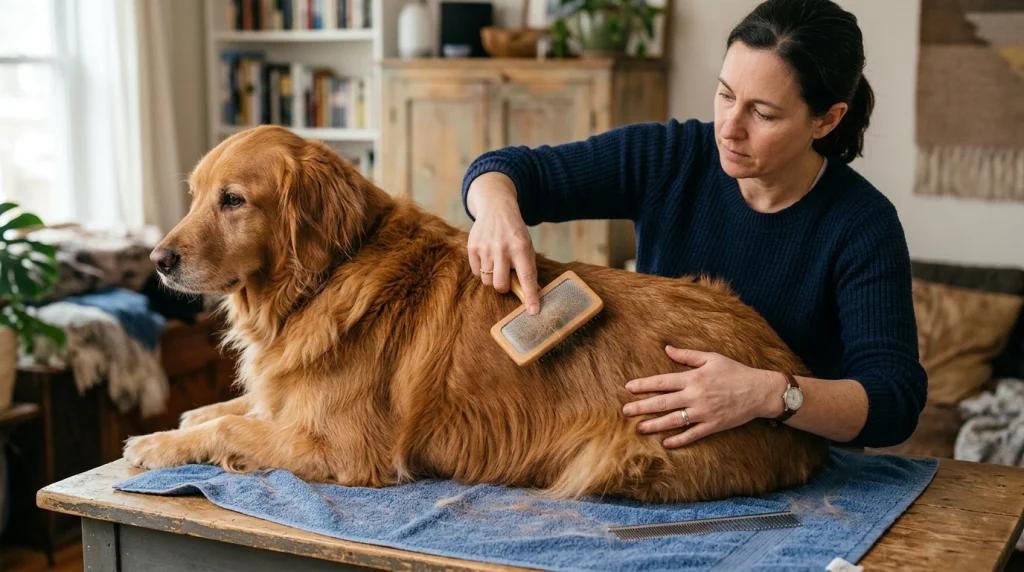
Slicker Brush vs Metal Comb for Dog Mats: Which Is Better?
 Save
SaveA slicker brush is usually the better working tool for small tangles, while a metal comb is the better finishing and detection tool. Neither is a safe answer for every tight mat.
Here is how I compare them in everyday grooming.
| Feature | Slicker Brush | Metal Comb |
|---|---|---|
| Main job | Loosening tangles and collecting loose hair | Finding hidden tangles and checking finished sections |
| Coverage | Broad | Narrow and precise |
| Light tangles | Excellent | Good |
| Hidden knots | Can miss them if you skim the surface | Excellent for detecting resistance |
| Tight mats | May pull painfully | May pull painfully |
| Best role | Primary brushing tool | Final coat check |
My usual routine is simple: slicker first, comb second.
If the comb slides from the base of the coat toward the ends without catching, I know I have done more than make the surface look tidy.
Can a Slicker Brush Remove Dog Mats?
A slicker brush can loosen small, recently formed tangles and help prevent them from turning into larger mats. It works best before hair becomes tightly compacted against the skin.
The mistake I see most often is brushing only across the top layer.
How I use a slicker on tangled fur
- Separate a small section. Lift the surrounding coat so you can see where the tangle begins.
- Support the hair near the skin. This reduces pulling as you work.
- Start near the outer edge. Do not immediately drag the brush through the tightest part.
- Use short, light strokes. Let the pins separate hair instead of forcing them through it.
- Check your progress. Stop if the skin moves strongly with the mat.
Light pressure matters. AKC grooming guidance warns that pressing a slicker too firmly can cause discomfort.
I would rather make five gentle passes than one aggressive pull.
Can a Metal Comb Remove Mats From a Dog?
A metal comb can work through minor tangles, but I mainly use it to locate knots and verify that brushing reached the full coat depth. It gives very clear feedback when hair is still tangled.
If the comb stops, I stop too.
- Easy pass: The section is likely well separated.
- Light resistance: There may be a small tangle worth working gently.
- Hard stop: Do not yank the comb through.
- Skin pulling: Reassess the mat or seek professional help.
A comb is especially useful behind the ears, around feathering, beneath longer body hair, and in other spots where a slicker can glide across the outer coat while missing a knot underneath.
This same brush-and-check approach is useful when working with dense double coats. My guide on managing Siberian Husky shedding explains why I finish dense-coat grooming with a metal comb.
Should You Use the Slicker Brush or Comb First?
Use the slicker brush first in most routine grooming sessions, then finish with the metal comb. The slicker separates and lifts the coat more efficiently across larger areas.
The comb then becomes your quality-control tool.
My brush-and-comb routine
- Inspect the coat for redness, debris, damp areas, and obvious mats.
- Divide long or dense hair into manageable sections.
- Brush each section gently with the slicker.
- Run the metal comb through the same section.
- Return to the slicker if the comb finds a small tangle.
- Stop if you find a mat that feels tight against the skin.
This is close to what groomers often call line brushing. You expose and work small layers instead of skimming over the entire dog.
It takes longer. It also finds far more hidden tangles.
When Should You Stop Trying to Brush Out a Mat?
 Save
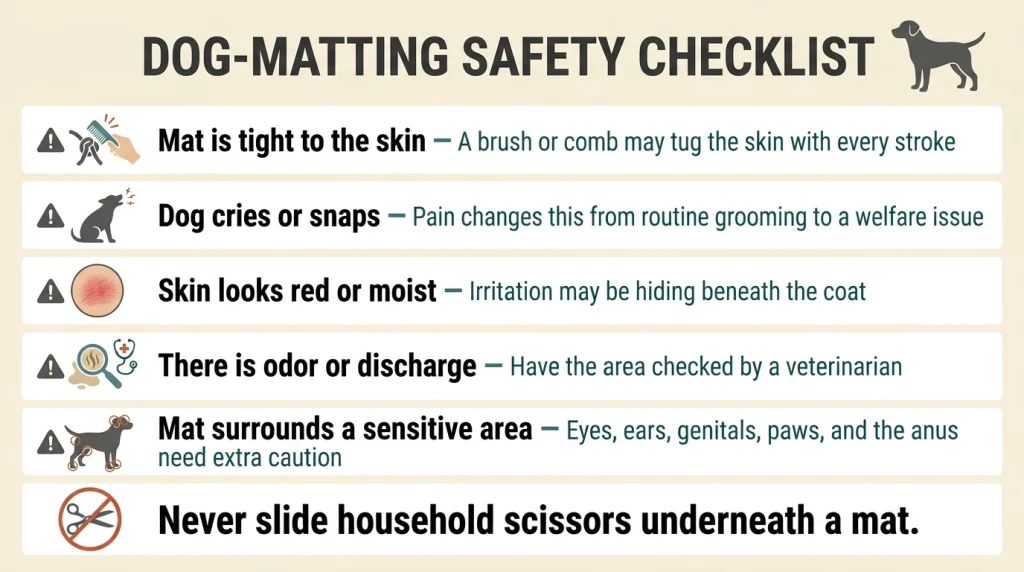
SaveYou should stop home detangling when a mat is tight against the skin, covers a large area, causes pain, or sits in a sensitive location. Continued pulling can make grooming painful and may irritate the skin.
Veterinary guidance is especially cautious with severe matting.
- Mat is tight to the skin: A brush or comb may tug the skin with every stroke.
- Dog cries or snaps: Pain changes this from routine grooming to a welfare issue.
- Skin looks red or moist: Irritation may be hiding beneath the coat.
- There is odor or discharge: Have the area checked by a veterinarian.
- Mat surrounds a sensitive area: Eyes, ears, genitals, paws, and the anus need extra caution.
A current PetMD veterinary guide to pet matting recommends professional help for tight, large, painful, or sensitive-area mats.
One rule matters most: never slide household scissors underneath a mat. Dog skin can be pulled upward inside the tangled coat, making accidental cuts surprisingly easy.
Where Do Dog Mats Form Most Often?
Mats tend to develop where hair experiences friction, moisture, or repeated movement. These areas deserve extra attention during every grooming session.
- Behind the ears
- Under the front legs
- Around the chest and collar
- Under harness straps
- Between or behind the legs
- Around the tail and hindquarters
- On long feathering
- Where damp hair dries tangled
I like to comb these areas even when the rest of the coat looks fine. Ten seconds of checking can catch a knot before it becomes a grooming problem.
Which Dogs Benefit Most From a Slicker and Metal Comb?
The two-tool setup is particularly useful for dogs with longer, curly, woolly, feathered, or dense coats. Coat texture matters more than simply choosing a brush based on dog size.
- Poodles and Poodle mixes: Dense curls can hide tangles close to the skin.
- Golden Retrievers: Feathering behind the ears and legs can knot.
- Shih Tzus: Long hair benefits from section-by-section brushing and comb checks.
- Havanese and Maltese: Fine coats can tangle quickly.
- Collies: Long outer hair and dense undercoat need more than surface brushing.
- Doodles: Mixed coat textures can make hidden matting difficult to spot.
Short, smooth-coated dogs usually do not need this exact combination for mat prevention. Rubber grooming tools or short-bristle brushes often make more sense for those coats.
How Do You Prevent Dog Mats From Coming Back?
 Save
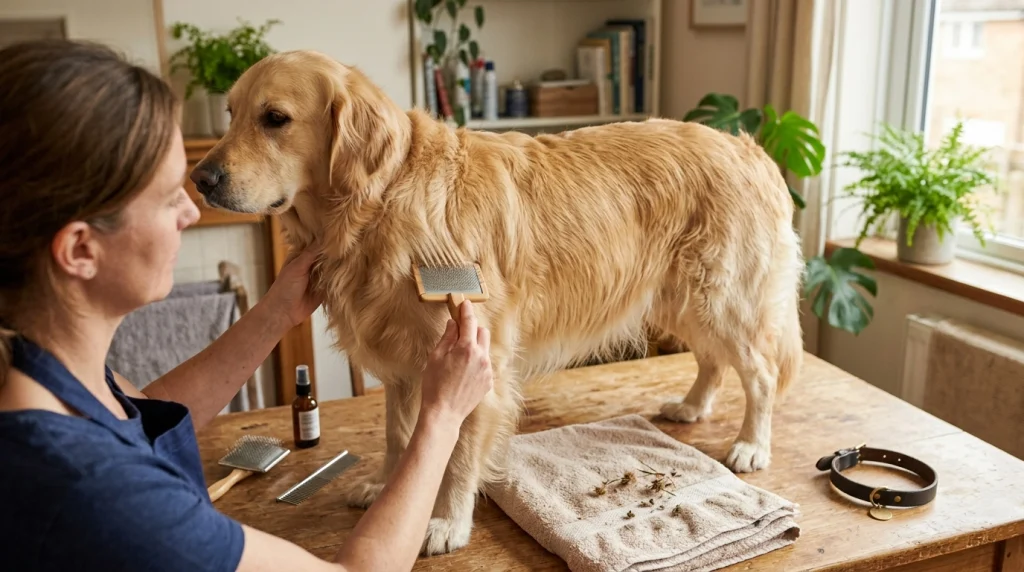
SaveRegular grooming is easier than repairing a neglected mat. The ideal schedule depends on coat length, density, activity, moisture exposure, and how quickly your individual dog tangles.
I focus on these habits rather than chasing an exact universal brushing schedule.
- Brush to the base: Do not polish only the visible surface.
- Comb-check afterward: Use the metal comb to locate missed knots.
- Check friction areas: Look behind ears and beneath collars or harnesses.
- Inspect after outdoor activity: Remove burrs and debris before they become embedded.
- Detangle before bathing: Water can make existing tangles harder to manage.
- Dry the coat properly: Damp, compressed hair can tangle as it dries.
- Keep sessions short: Comfortable grooming is easier to repeat consistently.
As of 2026, my preference has not changed: the best grooming tool is one you can use thoroughly without scraping the skin or making your dog dread being brushed.
Dog Grooming Tools I Would Choose for Mats and Tangles
If you’re building a simple home grooming kit, I would choose tools that perform different jobs rather than buying three versions of the same brush.
🏆 Best Premium Slicker
Chris Christensen Big G Slicker Brush
★★★★½
This long-pin slicker is designed for dense and longer coats where shallow brushing can miss deeper hair. I like this style for careful line brushing when reach and control matter more than keeping the tool inexpensive.
🔎 Best Final-Check Comb
Andis Steel Pet Comb
★★★★☆
A simple steel comb gives you both broader and finer tooth spacing for checking finished sections. I use this kind of comb as a detector rather than forcing it through resistance.
💰 Best Everyday Slicker
Safari Self-Cleaning Slicker Brush
★★★★☆
The self-cleaning design makes frequent coat maintenance more convenient when the brush fills with loose hair. I would choose it for routine brushing and light tangles rather than trying to attack a tight mat.
Frequently Asked Questions
Is a slicker brush or comb better for matted dog hair?
A slicker brush is usually better for gently loosening small tangles across the coat. A metal comb is better for locating hidden knots and checking your work afterward. Tight, painful, or skin-level mats should be handled by a professional rather than repeatedly pulled with either tool.
Can I use a metal comb instead of a slicker brush?
You can use a metal comb alone on some coats, but it covers a much smaller area and can pull if you meet resistance. For long, curly, or dense coats, I usually find a slicker-plus-comb routine faster and more thorough.
Should a metal comb touch my dog’s skin?
The teeth should move through the coat from near the base without scraping or digging into the skin. Use light pressure, choose smooth rounded teeth, and stop whenever the comb catches firmly or your dog reacts as though the area hurts.
How do I know if my dog’s mat is too severe to brush out?
A mat is too severe for routine home brushing when it sits tightly against the skin, covers a large area, causes pain, or has redness, odor, moisture, or damaged skin underneath. Those mats are safer in the hands of a groomer or veterinarian.
Does brushing a dog every day prevent mats?
Frequent brushing can reduce mat formation, but technique matters as much as frequency. A dog can still become matted if you brush only the surface. Work in sections, reach the base of the coat gently, and finish with a metal comb where the coat tends to knot.
Final Takeaway: Use the Slicker to Work and the Comb to Check
For most dogs prone to tangles, I would not choose between a slicker brush and a metal comb. I would keep both.
Use the slicker to separate the coat and deal with light tangles, then use the metal comb to find anything you missed.
The important part is knowing when to stop. If a mat is tight, painful, or pulling heavily on the skin, professional removal is safer than turning grooming into a battle.
Keep the sessions gentle and consistent, and you will catch most tangles while they are still easy to manage.

Thomas Cutter is a lifelong dog owner and the founder of FindOutAboutDogs.com. With over 10 years of hands-on experience owning multiple breeds, Thomas created this site to provide honest, research-based dog advice that real owners can actually trust.
