How to Brush a Short Dog Coat: Easy Step-by-Step Guide
Quick Answer
To brush a short dog coat, start with a rubber grooming brush or mitt to loosen dead hair, dirt, and dander. Use gentle strokes over the neck, shoulders, back, sides, chest, and legs, then finish in the direction of hair growth with a bristle brush. The AKC dog brush guide also recommends rubber and bristle brushes for short-coated dogs.
Quick brushing steps
- Check the skin: Look for redness, cuts, bumps, fleas, ticks, or sore areas before brushing.
- Loosen dead hair: Work a flexible rubber brush gently over the coat.
- Follow the coat: Finish with strokes in the natural direction of hair growth.
- Use light pressure: Short hair gives the brush less cushioning from the skin.
- Brush weekly: A weekly session works well for many smooth, short-coated dogs.
- Adjust for shedding: Brush more often when loose hair starts collecting around your home.
One rule I always follow
- If the skin becomes pink, your dog flinches, or the brush drags roughly, stop and reduce the pressure.
Short-haired dogs can look almost maintenance-free. I hear that assumption often, especially from new Boxer, Beagle, Pug, and short-coated mixed-breed owners.
The hair may be short, but it still sheds, traps dust, and sits close to sensitive skin. Here is the simple brushing routine I use to keep a short coat clean without turning grooming into a wrestling match.


What Is a Short Dog Coat?
A short dog coat has hairs that stay relatively close to the body rather than forming long feathering, curls, or a flowing outer layer. Short coats can still be smooth, coarse, dense, single-layered, or double-coated.
That distinction matters. A Boxer and a Labrador can both look short-haired, yet their grooming needs aren’t identical.
- Smooth short coat: Hair lies tight against the body, as on many Boxers and Greyhounds.
- Short dense coat: Hair feels thicker and may include a substantial undercoat.
- Short coarse coat: Individual hairs may feel stiffer even though they remain close to the body.
- Short double coat: A shorter outer coat sits over a softer undercoat that can shed heavily.
I choose the brush based on what my fingers feel beneath the visible coat. Coat structure tells me more than hair length alone.
What Brush Should You Use on a Short-Haired Dog?
For most smooth short coats, start with a rubber curry brush, flexible grooming mitt, or short-bristled brush. These tools remove loose surface hair without requiring sharp metal pins against lightly protected skin.
A short but dense double coat may need a more specialized shedding tool occasionally. Don’t automatically use one just because your dog sheds.
| Brush Type | Best For | Main Job | My Use |
|---|---|---|---|
| Rubber curry brush | Smooth short coats | Loosens dead hair and dirt | First choice for routine brushing |
| Grooming mitt | Brush-sensitive dogs | Collects loose surface hair | Useful for nervous beginners |
| Bristle brush | Smooth and moderately dense coats | Finishes and lifts loose hair | My finishing tool |
| Short-hair de-shedding tool | Short coats with a true undercoat | Removes loose undercoat | Occasional, controlled use |
| Slicker brush | Short, dense coats when appropriate | Collects loose hair and light tangles | Light pressure only |
If you’re still learning how grooming tools differ, compare that setup with my guide on choosing brushes for a dense double coat. The contrast makes it clear why one brush cannot suit every dog.
How Do You Brush a Short Dog Coat Step by Step?
 Save
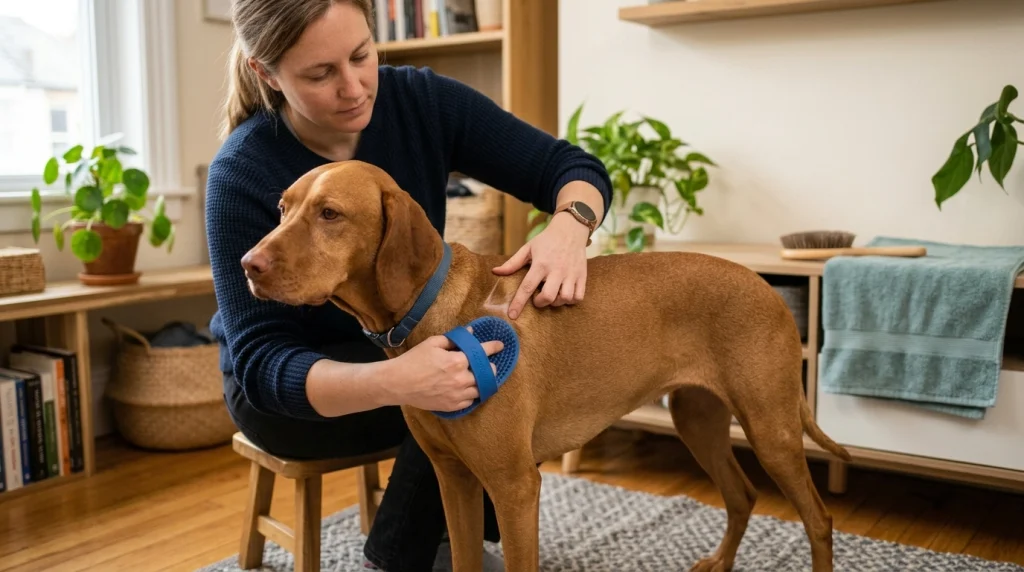
SaveBrush a short coat in small sections with controlled pressure. I prefer a two-stage routine: loosen the dead hair first, then collect and smooth it.
The entire session doesn’t need to take long. Consistency beats aggressive brushing.
- Settle your dog first. Choose a non-slip surface and let your dog inspect the grooming tool.
- Inspect the skin. Check for cuts, rashes, bumps, tender areas, parasites, and anything stuck in the coat.
- Start at the shoulders. Use your rubber brush with light, short strokes over the shoulders and upper back.
- Work along the body. Continue over the back, sides, and hindquarters without grinding repeatedly over one spot.
- Brush the chest carefully. Reduce pressure where the coat is thinner and bones sit closer to the surface.
- Work down the legs. Support each leg and avoid scraping bony joints with a stiff brush.
- Finish with the coat direction. Use a bristle brush or gentle mitt from front to back to collect loosened hair.
- Check the skin again. Look for new redness and stop if any area appears irritated.
Should you brush against the direction of the hair?
A light pass against the coat can help loosen dead hair on some short-coated dogs. Follow it with gentle strokes in the direction the hair naturally lies.
I don’t scrub hard against the grain. On thin-coated areas, that extra friction can irritate the skin quickly.
How much pressure should you use?
Use only enough pressure to move the hair and make contact through the flexible grooming tool. You shouldn’t need to press hard enough to drag the skin underneath.
My practical check is simple: watch the dog. Flinching, turning toward the brush, repeatedly sitting down, or trying to leave tells me to reassess my pressure or tool.
How Often Should You Brush a Short-Haired Dog?
Once a week is a practical starting schedule for many smooth short-coated dogs. Dogs that shed heavily may benefit from more frequent gentle sessions.
The ASPCA also recommends weekly brushing for smooth, short coats. Your individual dog’s shedding and skin condition should still guide the final routine.
- Light shedding: Start around once weekly.
- Moderate shedding: Try two short sessions per week.
- Heavy seasonal shedding: Increase frequency while keeping each session gentle.
- After muddy outdoor activity: Check and clean the coat as needed.
- Sensitive skin: Use shorter sessions and softer tools rather than simply brushing more.
More brushing isn’t automatically better. A five-minute session that your dog enjoys is more useful than twenty minutes of repeated scraping.
Why Should You Brush a Dog That Has Short Hair?
Brushing removes loose hair, surface debris, and dead skin while giving you a regular chance to inspect your dog’s skin. Short-haired dogs still benefit even when their coats never form obvious mats.
It also catches some shed hair before it lands on clothing and furniture. That’s often the benefit owners notice first.
- Loose hair removal: Dead hairs are collected before they fall throughout the home.
- Dirt removal: Rubber and bristle tools can lift surface debris.
- Skin checks: Grooming helps you notice lumps, scratches, ticks, redness, or tender spots.
- Coat care: Brushing helps spread the coat’s natural oils.
- Handling practice: Calm grooming teaches the dog to accept routine body handling.
VCA Animal Hospitals notes that regular grooming also helps remove loose hair and dead skin while distributing natural skin oils along the hair shafts.
What Changes If Your Dog Has a Short Double Coat?
 Save
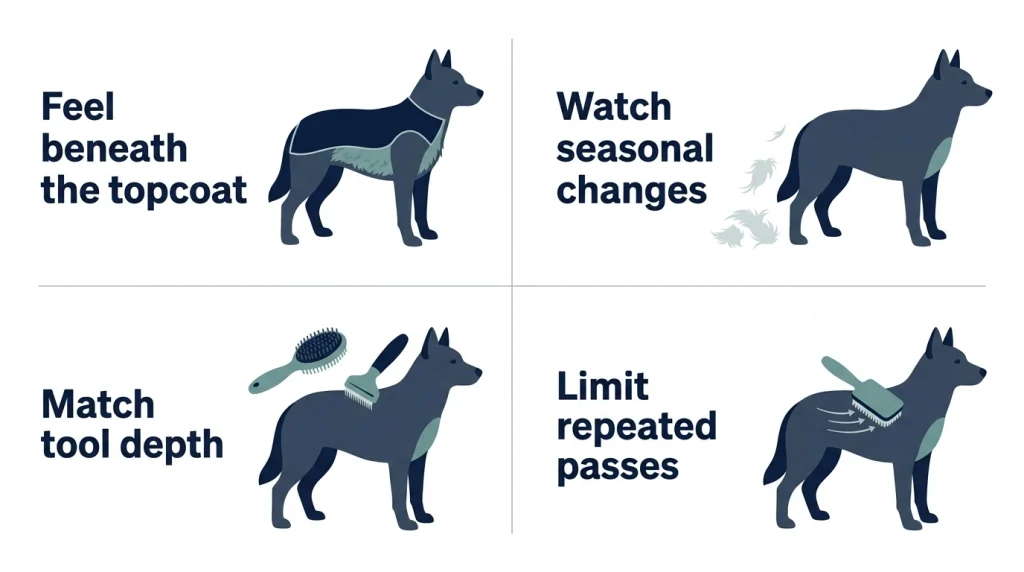
SaveA short double coat needs more attention underneath the visible hair. Labradors are a familiar example: their hair looks short, but loose undercoat can produce substantial shedding.
In that situation, a rubber brush may handle routine surface grooming while an appropriate undercoat tool helps during heavier shedding.
- Feel beneath the topcoat: A softer, denser layer suggests an undercoat.
- Watch seasonal changes: Loose fluffy hair may become more noticeable during heavier shedding.
- Match tool depth: Don’t use long aggressive teeth when the coat doesn’t require them.
- Limit repeated passes: Removing more hair isn’t useful if the skin becomes irritated.
For an example of a much denser double-coat routine, see how I manage heavy undercoat shedding. The basic principle remains the same: remove loose hair without fighting healthy attached coat.
What Are the Most Common Short-Coat Brushing Mistakes?
The biggest mistake is treating short hair as protection against rough technique. In reality, short-coated dogs often have less fur between the grooming tool and their skin.
Gentle tools and controlled pressure matter.
- Using too much pressure: Hard brushing can irritate skin without improving hair removal.
- Using the wrong tool: A deep undercoat rake is unnecessary for a thin single coat.
- Repeating one area: Stop working a patch simply because more hair keeps appearing.
- Ignoring sensitive zones: The belly, chest, joints, face, and lower legs need extra care.
- Brushing irritated skin: Don’t keep grooming across sores, inflamed areas, or unexplained bald patches.
- Forcing a frightened dog: Build tolerance with brief sessions, treats, and calm handling.
When should you stop brushing and call a veterinarian?
Normal shedding shouldn’t leave raw skin or painful bald patches. Stop routine grooming and contact your veterinarian when you notice concerning skin or coat changes.
- Persistent redness or inflamed skin
- Open sores, scabs, or bleeding
- Sudden bald patches or unusual hair loss
- Repeated intense scratching or biting
- Strong odor with greasy, flaky, or irritated skin
- Pain when a particular area is touched
Routine brushing is coat care, not medical treatment. VCA’s grooming and coat care guidance is a useful starting point when you’re deciding whether a coat change needs professional attention.
How Do You Brush a Dog That Hates Being Brushed?
Start by making the grooming tool less threatening. For a brush-sensitive short-haired dog, a soft rubber mitt often feels more like petting than formal grooming.
I build duration slowly rather than trying to finish the whole body on day one.
- Let your dog sniff the brush.
- Reward calm interest.
- Touch the shoulder gently with the tool.
- Give one or two light strokes.
- Reward again and end the session.
- Add more strokes during later sessions.
My rule is to stop while the dog is still cooperating. Ending successfully makes the next session easier.
My Simple 2026 Short-Coat Grooming Routine
 Save
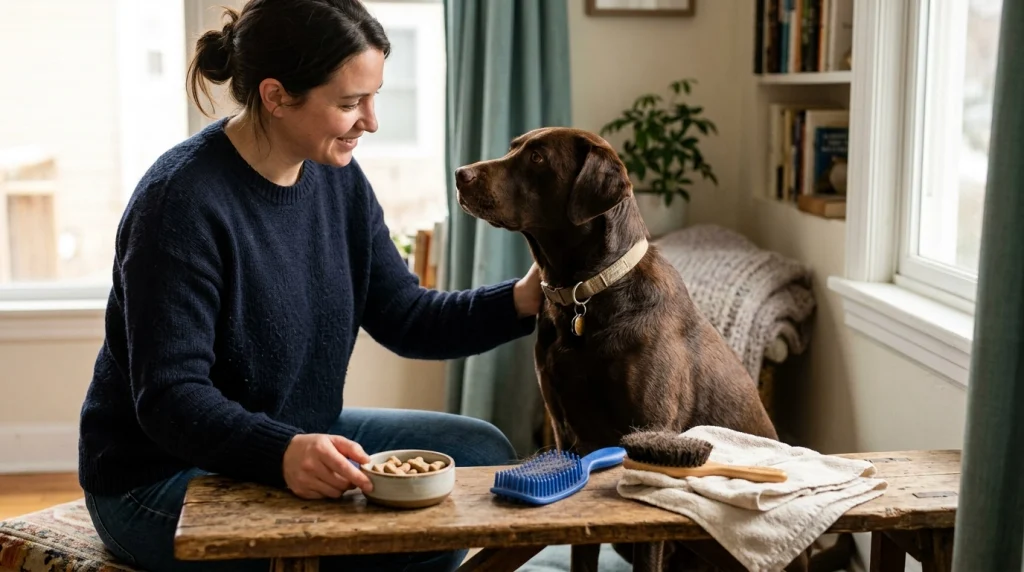
SaveAs of 2026, I still prefer a simple routine over collecting a drawer full of specialty tools. Most smooth short coats need good technique more than complicated equipment.
My basic setup contains a rubber brush, a bristle finishing brush, treats, and a towel.
- Before brushing: Run your hands over the dog and inspect the skin.
- First pass: Loosen dead hair with a rubber curry brush.
- Second pass: Smooth and collect hair with a bristle brush.
- Final check: Look at the skin and feel for anything unusual.
- Finish: Reward the dog and clean the brush before storing it.
On a cooperative smooth-coated dog, that routine can be surprisingly quick. I would rather repeat it regularly than wait until loose hair covers the sofa.
Short-Hair Dog Brushes I Would Consider
If you’re ready to choose a brush, I would match the tool to the coat instead of buying the most aggressive de-shedding product on the shelf.
🏆 Best for Smooth Short Coats
KONG ZoomGroom Dog Brush
★★★★½
Flexible rubber fingers loosen surface hair and can also be used during bathing. I like this style for smooth coats because it gives me plenty of control without metal pins pressing against lightly protected skin.
✨ Best Finishing Brush
Safari Bristle Dog Brush
★★★★☆
A bristle brush is useful after the rubber-brush pass for collecting loosened hair and smoothing the coat. I would pick this type when I want a straightforward finishing tool rather than something designed to reach deep undercoat.
🐕 Best for Short Double Coats
FURminator Short Hair deShedding Tool
★★★★☆
The short-hair version is intended for coats with loose undercoat rather than every smooth-haired dog. I would reserve it for an appropriate shedding coat and use controlled passes instead of treating it as an everyday rubber brush.
Frequently Asked Questions
Should you brush a short-haired dog every day?
You can give a short-haired dog brief, gentle brushing more frequently during heavy shedding, but daily brushing isn’t necessary for every dog. Many smooth short coats do well with weekly brushing. Adjust the schedule to shedding, skin sensitivity, and how comfortably your dog tolerates grooming.
Is a slicker brush good for short-haired dogs?
A slicker can work for some short, dense coats, but it isn’t my automatic choice for thin, smooth coats. Fine metal pins can feel harsh when little hair protects the skin. Rubber brushes, grooming mitts, and bristle brushes are often better starting tools.
Can you use a human hairbrush on a short-haired dog?
A human brush may smooth the coat but isn’t designed around canine coat types or grooming needs. A dog-specific rubber or bristle brush gives you better control over pressure and loose-hair removal while matching the shape and density of a dog’s coat.
Should you brush a short-haired dog before or after a bath?
A gentle pre-bath brushing helps remove loose hair and surface debris. A rubber grooming brush can also help distribute dog shampoo during bathing if its manufacturer allows wet use. Once the dog is completely dry, a light finishing brush can collect more loosened hair.
Why is my short-haired dog shedding so much?
Some short-haired dogs naturally shed substantial amounts, especially dogs with dense undercoats. However, sudden hair loss accompanied by bald patches, itching, sores, redness, or major coat changes deserves veterinary attention rather than increasingly aggressive brushing.
Final Takeaway: Keep Short-Coat Brushing Simple
Learning how to brush a short dog coat comes down to three things: choose a gentle tool, use light pressure, and brush consistently. For many smooth coats, a rubber brush followed by a bristle brush is all you need.
Pay attention to the skin while you work. Once your dog learns that grooming feels comfortable, those few weekly minutes become one of the easiest parts of routine coat care.

Thomas Cutter is a lifelong dog owner and the founder of FindOutAboutDogs.com. With over 10 years of hands-on experience owning multiple breeds, Thomas created this site to provide honest, research-based dog advice that real owners can actually trust.
