How to Brush a Silky Dog Coat: A Gentle Step-by-Step Guide
Quick Answer
To brush a silky dog coat, first loosen small tangles with your fingers or a wide-tooth comb. Then brush small sections gently from the ends toward the roots before finishing in the direction of hair growth. Silky coats usually need frequent care, while different coat types need different brushing tools.
Quick brushing steps
- Check the coat: Feel for tangles, mats, burrs, sore spots, and skin irritation before brushing.
- Start at the ends: Work through the lower part of the hair before moving closer to the skin.
- Use small sections: Separate the coat so you can brush through the full length instead of skimming the surface.
- Keep pressure light: Stop and loosen resistance rather than pulling a brush through a knot.
- Comb to check: Finish with a metal comb to find small tangles the brush may have missed.
- Brush frequently: Long silky coats often need daily attention to prevent tangles from becoming mats.
Most important rule
- Never yank through a stubborn mat. Stop and get professional help if the coat is tight against the skin.
Silky dog coats look effortless when they move, but keeping them that way takes a little technique. Fine hair tangles quickly around ears, legs, armpits, collars, and other high-friction areas.
I’ve found that gentle, regular brushing works far better than waiting for knots to become a weekend project. The goal is not to pull out as much hair as possible.


What Is a Silky Dog Coat?
A silky dog coat is made of fine, smooth hair that tends to lie relatively flat and move freely. Depending on the breed, it may be straight or slightly wavy and may grow quite long.
Examples include coats seen on Yorkshire Terriers, Maltese, some Spaniels, and long-coated companion breeds. Individual coat texture still varies, so your dog’s actual hair matters more than the breed label.
- Fine texture: Individual hairs can knot around each other easily.
- Long growth: Longer strands experience more friction and collect more debris.
- Feathering: Ears, legs, chest, tail, and belly may have longer decorative hair.
- High-friction zones: Harnesses, collars, armpits, and sleeping positions can encourage tangles.
Silky hair needs a different approach from a dense double coat. You are mainly trying to separate, detangle, and smooth the strands without snapping them or pulling the skin.
What Brush Should You Use on a Silky Dog Coat?
A pin brush and metal comb make a practical everyday combination for many silky-coated dogs. A soft or appropriately gentle slicker can help with small tangles, but it should not be scraped repeatedly across the skin.
The best tool reaches through the hair comfortably. It should not snag every few inches or require force.
| Tool | Best Use | Pressure | My Role for It |
|---|---|---|---|
| Pin brush | Routine brushing and separating long hair | Light | Main everyday brush |
| Steel comb | Finding remaining tangles and checking your work | Very light | Final coat check |
| Soft slicker | Small tangles and loose hair | Light | Occasional detangling tool |
| Fingers | Separating delicate knots before using a tool | Minimal | First step on resistance |
VCA Animal Hospitals notes that brush choice should match the type of hair coat. Their dog grooming and coat-care guidance also stresses being gentle and avoiding excessive pulling on tangles.
How Do You Brush a Silky Dog Coat Step by Step?
 Save
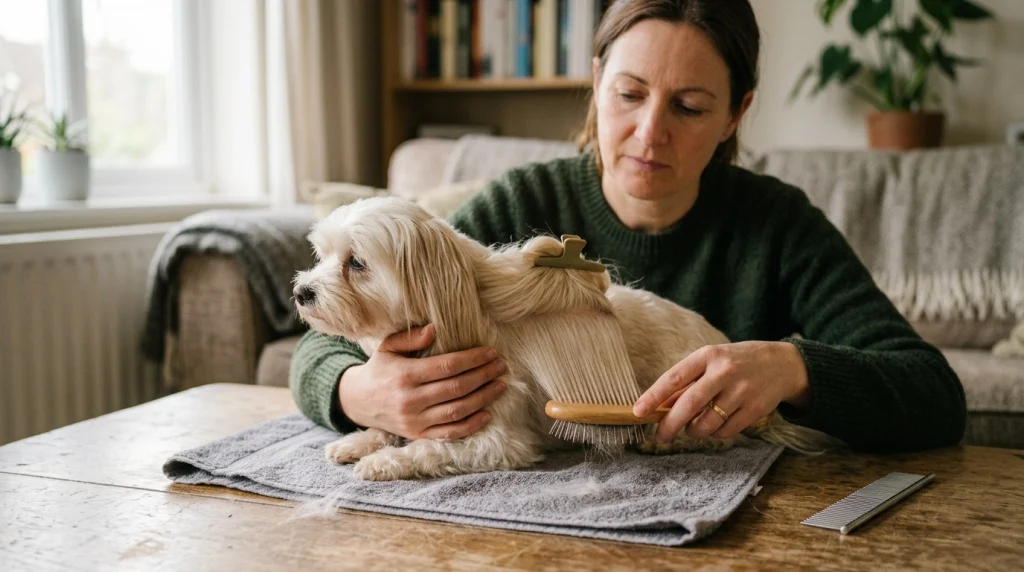
SaveBrush a silky coat in small sections, beginning with easy areas and working gradually through the full length. Starting at the tips reduces how much tension reaches the skin.
I prefer a calm ten-minute session over rushing through the entire dog. Good brushing should feel methodical, not like a tug-of-war.
- Set your dog somewhere stable. Use a non-slip surface where your dog can stand, sit, or lie comfortably.
- Inspect the skin and coat. Look behind the ears, under the collar, beneath the front legs, around the groin, and along feathered legs.
- Separate obvious tangles with your fingers. Hold the hair above the knot so you do not pull directly on the skin.
- Begin near the ends. Make short, gentle strokes through the last few inches of hair.
- Move gradually toward the roots. Once the ends move freely, brush a slightly longer section.
- Work section by section. Lift a thin layer of coat and brush the hair beneath it instead of only smoothing the surface.
- Finish in the direction of growth. This lays the coat neatly and lets you feel for remaining rough spots.
- Check with a steel comb. The comb should pass through without hard stops or pulling.
When the comb stops, I stop too. Resistance tells me to investigate instead of pulling harder.
Should you brush a silky coat wet or dry?
For routine maintenance, I prefer brushing a dry or slightly conditioned coat rather than working through dripping-wet hair. What matters most is avoiding unnecessary tension and following the directions for any grooming spray you use.
Before bathing, remove obvious tangles and debris. The ASPCA’s dog grooming guidance recommends brushing before a bath to remove dead hair and mats.
How Often Should You Brush a Silky Dog Coat?
Long silky coats often benefit from daily brushing, especially when the hair is kept long. Shorter pet trims may need less work, but high-friction areas still deserve frequent checks.
Both ASPCA and veterinary grooming guidance recommend frequent or daily attention for long, silky coats because they tangle more easily than short coats.
- Full long coat: Check and brush daily.
- Shorter pet trim: Brush several times each week and inspect friction areas daily.
- After outdoor walks: Check immediately for burrs, seeds, twigs, dirt, and damp tangles.
- Before bathing: Remove tangles first.
- During coat changes: Increase brushing if your individual dog releases more loose hair.
The schedule is different for dense double-coated dogs. My guide on managing heavy Husky shedding shows why coat structure changes the routine.
How Do You Remove Tangles Without Hurting Your Dog?
Start with your fingers and work from the outside of the tangle inward. Hold the hair close to the skin with one hand so your other hand is not pulling directly against your dog.
Patience matters more than strength. A tool that suddenly stops should never become a signal to pull harder.
- Loosen the edges: Separate a few hairs at a time.
- Work from the tip: Do not start by driving a comb into the center of a knot.
- Support the hair: Hold above the tangle to reduce skin tension.
- Use short strokes: Long forceful strokes increase pulling.
- Stop when it hurts: Flinching, snapping, turning toward the tool, or trying to escape deserves attention.
For severe mats close to the skin, I would use a professional groomer instead of experimenting with scissors. VCA advises using clippers rather than scissors for mats because dog skin can be injured easily.
Where Do Silky Coats Tangle Most?
 Save
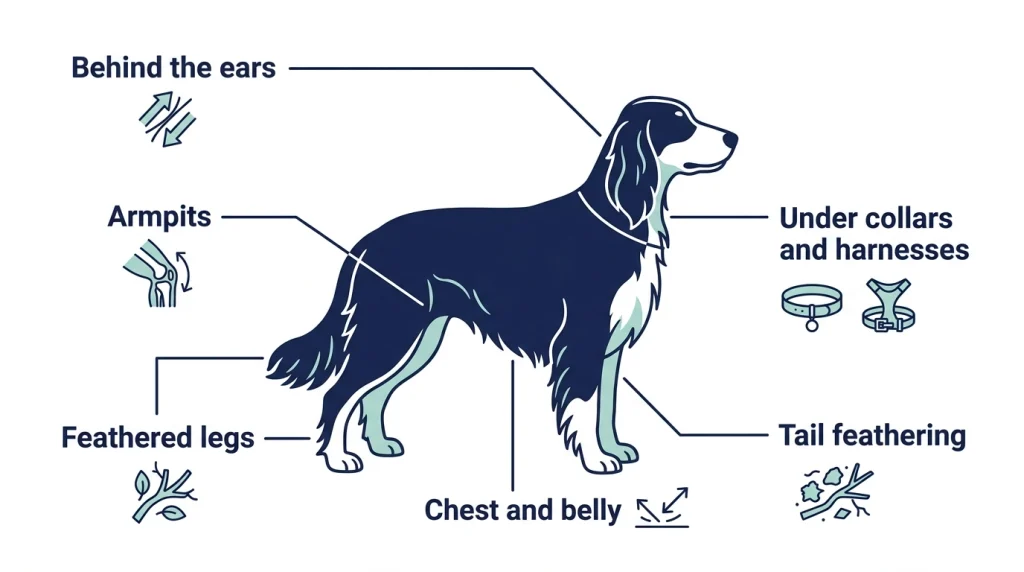
SaveTangles appear fastest where hair rubs against hair, equipment, moisture, or moving body parts. Those areas deserve attention even when the rest of the coat still looks perfect.
- Behind the ears: Fine hair moves against the head and collar.
- Armpits: Every step creates friction beneath the front legs.
- Under collars and harnesses: Straps continually rub the coat.
- Feathered legs: Long hair picks up dirt and twists during movement.
- Chest and belly: Hair can rub against beds, floors, grass, and clothing.
- Tail feathering: Long strands move constantly and may collect debris.
My quickest maintenance habit is running my fingers through these zones each evening. A tiny knot takes seconds to fix before it tightens.
What Brushing Mistakes Damage a Silky Coat?
The biggest mistake is treating resistance as something to overpower. Fine hair breaks, skin stretches, and the dog quickly learns that grooming predicts discomfort.
- Brushing only the surface: The top can look smooth while knots form underneath.
- Starting at the roots: This pushes several small snags into one tighter tangle.
- Pulling through knots: Force creates pain and can damage hair.
- Ignoring friction areas: Ears and armpits may mat before the back shows any problem.
- Waiting too long: Small tangles are far easier to manage than established mats.
- Using the wrong tool: An aggressive de-shedding tool is not automatically suitable for fine silky hair.
As of 2026, I still consider technique more important than chasing the newest grooming gadget. A basic pin brush and comb used gently can outperform a complicated tool used badly.
How Can You Make Brushing Easier for Your Dog?
Keep early sessions short and predictable. Brush an easy area, reward calm behavior, and finish before your dog becomes restless.
The American Kennel Club’s grooming guidance also describes grooming as an opportunity to build comfort with handling.
- Let your dog sniff the brush before you begin.
- Start on the back or shoulders rather than a sensitive area.
- Use slow, light strokes.
- Pause if your dog becomes tense.
- Reward calm standing or lying down.
- Build session length gradually.
I would rather stop with one section perfectly brushed than finish the whole dog while both of us are frustrated. Tomorrow is another grooming day.
Silky-Coat Grooming Tools I Would Consider
 Save
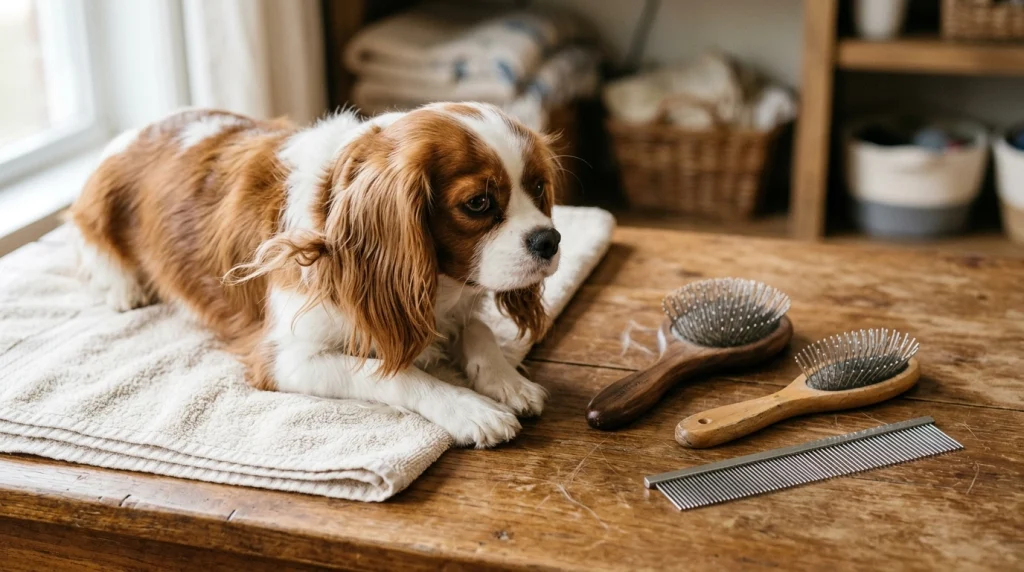
SaveIf you’re ready to build a simple grooming kit, I would choose tools that perform different jobs rather than buying three versions of the same brush.
🏆 Best for Long Silky Coats
Chris Christensen Original Series Oval Pin Brush
★★★★½
The range includes polished-tip pins in different lengths, including longer options intended for longer coats. I like a proper pin brush as the main daily tool because it separates silky hair without turning every session into aggressive de-shedding.
💰 Best Budget Brush
Andis Medium Pin Brush
★★★★☆
This straightforward pin brush uses medium-length pins for routine detangling, smoothing, and finishing. I would pick it for an owner who wants an uncomplicated daily brush without paying premium-tool prices.
✨ Best Finishing Tool
Andis 7-1/2-Inch Steel Comb
★★★★½
The steel comb has both coarse and fine tooth spacing for detangling and finishing. I use a comb as the final test because it exposes little snags that can hide beneath hair that already looks smooth.
Frequently Asked Questions
Should you brush a silky-haired dog every day?
Daily brushing is often useful when a silky coat is kept long because fine hair tangles easily. A shorter pet trim may need less brushing, but you should still inspect behind the ears, under the legs, and beneath collars or harnesses frequently.
Is a slicker brush good for silky dog hair?
A gentle slicker can help with small tangles and loose hair, but it should not be dragged repeatedly across sensitive skin. I prefer a pin brush for regular maintenance and use a metal comb afterward to check that the coat is fully detangled.
Should I cut a mat out of my dog’s silky coat?
Do not use scissors close to a tight mat because dog skin may be pulled up into the tangled hair. Severe or skin-level mats are safer in the hands of a professional groomer or veterinarian who can decide how they should be removed.
Why does my dog’s silky coat tangle so quickly?
Fine long hairs rub together as your dog walks, sleeps, plays, or wears a collar and harness. Moisture and debris can make the problem worse. Frequent brushing prevents those small knots from tightening into larger mats.
How do I know when I have finished brushing?
I use a metal comb as the final check. If it moves comfortably from near the skin through the ends without catching, that section is usually finished. Do not keep brushing simply because a few loose hairs still appear on the tool.
Final Takeaway: Gentle and Frequent Wins
The easiest way to maintain a silky dog coat is to prevent small tangles from becoming big ones. Use a suitable pin brush, work from the ends toward the roots, and check your work with a comb.
Keep your pressure light and pay close attention behind the ears, under the legs, and beneath collars or harnesses. Those few minutes of routine maintenance can save both you and your dog from a painful detangling session later.
Start with one short brushing session today. Once your dog learns that grooming is calm and predictable, keeping that silky coat smooth becomes much easier.

Thomas Cutter is a lifelong dog owner and the founder of FindOutAboutDogs.com. With over 10 years of hands-on experience owning multiple breeds, Thomas created this site to provide honest, research-based dog advice that real owners can actually trust.
