How to Brush a Wire Dog Coat: A Step-by-Step Guide
Quick Answer
To brush a wire dog coat, work in the direction of hair growth with a pin brush, then use a metal comb to find remaining tangles and finish lightly with a slicker brush. Keep your pressure gentle because wire coats have a harsh outer layer over softer hair, and regular brushing is different from hand-stripping a wire coat.
Quick brushing steps
- Check the skin: Look for redness, sores, burrs, knots, or tender areas before brushing.
- Brush with the coat: Use short, controlled strokes following the natural direction of hair growth.
- Work in sections: Start at the shoulders and gradually move across the body instead of skimming the surface.
- Comb afterward: Run a medium or fine metal comb through each section to uncover hidden tangles.
- Finish lightly: Use a slicker brush to collect loose hair without pressing the pins into the skin.
- Stop at resistance: Never yank a brush or comb through a snag.
One important distinction
- Brushing removes loose hair, debris, and tangles. Hand-stripping removes mature outer hairs and is a separate grooming technique.
Wire coats look tough, but they still need careful grooming. I’ve found that the biggest mistake is treating that coarse surface like an ordinary short coat.
The best results come from working through the coat in layers. This guide shows exactly how I brush a wire dog coat without turning a simple grooming session into a pulling contest.


What Is a Wire Dog Coat?
A wire dog coat has a coarse, firm outer layer that feels bristly rather than silky. Many wire-coated dogs also carry a softer layer underneath.
The American Kennel Club describes wire coats as having a hard outer coat with a softer undercoat. Breeds and individual dogs vary, so coat texture matters more than relying only on the breed name.
- Outer coat: Coarse, protective hairs that create the characteristic wiry texture.
- Undercoat: Softer hair beneath the harsh top layer in many wire-coated dogs.
- Furnishings: Longer hair around areas such as the eyebrows, beard, legs, or chest.
- Dead coat: Mature loose hair that may need brushing, carding, or professional hand-stripping depending on the dog.
Common examples include Wirehaired Dachshunds, Airedale Terriers, Border Terriers, Scottish Terriers, and German Wirehaired Pointers. Coat density still differs from dog to dog.
What Brush Should You Use on a Wire-Haired Dog?
A pin brush, metal comb, and gentle slicker brush make a useful basic kit. Each one does a different job, so I rarely rely on a single tool.
The AKC dog brush guide notes that slicker brushes can be used on wire-coated dogs, while pin brushes can help work through tangles. The important part is keeping pressure light.
| Tool | Best Job | When I Use It | Main Caution |
|---|---|---|---|
| Pin brush | General brushing | First pass over the body | Do not scrape the skin |
| Metal comb | Finding hidden tangles | After brushing each section | Never pull through resistance |
| Slicker brush | Loose hair and finishing | Final light pass | Too much pressure can irritate skin |
| Stripping knife | Removing mature outer coat | Only when hand-stripping is appropriate | Requires proper technique |
If you’re comparing brushes for other coat structures, the site’s guide to choosing a brush for a dense double coat shows why matching the tool to coat depth matters.
How Do You Brush a Wire Dog Coat Step by Step?
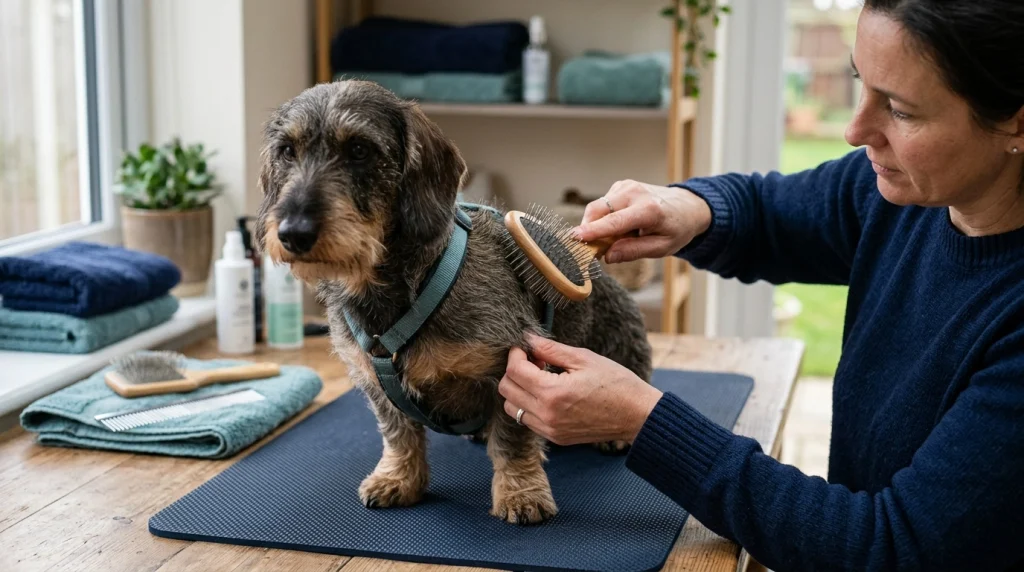 Save
SaveBrush a wire coat in small sections and follow the direction of hair growth. Your goal is to loosen debris and dead hair while keeping the skin comfortable.
I prefer a slow three-tool routine because it shows me where the coat is catching. It also prevents me from repeatedly brushing one sensitive area.
1. Inspect the Coat Before You Start
Run your hands over the dog before picking up a brush. Feel for tangles, burrs, scabs, damp areas, lumps, or spots that make your dog flinch.
- Check behind the ears.
- Feel under the collar.
- Inspect the armpits.
- Check the beard and chest.
- Look between and behind the legs.
- Inspect the belly and groin carefully.
Veterinary guidance from VCA Animal Hospitals recommends regular coat checks because grooming can help reveal tangles, debris, parasites, lumps, and sensitive areas.
2. Start With a Pin Brush
Begin at the shoulders or upper back and use short strokes in the direction the coat naturally lies. Lift a small section with your free hand instead of dragging the brush across the whole dog.
The brush should move through the hair rather than press into the skin. If your dog keeps turning toward the brush, reduce your pressure.
3. Work Through the Coat in Sections
Move gradually from one area to the next. I usually finish one section before shifting several inches farther along the body.
- Brush the shoulders and upper back.
- Continue along the sides and ribcage.
- Brush the chest carefully.
- Move down the legs with shorter strokes.
- Work through the beard and furnishings gently.
- Finish around the rear and tail.
Section-by-section grooming is especially useful if your dog also carries a noticeable undercoat. For comparison, this guide to managing heavy undercoat shedding explains the same idea of working through dense hair rather than brushing only the surface.
4. Follow With a Metal Comb
A comb is my reality check. A coat can look brushed while small tangles remain underneath.
Start with the wider-spaced teeth if your comb has two sections. Move to the finer side only after the wider teeth pass comfortably.
- Comb glides through: That section is probably finished.
- Comb stops suddenly: Find the snag instead of pulling harder.
- Skin moves with the comb: Stop and reduce tension.
- Dog reacts: Check for a mat, sore spot, or skin irritation.
5. Finish With a Light Slicker Pass
Use the slicker to collect loosened hair and tidy the surface. Keep the movement light because the closely spaced pins can become uncomfortable if pushed into the skin.
I usually make only a few controlled passes per section. More brushing is not automatically better.
How Hard Should You Brush a Wire-Haired Dog?
Use only enough pressure to move through the coat. You should not need to force metal pins against the skin to remove loose hair.
The ASPCA’s dog grooming guidance recommends brushing according to coat type and using grooming sessions to keep the coat clean and check the skin.
- Good pressure: The brush moves through the hair without dragging the skin.
- Too much pressure: Your dog flinches, turns, sits down, or tries to leave.
- Too many passes: The skin starts looking pink or irritated.
- Too much resistance: The tool catches repeatedly and pulls the coat.
My stopping rule is simple. Once the comb moves comfortably through the section, I stop chasing every last loose hair.
How Often Should You Brush a Wire Dog Coat?
For many pet wire coats, a thorough brushing about once a week is a practical starting point. Dogs with longer furnishings, active outdoor lifestyles, or heavier undercoats may need more frequent attention.
The exact schedule depends on coat density and how quickly debris or tangles develop. Check the coat between full sessions instead of relying only on a calendar.
| Situation | Practical Routine |
|---|---|
| Typical pet wire coat | Thorough check and brush about weekly |
| Long beard or leg furnishings | Check several times each week |
| After woodland or field activity | Inspect immediately for burrs and debris |
| Tangle-prone individual coat | Shorter, more frequent sessions |
As of 2026, the basic principle has not changed: consistent gentle grooming is safer than waiting until the coat becomes packed or tangled.
Is Brushing the Same as Hand-Stripping?
No. Brushing and hand-stripping are different grooming jobs.
Brushing removes loose material and helps prevent tangles. Hand-stripping intentionally removes mature outer hairs from the follicle to maintain the characteristic texture of certain wire coats.
- Brushing: Routine home maintenance.
- Combing: Finds tangles and checks completed sections.
- Carding: Removes loose undercoat or dead material with a specialized tool.
- Hand-stripping: Removes mature wire hairs according to coat condition and grooming goals.
The AKC explains that proper hand-stripping should be gentle and requires skill. Their hand-stripping guide also notes that inexperienced stripping can be uncomfortable and may not produce the intended result.
For a companion dog, I would ask an experienced wire-coat groomer before attempting stripping for the first time. Breed-standard grooming and simple household coat maintenance are not always the same thing.
Should You Brush a Wire Coat Before or After a Bath?
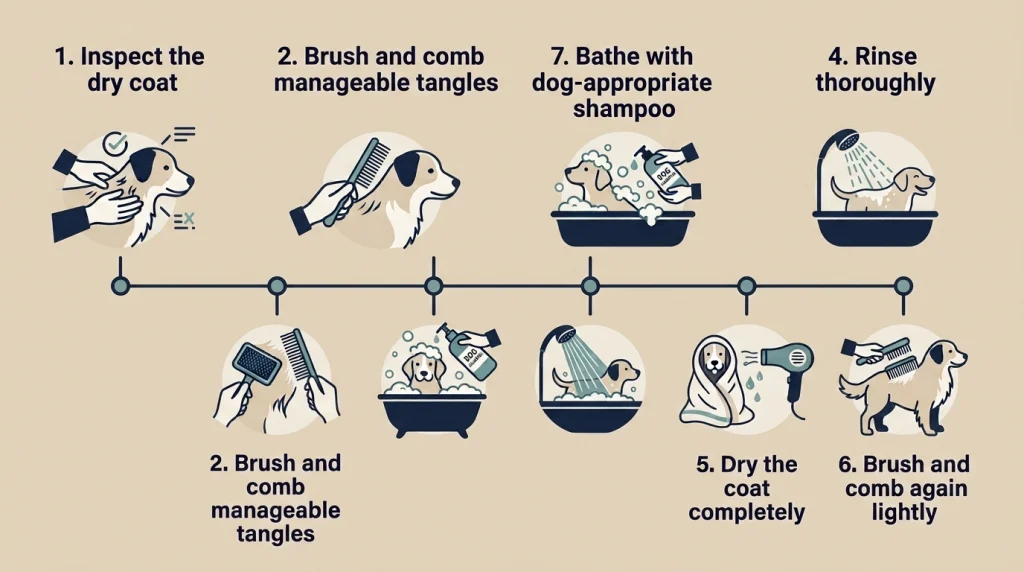 Save
SaveDo the main detangling before bathing. Water can make existing tangles harder to deal with once they tighten together.
I give the coat another light brush after it is fully dry. That second pass removes loosened hair and helps me check the final texture.
- Inspect the dry coat.
- Brush and comb out manageable tangles.
- Bathe with a dog-appropriate shampoo.
- Rinse thoroughly.
- Dry the coat completely.
- Brush and comb again lightly.
VCA also recommends brushing before bathing to remove loose hair and obvious debris. Dense areas need complete drying so moisture does not remain trapped near the skin.
What Wire-Coat Brushing Mistakes Should You Avoid?
Most problems come from too much force, rushing through tangles, or confusing brushing with coat stripping. Wire hair can feel durable even when the skin underneath is sensitive.
- Brushing only the surface: Tangles can remain beneath an apparently tidy top layer.
- Using heavy pressure: Metal pins can irritate skin when repeatedly pressed downward.
- Yanking through knots: Hold the hair near the skin and work small tangles gradually.
- Ignoring furnishings: Beards, legs, armpits, and chest hair can tangle faster than the main jacket.
- Overworking one spot: Repeated strokes can create redness before you notice it.
- Trying to strip with a normal brush: Brushing does not replace proper hand-stripping.
- Cutting tight mats blindly: Dog skin can sit close to a dense mat.
One lesson I keep coming back to is that a calm ten-minute session beats an aggressive forty-minute one. You can always finish another section later.
When Should You Stop Brushing and Call a Groomer or Vet?
Stop when grooming causes pain or when you find a problem that normal brushing cannot safely solve. Severe matting and abnormal skin changes deserve professional attention.
- Open sores or bleeding
- Persistent redness
- Strong or unusual skin odor
- Moist or weeping areas
- Sudden bald patches
- Constant scratching or chewing
- Tight mats close to the skin
- A dog that becomes unusually painful during grooming
Regular grooming can reveal skin problems, but it cannot diagnose or treat them. If coat changes come with discomfort or illness, a veterinarian is the right next step.
Wire-Coat Grooming Tools I Would Consider
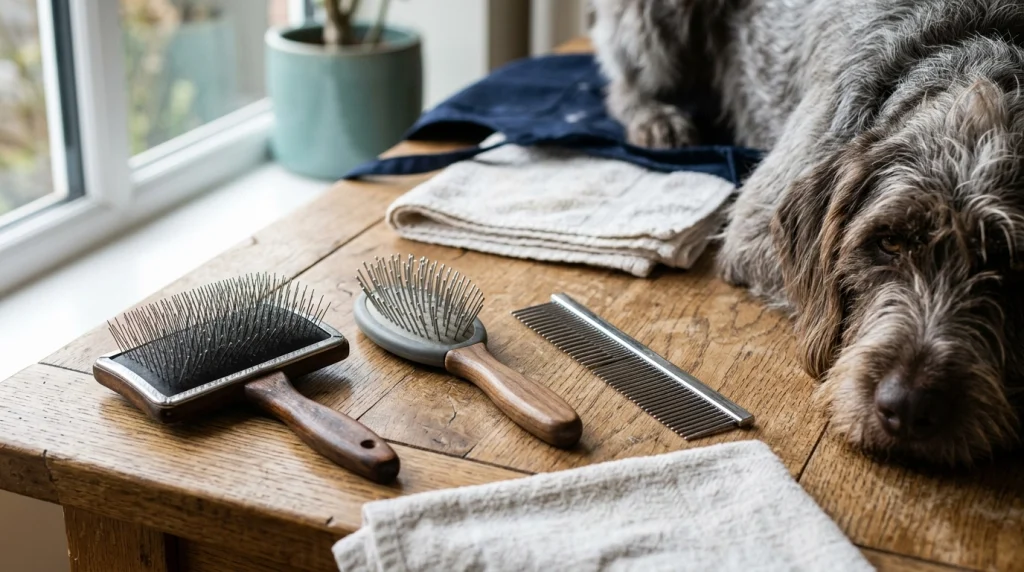 Save
SaveIf you’re building a simple home kit, I would choose tools that perform different jobs instead of buying three versions of the same brush.
🏆 Best Everyday Pin Brush
Safari Wire Pin Brush for Dogs
★★★★½
This traditional wire-pin design suits general coat maintenance and helps separate longer wiry hair. I like a pin brush as the first pass because it gives me good control before I reach for a finer comb.
✨ Best Premium Finisher
Chris Christensen Big G Slicker Brush
★★★★½
The Big G uses 27 mm stainless-steel pins and a flexible cushion. I would use it as a finishing tool on a fuller wire coat rather than repeatedly pressing it into short or sensitive areas.
🔎 Best for Checking Tangles
Andis 7-1/2-Inch Steel Comb
★★★★☆
This 7.5-inch steel comb has coarse and fine tooth spacing for detangling and finishing. I like this type of comb because it quickly exposes spots a brush has skimmed over.
Frequently Asked Questions
Can you use a slicker brush on a wire-haired dog?
Yes. A slicker brush can remove loose hair and help tidy many wire coats, but use light pressure because the metal pins can irritate the skin. I prefer using it after a pin brush and comb rather than relying on it for the entire grooming session.
Should you brush a wire-haired dog every day?
Most wire-coated pets do not automatically need a full daily brushing. Weekly grooming is a reasonable starting point for many dogs, while long furnishings or tangle-prone areas may need more frequent checks. Let the individual coat condition determine the schedule.
Does brushing ruin a wire coat?
Normal gentle brushing should not ruin a healthy wire coat. Problems are more likely when tools are used aggressively or when healthy hairs are repeatedly pulled. Maintaining a traditional harsh texture through hand-stripping is a separate process from routine brushing.
Should you brush against the grain on a wire coat?
For routine home grooming, I usually work mainly in the direction of hair growth. Lifting small sections can help you reach beneath the surface, but repeatedly scraping backward against the coat can create unnecessary pulling and discomfort.
How do I know when my wire dog’s coat is fully brushed?
Use a metal comb as your final check. If it moves comfortably from near the base of the hair through the ends without snagging or pulling the skin, that section is usually finished. Do not keep brushing simply because a few loose hairs still appear.
Final Takeaway: Brush the Coat, Don’t Fight It
The easiest way to brush a wire dog coat is to slow down. Start with a pin brush, work section by section, check everything with a metal comb, and finish lightly with a slicker.
Keep brushing separate from hand-stripping, watch your dog’s skin and body language, and stop when the coat moves freely. That simple routine keeps grooming comfortable while preserving the rough, practical character that makes a wire coat distinctive.

Thomas Cutter is a lifelong dog owner and the founder of FindOutAboutDogs.com. With over 10 years of hands-on experience owning multiple breeds, Thomas created this site to provide honest, research-based dog advice that real owners can actually trust.
