How to Choose a Dog Brush: Find the Right Tool for Your Dog’s Coat
Quick Answer
To choose a dog brush, start with your dog’s coat type and grooming needs, not the brush that simply looks most popular. Short, smooth coats usually suit rubber or bristle tools, while longer, curly, dense, or double coats often need tools that can reach deeper without pulling or scratching the skin.
Choose your brush in this order
- Identify the coat: Look at its length, density, texture, and whether your dog has an undercoat.
- Define the job: Decide whether you need to remove loose hair, prevent tangles, work through mats, or simply finish the coat.
- Match the tool: Select a brush designed for that coat and grooming task.
- Check the size: A brush should fit both your dog’s body and smaller areas like legs and ears.
- Test your pressure: Even the right brush can cause discomfort when used too aggressively.
One simple rule
- Don’t buy by breed name alone: Two dogs of the same breed can still have different coat lengths, density, shedding patterns, and grooming needs.
Choosing a dog brush sounds simple until you stand in front of dozens of slickers, pin brushes, bristle brushes, gloves, combs, and deshedding tools.
I’ve found that the easiest way to avoid buying the wrong one is to stop thinking about the brush first. Start with the coat in front of you, then choose the tool that has a clear job to do.


What is the best way to choose a dog brush?
The best way to choose a dog brush is to match the brush to your dog’s coat type, coat length, shedding level, and the specific grooming problem you want to solve.
A dog brush is not a one-tool-fits-all product. A brush that feels excellent on a short-coated Boxer may be ineffective on a thick-coated Golden Retriever or uncomfortable on a curly-coated Poodle.
- Coat length: Short, medium, and long coats need different levels of reach.
- Coat density: Dense coats may hide loose hair beneath the surface.
- Coat texture: Smooth, silky, curly, wiry, and woolly hair behave differently.
- Undercoat: Double-coated dogs have an outer coat and a softer layer beneath it.
- Grooming goal: Removing shed hair is different from detangling or finishing.
- Dog comfort: Sensitive skin and nervous dogs may need gentler tools and shorter sessions.
Regular brushing can remove loose hair and debris while helping you inspect the coat and skin for changes. The American Kennel Club also recommends matching grooming tools to coat characteristics rather than assuming one brush suits every dog. :chatgpt-content-reference{index=”0″}
Step 1: Identify your dog’s coat type before buying anything
 Save
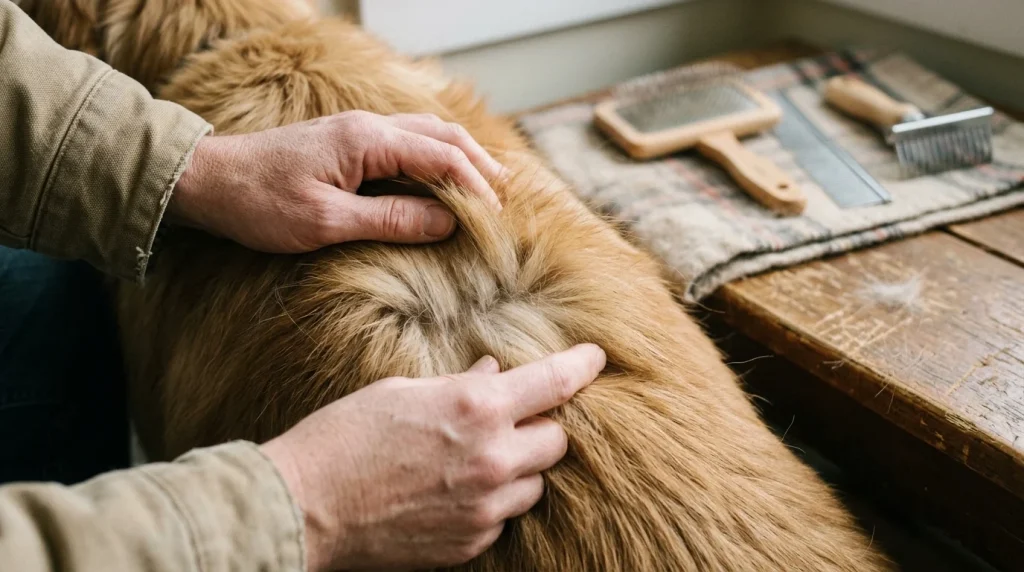
Your dog’s coat is the starting point. Before choosing a brush, run your fingers through the hair and look beyond what you see on the surface.
Ask whether the coat is smooth, short, medium, long, curly, wiry, silky, dense, or double-coated. That answer narrows your choices quickly.
Short and smooth coats
Dogs with close, smooth coats usually do not need long pins that reach deep through layers of hair.
Rubber brushes, grooming gloves, and softer bristle brushes are often practical choices because they can loosen surface hair and dirt without excessive pulling. :chatgpt-content-reference{index=”1″}
Medium coats
Medium-length coats can vary widely. Some are relatively easy to maintain, while others shed heavily or develop tangles around friction areas.
A bristle brush, slicker, or comb may work depending on the coat’s density and the amount of loose hair underneath.
Long and silky coats
Long hair needs more than a quick pass over the top. You need to check whether the tool can move through the coat without simply gliding across the surface.
Pin brushes and long-toothed combs can help with longer coats, while slicker brushes may help manage tangles when used gently. :chatgpt-content-reference{index=”2″}
Curly or easily tangled coats
Curly coats often require frequent attention because tangles can tighten into mats if ignored.
A slicker brush and a suitable comb are common choices, but technique matters as much as the tool. Work in small sections instead of dragging the brush through resistance.
Double coats
A double coat has a protective outer layer and a softer undercoat. Surface brushing alone may leave a surprising amount of loose undercoat behind.
Undercoat rakes, appropriate slicker brushes, and combs can help depending on the dog’s coat length and shedding stage. :chatgpt-content-reference{index=”3″}
| Coat type | Common starting tool | Main job | Watch out for |
|---|---|---|---|
| Short and smooth | Rubber brush or bristle brush | Loose surface hair and dirt | Pins that are unnecessarily long or harsh |
| Medium shedding coat | Bristle brush, slicker, or comb | Loose hair and minor tangles | Choosing only by hair length |
| Long or silky | Pin brush plus comb | Detangling and smoothing | Brushing only the visible top layer |
| Curly | Slicker brush and comb | Tangle and mat prevention | Pulling forcefully through knots |
| Double-coated | Undercoat rake or suitable slicker | Loose undercoat and seasonal shedding | Using excessive pressure or the wrong pin length |
Step 2: Decide what you need the brush to do
Once you understand the coat, define the problem. This is where many people make the mistake of buying a brush based only on appearance.
A good grooming setup may use more than one tool because each tool performs a different job.
If your main problem is shedding
Look for a tool that can remove loose hair appropriate to your dog’s coat depth. Short-coated dogs may respond well to rubber or bristle tools, while dense double coats often need deeper-reaching grooming tools.
Brushing during heavy shedding should still be gentle. More force does not automatically mean more loose hair removed. :chatgpt-content-reference{index=”4″}
If your main problem is tangles
Choose a tool that can separate hair gradually. A slicker brush or appropriate comb may be useful, especially when you work through small sections.
Never treat a tight tangle like something you can simply rip through. If your dog reacts, stop and reassess the knot rather than increasing pressure.
If your main goal is everyday coat maintenance
You may only need a gentle brush that removes loose hair and keeps the coat tidy.
This is common with short, low-maintenance coats where a highly aggressive deshedding tool would be unnecessary.
What are the main types of dog brushes?
 Save
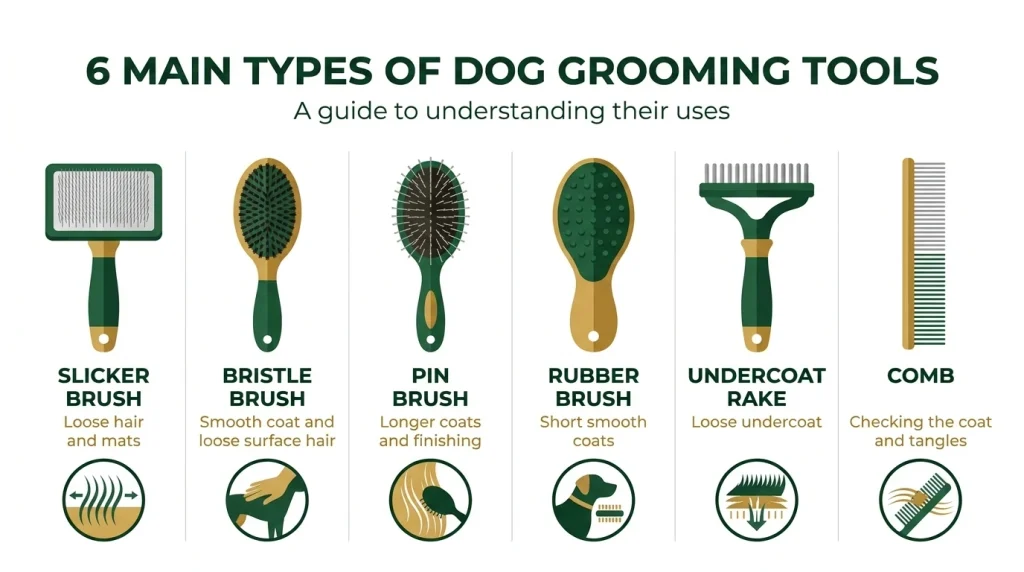
Most dog brushes fall into a few broad categories. Understanding what each one does makes shopping much easier.
- Slicker brush: Closely spaced wire pins designed to work through many medium, long, wire, and curly coats and help with loose hair and mats.
- Bristle brush: A useful choice for smoothing the coat and removing loose surface hair, particularly on shorter coats.
- Pin brush: Longer pins that can be useful for many long-haired coats as a grooming or finishing tool.
- Rubber brush: Flexible rubber teeth or bristles that work well on many short, smooth coats.
- Undercoat rake: A deeper-reaching tool intended to help remove loose undercoat from suitable double-coated dogs.
- Comb: Useful for checking whether you have actually worked through the coat and for handling certain tangles.
The important point is that these names describe different tool designs, not a ranking from best to worst.
As of 2026, I still think the most useful question before buying is simple: “What exactly will this tool reach, and what hair am I trying to remove?”
How should you choose the right brush size?
Brush size matters more than many buyers expect. A huge brush may cover a large dog’s body quickly but can be awkward around legs, ears, the chest, and other smaller areas.
A very small brush can be precise but frustrating for grooming a large, dense coat.
- Small dogs: Choose a head that can comfortably reach around the body and legs.
- Large dogs: A wider head can speed up routine grooming.
- Long-haired dogs: Make sure pin length reaches through the coat without scraping the skin.
- Dense coats: Check that the teeth or pins can move through the coat rather than stopping at the surface.
- Detail areas: Keep a smaller comb or tool available when the main brush is too bulky.
Does the handle and brush design matter?
Yes. A brush can have the right pins and still be unpleasant to use if the handle twists in your hand or creates fatigue during longer grooming sessions.
I pay attention to the grip because a comfortable handle makes it easier to maintain gentle, controlled strokes.
Look for control, not gimmicks
An ergonomic handle can be helpful, especially when grooming a large dog or working through a long coat.
You should also check whether the brush head feels stable and whether the overall size suits your hand.
Consider self-cleaning features carefully
Some slicker brushes have retractable pins or similar mechanisms that make collected hair easier to remove.
That feature can save time, but it should not outweigh pin quality, comfort, and suitability for your dog’s coat.
How do you know if a dog brush is too harsh?
The right brush should work through the coat without causing obvious pain or repeatedly scraping the skin.
If your dog consistently flinches, pulls away, yelps, or develops redness during grooming, stop and check both the tool and your technique.
- Use light pressure: Let the pins or bristles do their job rather than pressing hard.
- Work in sections: Smaller sections give you better control over tangles.
- Check the skin: Pause periodically to look for irritation or sensitivity.
- Avoid repeated scraping: Don’t keep brushing the same spot aggressively.
- Watch your dog’s behavior: Resistance can signal discomfort, fear, or a sensitive area.
Regular grooming also gives you an opportunity to notice unusual skin changes, parasites, cuts, or areas of sensitivity. If you find persistent irritation, significant hair loss, or other concerning changes, contact a veterinarian rather than trying to solve the problem with a different brush. :chatgpt-content-reference{index=”5″}
Should you use one dog brush or several?
Some dogs do perfectly well with one brush. Others benefit from a small grooming combination.
A common example is a long or dense coat where one tool loosens hair and another checks for hidden tangles or smooths the finished coat.
Think of it as choosing tools for separate jobs rather than collecting brushes unnecessarily.
- Main brush: Handles the biggest grooming task for your dog’s coat.
- Comb: Checks whether you have worked through the coat completely.
- Finishing brush: Smooths the outer coat when needed.
How often should you brush your dog?
Brushing frequency depends mainly on coat type, length, shedding, and how quickly your dog develops tangles.
Some short-coated dogs may only need occasional weekly grooming, while long, curly, or mat-prone coats can need much more frequent attention. :chatgpt-content-reference{index=”6″}
Instead of following one universal schedule, watch the coat. If loose hair is building up or small tangles are appearing, your routine probably needs adjusting.
A simple checklist before buying a dog brush
 Save
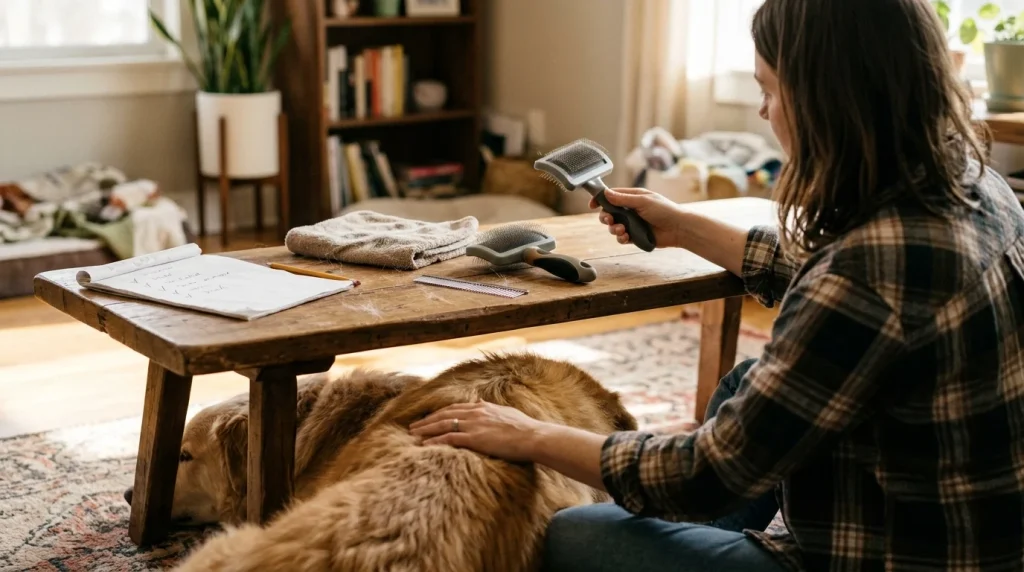
If you are standing on an Amazon results page wondering which option to choose, use this checklist before clicking.
- What type of coat does my dog have?
- Does my dog have a thick undercoat?
- Am I mainly removing loose hair or dealing with tangles?
- Can the brush reach through the coat appropriately?
- Is the brush head the right size for my dog?
- Can I hold and control it comfortably?
- Will the pins, teeth, or bristles be gentle enough when used correctly?
If you cannot answer the first three questions, don’t buy yet. Those answers are more useful than comparing dozens of nearly identical product listings.
Dog brush recommendations for common grooming needs
If you’re ready to pick one, these are the types of options I’d start comparing based on common coat and grooming needs.
🏆 Best for versatile grooming
Self-Cleaning Slicker Brush for Dogs
★★★★☆
Look for a slicker with appropriately sized pins and a comfortable handle for your dog’s coat. I like this category for owners who need regular loose-hair removal and gentle detangling rather than a finishing brush alone.
💰 Best for short coats
Rubber Dog Grooming Brush or Curry Brush
★★★★☆
Flexible rubber grooming tools are worth comparing for smooth, short coats. They are usually simpler and gentler than deep-reaching pin tools when your main job is loosening surface hair.
🐕 Best for coat checking
Stainless Steel Dog Grooming Comb
★★★★☆
A quality comb can complement your main brush by checking for hidden tangles and helping you work carefully through suitable areas. I consider it especially useful when a thick or long coat can hide problems below the surface.
Frequently asked questions about choosing a dog brush
What is the best dog brush for all coat types?
There is no single best brush for every coat type. A slicker can be versatile for many dogs, but short smooth coats, dense undercoats, and long silky coats may benefit from different tools or combinations.
How do I know what brush my dog needs?
Look at your dog’s coat length, density, texture, and whether an undercoat is present. Then decide whether your main goal is removing loose hair, preventing tangles, working through knots, or simply maintaining the coat’s appearance.
Is a slicker brush good for every dog?
No. Slicker brushes can be useful for many coat types, particularly medium, long, wire, and curly coats, but they must be used gently. They may be unnecessary or less comfortable for some short, smooth-coated dogs.
Should I get a brush with soft or hard bristles?
Choose the firmness according to your dog’s coat and skin sensitivity rather than assuming harder is better. The tool should work through the hair effectively without repeatedly scraping the skin or causing your dog obvious discomfort.
Can the wrong dog brush damage my dog’s coat?
An unsuitable tool or rough technique can pull hair, cause discomfort, or irritate the skin. Problems often come from excessive pressure, repeatedly brushing the same area, or forcing a tool through tight tangles.
Do I need a comb as well as a brush?
Not always, but a comb can be useful for checking longer, thicker, or tangle-prone coats after brushing. It can reveal knots that remain hidden beneath a coat that looks smooth on the surface.
The takeaway: choose the brush for the coat, not the label
The easiest way to choose a dog brush is to work backward from your dog’s actual needs. Identify the coat, decide what grooming job needs doing, and then choose a tool designed for that combination.
Don’t be tempted by the biggest brush, the most aggressive-looking tool, or the longest feature list. A comfortable, well-matched brush used gently and consistently is usually the better starting point.

Thomas Cutter is a lifelong dog owner and the founder of FindOutAboutDogs.com. With over 10 years of hands-on experience owning multiple breeds, Thomas created this site to provide honest, research-based dog advice that real owners can actually trust.
