How to Choose the Right Dog Brush Size: A Practical Guide
Quick Answer
Choose a dog brush size that fits your dog’s body, coat density, and grooming needs. Small brush heads offer better control around toy breeds, faces, legs, and other tight areas, while medium and large heads cover broader body areas more efficiently. First match the brush style and pin length to the coat, then test whether the head moves comfortably without pulling hair or scraping skin.
Quick steps to find the right size
- Measure the task: Consider your dog’s body size and the areas you need to groom.
- Check the coat: Identify whether it is short, long, curly, wiry, or double-layered.
- Choose the head: Pick a head that covers enough hair without becoming awkward around curves.
- Match the pins: Select bristles or teeth suited to the coat’s length and density.
- Test gently: Brush a small, untangled area and watch your dog’s reaction.
One important rule
- A bigger brush is not automatically better. Choose the smallest head that still makes grooming efficient and comfortable for the area you’re working on.
Choosing a dog brush sounds simple until you see how many shapes and sizes are available. I’ve found that the most useful starting point is to consider the dog’s coat and the amount of control you need, rather than choosing the largest brush on the shelf.
In this guide, I’ll explain how to compare brush-head sizes, match tools to different coats, and recognize when a brush is too large or too small. I’ll also cover common sizing mistakes and practical ways to check the fit before committing to a grooming routine.


What Does Dog Brush Size Actually Mean?
Dog brush size describes the dimensions of the grooming head and, depending on the product, the overall tool. The head’s width and length determine how much coat you can cover with each stroke, while the pins or bristles determine how the tool interacts with the hair.
Brush size is different from brush type. A small slicker brush and a large slicker brush may serve similar grooming purposes, but they offer different levels of coverage and control.
When comparing brushes, look at these features:
- Head width: Determines how much coat you cover across a stroke.
- Head length: Affects how much hair the brush can engage at once.
- Pin or bristle length: Helps determine whether the tool suits a short, long, or dense coat.
- Head shape: Affects maneuverability around the legs, chest, neck, and other curved areas.
- Handle design: Influences grip, wrist comfort, and control during repeated strokes.
There is no universal measurement that makes a brush small, medium, or large across every brand. One manufacturer’s medium brush might differ considerably from another’s, so compare the actual dimensions rather than relying only on the label.
How Do You Choose the Right Dog Brush Size for Your Dog?
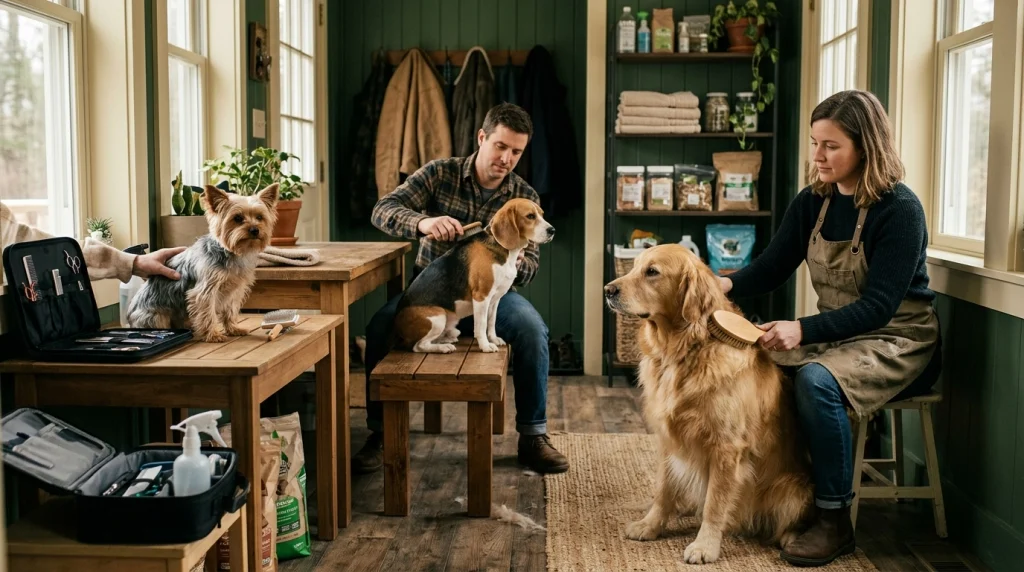 Save
Start with your dog’s overall size, then consider the coat and the specific areas you need to brush. The best brush should cover enough hair to make grooming practical without feeling difficult to control.
Small dogs and toy breeds
Small dogs often benefit from compact brush heads because they make it easier to work around narrow legs, small chests, and delicate areas. A large head can overlap the edges of a small body and make it harder to keep each stroke controlled.
For a Chihuahua, Yorkshire Terrier, or Maltese, consider a small head for everyday grooming. However, the right brush style still depends on whether the dog’s coat is smooth, long, or prone to tangles.
Medium-sized dogs
A medium brush head can be a useful starting point for dogs such as Beagles, Cocker Spaniels, and many Border Collies. It provides reasonable coverage while remaining manageable around the shoulders, legs, and chest.
Coat differences matter here. A short-coated Beagle may need a rubber grooming brush or soft bristle brush, while a long-coated Border Collie may benefit from a slicker brush and a suitable comb.
Large and giant breeds
Large brush heads can save time when grooming broad areas of dogs such as Golden Retrievers, German Shepherds, and Great Danes. They are particularly convenient when the dog has a large body and the brush style suits its coat.
Don’t choose a large head solely because your dog weighs a lot. A large dog still needs a smaller, more manageable tool around its paws, legs, face, and other areas where precision matters.
The following table gives practical starting points rather than fixed size standards.
| Dog size or task | Brush-head starting point | Main advantage |
|---|---|---|
| Toy and small dogs | Small | Greater control over narrow areas |
| Most medium-sized dogs | Small or medium, depending on the coat | A balance of control and coverage |
| Large and giant dogs | Medium or large | More efficient coverage of broad areas |
| Face, paws, and tight spaces | Compact head suited to the coat | More precise movements |
| Dense or long coat | Choose by coat reach first | Helps the tool reach the intended layer |
Use these categories as a first filter, not as a strict purchasing rule. When a manufacturer publishes exact head dimensions, compare those measurements with the areas you groom most often.
Should You Choose a Dog Brush by Coat Type or Dog Size?
Coat type should guide your choice of brush design, while body size helps you decide how large the head should be. Neither factor works well in isolation.
For example, a small dog with a thick, long coat may need a compact slicker brush with suitable pins. A large dog with a smooth coat may be more comfortable with a broad rubber brush that glides over the surface.
The American Kennel Club’s guide to dog brush types explains why different coat types need different grooming tools.
Short, smooth coats
Dogs with short, close-fitting coats often do well with a rubber curry brush, grooming mitt, or soft bristle brush. These tools collect loose surface hair without requiring long pins to penetrate a dense coat.
For a Beagle or Boxer, a medium-sized head may cover the body efficiently. A smaller version can still be useful if your dog is petite or you prefer extra control.
Medium and long coats
Longer hair can tangle around the ears, chest, tail, and back legs. A slicker brush or pin brush may be appropriate, but the head and pin length must suit the coat’s density and texture.
A small head can be helpful for working through narrow sections. On broad body areas, a larger head may reduce the number of strokes needed.
Curly and mat-prone coats
Curly coats can hide tangles beneath the surface. A suitable slicker brush and a metal comb can help you work through the coat in sections and check whether the hair is free of knots.
Don’t use a larger brush to force your way through mats. If a tangle resists gentle brushing or sits tightly against the skin, ask a professional groomer for help rather than pulling harder.
Thick double coats
Double-coated dogs have an outer coat and a softer undercoat. An appropriate slicker brush, undercoat rake, or deshedding tool may be needed depending on the coat and the grooming task.
For these dogs, tooth length and tool design can matter more than the overall head size. A broad brush that only skims the topcoat won’t solve the problem, while overly long or aggressively used teeth can irritate the skin.
How Do You Know If a Dog Brush Is Too Big or Too Small?
A brush fits well when you can move it comfortably across the coat, reach the intended area, and maintain gentle contact without repeatedly snagging hair or scraping skin. You should be able to control each stroke without awkward wrist movements.
Signs the brush is too large
- Poor maneuverability: The head feels awkward around legs, shoulders, or curved areas.
- Limited precision: You struggle to groom a narrow section without brushing neighboring areas.
- Uncomfortable handling: You need to twist your wrist or change your grip repeatedly.
- Uneven coverage: The brush skips small sections because the head doesn’t sit comfortably against the body.
Signs the brush is too small
- Slow progress: Grooming broad areas requires many more strokes than necessary.
- Repeated passes: You keep covering the same section because the head is too narrow for efficient work.
- Awkward technique: You find yourself rushing or applying extra pressure to finish.
A small brush is not automatically unsuitable for a large dog, and a large brush isn’t automatically wrong for a small dog. The deciding factor is whether the tool allows controlled, comfortable grooming.
Practical fit check
Try a few gentle strokes on an untangled area of your dog’s coat. The head should feel easy to guide, and your dog should remain comfortable. Stop if you notice flinching, repeated pulling, skin redness, or signs of distress.
Does Brush Pin Length Matter as Much as Brush Size?
 Save
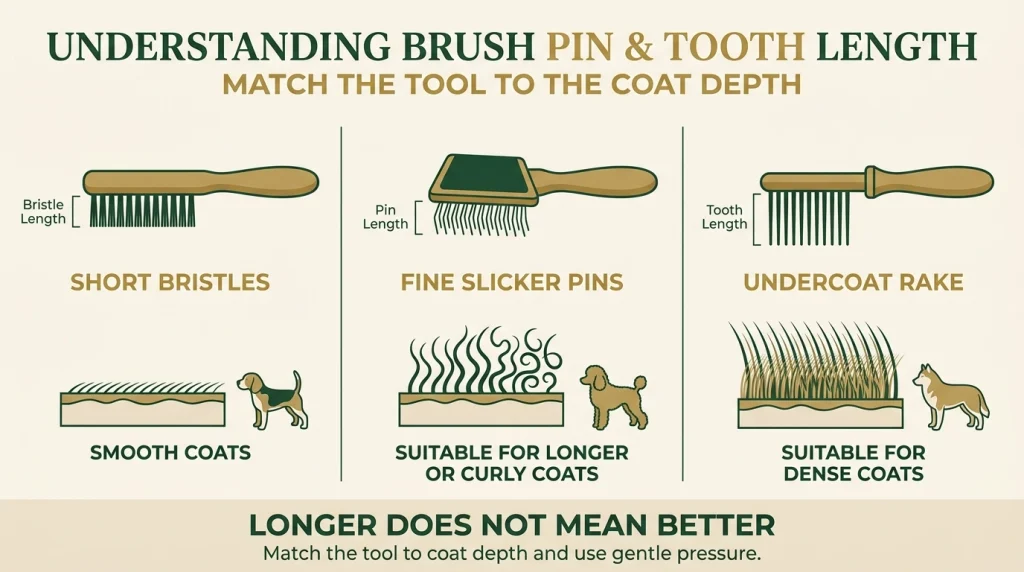
Yes. Brush-head size controls coverage and maneuverability, but pin length affects how the tool reaches the coat. The correct combination depends on hair length, density, texture, and the purpose of the brush.
Consider these differences when shopping:
- Short bristles: Often suit smooth coats and surface grooming.
- Fine slicker pins: Can help maintain medium, long, or curly coats when the pin design and technique suit the dog.
- Longer pins: May be appropriate for longer or denser coats when used carefully and with suitable spacing.
- Undercoat-rake teeth: Must match the coat’s depth and structure rather than simply being as long as possible.
Never assume that deeper penetration means better grooming. Pressing too hard can irritate the skin, especially when using wire pins or metal teeth.
For further guidance on matching tools to different coats, VCA’s pet brush selection resource outlines common brush styles and their uses.
How Can You Test a Dog Brush Before Buying It?
A quick inspection can reveal whether a brush is likely to suit your grooming routine. If possible, compare the actual dimensions, examine the pin tips, and hold the handle as you would during a normal session.
- Check the head dimensions. Compare the listed width and length rather than relying on a small, medium, or large label.
- Inspect the working surface. Look for damaged pins, sharp edges, or bristles that appear unsuitable for your dog’s skin and coat.
- Assess the grip. Hold the brush and mimic short, controlled strokes without forcing your wrist into an awkward position.
- Consider cleaning. Choose a design that allows collected hair to be removed and the brush to be maintained according to its instructions.
- Test on a calm dog. Start with a small, untangled area and use light pressure.
Don’t judge a brush solely by how much fur it collects during the first session. A tool can remove a lot of hair and still be too harsh, too large, or inappropriate for the coat.
As of 2026, the most useful shopping approach remains a simple one: compare the dimensions, confirm the coat compatibility, and check the manufacturer’s care and use instructions before buying.
What Are the Most Common Dog Brush Sizing Mistakes?
Most sizing problems come from choosing a brush based on one feature while overlooking the rest of the grooming task. Avoid these common mistakes.
- Buying the biggest brush available: A large head may save time on broad areas but can be cumbersome around smaller body parts.
- Choosing by breed alone: Individual dogs can have different coat lengths, textures, and densities, even within the same breed.
- Ignoring pin length: A correctly sized head can still have pins that don’t suit the coat.
- Using one brush for every task: Body grooming and detailed work around the legs or face may call for different tools.
- Brushing harder when progress is slow: Slow grooming may signal the wrong brush style, a poor fit, or tangles that need separate attention.
- Overlooking skin sensitivity: Redness, soreness, or discomfort means you should stop and reassess the tool and technique.
Persistent mats, painful areas, or unexplained skin changes deserve more than a brush adjustment. Seek advice from a qualified groomer or veterinarian when necessary.
Which Dog Brushes Are Worth Considering?
 Save
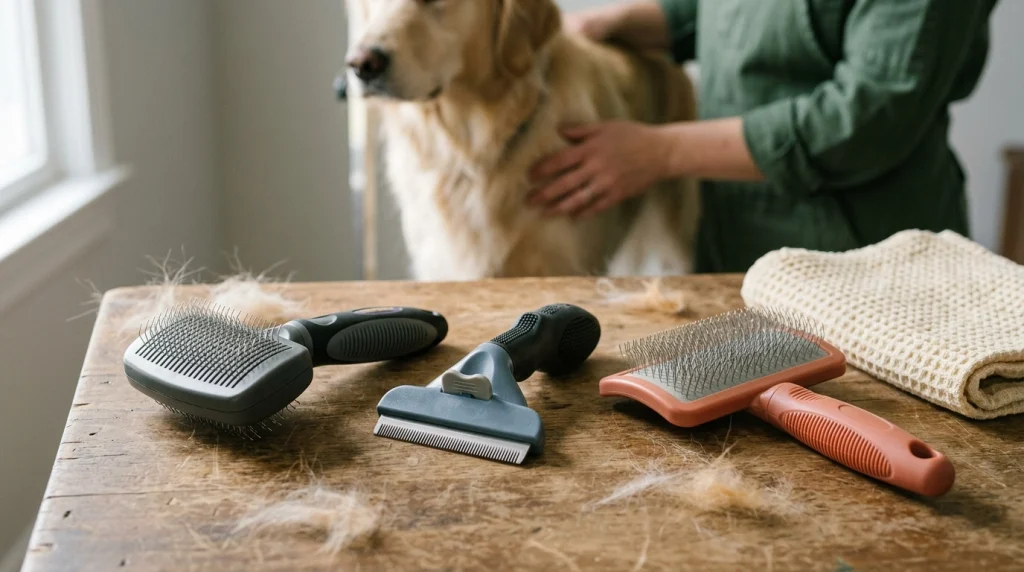
If you’re ready to choose a brush, start by matching the tool to your dog’s coat and grooming task. The following products represent different brush styles; confirm the available sizes and specifications before purchasing.
BEST FOR GENERAL GROOMING
Hertzko Self Cleaning Slicker Brush
★★★★☆
A slicker-style option to consider for suitable medium, long, or curly coats. Compare the head dimensions with your dog’s size and check that the pins and pressure required are appropriate for its coat.
BEST FOR DOUBLE COATS
FURminator Undercoat Deshedding Tool
★★★★☆
A specialized option for removing loose undercoat from suitable shedding dogs. Choose the model intended for your dog’s size and coat length, and follow its instructions to avoid excessive or forceful use.
BEST FOR LONG-COAT DETAILING
Chris Christensen Big G Slicker Brush
★★★★☆
A specialist slicker-style option to investigate for appropriate longer, fuller, or curly coats. Check the available head sizes and use a light technique; a premium or larger brush does not replace correct coat preparation.
These star symbols are editorial shortlist indicators, not verified customer ratings or results from hands-on product testing. Check current listings for the exact model, dimensions, intended coat type, and available sizes before making a decision.
Frequently Asked Questions
What size dog brush is best for a small dog?
A small brush head is a sensible starting point for many toy and small breeds because it offers better control around narrow body areas. Match the brush style and pin length to the coat, though, since a small dog with long or dense hair may need a different tool from one with a smooth coat.
Can I use a large dog brush on a small dog?
Sometimes, provided the brush is gentle and appropriate for the coat. However, a large head may be awkward around the legs, chest, and face, so a compact brush can provide better control for detailed grooming.
Should I buy a medium brush for a medium-sized dog?
A medium brush is a reasonable starting point, but size labels differ between manufacturers. Compare the head’s actual dimensions and consider the coat’s length and density before deciding whether a small, medium, or large head will be easier to control.
Does a long-haired dog always need a large brush?
No. Long hair affects the brush style and pin length you may need, but it doesn’t automatically call for a large head. A smaller brush can be easier to control when working through narrow sections or checking for tangles.
How do I know if my dog’s brush is hurting its skin?
Watch for flinching, pulling away, repeated licking, redness, or signs of distress during brushing. Stop if your dog appears uncomfortable, reduce pressure, and reassess the tool. Persistent soreness, skin changes, or painful mats warrant advice from a veterinarian or qualified groomer.
Choose the Brush That Fits Your Dog, Not Just Its Size
The right dog brush should make grooming easier without sacrificing comfort or control. Start with your dog’s body size, choose a brush style suited to the coat, and compare head dimensions and pin length before buying.
When in doubt, prioritize gentle handling and maneuverability over maximum coverage. A suitable brush used carefully is a better choice than a larger tool that makes grooming awkward or uncomfortable.

Thomas Cutter is a lifelong dog owner and the founder of FindOutAboutDogs.com. With over 10 years of hands-on experience owning multiple breeds, Thomas created this site to provide honest, research-based dog advice that real owners can actually trust.
