What Is a Bristle Brush Used For? Dog Grooming Guide
Quick Answer
A bristle brush is mainly used to remove loose surface hair, dirt, and dander while smoothing a dog’s coat and spreading natural skin oils through the fur. It works especially well on short and smooth coats, although it can also serve as a finishing brush after other grooming tools on longer or double coats. The American Kennel Club’s dog brush guide also recommends bristle brushes for short-coated dogs and coat finishing.
What a bristle brush does
- Removes loose hair: The bristles collect hairs sitting near the surface of the coat.
- Lifts light debris: Dirt, dust, flakes, and small particles are brushed away.
- Smooths the coat: Bristles lay hairs neatly and create a cleaner finished appearance.
- Spreads natural oils: Gentle brushing carries skin oils along the hair shafts.
- Finishes grooming: It works well after a slicker, rake, or rubber brush has done deeper work.
Best match
- Use one most confidently on short, smooth, or moderately dense coats where you mainly need surface grooming and finishing.
A bristle brush looks simple, but choosing the right dog brush isn’t always simple. I’ve seen owners expect one brush to detangle mats, pull undercoat, remove shedding hair, and polish the coat.
That’s asking too much from one tool. A bristle brush has a specific job, and it works best when you understand where it fits in a grooming routine.


What Is a Bristle Brush for Dogs?
A bristle brush is a grooming brush made with many closely spaced natural or synthetic bristles. The bristles are usually softer and more flexible than the metal pins found on slicker or pin brushes.
Its main job happens near the surface. It collects loose hair and debris while smoothing the visible coat.
- Natural bristles: Often softer and useful for gentle coat finishing.
- Synthetic bristles: Usually made from nylon or similar materials and may feel slightly firmer.
- Mixed bristles: Some brushes blend materials to balance softness and cleaning ability.
- Combination brushes: One side may have pins while the opposite side has bristles.
As of 2026, combination pin-and-bristle brushes remain common because they give owners two grooming functions in one handle.
What Is a Bristle Brush Used For on a Dog?
 Save
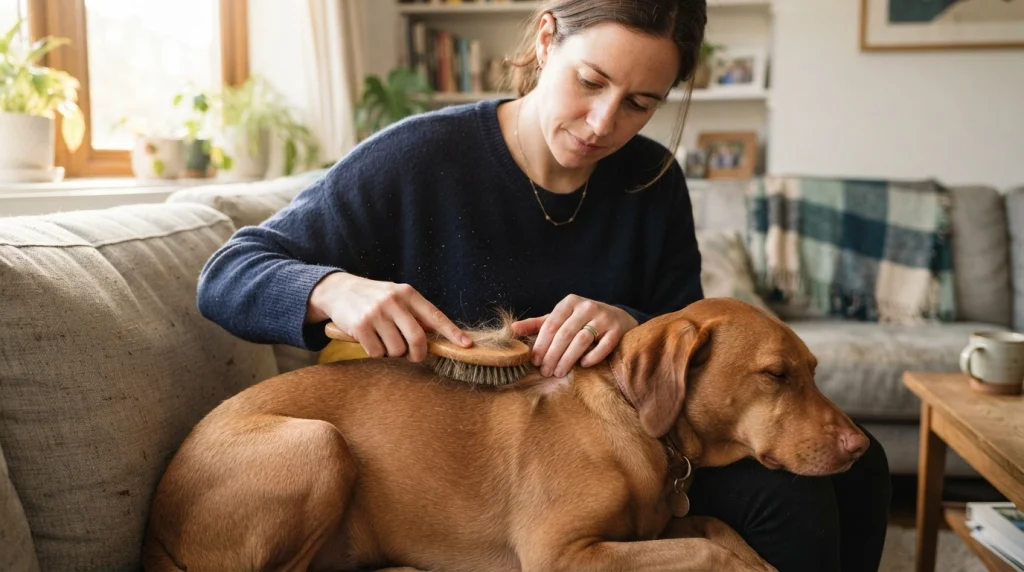
SaveA bristle brush is used for routine surface grooming, especially removing loose hair, smoothing fur, and distributing natural oils. It is usually more of a maintenance and finishing tool than a heavy detangling tool.
Here are the jobs where I find it most useful.
1. Removing Loose Surface Hair
Bristles catch hair that has already loosened and moved toward the outside of the coat. This can reduce the amount left on furniture, clothing, and floors.
It isn’t usually the strongest choice for thick undercoat. For that job, a rake or another deeper-reaching tool often works better.
2. Removing Dirt and Dander
Dust, dry skin flakes, and outdoor debris can settle throughout a dog’s coat. Brushing lifts much of this material before it builds up.
I especially like doing a quick brush after a dry walk. It often removes light dust without needing a full bath.
3. Spreading Natural Coat Oils
Skin produces natural oils that help condition the coat. Brushing helps move those oils away from the skin and along the individual hairs.
This is one reason a properly brushed short coat can look noticeably smoother afterward.
4. Smoothing and Finishing the Coat
A bristle brush is one of my favorite finishing tools. After loose hair and tangles are removed, I use gentle passes in the direction of hair growth.
The result is a neater coat with fewer stray hairs.
5. Checking Your Dog’s Skin
Brushing gives you regular hands-on contact with your dog. That makes it easier to notice bumps, sore areas, ticks, flakes, or unexpected hair loss.
The ASPCA also recommends routine brushing as an opportunity to keep the coat clean and check for problems such as fleas and skin irritation.
Which Dogs Benefit Most From a Bristle Brush?
Bristle brushes usually work best on dogs with short, smooth, or moderately dense coats. Their effectiveness drops when the coat becomes deeply tangled or has a heavy undercoat.
| Coat Type | How Useful Is a Bristle Brush? | Best Job | Possible Extra Tool |
|---|---|---|---|
| Short, smooth | Excellent | Loose hair, shine, dirt | Rubber grooming brush |
| Short, dense | Good | Finishing and loose hair | Slicker or shedding tool |
| Medium coat | Good as a finisher | Smoothing topcoat | Pin brush or slicker |
| Long, silky | Limited alone | Final smoothing | Pin brush and comb |
| Thick double coat | Mostly finishing | Surface loose hair | Undercoat rake |
| Curly or matted | Usually insufficient alone | Finishing only | Slicker and comb |
For breeds with heavy double coats, don’t expect bristles to reach all the loose undercoat. My guide to choosing a brush for a Husky shows why deeper-reaching tools matter for dense coats.
Bristle Brush vs Slicker Brush: What Is the Difference?
 Save
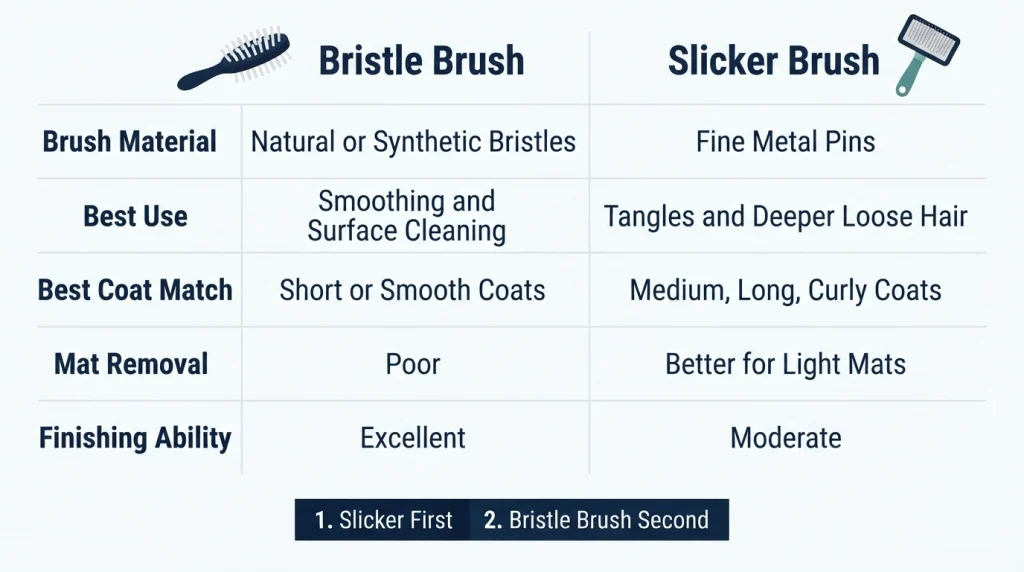
SaveA bristle brush focuses on surface hair and coat finishing, while a slicker brush uses closely spaced wire pins to reach farther into the coat. Slickers are generally better for tangles, loose hair, and light matting.
| Feature | Bristle Brush | Slicker Brush |
|---|---|---|
| Brush material | Natural or synthetic bristles | Fine metal pins |
| Best use | Smoothing and surface cleaning | Tangles and deeper loose hair |
| Best coat match | Short or smooth coats | Medium, long, curly coats |
| Mat removal | Poor | Better for light mats |
| Finishing ability | Excellent | Moderate |
I don’t consider these brushes competitors in every situation. For many dogs, they work better as a sequence.
- Use the slicker first: Remove loose hair and work through manageable tangles.
- Use the bristle brush second: Collect surface hairs and smooth the finished coat.
How Do You Use a Bristle Brush Correctly?
Use gentle strokes in the direction the hair naturally grows. A bristle brush should glide across the coat rather than scrape or pull against the skin.
- Check the coat first. Look for mats, burrs, sores, redness, or tender spots.
- Remove serious tangles separately. Don’t force dense mats with a bristle brush.
- Start at the neck. Work toward the shoulders, back, sides, and hindquarters.
- Follow hair growth. Use controlled strokes rather than fast scrubbing.
- Use lighter pressure on sensitive areas. The belly, legs, and chest may need extra care.
- Clean the brush afterward. Pull out trapped fur and remove visible dirt.
One practical test I use is simple. If the dog’s skin moves significantly under every stroke, I’m probably pressing harder than needed.
Gentle grooming works better. More pressure doesn’t automatically remove more hair.
How Often Should You Use a Bristle Brush?
Frequency depends on the dog’s coat, shedding level, lifestyle, and comfort. A smooth short-coated dog may only need a thorough brushing about once a week.
Dogs shedding more heavily may benefit from additional short sessions. The correct tool matters more than blindly following a calendar.
- Light shedding: About once weekly may be enough.
- Moderate shedding: Try two or more short sessions per week as needed.
- Heavy seasonal shedding: Pair the bristle brush with a tool suited to the undercoat.
- After dusty outings: A quick surface brush may remove dry debris.
The ASPCA notes that brushing frequency should match coat type, while VCA Animal Hospitals also recommends choosing grooming tools according to the dog’s hair coat.
Can a Bristle Brush Remove Mats?
No, a bristle brush is not designed to remove significant mats. Its flexible bristles usually bend over dense tangles rather than separating them.
Small loose tangles may improve during ordinary grooming, but don’t keep pulling if the brush catches.
- Light tangles: A pin brush, slicker, or comb may work better.
- Dense matting: Get help from a professional groomer when necessary.
- Mats against the skin: Avoid blindly cutting them with scissors.
- Pain or skin irritation: Stop grooming and consult a veterinarian when appropriate.
A dog’s skin can sit surprisingly close to a tight mat. Forceful home removal can cause unnecessary pulling or injury.
Does a Bristle Brush Help With Shedding?
Yes, but mostly with loose hair near the surface. It won’t usually remove deep undercoat as efficiently as a rake or dedicated shedding tool.
This distinction matters with breeds such as Huskies. My guide on managing Siberian Husky shedding explains why undercoat grooming requires a different approach.
For smooth-coated dogs, I often pair a rubber brush with a bristle brush. The rubber tool loosens hair, then the bristles sweep much of it away.
What Should You Look for When Buying a Bristle Brush?
 Save
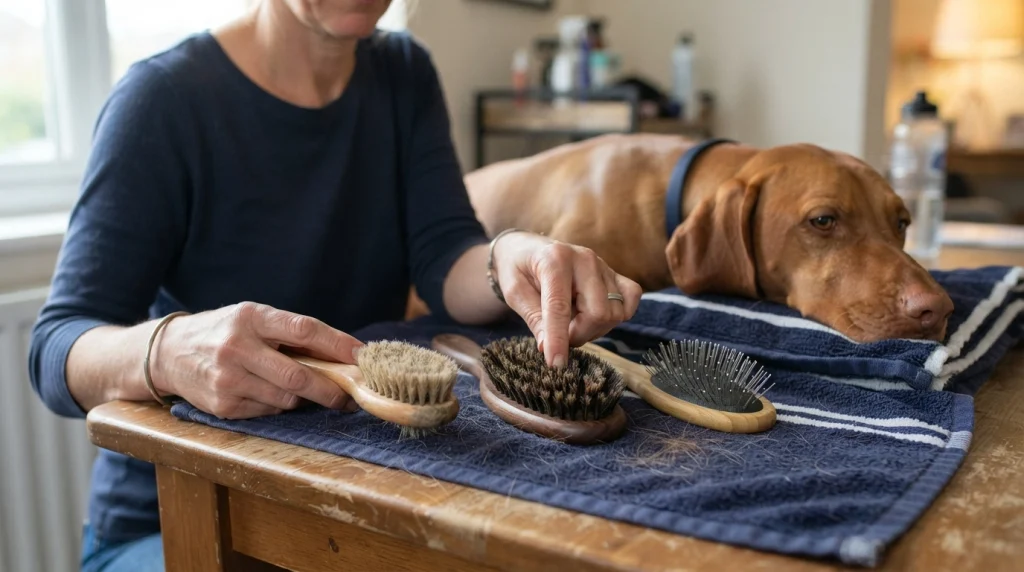
SaveChoose the brush around your dog’s coat and comfort rather than advertising claims. Bristle stiffness, brush size, and handle control make a noticeable difference.
- Bristle firmness: Softer bristles suit sensitive skin and fine coats, while slightly firmer bristles can handle denser hair.
- Brush size: A large head covers a Labrador faster than a tiny grooming brush.
- Comfortable handle: A secure grip helps you control pressure.
- Even bristles: Avoid rough, broken, or unusually sharp material.
- Easy cleaning: Dense bristles can trap hair and debris.
- Combination design: A pin-and-bristle model can be useful when you want two basic tools together.
I wouldn’t choose a brush simply because it promises to work on every coat type. Dogs with different coats need different levels of reach.
When Should You Not Rely on a Bristle Brush?
A bristle brush shouldn’t be your only tool when the main problem lies beneath the surface. Thick undercoat, curly hair, and serious tangling usually need something else.
- Heavy double coats: Consider an appropriate undercoat rake or similar tool.
- Curly coats: Slicker brushes and combs usually provide better separation.
- Long tangled coats: Use a pin brush, slicker, and comb according to the coat.
- Severe matting: Professional grooming may be safer.
- Abnormal skin: Redness, sores, bald patches, or severe itching deserve veterinary attention.
The American Kennel Club recommends matching the grooming brush to the dog’s coat rather than treating one brush as universal.
Bristle Brushes I Would Consider for Everyday Grooming
If you’re ready to add one to your grooming kit, I’d focus on straightforward brushes that make sense for routine coat care.
🏆 Best Everyday Combo
Hartz Groomer’s Best Combo Dog Brush
★★★★½
This double-sided brush combines coated metal pins with dense nylon bristles. I like the format for owners who want basic detangling on one side and coat smoothing on the other.
🌿 Best Soft-Finish Option
Burt’s Bees Double Sided Pin & Hemp Bristle Brush
★★★★☆
The pin side handles routine debris and light tangles, while the hemp-bristle side smooths the coat. I’d consider it for gentle maintenance when deep undercoat removal isn’t the main goal.
✂️ Best Salon-Style Combo
ConairPRO Pin & Bristle Brush
★★★★☆
This style combines a pin side for basic coat separation with a bristle side for smoothing. I like combination brushes when storage space is limited and the dog’s coat doesn’t require aggressive de-shedding.
Frequently Asked Questions
Are bristle brushes good for short-haired dogs?
Yes. Bristle brushes are especially useful for many short-haired dogs because they remove loose surface hair and dirt while smoothing the coat. For a very smooth coat, using a rubber grooming brush first can loosen extra hair before you finish with the bristle brush.
Can I use a bristle brush every day?
You can use a soft bristle brush frequently if your dog’s skin remains comfortable, but daily brushing isn’t necessary for every dog. Match the schedule to coat type, shedding, and lifestyle, and stop if you notice redness, soreness, or irritation.
Does a bristle brush remove a dog’s undercoat?
Not efficiently in most thick-coated dogs. Bristles mainly work near the surface, so an undercoat rake or another deeper-reaching grooming tool is usually more effective when loose undercoat is the main problem.
Is a bristle brush better than a slicker brush?
Neither is universally better. A bristle brush is better for surface cleaning, smoothing, and finishing, while a slicker brush is usually better for tangles and deeper loose hair. Many owners benefit from using both for different stages of grooming.
Do bristle brushes make a dog’s coat shiny?
They can make the coat look smoother and shinier by removing dull loose hair and spreading natural skin oils along the hair shafts. The effect is most noticeable on healthy short or smooth coats that are brushed regularly.
Final Takeaway: Use a Bristle Brush for Surface Grooming and Finishing
A bristle brush is best used to remove loose surface hair and debris, spread natural oils, and leave a dog’s coat smooth and tidy. It is especially useful for short-coated dogs and as the final step in a multi-tool grooming routine.
Don’t expect it to solve deep mats or packed undercoat. Match the brush to your dog’s coat, use gentle pressure, and let each grooming tool do the job it was designed to do.

Thomas Cutter is a lifelong dog owner and the founder of FindOutAboutDogs.com. With over 10 years of hands-on experience owning multiple breeds, Thomas created this site to provide honest, research-based dog advice that real owners can actually trust.
