How to Identify a Double-Coated Dog: 7 Signs to Look For
Quick Answer
To identify a double-coated dog, gently part the fur and look for two distinct layers: longer, firmer outer hairs and a softer, denser undercoat close to the skin. A dog can have a double coat even if its fur is short and doesn’t look especially fluffy. Check the coat in several places and compare your findings with your dog’s breed characteristics before choosing a suitable dog brush.
7 signs your dog may have a double coat
- Two hair layers: You can distinguish the outer hairs from the softer fur underneath.
- Dense undercoat: Short, fine hairs sit close to the skin.
- Coarser guard hairs: The outer layer often feels firmer and provides protection from the elements.
- Seasonal shedding: Some dogs release large amounts of undercoat during seasonal changes.
- Weather-resistant fur: The outer layer may help repel moisture and debris.
- Breed clues: German Shepherds, Golden Retrievers, Huskies, and many other breeds commonly have double coats.
- Different hair textures: The inner and outer layers often feel noticeably different.
How to check safely
- Part a small section of dry fur at the shoulder, back, and side, using your fingers in good light.
- Look for both hair types without pulling, scraping, or digging into the skin.
- If the coat is unclear, ask a veterinarian or experienced groomer to confirm it.
A dog’s coat can tell you a lot about how to care for it, but appearance alone can be misleading.
In this guide, I’ll explain how to recognize a double coat, where to check for the undercoat, which breeds commonly have one, and how your findings should influence your brushing routine.


What Is a Double-Coated Dog?
 Save
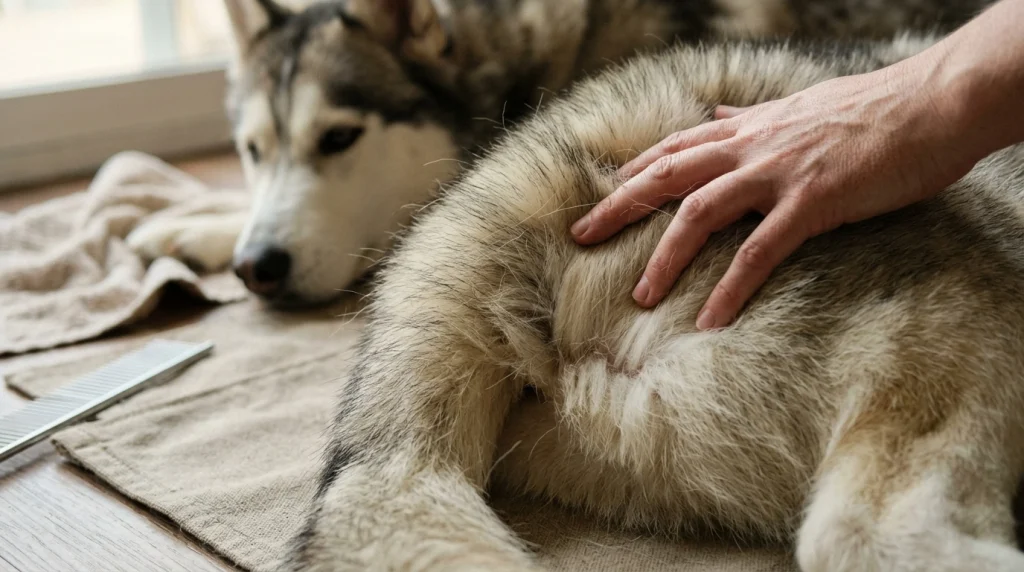
SaveA double-coated dog has two types of hair: an outer coat made of protective guard hairs and an undercoat made of softer, usually shorter hairs. These layers work together to protect the skin and help regulate body temperature.
The outer coat helps shield the dog from moisture, dirt, and environmental wear, while the undercoat traps insulating air close to the body. The exact texture, thickness, and length of each layer vary between breeds.
The difference between the topcoat and undercoat
- Topcoat: Usually longer, firmer hairs that form the visible outer layer.
- Undercoat: Softer, finer hairs beneath the topcoat that provide insulation.
Not every double-coated dog looks fluffy. A Labrador Retriever, for example, has a relatively short coat but also has a dense undercoat.
That distinction matters when choosing grooming tools. A brush that works on a short, dense coat may not be the best choice for a long, thick coat.
How Can You Tell If Your Dog Has a Double Coat?
The most useful clue is the presence of two distinct hair layers, not the overall length or volume of your dog’s fur. A simple visual and fingertip check can help you look for them without irritating the skin.
1. Part the fur and look for a second layer
Choose a well-lit area and gently separate a small section of dry fur with your fingers. Look closely at the hair emerging from the skin rather than judging only the surface.
You may see longer outer hairs extending over a layer of shorter, softer fur. This is one of the clearest signs of a double coat.
2. Compare the texture of the hairs
Run your fingertips lightly over the outer fur, then examine the exposed hairs underneath. Guard hairs often feel firmer, while the undercoat tends to feel softer and denser.
Texture alone cannot confirm the coat type, since single-coated dogs can also have coarse, soft, or mixed-texture hair. Look for two layers together.
3. Check several parts of the body
Don’t rely on a single patch of fur. Coat thickness can vary across the body, and tangles or heavy shedding may make the layers difficult to see.
- Shoulders and back: Often convenient places to inspect the coat.
- Flanks and sides: Useful for checking whether softer hairs sit beneath the outer layer.
- Neck and hindquarters: May reveal a denser undercoat in some breeds.
Keep your examination gentle, especially around the belly, armpits, and other sensitive areas. Stop if your dog shows discomfort or the skin looks irritated.
4. Notice how your dog sheds
Many double-coated dogs shed their undercoat throughout the year, with heavier shedding during seasonal coat changes. Owners sometimes call this heavy seasonal shedding “blowing coat.”
However, shedding is supporting evidence, not proof. Single-coated dogs shed too, and some double-coated dogs shed less noticeably depending on their coat, environment, and grooming routine.
5. Check your dog’s breed background
Breed information can help you narrow down the possibilities. Many sporting, herding, and working breeds have double coats, although individual coat characteristics and mixed-breed ancestry can complicate identification.
If your dog is a mixed breed, use its visible coat structure rather than assuming it inherited a particular coat type from one parent.
6. Look for a protective outer layer
Many double coats have an outer layer that helps shed moisture and protects the skin from dirt or vegetation. The undercoat sits beneath this protective covering.
Don’t pour water over your dog or deliberately expose it to harsh weather as a test. Coat function varies, and the two-layer structure is a more useful clue than how a dog behaves in rain.
7. Consider your dog’s age and coat changes
Puppies may not have developed their full adult coat yet, so the two layers can be less obvious. Their coat may change in texture and density as they mature.
Clipping, skin conditions, and uneven regrowth can also make an adult coat harder to assess. When the signs conflict, a veterinarian or knowledgeable groomer can help you identify the coat type.
Which Dog Breeds Commonly Have a Double Coat?
 Save
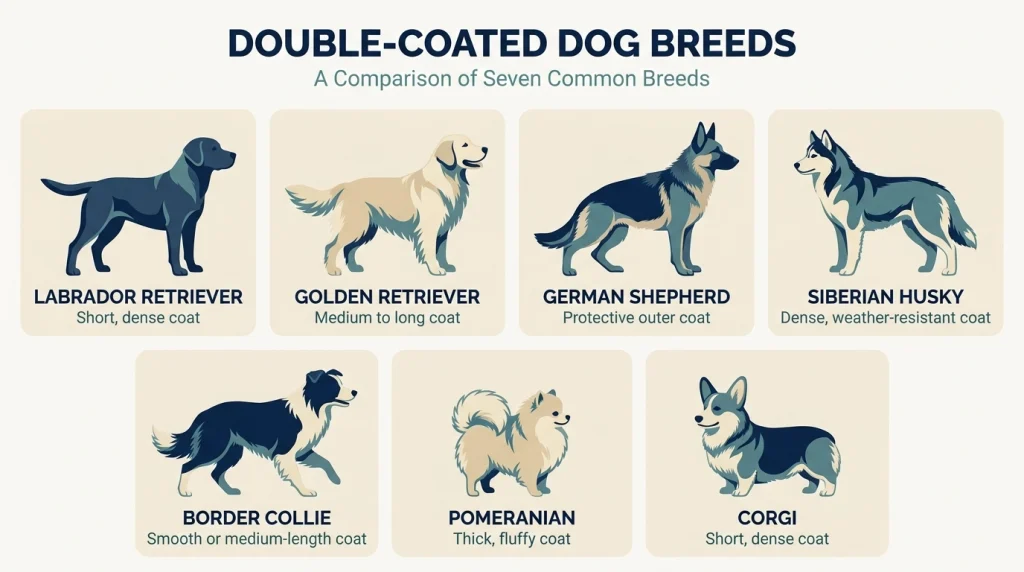
SaveMany familiar dog breeds have double coats, including short-haired dogs that don’t look particularly fluffy. Breed is a useful starting point, but checking the actual coat is more reliable, especially for mixed-breed dogs.
Here are examples of common double-coated breeds and the coat features you might notice.
| Dog breed | Typical coat | What to look for |
|---|---|---|
| Labrador Retriever | Short and dense | Thick fur beneath the smooth outer layer |
| Golden Retriever | Medium to long | Feathering and soft undercoat |
| German Shepherd | Short to medium, depending on variety | Protective outer hairs over dense undercoat |
| Siberian Husky | Dense and weather-resistant | Thick insulation beneath straight guard hairs |
| Border Collie | Smooth or medium-length | Undercoat beneath the outer hair |
| Pomeranian | Very thick and fluffy | Dense undercoat supporting longer outer hairs |
| Corgi | Short to medium and dense | Firm outer coat and softer inner fur |
These are typical breed characteristics, not a substitute for examining an individual dog. The American Kennel Club’s double-coated breed guide provides further examples and explains how coat structure varies.
Double Coat vs. Single Coat: What’s the Difference?
The main difference is whether the dog has a distinct undercoat beneath its outer hair. Both coat types can be short, long, smooth, or textured, so length alone doesn’t tell you which one your dog has.
| Feature | Double coat | Single coat |
|---|---|---|
| Hair layers | Distinct outer coat and undercoat | No distinct insulating undercoat |
| Texture | Often different between layers | Depends on the individual coat type |
| Shedding | May release substantial undercoat seasonally | Can also shed, depending on breed |
| Common examples | Husky, Labrador, Corgi | Poodle, Greyhound, Maltese |
| Grooming approach | May need an appropriate undercoat tool | Depends on length, texture, and matting risk |
These comparisons describe common patterns rather than absolute rules. A mixed-breed dog may have a combination of coat characteristics, and some breeds have several coat varieties.
What Dog Brush Should You Use for a Double Coat?
 Save
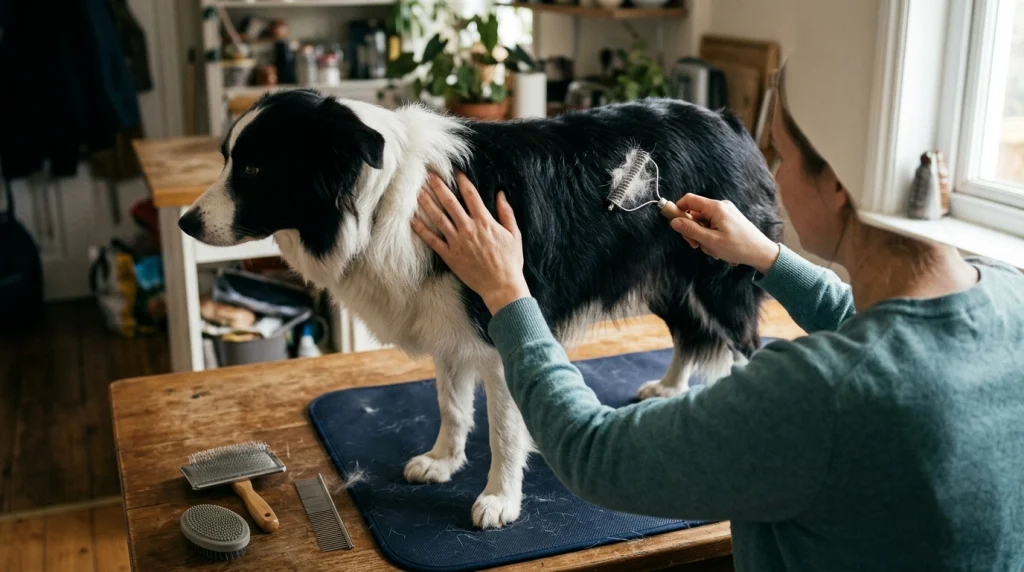
SaveIf your dog has a double coat, choose a brush that reaches the coat appropriately without scraping the skin or breaking healthy guard hairs. The best option depends on coat length, undercoat density, and whether you’re managing everyday shedding or a heavy seasonal shed.
For additional guidance, see this practical guide to choosing a brush for a Husky, a breed with a dense double coat.
- Undercoat rake: Helps lift loose undercoat from dense double coats when used gently.
- Slicker brush: Helps separate coat sections, remove loose hair, and manage light tangles when the pin length suits the coat.
- Metal comb: Helps check whether grooming has reached through the coat and can reveal hidden tangles.
- Rubber grooming brush: Useful for surface hair and gentle grooming on many short coats, but it may not reach a dense undercoat.
Don’t choose a tool simply because it removes a large pile of fur. Excessive pressure or repeated passes can irritate the skin and damage healthy hair.
How often should you brush a double-coated dog?
Many double-coated dogs benefit from brushing several times a week, with more frequent sessions during heavy shedding. Short-coated breeds may need less intensive grooming than dogs with long, dense coats.
Start with a manageable routine and adjust it according to how quickly loose hair builds up. If you find tight mats, sore skin, or persistent tangles, seek professional help rather than forcing a brush through them.
What Mistakes Should You Avoid When Identifying a Double Coat?
Misidentifying a coat can lead to the wrong grooming tools or unnecessary trimming. A few common mistakes are easy to avoid.
- Judging by fluffiness: Short-haired dogs can have dense double coats, while fluffy-looking dogs don’t automatically have them.
- Using shedding as the only test: Single-coated dogs can shed, and double-coated dogs don’t all shed at the same rate.
- Assuming every breed is identical: Individual dogs and mixed breeds can differ in coat texture and density.
- Pulling at the undercoat: Don’t yank hairs or use sharp tools to investigate the layers.
- Shaving to test the coat: Shaving is unnecessary for identification and can interfere with the coat’s protective function.
The AKC’s guidance on shaving dogs explains why owners should consider coat type and professional advice before clipping a double-coated dog.
Recommended Grooming Tools for a Double-Coated Dog
Once you’ve identified a likely double coat, you can choose tools based on the job you need to do. These are established grooming-tool options to compare, not products presented as personally tested or independently performance-rated.
BEST FOR LOOSE UNDERCOAT
Safari Double Row Undercoat Rake
Coat-specific tool
A double-row rake is designed to help remove loose undercoat from dense fur. Choose the appropriate size and use gentle strokes rather than pressing the teeth into the skin.
BEST FOR FINISHING
Chris Christensen Big G Slicker Brush
Coat-dependent option
This slicker brush is intended for working through dense coats and separating hair. It may suit some longer double coats, but use a light touch and select a size appropriate for your dog.
BEST FOR COAT CHECKS
Safari Stainless Steel Comb
Useful finishing tool
A metal grooming comb can help check for tangles and sections that still need attention after brushing. Never force it through resistance or use it to pull out tight mats.
Frequently Asked Questions
Can a short-haired dog have a double coat?
Yes. Labrador Retrievers are a familiar example of dogs with relatively short, dense double coats. The key is finding a soft undercoat beneath the outer hairs, rather than judging coat type by length or fluffiness.
Do all double-coated dogs shed a lot?
No. Shedding varies by breed, individual dog, season, and living environment. Some double-coated dogs release substantial amounts of undercoat during seasonal changes, while others shed more gradually throughout the year.
Can I tell whether my mixed-breed dog has a double coat?
Often, yes. Gently part the fur in several places and look for a distinct undercoat beneath the outer hairs. Breed ancestry can provide useful clues, but a veterinarian or experienced groomer can help if the coat structure remains unclear.
Should I shave my dog if it has a double coat?
Routine shaving is generally not recommended for healthy double-coated dogs simply to reduce shedding or manage warm weather. Their coat provides protection and insulation, and clipping can affect regrowth. Ask a veterinarian or qualified groomer about severe matting or medical needs.
Which brush is best for a double-coated dog?
The best brush depends on coat length and density. An appropriate undercoat rake can remove loose inner fur, while a slicker brush and metal comb can help with finishing and checking tangles. Use gentle pressure and avoid repeatedly brushing the same spot.
Final Takeaway: Identify the Coat Before Choosing the Brush
The most reliable way to identify a double-coated dog is to look for two distinct layers: protective outer hairs and a softer undercoat close to the skin. Breed information and shedding patterns can support your assessment, but neither is conclusive on its own.
Once you understand your dog’s coat, choosing a suitable brush becomes much easier. Work gently, avoid unnecessary shaving, and ask a professional to check the coat if you’re unsure or notice changes in your dog’s skin or hair.

Thomas Cutter is a lifelong dog owner and the founder of FindOutAboutDogs.com. With over 10 years of hands-on experience owning multiple breeds, Thomas created this site to provide honest, research-based dog advice that real owners can actually trust.
