How to Tell If a Dog Needs More Frequent Brushing
Quick Answer
Your dog probably needs more frequent brushing if you notice new tangles, small mats, heavier loose hair, a coat that separates into clumps, or a brush that fills with fur quickly every session. Coat type matters, so use your dog’s current condition rather than a rigid calendar; the ASPCA dog grooming guidance also recommends adjusting brushing frequency according to coat type.
Signs your current brushing schedule may be too light
- New tangles: Knots keep returning between normal grooming sessions.
- Small mats: Dense clumps appear behind the ears, legs, collar, or tail.
- Heavy loose hair: Your brush fills unusually quickly or hair collects around the home faster.
- Uneven coat texture: The coat feels clumpy, packed, or difficult to comb down to the skin.
- Seasonal coat change: A double-coated dog suddenly releases much more undercoat.
- Outdoor debris: Seeds, burrs, dirt, or plant material are repeatedly getting trapped in the coat.
One important warning
- Sudden bald patches, sores, intense scratching, redness, or dramatic hair loss deserve veterinary attention instead of simply adding more brushing.
Brushing looks simple until your dog’s coat changes faster than your routine. A schedule that worked last month may suddenly leave fur packed around the legs, ears, tail, or undercoat.
I prefer to judge the coat in front of me instead of blindly following the calendar. In this guide, I’ll show you the signs that tell you when it’s time to brush more often.


What Signs Mean a Dog Needs More Frequent Brushing?
 Save
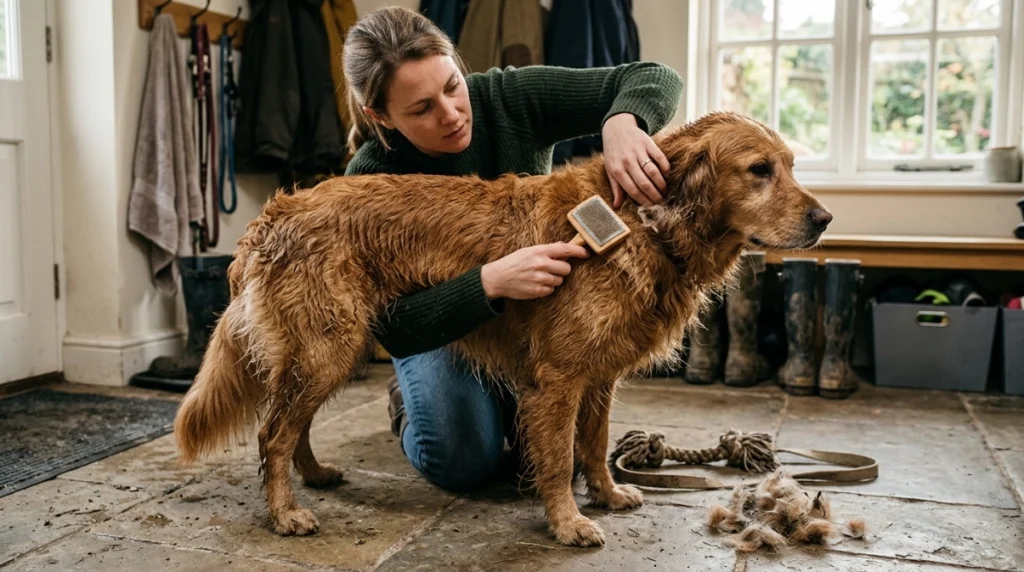
SaveA dog needs more frequent brushing when loose hair, tangles, debris, or early mats build up before the next planned grooming session. The easiest clue is simple: your dog’s coat is no longer staying manageable from one session to the next.
Look for these practical signs during petting, play, or your normal coat check:
- Tangles return quickly: You detangle the coat, but knots are back within a day or two.
- Small mats are forming: Pay special attention behind the ears, under the collar, in the armpits, around the rear legs, and beneath the tail.
- The coat feels packed: Dense loose hair may sit underneath a normal-looking outer coat.
- Your comb keeps stopping: A metal comb cannot travel easily through sections that were previously manageable.
- Shedding suddenly increases: Your hands, clothes, furniture, or brush collect noticeably more loose hair.
- Dirt stays trapped: Grass, burrs, seeds, dust, or dried mud remain caught between hairs.
A quick coat inspection often catches trouble before you can see it. I part the hair with my fingers and check whether I can see clean skin without pushing through a layer of packed fur.
Definition: Frequent brushing means brushing often enough to remove loose hair and tangles before they develop into uncomfortable mats. The ideal interval differs by coat type, season, activity, and the individual dog.
How Often Should You Brush a Dog Based on Coat Type?
Short, smooth coats may stay manageable with weekly brushing, while long, silky, curly, or mat-prone coats often need attention several times a week or daily. There isn’t one correct schedule for every dog.
The American Kennel Club’s home grooming guidance also notes that equipment and grooming frequency depend heavily on coat length and texture.
| Coat Type | Useful Starting Schedule | Signs to Increase It | Typical Tool |
|---|---|---|---|
| Smooth, short coat | About once weekly | More loose hair or seasonal shedding | Rubber grooming mitt or bristle brush |
| Short, dense coat | 1–2 times weekly | Packed undercoat or heavy shedding | Slicker, bristle brush, or suitable undercoat tool |
| Long or silky coat | Several times weekly to daily | Knots between sessions | Slicker or pin brush plus metal comb |
| Curly, continuously growing coat | Several times weekly to daily | Hidden tangles close to the skin | Slicker plus metal comb |
| Heavy double coat | Several times weekly during heavy shedding | Loose undercoat comes out in tufts | Brush plus appropriate undercoat tool |
These are starting points rather than medical rules. The ASPCA notes that smooth short coats may need weekly brushing, while long coats can require daily attention.
The dog’s actual coat should make the final decision. If tangles develop sooner, shorten the interval.
How Can You Tell Your Current Brushing Schedule Isn’t Enough?
Your schedule isn’t frequent enough when each grooming session feels like a rescue job instead of routine maintenance. Brushing should remove manageable loose hair and minor tangles, not repeatedly uncover large knots.
Try a simple “comb-through check” after brushing. A suitable metal comb should move through a long or medium coat without repeatedly catching on hidden tangles.
- Brush fills immediately: Increase frequency temporarily if unusually large amounts of loose hair return every session.
- Sessions keep getting longer: More frequent short sessions may be easier than one difficult weekly session.
- Knots hide underneath: Surface brushing may be missing deeper sections of the coat.
- Friction areas mat first: Check the ears, collar line, harness area, armpits, thighs, and tail.
- Your dog becomes uncomfortable: Waiting until knots tighten can make grooming pull at the skin.
The VCA Animal Hospitals coat-care guide recommends choosing grooming tools according to coat type and using them gently. Excessive pulling isn’t the goal.
Does Seasonal Shedding Mean You Should Brush More Often?
Yes, many shedding dogs benefit from temporarily increased brushing during heavier coat changes. Double-coated dogs can release large quantities of soft undercoat during seasonal shedding periods.
Spring and fall are common heavy-shedding periods for many dogs. Indoor living, climate, breed, and individual coat cycles can change the timing.
- Move from weekly brushing to several shorter sessions during a heavy shed.
- Remove loose hair before it packs beneath the outer coat.
- Use the correct tool rather than applying extra pressure.
- Return to the normal schedule when the heavy shedding period passes.
This is one reason I don’t treat grooming frequency as a permanent number. The right routine can change during the year.
If shedding becomes dramatically different from your dog’s normal pattern, look at the skin as well as the hair. Grooming cannot diagnose the cause of abnormal hair loss.
Are Mats a Sign That Your Dog Needs More Brushing?
 Save
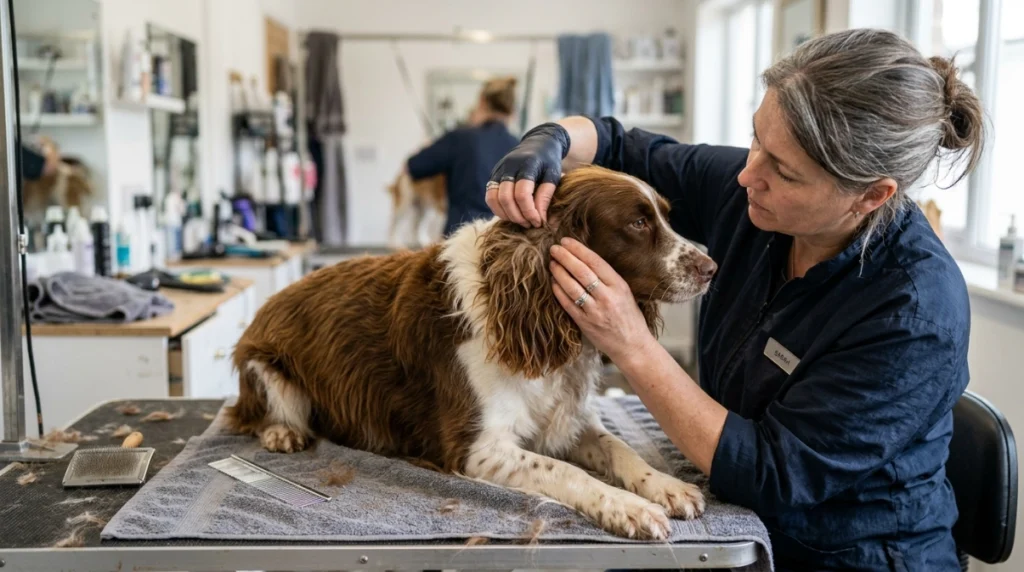
SaveRepeated mats are one of the clearest signs that a dog’s current coat-care routine needs adjustment. However, once a mat becomes tight, aggressively brushing it may hurt the dog.
Mats often develop where hair rubs against hair or equipment. Common trouble spots include the collar area, behind the ears, armpits, legs, chest, and rear end.
The PetMD guide to matted coats explains that brushing requirements depend on coat length, texture, and activity. It also warns that severe mats may require professional removal rather than forceful combing.
Check These High-Risk Areas First
- Behind both ears
- Under collars and harness straps
- Inside the front legs
- Between and behind the rear legs
- Around the tail and rear
- Chest and belly feathering
- Long hair around the paws
If these areas repeatedly knot before your next scheduled brushing, work on them more often. A two-minute spot check can be more useful than waiting for a full-body grooming day.
When Will More Brushing Not Solve the Problem?
More brushing is not the answer when the coat change comes with abnormal skin symptoms, pain, bald areas, sores, or persistent itching. Those signs can point to a health or skin problem that grooming alone cannot correct.
The ASPCA advises veterinary consultation for problems such as bald spots, thinning hair, skin irritation, sores, or persistent scratching.
- Sudden bald patches: Don’t repeatedly brush over exposed or irritated areas.
- Red or inflamed skin: Stop if brushing makes the redness worse.
- Open sores or scabs: Avoid grooming directly over damaged skin.
- Constant scratching or chewing: A veterinarian can help determine the cause.
- Unexpected heavy hair loss: Don’t assume every increase in shedding is seasonal.
- Pain when touched: Stop and investigate instead of forcing the session.
A grooming brush is a maintenance tool. It isn’t a treatment for parasites, allergies, infections, or other medical conditions.
How Do You Increase Brushing Frequency Without Irritating Your Dog?
Increase frequency by making sessions shorter and gentler rather than simply brushing harder. Five comfortable minutes several times a week can work better than one long session that your dog learns to avoid.
- Start with a calm dog. Choose a quiet place with stable footing.
- Inspect the skin first. Look for sores, redness, ticks, or painful areas.
- Work in small sections. Don’t repeatedly drag the brush across one spot.
- Use light pressure. Let the correct tool do the work.
- Check with a comb. On longer coats, a metal comb can reveal tangles the brush missed.
- Reward cooperation. Short breaks and small treats can help build a positive routine.
- Stop before frustration. End the session while your dog is still comfortable.
Pay attention to body language. Turning away, sitting suddenly, lip licking, repeated attempts to escape, growling, or guarding a body area can mean your dog is uncomfortable.
As of 2026, my simplest rule remains the same: increase brushing when the coat stops staying clean, loose, and tangle-free between sessions. Then reduce the schedule again if the extra brushing is no longer needed.
Which Brush Should You Use When Your Dog Needs More Frequent Grooming?
 Save
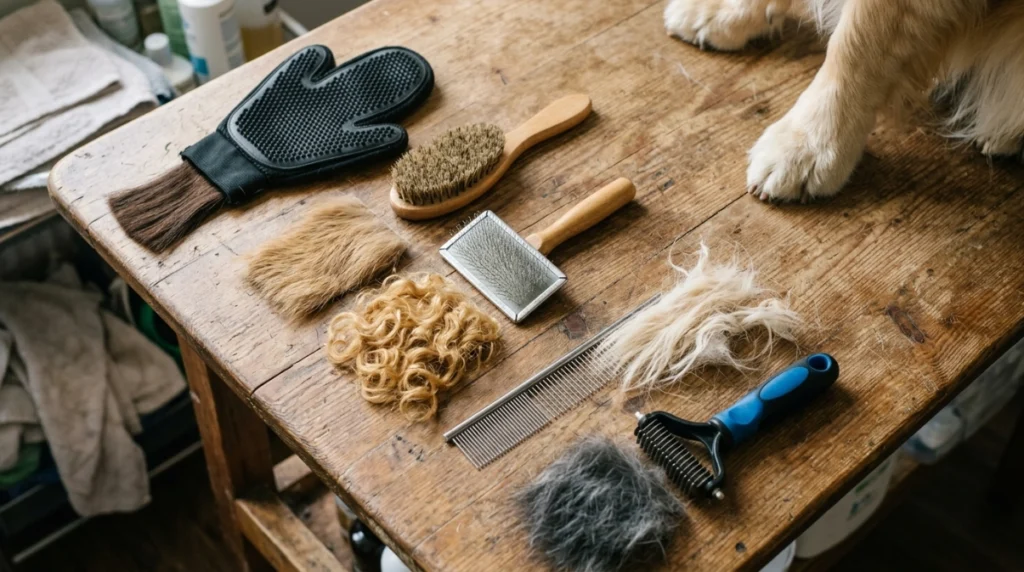
SaveThe best brush depends on the coat you’re trying to maintain. Using the wrong tool more often can create irritation without solving the actual grooming problem.
| Tool | Best For | Main Job |
|---|---|---|
| Rubber grooming mitt | Smooth short coats | Loosens surface hair and debris |
| Bristle brush | Short to medium coats | Removes loose surface hair and smooths the coat |
| Slicker brush | Curly, medium, long, or tangle-prone coats | Separates hair and removes loose fur and small tangles |
| Metal comb | Medium, long, and curly coats | Checks for hidden tangles after brushing |
| Undercoat de-shedding tool | Suitable shedding dogs with undercoat | Removes loose undercoat during shedding periods |
Don’t assume a de-shedding tool replaces ordinary brushing. For example, FURminator describes its undercoat tool as a separate de-shedding step and recommends checking the coat for mats and skin problems before use.
Dog Brushes I’d Consider for Different Coat Problems
If you’re ready to choose a grooming tool, I prefer matching the brush to the problem instead of buying the most aggressive option.
🏆 Best Everyday Slicker
Hertzko Self-Cleaning Slicker Brush
★★★★☆
A self-cleaning slicker designed to collect loose hair and work through everyday tangles. I like this style for owners who brush often because quick hair release makes repeated sessions less tedious.
🐕 Best for Heavy Undercoat
FURminator Undercoat deShedding Tool
★★★★☆
This stainless-steel de-shedding tool is designed to reach loose undercoat beneath the topcoat on suitable shedding dogs. I would use it as a targeted shedding tool, not as a substitute for normal brushing or on a dog with painful mats.
✨ Best for Long Dense Coats
Chris Christensen Big G Slicker Brush
★★★★☆
The Big G uses long 27 mm pins and is designed for longer, dense, curly, or cottony coats. I would consider it when coat depth makes a shallow everyday brush struggle to separate the hair effectively.
Frequently Asked Questions
How do I know if I am not brushing my dog enough?
You may not be brushing often enough if tangles, small mats, trapped debris, or heavy loose hair repeatedly appear before the next grooming session. Increase the frequency gradually and check whether the coat stays easier to comb and more comfortable between sessions.
Can I brush my dog every day?
Many dogs can be brushed daily when you use a coat-appropriate tool and gentle pressure. Long, silky, curly, and mat-prone coats may benefit from daily maintenance, while a smooth short coat may not need it. Stop if you notice irritation or discomfort.
Does more shedding always mean my dog needs more brushing?
More shedding often means temporary extra brushing will help, especially during normal seasonal coat changes. However, sudden excessive hair loss accompanied by bald areas, redness, sores, or intense itching should be discussed with a veterinarian rather than treated only with extra grooming.
Why does my dog get mats even though I brush regularly?
You may be brushing only the coat’s surface, using a tool that doesn’t reach the problem area, or waiting too long between sessions. Friction from collars, harnesses, legs, and ears can also create localized mats that need more frequent spot checks.
Should I cut a tight mat out with scissors?
Using scissors close to a tight mat can be risky because a dog’s skin may be pulled into or hidden beneath the mat. If a mat sits tightly against the skin or your dog is uncomfortable, a professional groomer or veterinary team is the safer choice.
Final Takeaway: Let Your Dog’s Coat Set the Schedule
The best way to tell if a dog needs more frequent brushing is to watch what happens between grooming sessions. Recurring tangles, early mats, packed undercoat, increased loose fur, and trapped debris all tell you that your current interval may be too long.
Increase brushing gently, use the right tool, and focus on short maintenance sessions before knots become difficult. If the coat change comes with abnormal skin symptoms or sudden hair loss, contact your veterinarian instead of simply brushing more.
Check your dog’s ears, collar area, armpits, legs, tail, and undercoat today. Those few minutes can tell you more about the right brushing schedule than any one-size-fits-all calendar.

Thomas Cutter is a lifelong dog owner and the founder of FindOutAboutDogs.com. With over 10 years of hands-on experience owning multiple breeds, Thomas created this site to provide honest, research-based dog advice that real owners can actually trust.
