How to Manage Shedding in a German Shepherd
Quick Answer
Manage German Shepherd shedding with gentle brushing several times weekly, brief daily sessions during heavy shedding, and baths when needed. You can collect loose fur before it spreads, but you cannot stop normal shedding; the American Kennel Club’s German Shepherd grooming guide supports regular coat care.
Five steps to start
- 1. Check skin: Look for redness, sores, or bald patches before grooming.
- 2. Brush gently: Work in small sections with tools suited to the coat.
- 3. Adjust frequency: Add short sessions when loose undercoat increases.
- 4. Bathe thoughtfully: Use dog shampoo when needed, rinse thoroughly, and dry the undercoat.
- 5. Collect fur: Clean bedding and vacuum favorite resting spots regularly.
German Shepherd fur can make a clean floor look neglected before lunchtime. I’d focus on a repeatable routine that keeps your dog comfortable and household cleanup manageable.
This guide explains brush selection, gentle technique, and the difference between normal shedding and concerning hair loss. The suggested schedules are starting points, not promises of a fur-free home.


Why does a German Shepherd shed so much?
German Shepherds have a double coat that releases loose hair throughout the year. Seasonal coat changes can bring a heavier wave of soft undercoat.
Double coat: A double coat consists of an outer layer of guard hairs and a softer undercoat beneath it.
Blowing coat: This term describes a period when a dog releases a large amount of undercoat.
Long outer hairs and soft fluff may both appear on your furniture. Removing loose hair catches some of that material before it reaches the sofa.
- Outer coat: Longer hairs form the visible surface.
- Undercoat: Dense, softer hair sits beneath that surface.
- Seasonal shedding: Loose fluff may increase during coat changes.
- Indoor shedding: Some dogs shed noticeably across much of the year.
The amount on your floor is only part of the picture. A comfortable dog with even coat coverage differs from one with thinning patches and constant scratching.
How often should you brush a German Shepherd?
 Save
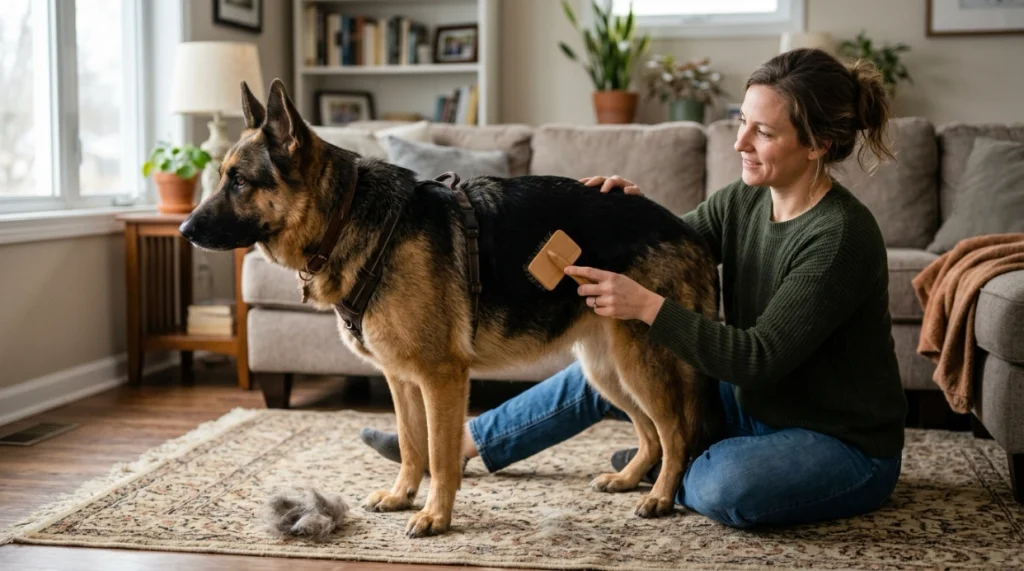
SaveStart with gentle brushing every other day, then adjust to your dog’s coat and comfort. During heavy shedding, brief daily sessions may make loose hair easier to manage.
I’d use a five-minute timer initially to keep the task approachable. That number is a planning aid, not a required treatment length.
- Ordinary weeks: Try three or four short sessions.
- Heavy shedding: Check the coat daily and remove loose hair gently.
- Longer coats: Check feathering and friction areas between sessions.
- Sensitive dogs: Start with a few strokes and build gradually.
A weekly schedule you can adapt
Put grooming beside an existing habit, such as your evening walk. Keeping the brush and cleanup bag together removes one small barrier to starting.
- Monday: Inspect the skin and brush one side, with breaks.
- Wednesday: Work through the other side and check longer hair.
- Friday: Remove loose coat and inspect areas you missed.
- Sunday: Check overall coat condition and clean grooming tools.
Each session can cover more of the body if your dog remains relaxed. Avoid repeatedly working one spot simply because the brush still collects hair.
Which dog brush works best for German Shepherd shedding?
 Save
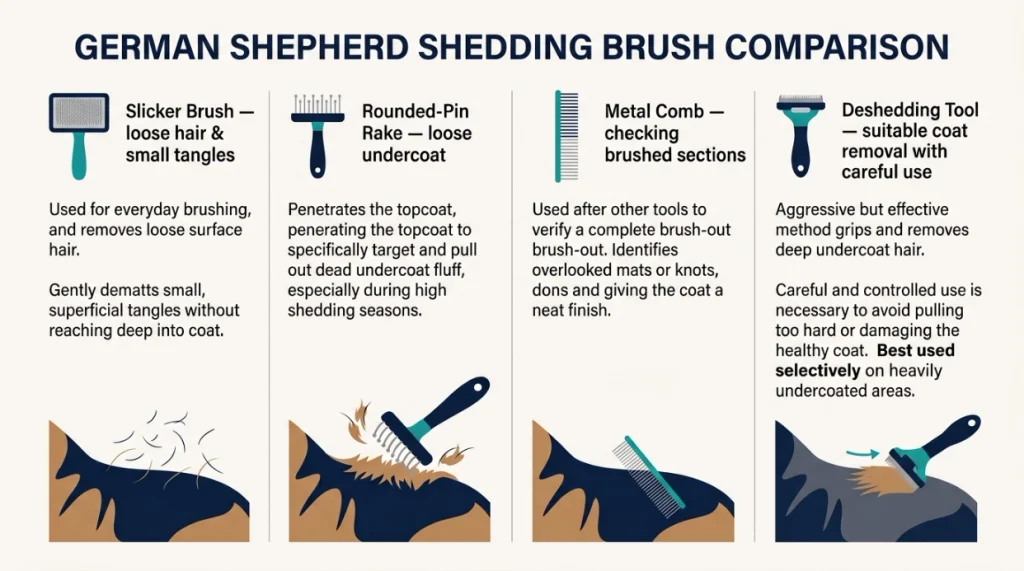
SaveThe right brush reaches loose coat without scraping skin or pulling attached hair. A slicker, rounded-pin undercoat rake, and metal comb serve different purposes.
I’d choose tools by coat depth and tolerance before brand popularity. A brush that skims the surface may leave loose undercoat behind.
| Tool | Design | Useful task | Main limit |
|---|---|---|---|
| Slicker brush | Fine wire pins | Collecting loose hair and easing small tangles | Pressure can irritate skin |
| Rounded-pin rake | Spaced metal pins | Reaching loose undercoat | Pin length must suit coat depth |
| Metal comb | Fixed teeth, often with two spacings | Checking brushed sections for catches | Slow for whole-body loose-hair removal |
| Deshedding-edge tool | Closely spaced working edge | Removing loose undercoat on suitable coats | Misuse can damage coat or skin |
Check what “undercoat rake” means before buying
Some tools called rakes have rounded pins; others have curved cutting teeth. Those designs are not interchangeable.
- Read the description and examine close-up photos.
- Choose pin length for your dog’s actual coat.
- Ask a groomer before using cutting tools on compacted hair.
- Follow the manufacturer’s instructions for the exact model.
How do you remove loose undercoat without hurting your dog?
Brush a dry, untangled coat in small sections using light pressure. Stop when the tool catches, the skin reddens, or your dog shows discomfort.
My preferred way to judge progress is by comfortable, checked sections rather than the size of the fur pile. Chasing a bigger pile encourages unnecessary extra passes.
- Set up stable footing. Use a nonslip surface where your dog can stand or lie comfortably.
- Inspect before brushing. Part the hair and check the skin in several places.
- Start somewhere easy. Try the shoulder or side, avoiding tender areas.
- Lift a small layer. Hold longer hair aside to see the section beneath.
- Follow hair growth. Use short strokes without digging the pins into skin.
- Check with a comb. Let it pass gently through the section; investigate any snag.
- Take breaks. Reward cooperation and finish before your dog becomes frustrated.
Check the areas a quick surface brush misses
Longer hair and friction can hide tangles beneath a tidy-looking surface. Examine these areas gently rather than running a rake over them automatically.
- Behind the ears.
- Under harness contact points.
- Behind the front legs.
- Around the rear feathering.
- At the tail base.
Do not pull through tight mats or cut close to skin with scissors. A groomer can assess compacted coat and choose a safer approach.
Help a reluctant dog accept the brush
A dog that moves away may need a slower introduction or a different tool. Sudden resistance also deserves a check for pain.
- Let your dog look at the brush, then offer a small reward.
- Touch the brush lightly to an easy area without stroking.
- Try one gentle stroke, reward, and pause.
- Increase gradually while your dog remains comfortable.
For example, I’d plan to groom one shoulder successfully before attempting the whole back. A small, calm session gives tomorrow’s session a better starting point.
Does bathing help with German Shepherd shedding?
 Save
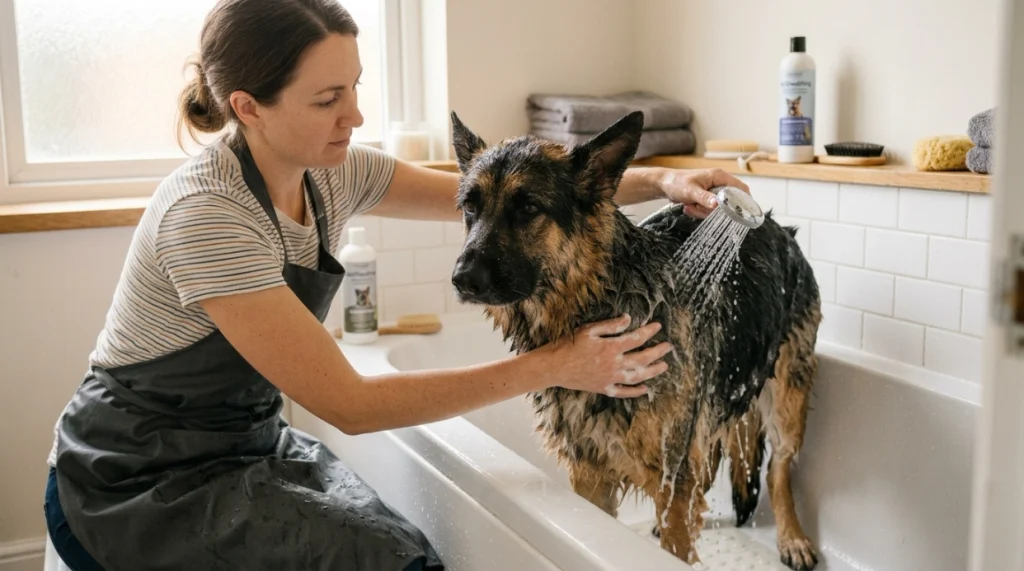
SaveBathing can help loosen and wash away shed hair, but it cannot stop the coat cycle. Bathe when your dog needs cleaning rather than whenever you notice fur.
Skin condition and lifestyle affect bathing needs. Follow your veterinarian’s schedule when using a prescribed shampoo.
- Before washing: Check for mats and gently remove loose tangles.
- During washing: Use lukewarm water and shampoo made for dogs.
- When rinsing: Work through the dense coat to remove residue.
- After washing: Towel dry and ensure the undercoat dries fully.
A dry-looking outer coat can hide dampness underneath. Part the hair to check instead of relying on the surface alone.
A professional groomer may use a dog dryer to clear loosened coat. Ask for a gentle introduction if your dog finds noise or airflow upsetting.
Should you shave a German Shepherd to reduce shedding?
Do not shave a German Shepherd as a routine shedding solution. Clipping does not stop hair growth and shedding, and it removes the protective coat.
- Use brushing to collect loose hair.
- Ask a groomer about compacted undercoat.
- Leave medically necessary clipping decisions to your veterinarian.
Can food or supplements reduce shedding?
A complete, balanced diet supports healthy skin and hair, but no food makes normal shedding disappear. Avoid changing meals based only on the amount in the vacuum.
VCA’s guidance on healthy skin and coat explains how nutrition and health affect coat condition. A change in coat quality deserves attention alongside other symptoms.
- Feed a complete diet appropriate for your dog’s life stage.
- Keep fresh drinking water available.
- Discuss supplements with your veterinarian before adding them.
- Maintain veterinarian-recommended parasite prevention.
I’d be cautious about a 2026 “anti-shedding” product promising dramatic results without clear evidence. Better packaging does not change what routine grooming can achieve.
When is shedding a reason to call the vet?
Arrange a veterinary visit when shedding comes with bald patches, inflamed skin, or persistent itching. Sudden changes in coat condition also warrant advice.
Ordinary shedding should not leave painful sores. Brushing harder will not resolve an underlying skin problem.
- Patchy loss: Bare areas or uneven thinning.
- Skin irritation: Redness, scabs, moisture, or sores.
- Repeated discomfort: Scratching, chewing, or licking.
- Other changes: Reduced energy, appetite changes, or unusual thirst.
Photograph affected areas and note when the changes began. Bring details of recent food, shampoo, medication, or parasite-prevention changes to the appointment.
How can you keep shed fur under control at home?
Focus cleanup on the places where your dog rests most. A small daily routine is easier to maintain than waiting for fur to spread everywhere.
- Cover the favorite seat: Use a washable throw.
- Clean resting areas: Vacuum around beds and furniture edges.
- Collect hair first: Remove clumps from bedding before washing.
- Maintain equipment: Empty the vacuum and clean filters as directed.
- Clean the brush: Remove trapped hair after each session.
I’d track whether cleanup feels easier after two weeks, rather than counting hairs after one brushing. Note your dog’s comfort and coat condition alongside the household difference.
Dog brushes worth considering for this routine
If you need tools, these two options cover different grooming tasks. Check the exact model and size before buying.
The stars below are editorial suitability scores based on design and limitations, not customer ratings or hands-on test results. Neither tool is a complete solution for every coat.
Affiliate disclosure: As an Amazon Associate, this site earns from qualifying purchases.
🪮 For loose undercoat
FURminator Grooming Rake
★★★★☆ — Editorial suitability: 4/5
This rake uses rotating metal teeth to work through loose hair and tangles. I’d consider it for accessible undercoat, provided the pins suit the coat depth and pass without pulling.
🐾 For surface grooming
Safari by Coastal Dog Soft Slicker Brush with Coated Tips
★★★☆☆ — Editorial suitability: 3/5
This soft slicker has coated pin tips for general grooming. I’d consider it a companion brush, because its reach may be insufficient for a dense German Shepherd undercoat.
Frequently asked questions
Can you stop a German Shepherd from shedding completely?
No, normal shedding is part of a German Shepherd’s coat cycle. Regular brushing and household cleanup help manage loose fur, while unusual hair loss needs veterinary attention; no brush or shampoo can permanently stop healthy shedding.
Do short-haired German Shepherds need undercoat grooming?
Yes, a shorter outer coat does not mean there is no undercoat to maintain. Choose tools that suit the dog’s coat depth, and use light pressure; longer pins are not automatically better for a shorter-coated dog.
Why does my German Shepherd still shed after brushing?
Brushing removes some loose hair present during that session, but more hair continues to shed afterward. Remaining fur does not mean you should keep brushing indefinitely; stop before repeated passes irritate skin or make your dog uncomfortable.
Is a deshedding tool safe to use every day?
Daily use is not suitable for every deshedding tool or coat. Follow the exact product instructions, and ask a groomer about technique; a daily coat check or gentle brush session does not require daily use of a deshedding edge.
When should I book professional grooming?
Book a groomer when undercoat becomes compacted, tangles resist gentle combing, or home grooming becomes difficult. Tell the groomer about sensitivity and handling concerns; painful skin, sores, or unexplained bald patches should receive veterinary attention first.
Start with one comfortable grooming session
Begin by checking your dog’s skin, then gently brush a small section with an appropriate tool. Build a schedule around what your dog tolerates and what you can maintain.
The goal is a healthy, comfortable coat and less loose fur around your home. Put the next short session on your calendar today.

Thomas Cutter is a lifelong dog owner and the founder of FindOutAboutDogs.com. With over 10 years of hands-on experience owning multiple breeds, Thomas created this site to provide honest, research-based dog advice that real owners can actually trust.
