How to Manage Shedding in a Labrador Retriever: 2026 Guide
Quick Answer
To manage shedding in a Labrador Retriever, brush the coat several times each week, increase to short daily sessions during heavy shedding, and use tools designed for a short double coat. Follow a gentle Labrador brushing routine, remove only loose hair, and watch the skin for redness, itching, or bald patches.
Quick shedding-control steps
- Brush regularly: Start with two or three gentle sessions each week.
- Increase during coat blow: Use short daily sessions when loose undercoat suddenly increases.
- Choose the right tools: A rubber curry brush works well for routine grooming, while a suitable de-shedding tool helps with released undercoat.
- Keep pressure light: Repeated scraping can irritate skin without improving shedding control.
- Bathe when needed: Bathing can loosen dead hair, but the coat should be rinsed and dried thoroughly.
- Check the skin: Sudden thinning, bald patches, sores, or intense itching need veterinary attention.
Remember
- You can reduce loose Labrador hair around your home, but you cannot completely stop normal shedding.
Labradors look low-maintenance until their short hair starts appearing on the sofa, clothes, car seats, and almost everywhere else. The good news is that consistent coat care makes that loose hair much easier to control.
This 2026 guide focuses on practical shedding management without stripping, shaving, or over-brushing your Labrador’s protective coat.


Why Does My Labrador Retriever Shed So Much?
Labrador Retrievers shed because they have a dense double coat containing protective outer hairs and a softer insulating undercoat. Loose and aging hair naturally releases as new coat grows.
Definition: Labrador shedding is the normal release of old or loose hair from the breed’s short double coat. Shedding becomes abnormal when it causes bald patches, obvious coat loss, inflamed skin, or other signs of disease.
The Labrador’s coat may look simple from the outside, but plenty of hair can sit beneath that smooth surface. The American Kennel Club’s Labrador grooming guidance describes the breed’s coat as short, dense, and weather-resistant.
- Normal coat turnover: Old hairs naturally release as part of the hair-growth cycle.
- Seasonal changes: Many Labs release more undercoat during heavier shedding periods.
- Indoor living: Artificial heating and cooling can make shedding patterns feel less seasonal.
- Individual variation: Age, health, environment, and coat density can change how much loose hair you notice.
My practical rule is simple: judge shedding by your dog’s skin and coat condition, not by the amount of hair on one vacuuming day. A healthy-looking coat with normal loose hair is different from patchy hair loss.
How Often Should You Brush a Labrador to Control Shedding?
 Save
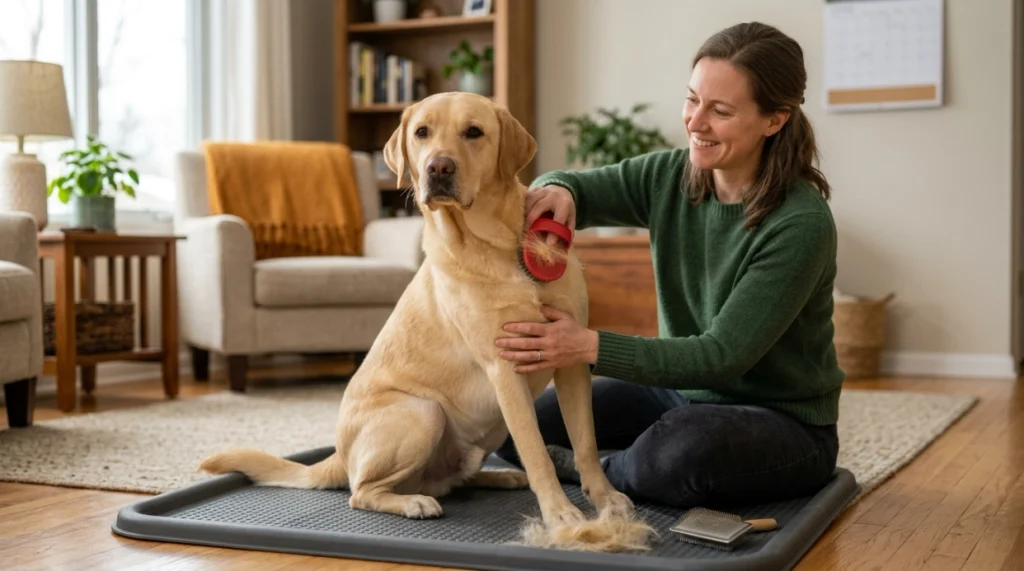
SaveFor many healthy Labradors, brushing two or three times per week is a useful starting point. During a heavy coat release, short daily sessions can keep loose undercoat from building up.
The schedule should change with the dog rather than staying fixed all year. The AKC’s dog shedding guide also notes that heavier shedders may need grooming several times weekly or daily during peak periods.
| Situation | Practical starting schedule | Main goal |
|---|---|---|
| Normal shedding | 2–3 times weekly | Collect loose surface hair before it reaches furniture |
| Heavy coat release | Short daily sessions as needed | Remove released undercoat gradually |
| Before bathing | One thorough gentle brushing | Remove loose hair and debris first |
| After outdoor activity | Quick coat and skin check | Find debris, ticks, irritation, or tender areas |
Do not turn every brushing session into a full de-shedding session. Gentle routine brushing and deeper undercoat removal serve different purposes.
What Is the Best Brush for a Labrador Retriever?
A rubber curry brush is excellent for regular loose-hair removal, while a short-coat de-shedding tool can help when your Labrador releases heavier undercoat. You can compare the options in my guide to choosing the best brush for a Labrador Retriever.
I prefer using the gentlest tool that still does the job. A stronger tool is not automatically a better tool.
| Tool | Best use | How often | Main caution |
|---|---|---|---|
| Rubber curry brush | Routine loose hair and bath-time grooming | Several times weekly | Do not scrub irritated skin |
| Short-hair de-shedding tool | Released undercoat during heavier shedding | Follow the specific tool’s directions | Repeated passes can irritate skin |
| Bristle brush | Finishing and surface debris | As part of routine grooming | Limited deep undercoat removal |
| Grooming glove | Brush-sensitive dogs and loose surface hair | As needed | May struggle during heavy coat release |
VCA Animal Hospitals’ coat-care guidance also stresses matching grooming tools to coat type and using them gently. That matters more than buying the most aggressive brush available.
How Do You Manage Heavy Labrador Shedding at Home?
 Save
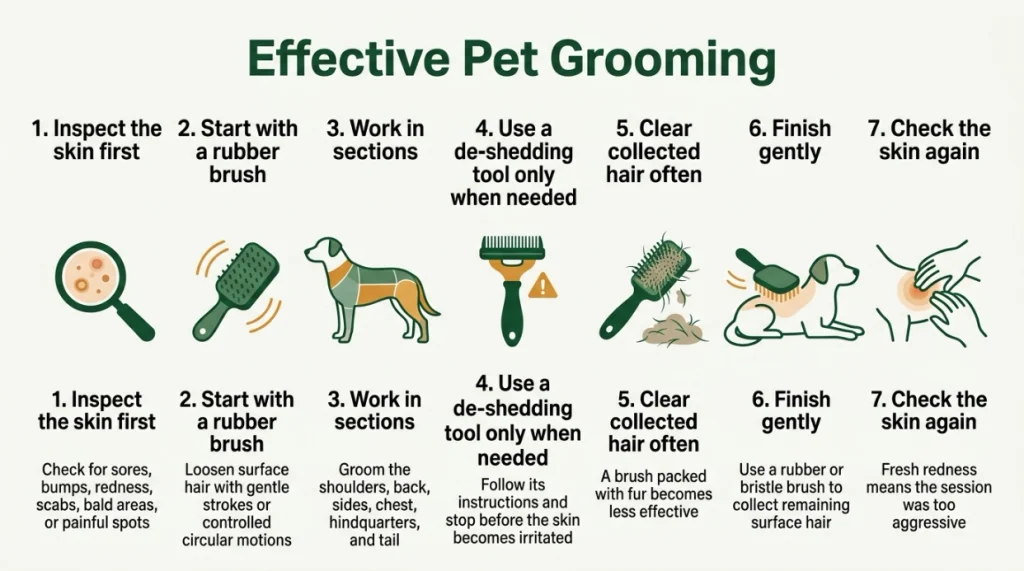
SaveThe easiest way to manage heavy Labrador shedding is to remove loose hair in small, regular sessions before it spreads around your home. Combine grooming with simple cleaning habits rather than trying to eliminate shedding completely.
- Inspect the skin first. Check for sores, bumps, redness, scabs, bald areas, or painful spots before brushing.
- Start with a rubber brush. Loosen surface hair with gentle strokes or controlled circular motions.
- Work in sections. Groom the shoulders, back, sides, chest, hindquarters, and tail instead of repeatedly brushing one area.
- Use a de-shedding tool only when needed. Follow its instructions and stop before the skin becomes irritated.
- Clear collected hair often. A brush packed with fur becomes less effective.
- Finish gently. Use a rubber or bristle brush to collect remaining surface hair.
- Check the skin again. Fresh redness means the session was too aggressive.
If Monday, Wednesday, and Friday brushing still leaves handfuls of loose coat by Saturday, switch temporarily to shorter daily sessions. That usually makes more sense than doubling the pressure or extending one session.
Should I Bathe My Labrador More Often to Reduce Shedding?
Bathing can loosen dead hair, but frequent shampooing is not a shortcut to stopping shedding. Bathe when your Labrador needs it, use dog-appropriate products, rinse thoroughly, and dry the dense coat well.
Brushing before bathing can remove loose fur and debris before everything gets wet. Afterward, wait until the coat is properly dry before using any grooming tool designed specifically for dry fur.
Can Food or Supplements Stop Labrador Shedding?
No food or supplement can stop the normal shedding cycle of a healthy Labrador. A complete, balanced diet supports normal skin and coat condition, but shedding remains part of living with a double-coated breed.
Do not add oils, vitamins, or other supplements simply because your Lab sheds. Ask your veterinarian first, especially when shedding comes with itching, digestive changes, or skin problems.
How Can You Keep Labrador Hair Off Furniture and Clothes?
You will get better results by controlling hair at both ends: remove loose coat from your Labrador and make your home easier to clean. Small routines beat occasional deep-cleaning battles.
- Groom in an easy-clean area: A patio, washable floor, or grooming mat keeps loose fur contained.
- Use washable furniture covers: They are easier to clean than an entire sofa.
- Wash dog bedding regularly: Bedding collects surprising amounts of short Labrador hair.
- Vacuum high-traffic areas often: Short fur becomes harder to remove after it works into upholstery.
- Keep a lint roller nearby: It is useful for clothes, fabric chairs, and car seats.
- Clean grooming tools after each session: A hair-packed brush cannot collect loose coat efficiently.
I would rather spend five minutes collecting hair from the dog than twenty minutes pulling embedded hair from a car seat. That is the real advantage of a consistent grooming routine.
When Is Labrador Shedding a Sign of a Health Problem?
Normal shedding should not leave obvious bald patches, painful skin, or severe inflammation. Sudden coat loss combined with itching, sores, odor, scaling, or behavior changes deserves veterinary attention.
The Merck Veterinary Manual’s guide to canine hair loss explains that abnormal hair loss can have many underlying causes. Grooming alone cannot diagnose or treat those problems.
- Bald or thinning patches: Normal shedding should not create obvious bare areas.
- Persistent itching: Repeated scratching, licking, or biting needs attention.
- Red or painful skin: Stop brushing irritated areas until the cause is understood.
- Crusts, sores, or discharge: These are not normal features of seasonal shedding.
- Strong odor: An unusual skin odor can accompany skin or ear problems.
- Sudden major change: A sharp change from your dog’s normal coat pattern is worth discussing with a veterinarian.
A brush should never be the treatment for unexplained hair loss. When the skin looks wrong, solve the health question before increasing grooming intensity.
What Labrador Shedding Mistakes Should You Avoid?
 Save
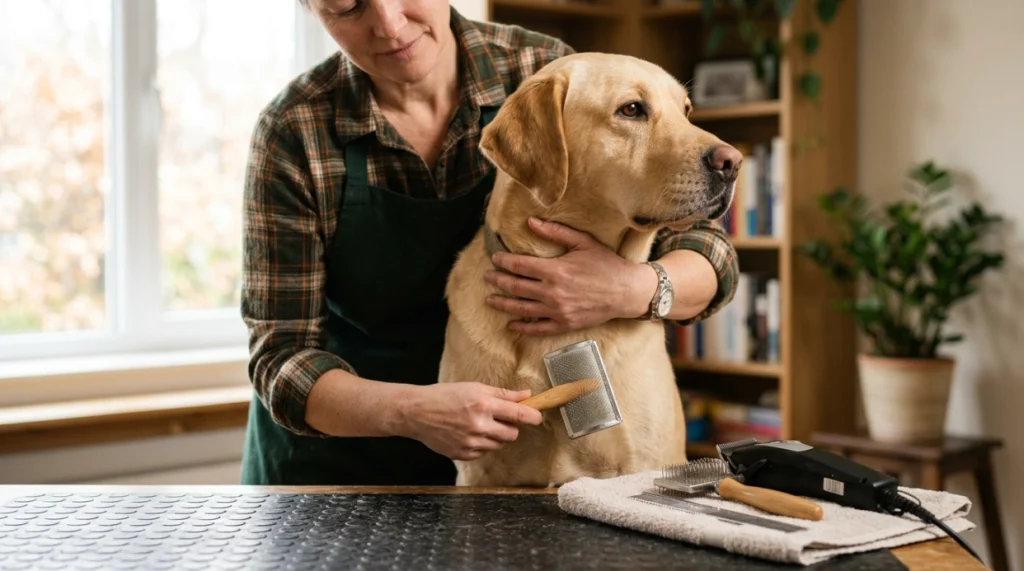
SaveThe biggest shedding mistakes come from trying to force normal coat release to happen faster. Gentle consistency is safer than scraping the coat until no more hair appears.
- Do not chase every loose hair: Your Labrador will continue normal coat turnover after the session ends.
- Do not use excessive pressure: A tool should collect hair without leaving the skin sore.
- Do not repeat dozens of passes: Move to another area once a section is reasonably groomed.
- Do not brush damaged skin: Sores, hot spots, cuts, and inflamed areas need appropriate care.
- Do not routinely shave the coat: Shaving is not a normal shedding-control strategy for a Labrador’s double coat.
- Do not assume all shedding breeds need identical tools: Coat length, density, and texture change the grooming approach.
For comparison, see how I approach Golden Retriever shedding and German Shepherd shedding. All three breeds shed, but their coat length and grooming needs are not identical.
If you’re ready to build a simple Labrador grooming kit, these are the three tools I would consider first:
🏆 Best Routine Brush
KONG ZoomGroom Dog Brush
★★★★★ My fit rating: 4.8/5
Flexible rubber fingers loosen short surface hair and can be used during dry grooming or bathing. I like this style for frequent Labrador grooming because the rubber design encourages a gentler touch.
🐕 Best for Heavy Shedding
FURminator Undercoat deShedding Tool — Large Dog, Short Hair
★★★★☆ My fit rating: 4.6/5
This version is designed for large, short-haired dogs and targets loose undercoat beneath the topcoat. I would use it for controlled de-shedding sessions rather than aggressive everyday brushing.
💰 Best Simple De-shedding Option
The Original by SleekEZ Medium Grooming Tool
★★★★☆ My fit rating: 4.4/5
The medium tool is made to collect shedding hair with a compact toothed edge. I would use light passes on a healthy Labrador coat and stop immediately if the skin shows irritation.
Frequently Asked Questions
Do Labrador Retrievers shed all year?
Yes. Labradors can release some hair throughout the year because normal hair turnover never completely stops. Many dogs also have periods when undercoat release becomes much heavier, so your grooming schedule may need to increase temporarily.
Can I brush my Labrador every day?
Yes, gentle daily brushing can be useful during heavy shedding if your Labrador’s skin remains comfortable. Use a mild grooming tool and light pressure rather than performing an aggressive undercoat-removal session every day.
Why is my Labrador still shedding after I brush him?
Brushing removes hair that is already loose or ready to release; it does not stop the natural hair-growth cycle. A well-brushed Labrador can therefore continue shedding later that day, especially during periods of heavy undercoat turnover.
Should I shave my Labrador to stop shedding?
No. Routine shaving is not a good way to control normal Labrador shedding because Labs have protective double coats. Regular brushing, sensible bathing, thorough drying, and controlled loose-undercoat removal are more appropriate everyday strategies.
When should I call a veterinarian about Labrador shedding?
Contact your veterinarian when shedding causes bald patches or comes with persistent itching, redness, sores, crusting, pain, strong odor, or a sudden major coat change. Those signs can point to a skin or health problem rather than ordinary seasonal shedding.
Final Takeaway
Managing Labrador shedding is mostly about consistency. Brush several times weekly, increase grooming during heavy coat release, and choose tools that remove loose hair without scraping healthy skin.
You will never make a healthy Labrador completely shed-free, and that should not be the goal. Keep the coat comfortable, watch for abnormal changes, and catch loose hair before it ends up all over your home.

Thomas Cutter is a lifelong dog owner and the founder of FindOutAboutDogs.com. With over 10 years of hands-on experience owning multiple breeds, Thomas created this site to provide honest, research-based dog advice that real owners can actually trust.
