How to Manage Shedding in a Golden Retriever
Quick Answer
Manage Golden Retriever shedding with regular gentle brushing, occasional baths, and thorough drying. You can collect loose fur before it spreads, but you cannot stop the breed’s natural shedding, described in the American Kennel Club’s Golden Retriever guide.
Five quick steps
- 1. Brush regularly: Increase to short daily sessions during heavy shedding if your dog’s skin tolerates them.
- 2. Work in sections: Use light strokes with a suitable slicker, then check gently with a comb.
- 3. Bathe when needed: Use dog shampoo, rinse thoroughly, and dry the undercoat.
- 4. Keep the coat: Avoid shaving your Golden simply to reduce shedding.
- 5. Check the skin: Contact your vet about bald patches, persistent itching, or sore skin.
Golden fur can make a clean room look untidy within hours. I’d tackle that frustration with a repeatable grooming routine and a clear stopping point.
This guide explains which tools earn their place and how to use them gently. It also separates ordinary loose hair from changes that deserve a vet visit.


Why does my Golden Retriever shed so much?
Golden Retrievers have a double coat that naturally releases hair. Shedding often becomes heavier during seasonal coat changes, although the timing varies.
A double coat is a coat with two layers: longer outer hairs and a softer undercoat beneath them.
Loose undercoat can gather beneath the longer hair before appearing on your floor. A smooth-looking back doesn’t prove that the deeper coat is tangle-free.
- Ordinary shedding: Loose hair appears while the coat remains evenly covered.
- Seasonal shedding: More undercoat comes away during a coat change.
- Possible skin trouble: Hair loss appears alongside itching, redness, or bare areas.
I wouldn’t judge the situation by one impressive brushful. Check your dog’s comfort and skin as well as the amount of hair.
How often should you brush a Golden Retriever?
Brush your Golden several times each week, adjusting to coat thickness and tangles. During heavy shedding, short daily sessions may help collect loose hair.
Use this schedule as a starting point, rather than a fixed requirement. A sensitive dog may need shorter sessions and help choosing a gentler tool.
- Regular weeks: Try three or four brief brushing sessions and adjust as needed.
- Heavy shedding: Check daily and remove loose hair gently.
- After outdoor play: Look for debris caught in longer hair.
- After swimming: Dry thoroughly and check for developing tangles.
Start with five minutes if your dog is new to grooming. The goal is a calm session, not finishing every body area at once.
Try a simple weekly rotation
I’d use a body-area checklist to avoid brushing the easy spots repeatedly. That makes missed tangles easier to catch.
- Monday: Focus on the shoulders, sides, and back.
- Wednesday: Check the chest and longer leg hair.
- Friday: Work gently through the hindquarters and tail.
- Between sessions: Check friction areas and any spots your dog licks.
This rotation supplements regular checks; it doesn’t mean leaving a developing knot until its scheduled day. Deal with small tangles early.
Which brush works best for Golden Retriever shedding?
 Save
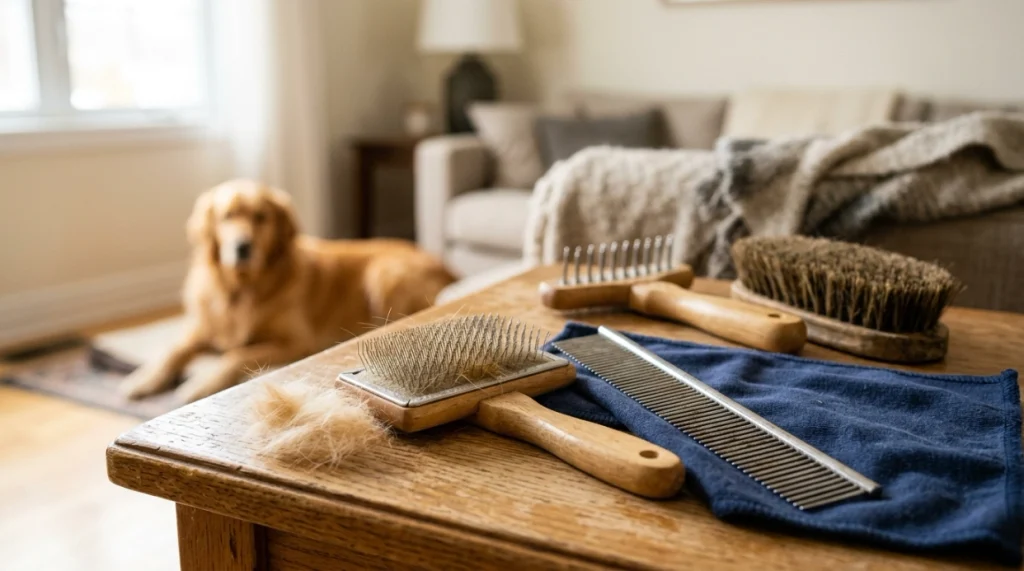
SaveA suitable slicker brush and metal comb make a practical starting pair. A rounded-pin rake can help with loose undercoat when used correctly.
Choose tools for your dog’s coat and your handling skills. A powerful-looking tool won’t compensate for heavy pressure.
| Tool | Specific design | Useful role | Main caution |
|---|---|---|---|
| Slicker brush | Closely spaced fine wire pins | Loose hair and small tangles | Repeated strokes can irritate skin |
| Metal comb | Rigid teeth, often with two spacings | Checking sections after brushing | Never pull through resistance |
| Rounded-pin rake | More widely spaced rounded pins | Loose undercoat in thicker areas | Pin length must suit the coat |
| Bristle brush | Dense flexible bristles | Light surface cleanup | Doesn’t reliably check deeper tangles |
Some tools sold as rakes have cutting edges. Check the actual design before treating one like a simple rounded-pin comb.
If you’re unsure, ask a groomer to demonstrate on your dog. Watching the pressure and stroke length helps more than buying another brush.
How do you brush a Golden Retriever without hurting them?
Use light pressure, follow hair growth, and work through small sections. Stop whenever the tool catches or your dog shows discomfort.
- Set up a steady surface. Use a nonslip mat and let your dog stand or lie comfortably.
- Check with your hands. Feel for sore spots and knots before using the brush.
- Part a small section. Lift the upper hair so you can work beneath the surface.
- Make short strokes. Brush gently outward through the hair without scraping the skin.
- Check with a comb. Start with wider teeth and stop at resistance.
- Reward and pause. Finish before your dog becomes restless or worried.
Check the areas that tangle easily
Longer hair and friction can make some areas harder to maintain. These spots deserve careful handling.
- Behind the ears.
- Under the front legs.
- Along harness contact points.
- Behind the hind legs.
- Around the tail’s longer hair.
Support a small tangle near its base while gently easing apart the ends. Leave tight mats near the skin to a professional.
Don’t slide scissors beneath a mat. Skin can sit inside the knot where you cannot see it.
Know when to put the brush down
My preferred stopping rule is a comfortable dog and a section that combs through gently. Chasing an empty brush can lead to unnecessary repeated passes.
- Pause if your dog turns toward the brush or keeps moving away.
- Stop if the skin looks pink or becomes tender.
- Change your approach if the tool repeatedly catches.
- Ask for help if one area remains difficult.
Does bathing help reduce Golden Retriever shedding?
 Save
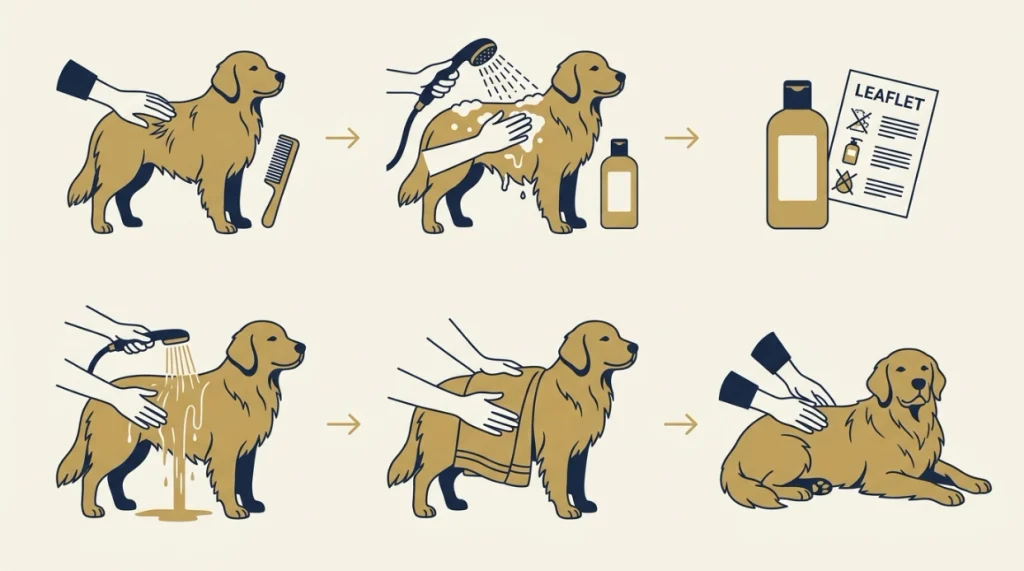
SaveBathing can loosen hair that is ready to come out. It won’t stop the coat’s normal replacement cycle.
Bathing needs depend on activity and skin condition. The veterinary guide to coat and skin care explains why individual needs matter more than a rigid schedule.
- Check for tangles before wetting the coat.
- Use lukewarm water and shampoo formulated for dogs.
- Follow the label’s dilution and contact-time instructions.
- Rinse carefully through the dense coat.
- Press out moisture with towels instead of rubbing vigorously.
- Dry thoroughly before finishing the grooming session.
A damp outer surface can hide moisture deeper down. Check the thicker coat rather than assuming one towel has finished the job.
If you use a pet dryer, follow its instructions and keep airflow away from the face and ears. Let a groomer demonstrate if you’re unfamiliar with it.
- Persistent odor: Investigate the cause instead of repeatedly masking it with shampoo.
- Skin treatment: Follow your vet’s bathing plan when medicated products are prescribed.
- Dryer distress: Stop and use a calmer approach.
Should you shave a Golden Retriever to stop shedding?
No—shaving is not a routine shedding solution for a Golden Retriever. Shortened hair can still shed, and removing the coat reduces its protection.
The American Kennel Club’s advice on shaving dogs explains the concerns for double-coated breeds. Medical clipping or severe matting requires a separate professional decision.
- For loose fur: Maintain gentle brushing and regular cleanup.
- For untidy feathering: Ask a groomer about conservative trimming.
- For hot weather: Provide shade, water, and cooler exercise times.
Can food or supplements stop the shedding?
A balanced diet supports healthy skin and hair, but no food makes a Golden shed-free. Correcting a nutritional problem differs from stopping normal coat turnover.
I’d review the current diet before buying a supplement marketed for shedding. A new bottle shouldn’t replace a closer look at your dog’s needs.
- Choose a complete diet appropriate for your dog’s life stage.
- Keep fresh water available.
- Avoid stacking several skin-and-coat supplements.
- Ask your vet before adding fish oil or changing a prescribed diet.
Bring the food label and supplement details to the appointment. That gives your vet something specific to assess.
When does shedding need a vet visit?
Arrange a vet visit when shedding comes with bare patches or persistent skin discomfort. Sudden unexplained changes also deserve attention.
- Visible damage: Red, broken, crusted, or weeping skin.
- Repeated discomfort: Scratching, chewing, or licking one area.
- Uneven coverage: New bald spots or obvious thinning.
- Other changes: Reduced energy or changes in appetite or weight.
Stop grooming over painful skin and contact your vet promptly about a sore, wet patch. Don’t assume a stronger brush will fix it.
Take clear photos and note when the change began. A short record helps explain what you’ve noticed.
Keep loose hair manageable around the house
 Save
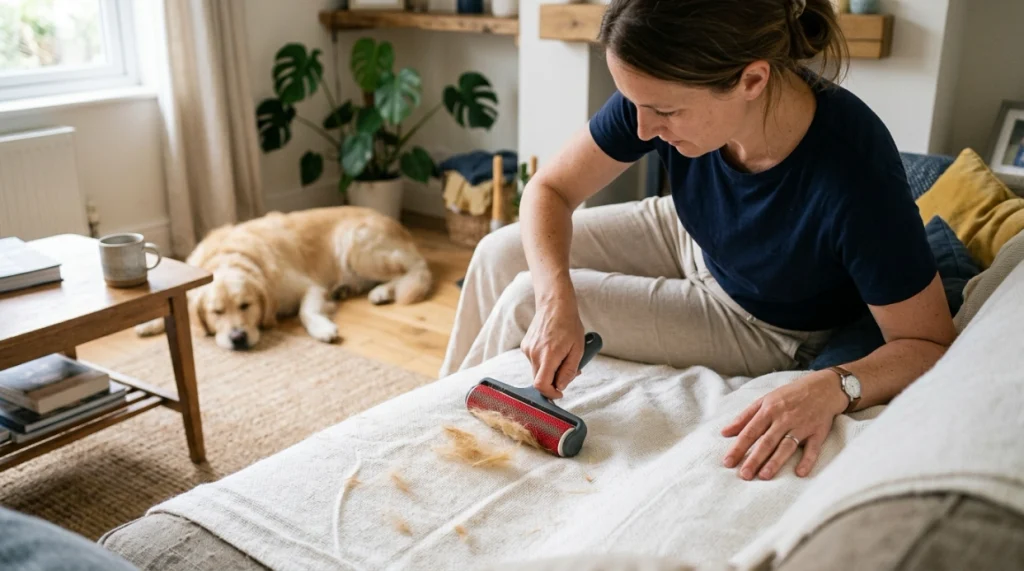
SavePair grooming with a small cleanup routine. Collecting hair near your dog’s resting places makes the job easier to repeat.
- Cover a favorite seat: Use a washable throw where your dog rests.
- Choose one grooming spot: Brush on an easy-to-clean floor.
- Lift fabric hair first: Use a suitable reusable pet-hair remover.
- Maintain the vacuum: Clear wrapped hair according to its instructions.
- Clean the tools: Remove trapped fur and allow washed tools to dry.
For a practical example, try five minutes of grooming before cleaning the living room. That puts the mess into one planned session.
My priority would be fewer tangles and easier cleanup over the next week. A huge pile of removed fur isn’t a useful target by itself.
Two grooming tools worth considering
For this 2026 guide, I’d start with tools that have clearly different jobs. Check the exact size and seller before ordering.
These are editorial suitability scores based on tool design, not customer ratings or hands-on test results. As an Amazon Associate, I earn from qualifying purchases.
🪮 For dense body coat
Chris Christensen Big G Slicker Brush, Large
★★★★☆ — 4/5 editorial fit
This model has 27 mm pins and a 3¾-by-3¾-inch head, according to the manufacturer’s specifications. I’d consider it for a dense adult coat, with careful pressure around sensitive areas.
🔎 For checking missed tangles
Andis 7.5-Inch Steel Comb
★★★★☆ — 4/5 editorial fit
This steel comb provides coarse and fine tooth sections for grooming checks. I’d pair it with a slicker to find resistance, rather than use it to pull through dense knots.
Frequently asked questions
Can you stop a Golden Retriever from shedding completely?
No, a healthy Golden Retriever naturally sheds as its coat renews. Regular brushing and appropriate bathing help collect loose hair, but they cannot eliminate shedding; check with your vet when hair loss becomes patchy or accompanies skin irritation.
Is daily brushing too much for a Golden Retriever?
Short, gentle daily brushing can suit a Golden during heavy shedding. Adjust the tool and session length to your dog’s comfort, and stop if the skin becomes irritated; daily grooming should never mean repeatedly scraping the same area.
Why is my Golden Retriever still shedding after brushing?
Brushing removes available loose hair, while the coat continues its natural cycle. Some hair will still reach your floor, so assess whether the coat stays comfortable and tangle-free rather than brushing until no more hair appears.
Does a professional deshedding appointment help?
A professional appointment can help remove accumulated loose coat and address difficult grooming areas. Ask for coat-preserving care and explain any sensitive spots; the benefit is easier maintenance afterward, not a permanent end to shedding.
Start with a gentle routine you can keep
Managing Golden Retriever shedding starts with regular checks and careful brushing. Keep the coat intact and respond to skin changes early.
- Set aside five calm minutes for your next session.
- Brush one manageable area and check it gently with a comb.
- Stop while your dog remains comfortable.
I’d make that small routine consistent before adding more products. A comfortable dog and manageable coat are the results to aim for.

Thomas Cutter is a lifelong dog owner and the founder of FindOutAboutDogs.com. With over 10 years of hands-on experience owning multiple breeds, Thomas created this site to provide honest, research-based dog advice that real owners can actually trust.
