Undercoat Rake vs Deshedding Tool: Which Is Better for Your Dog?
Quick Answer
An undercoat rake is usually the better starting point for dogs with thick, dense double coats because its longer teeth reach into loose underfur. A deshedding tool with a specialized metal edge can remove loose shedding hair efficiently, but improper or excessive use may damage the coat or irritate the skin. Choose according to your dog’s coat type, and follow the American Kennel Club’s dog-shedding advice when planning a grooming routine.
Which tool should you choose?
- Dense double coats: Choose an appropriately sized undercoat rake to loosen trapped underfur.
- Short shedding coats: Consider a compatible deshedding tool or rubber grooming brush.
- Long outer coats: Protect the guard hairs with a tool that suits the coat’s depth and texture.
- Curly or silky coats: Start with coat-specific brushes and combs instead of assuming either tool will work.
- Matted fur or sore skin: Avoid both tools on affected areas until you have appropriate professional guidance.
One important safety rule
- Use light strokes in the direction of hair growth, inspect the skin regularly, and stop if brushing causes pain or irritation.
If you’ve ever brushed your dog and still found fur covering the sofa minutes later, you’ve probably wondered whether you need a different grooming tool. The choice between an undercoat rake and a deshedding tool can be confusing because both remove loose hair, but they work differently.
I’ll explain how each tool works, which coat types benefit most, and how to choose without wasting money or irritating your dog’s skin. You’ll also learn safe grooming techniques and what to look for when buying a tool in 2026.


What Is an Undercoat Rake?
 Save
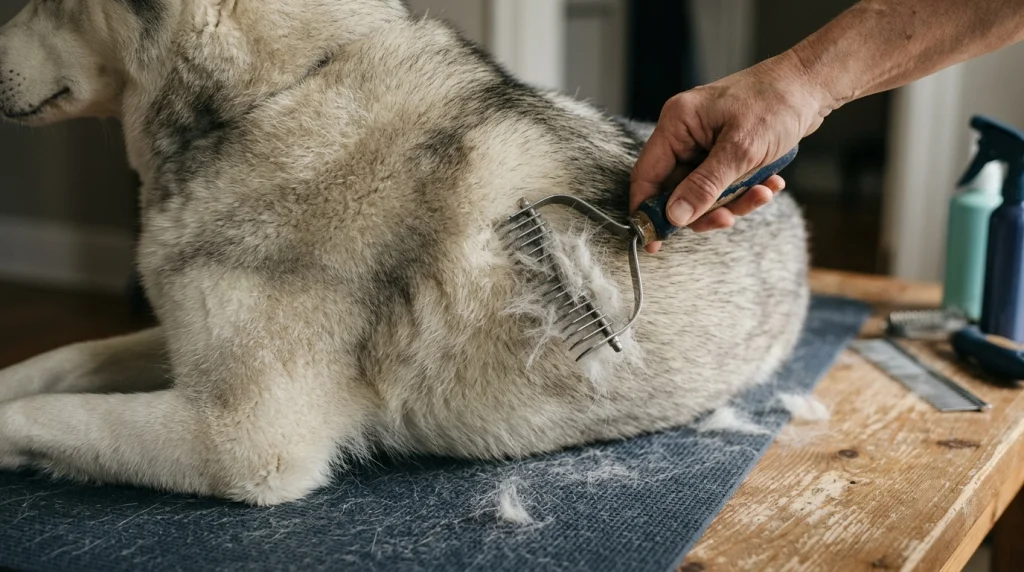
SaveAn undercoat rake is a grooming tool with long, spaced teeth designed to reach beneath the outer coat and lift loose undercoat hair. It works particularly well on suitable double-coated dogs with dense fur.
Unlike a blade-style deshedder, a conventional undercoat rake uses teeth rather than a continuous cutting-style edge. That design helps loosen shedding hair without deliberately cutting through the coat.
How Does an Undercoat Rake Work?
The teeth pass between the longer guard hairs and catch loose, shorter undercoat hairs. With gentle strokes, the rake brings trapped fur to the surface so you can remove it before it collects around your home.
Different rakes have different tooth lengths, spacing, and shapes. Some use rotating teeth, while others have fixed metal pins, so the best choice depends on coat depth and density.
- Long teeth: Reach into deeper coats when correctly sized.
- Spaced pins: Help separate loose underfur without brushing every strand together.
- Comfortable handles: Make controlled strokes and light pressure easier.
- Smooth tips: Can reduce snagging, although they don’t make forceful grooming safe.
The American Kennel Club explains that undercoat rakes have metal pins designed to penetrate the coat and remove loose fur. Its guide to different dog brushes also emphasizes matching the tool to the dog’s coat length.
What Is a Deshedding Tool?
A deshedding tool is designed to collect loose shedding hair, often from the undercoat, using a specialized combing head or fine-toothed metal edge. Some models resemble a small rake, while others use a narrow blade-like head.
This distinction matters because the term describes a broad product category, not one universal design. A rubber deshedding brush, a fine-toothed metal tool, and a blade-style undercoat deshedder don’t all behave the same way.
How Does a Deshedding Tool Work?
A blade-style model catches loose hairs as you move its edge through the coat. It can remove a noticeable amount of shedding fur in a short session, especially when the coat and tool are compatible.
However, fine teeth can catch healthy guard hairs or scrape the skin when you press too hard or repeat strokes excessively. Read the manufacturer’s instructions rather than assuming every deshedding tool suits every shedding breed.
- Fine-toothed edges: Collect loose hairs efficiently when used correctly.
- Curved heads: May follow the body’s contours, depending on the model.
- Short sessions: Help prevent excessive friction and repeated passes.
- Coat-specific designs: Offer different working widths and tooth arrangements for different dogs.
Removing loose hair isn’t the same as stopping hair growth or eliminating natural shedding. Your dog will continue to shed according to its coat type, environment, and individual hair-growth cycle.
Undercoat Rake vs Deshedding Tool: What’s the Difference?
The main difference is the working design and how it interacts with your dog’s coat. An undercoat rake generally uses longer, spaced teeth to reach deeper, while a blade-style deshedder uses a finer edge to collect loose hair efficiently.
| Feature | Undercoat Rake | Deshedding Tool |
|---|---|---|
| Working surface | Long, spaced teeth or pins | Often a fine-toothed edge; designs vary |
| Main purpose | Loosen trapped, dead undercoat | Collect loose shedding hair |
| Typical best fit | Suitable dense double coats | Compatible shedding coats |
| Hair removal | Lifts loose underfur through the coat | Collects loose hair along its working edge |
| Topcoat concerns | Can snag or pull if forced | Repeated or forceful use may damage guard hairs |
| Suitable for mats? | No; don’t force teeth through mats | No; avoid blades on tangled or matted hair |
| Best approach | Slow strokes with light pressure | Few light passes, following the instructions |
Neither tool wins in every situation. Coat compatibility, tooth length, skin health, and technique matter more than how much hair a tool collects in one pass.
Which Tool Is Better for Your Dog’s Coat Type?
The best grooming tool depends on the structure of your dog’s coat, not simply how much fur you see on the floor. Check the coat and skin before choosing a tool.
| Coat Type | Examples | Practical Starting Point |
|---|---|---|
| Dense double coat | Siberian Husky, Samoyed | Suitable undercoat rake and steel comb |
| Short double coat | Labrador Retriever, Corgi | Coat-compatible rake or deshedding tool |
| Smooth, short coat | Boxer, Beagle | Rubber curry brush or grooming mitt |
| Curly coat | Poodle | Suitable slicker brush and comb |
| Long, silky coat | Maltese, Yorkshire Terrier | Pin brush and gentle comb |
For Huskies, German Shepherds, and Other Dense Double-Coated Dogs
An appropriately sized undercoat rake is often the better starting point for a thick double coat. It can reach loose underfur beneath the outer guard hairs without relying on a fine blade-style edge.
During a heavy seasonal shed, combine careful raking with a suitable slicker brush or metal comb where needed. Avoid repeatedly raking the same area once the loose hair has cleared.
For Labradors and Other Short-Coated Shedders
A compatible deshedding tool may help remove loose hair from a short, dense coat. However, a rubber curry brush or grooming mitt may be enough for routine maintenance, depending on the dog’s undercoat and skin.
Don’t assume a tool marketed for heavy shedders automatically suits every Labrador or short-haired mixed breed. Start gently and inspect the coat after a few strokes.
For Curly, Silky, or Non-Shedding Coats
Neither an undercoat rake nor a blade-style deshedder should be your automatic first choice for a Poodle or a long, silky-coated dog. These coats often need brushing and combing techniques designed to prevent tangles without damaging the hair.
If you’re unsure about your dog’s coat type, ask a professional groomer or veterinarian before buying a specialized deshedding tool.
Can a Deshedding Tool Damage a Dog’s Coat?
 Save
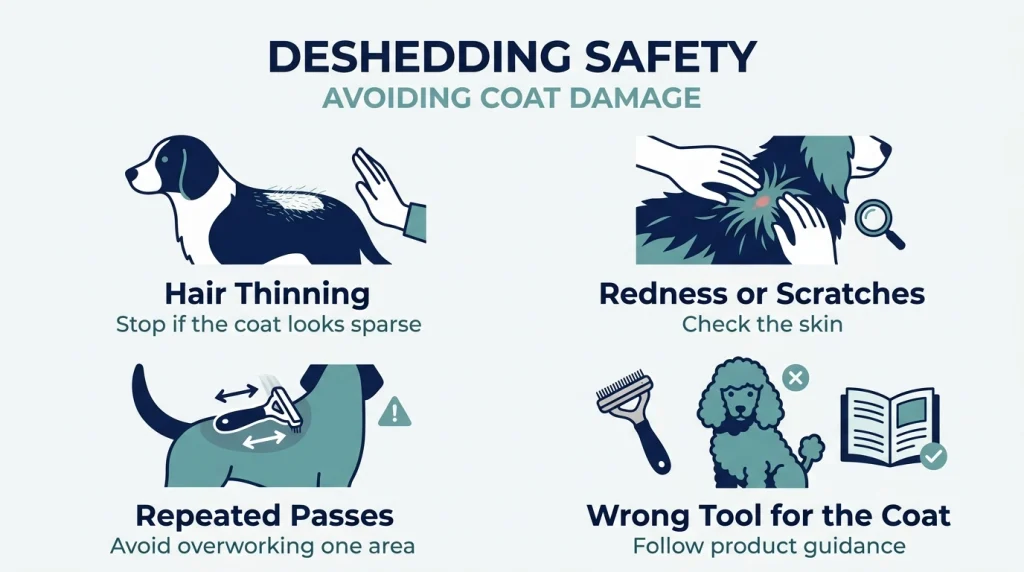
SaveYes, a blade-style deshedding tool can damage the coat or irritate the skin when used incorrectly. Excessive pressure, too many passes, and an unsuitable coat type can increase the risk.
Healthy guard hairs help protect many double-coated dogs from environmental exposure. Removing too much healthy hair is not the goal of grooming.
- Watch for thinning: Stop if the outer coat starts looking uneven or noticeably sparse.
- Check the skin: Redness, scratches, tenderness, or unusual warmth are reasons to stop.
- Avoid prolonged sessions: Don’t keep working just because the tool continues collecting hair.
- Follow product guidance: Some manufacturers exclude sensitive skin and certain coat types.
An undercoat rake isn’t risk-free, either. Its teeth can pull hair painfully, snag mats, or scratch skin when you press down or drag it through resistance.
For general coat-care guidance, see VCA Animal Hospitals’ grooming and coat-care resource. If you notice bald patches, persistent itching, sores, or unusual hair loss, contact your veterinarian instead of trying to solve the problem with a different brush.
How to Use an Undercoat Rake or Deshedding Tool Safely
Safe grooming starts with a quick inspection and a gentle first pass. The aim is to remove hair that’s ready to come loose, not to force every strand out.
- Inspect the coat: Check for mats, burrs, sores, redness, and sensitive areas before brushing.
- Choose the right tool: Match the tooth length and design to your dog’s coat.
- Work through tangles first: Use a suitable comb or seek professional help for tight mats.
- Brush with the coat: Move in the direction of hair growth using light, controlled strokes.
- Check your progress: Lift the hair occasionally to check the skin and see whether loose fur remains.
- Stop when needed: End the session if the skin becomes irritated, your dog shows pain, or the tool catches.
For a blade-style deshedder, use only the pressure and stroke pattern recommended by its manufacturer. Never scrape repeatedly over the same patch to chase every last loose hair.
For an undercoat rake, select teeth that reach the loose undercoat without digging into the skin. If you meet resistance, stop and investigate rather than pulling harder.
How Often Should You Use Each Tool?
There’s no single schedule that works for every dog. Grooming frequency depends on coat length, shedding patterns, skin condition, and the tool’s instructions.
- Undercoat rake: Use when loose underfur builds up, with more attention during heavy shedding periods if the coat needs it.
- Blade-style deshedder: Keep sessions brief and follow the product’s recommended frequency.
- Routine brush: Use as needed to keep the coat free of loose hair and tangles.
- Steel comb: Check longer or denser areas where loose hair and tangles can hide.
Some double-coated dogs shed heavily during seasonal coat changes, while others shed more steadily throughout the year. Indoor living, climate, and individual coat characteristics can affect what you notice.
Don’t increase grooming frequency simply because your dog continues shedding. If hair loss suddenly changes or you see bald spots, scaling, or inflamed skin, ask your veterinarian about possible causes.
Do You Need Both an Undercoat Rake and a Deshedding Tool?
Usually, no. Many dog owners can manage routine coat care with one suitable undercoat tool plus a brush or comb for other grooming needs.
For a dense double-coated dog, an undercoat rake and a slicker brush or steel comb can cover many routine tasks. A blade-style deshedder is an optional alternative when its design suits the coat and the owner can use it safely.
Buying both specialized tools makes more sense only when each has a clear purpose in your dog’s grooming routine. More tools don’t automatically mean better coat care.
What Should You Look for When Buying a Grooming Tool?
 Save
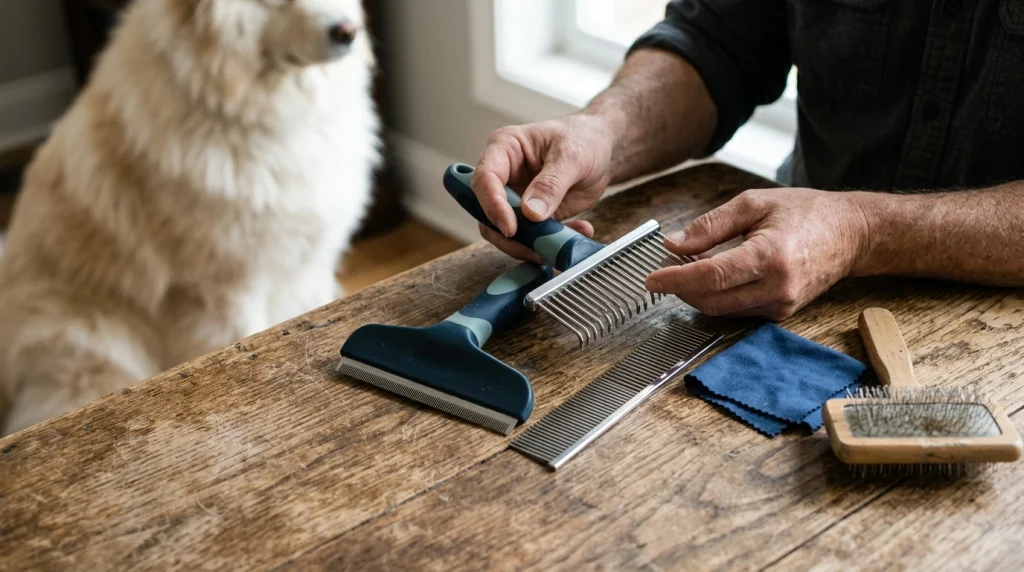
SaveFocus on fit, comfort, and construction rather than bold promises about removing every loose hair. The right tool should work with your dog’s coat without requiring force.
- Correct tooth length: The teeth should reach the intended coat layer without digging into the skin.
- Smooth construction: Check for rough edges, bent teeth, and damaged parts.
- Comfortable grip: A secure handle helps you control pressure and direction.
- Clear coat guidance: Look for instructions identifying suitable coat types and limitations.
- Easy cleaning: Fur should come out without forcing or bending the teeth.
As of 2026, the safest buying approach remains simple: identify your dog’s coat type first, then compare tools designed for that coat. No grooming tool is suitable for every breed, coat, and skin condition.
Recommended Grooming Tools for Removing Loose Undercoat
Before buying, it’s worth comparing a few established grooming tools. These examples represent different approaches to loose-hair removal, rather than a claim that one design suits every dog.
BEST FOR DENSE COATS
FURminator Grooming Rake
★★★★☆ Editorial assessment
This rake uses rotating metal teeth to loosen loose fur in thick coats. Consider it for a suitable double-coated dog, checking the size and tooth length before purchasing.
BEST FOR TARGETED DESHEDDING
FURminator Undercoat deShedding Tool
★★★★☆ Editorial assessment
This specialized tool has a fine-toothed metal edge designed to collect loose undercoat. Check its specific coat recommendations and use it sparingly rather than repeatedly working the same patch.
BEST ROUTINE COMPANION
Andis Stainless Steel Pet Comb
★★★★☆ Editorial assessment
A steel comb helps check for remaining tangles and loose hair after brushing. Choose appropriate tooth spacing for the coat and use it gently, especially around feathering and sensitive areas.
Product availability, sizes, and prices can change, so check the current listing before ordering. These are editorial suggestions based on tool type, not verified customer ratings or a claim that each tool fits every breed.
Frequently Asked Questions
Is an undercoat rake better than a FURminator?
An undercoat rake is often a sensible starting point for dense double coats because its spaced teeth loosen underfur without a blade-style edge. A FURminator undercoat deShedding tool can collect loose hair efficiently when used on a compatible coat, but the better choice depends on coat type, skin condition, and technique.
Can I use an undercoat rake every day?
Some dogs benefit from frequent grooming, but an undercoat rake doesn’t automatically belong in a daily routine. Check your dog’s coat and the manufacturer’s instructions, and stop if you notice irritation, pulling, or thinning hair; a gentler brush may be more appropriate between shedding sessions.
Can I use a deshedding tool on a Husky?
Some deshedding tools are intended for compatible double coats, but not every design suits every Husky. An appropriately sized undercoat rake is often a useful starting point for loose underfur, while blade-style tools require extra care to avoid damaging guard hairs or irritating the skin.
Should I use an undercoat rake on a short-haired dog?
Only if the dog’s coat has an underlayer that the particular rake can safely reach. Many short-coated dogs do better with a rubber grooming mitt or curry brush, and some need a suitable deshedding tool instead. Check the coat rather than choosing solely by breed name.
What should I do if my dog has mats or irritated skin?
Don’t force an undercoat rake or deshedding tool through tight mats, and avoid grooming over sores or inflamed skin. A professional groomer can assess difficult tangles, while a veterinarian should evaluate painful skin, persistent itching, bald patches, or sudden unusual hair loss.
Final Takeaway: Choose the Tool That Matches the Coat
For a dog with a thick, dense double coat, an undercoat rake is often the most practical starting point for loosening trapped underfur. A suitable deshedding tool can also help, but a blade-style design calls for careful, limited use.
Start with your dog’s coat type, choose a tool with appropriate teeth, and use gentle strokes. If your dog shows discomfort or the skin looks irritated, stop rather than trying to remove more hair.
The goal isn’t to collect the biggest pile of fur in one session. It’s to keep your dog’s coat comfortable, healthy, and free from preventable tangles while managing normal shedding.

Thomas Cutter is a lifelong dog owner and the founder of FindOutAboutDogs.com. With over 10 years of hands-on experience owning multiple breeds, Thomas created this site to provide honest, research-based dog advice that real owners can actually trust.
