What Brush Is Best for Wavy Dog Hair? A Simple Grooming Guide
Quick Answer
For most dogs with medium-to-long, dense, wavy hair, a gentle slicker brush paired with a stainless-steel comb is the best choice. Fine, loose waves may do better with a soft pin brush. Coat thickness matters more than breed name, as this veterinary grooming guide explains.
What to look for
- Dense, long waves: Choose a flexible slicker with pins long enough to reach into the coat.
- Fine, loose waves: Start with a gentle pin brush and check tangles with a comb.
- Hidden knots: Use a coarse-and-fine metal comb after brushing.
- Shedding undercoat: Ask a groomer whether a suitable undercoat rake would help.
- Comfort first: Use light strokes and stop if the skin becomes sore.
Fast buying rule
- Start with two tools: One coat-appropriate brush and one steel comb usually beat a drawer full of gadgets.
Wavy dog hair looks easy to manage until a small knot hides behind an ear or under a harness. I like to start with the coat itself before thinking about brands or fancy grooming kits.
Below, I’ll help you match the brush to your dog’s waves, use it without tugging, and spot the signs that a groomer should step in.


Why does wavy dog hair need a different brush?
Wavy dog hair is a coat that bends into visible waves rather than lying straight or forming tight curls. Those waves can be silky, fluffy, dense, or mixed with a shedding undercoat.
That difference matters. A brush that smooths the top layer might never reach loose hair or tangles closer to the skin.
Think about what your dog’s coat does during a normal week:
- Does it trap loose hair? Dense, low-shedding coats often need careful section-by-section brushing.
- Does it shed onto furniture? A wavy double coat may need a different approach to loose undercoat.
- Does it tangle at friction points? Check behind the ears, armpits, collar, tail, and legs.
- Is the skin easy to see? Fine or thin hair needs a lighter brush and gentler pressure.
A Goldendoodle, a Cocker Spaniel, and a wavy-coated Havanese may all look similar in photos. Yet their coat density, shedding, and tolerance for brushing can be quite different.
Which brush works best for each type of wavy dog coat?
A flexible slicker is my default recommendation for longer, fuller waves. For a fine, silky coat, I would choose a softer pin brush before reaching for a firm slicker.
| Coat type | Best starting tool | Follow-up tool |
|---|---|---|
| Long, dense waves, often seen in Doodle-type coats | Long-pin flexible slicker | Steel comb to check the roots |
| Fine, silky, loose waves | Soft pin brush | Wide-tooth comb; soft slicker if needed |
| Medium wavy coat with a shedding undercoat | Gentle slicker or pin brush | Comb; appropriate rake only when needed |
| Short, lightly wavy coat | Soft bristle or gentle pin brush | Comb for occasional longer areas |
These are starting points, not breed rules. If you cannot tell which coat your dog has, ask a professional groomer to show you the right brush on one small section.
Why a slicker brush is often the best first choice
A slicker brush has a pad filled with fine, bent metal pins. It can lift loose hair and gently separate tangles in medium, long, and curly or wavy coats.
The American Kennel Club’s brush guide also stresses using a light touch. Pressing a slicker into the skin can make grooming painful rather than helpful.
- Choose longer pins for a longer, denser coat, without scraping the skin.
- Look for a flexible cushion that gives slightly during a stroke.
- Pick the right head size so you can work around legs and tight spaces.
- Skip stiff pressure even if the brush claims to remove mats quickly.
When a pin brush makes more sense
Pin brushes have fewer, widely spaced pins than slickers. They are useful for longer, finer waves that need smoothing more than heavy detangling.
For a dog with thin hair or tender skin, I would begin with this gentler option. It may not catch compacted hair hiding under a thick coat, though.
Why a metal comb is not optional for dense waves
A good comb catches what the brush misses. One with both wide and closely spaced teeth lets you check different areas without changing tools.
After each section, I would run the wider teeth from near the skin outward without force. If they snag, the section still needs attention.
The comb is a check, not a tool for dragging through painful knots. A snag tells you to stop and investigate.
How do you brush a wavy-haired dog without pulling?
 Save
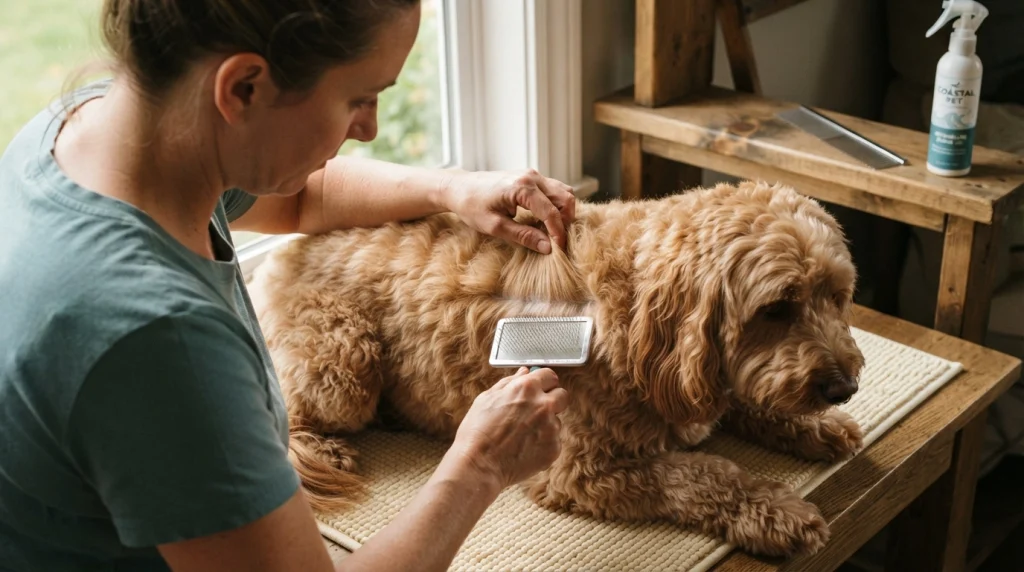
SaveUse short, gentle strokes in small sections, then check each area with a comb. This method is often called line brushing, and it helps you reach hair beneath the surface.
- Set up a calm spot. Choose a non-slip surface and offer a treat before you begin.
- Inspect the coat. Feel for knots and look for redness, burrs, or sore skin.
- Lightly mist if needed. Use a dog-safe detangling spray as directed; avoid soaking the coat.
- Lift a narrow layer. Hold the coat above your working section to expose the hair below.
- Brush with light strokes. Work gently through the exposed layer, moving in the direction the hair grows.
- Check with the comb. Use the wide teeth first, stopping whenever they catch.
- Move to the next section. Repeat until you’ve covered the body, then reward your dog.
Start with a small area if your dog is new to grooming. A short session that ends well is better than a long struggle.
Support the hair close to a loose tangle with your fingers. This can reduce the pull your dog feels while you ease the ends apart.
Which spots need extra attention?
Focus on the places that rub, bend, or get wet. A coat can look smooth on the back while tangles gather in less visible areas.
- Behind and beneath the ears
- Under the collar and harness straps
- Armpits, groin, and inner legs
- Chest, belly, and tail base
- Feet, leg furnishings, and beard
Check gently rather than scraping sensitive spots. For advice on routine coat care, the ASPCA’s dog grooming tips explain why brushing and skin checks belong together.
How often should you brush wavy dog hair?
Brushing frequency depends on coat length, density, activity, and how fast tangles form. Long, dense, low-shedding waves often need daily attention, while shorter, loose waves may need less.
- Long, dense Doodle-type coat: Check daily and brush thoroughly as needed, often every day.
- Medium wavy coat: Start with several sessions each week, then adjust based on tangles and shedding.
- Short, loose waves: A weekly check may be enough if the hair stays free of knots.
- After swimming, rain, or harness use: Check friction areas once the dog is safely dry.
These are practical starting schedules, not strict rules. A groomer can help you build a plan around your dog’s haircut and coat.
As of 2026, I still favor a simple measure over any fixed calendar: can a comb pass through the coat without snagging? That tells you more about today’s grooming needs than a reminder on your phone.
Can a slicker brush hurt a dog with wavy hair?
Yes, if the pins scrape the skin or you repeatedly brush the same spot. The goal is to work through hair, not apply pressure to the body.
Watch your dog’s reaction. Pulling away, flinching, turning toward the brush, or showing red skin means it’s time to stop.
- Test pressure first: Try a gentle stroke on an easy, untangled section.
- Do not dig: Let the pins move through hair without pressing the pad into skin.
- Avoid repeat scraping: Change sections and take breaks.
- Respect sensitive areas: Use a smaller, softer tool or seek help near ears and the groin.
If a brush keeps causing discomfort, it may be too firm or poorly matched to the coat. Switching tools is smarter than brushing harder.
What if my dog’s wavy hair is already matted?
 Save
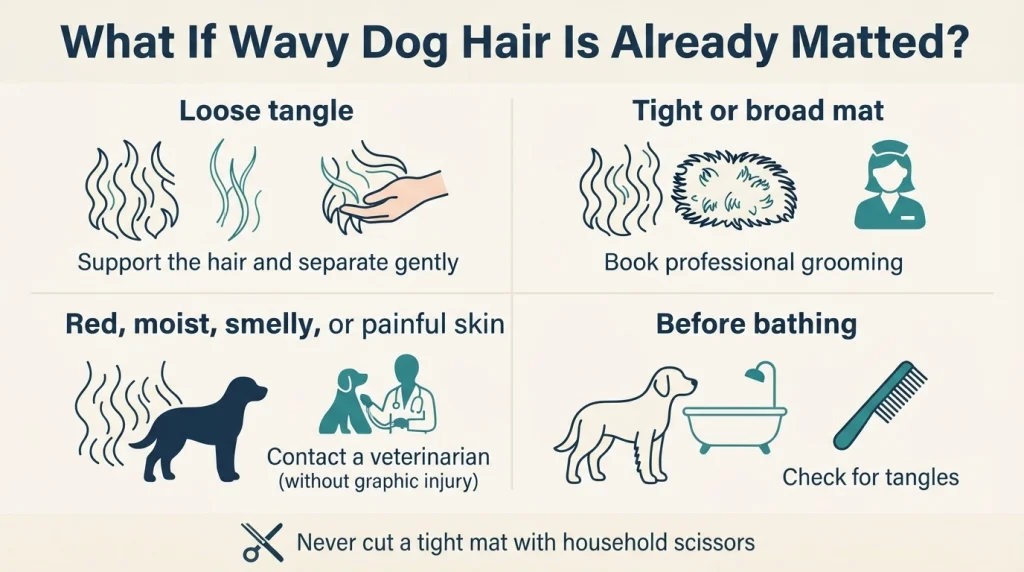
SaveA small, loose tangle may be manageable with patience and a dog-safe detangler. Tight mats close to the skin need a groomer or veterinarian, not forceful brushing.
Never cut a tight mat with household scissors. Skin can fold into the knot, making an accidental cut much easier than it looks.
- Loose tangle: Support the hair, separate the outer strands gently, and stop if your dog resists.
- Tight or broad mat: Book professional grooming rather than pulling at it.
- Red, moist, smelly, or painful skin: Contact a veterinarian for an exam.
- Before bathing: Check for tangles because water can make existing mats harder to manage.
This distinction matters more than any brush brand. The veterinarian-reviewed PetMD guide to matting explains why painful, close-to-skin mats deserve professional care.
What features should you check before buying a brush?
The most expensive brush is not automatically the right one. I would compare how its pins, size, and handle fit the dog in front of me.
- Pin length: Long enough for the coat, but never a reason to press harder.
- Pin flexibility: Look for a gentle feel and a cushion that moves slightly.
- Brush width: Smaller heads offer control around legs; larger heads suit broad body areas.
- Handle grip: Choose one you can hold without wrist strain.
- Cleaning: Hair should come out easily, and the brush should dry well after cleaning.
- Comb pairing: Set aside room in your budget for a stainless-steel comb.
Do not judge a brush by the words “professional” or “dematting” alone. Match the tool to your dog’s hair and comfort.
Which grooming mistakes should you avoid?
A good brush cannot fix a rough technique. These common habits can make wavy coats harder to maintain.
- Brushing only the surface: Hidden tangles remain near the roots.
- Rushing through knots: Pulling can make dogs fear grooming sessions.
- Using a harsh shedding blade: Some coat types may suffer breakage or unnecessary hair removal.
- Bathing first: Pre-existing mats can tighten after water and drying.
- Skipping the comb check: The coat may look fluffy while still holding knots.
Best grooming tools for wavy dog hair
 Save
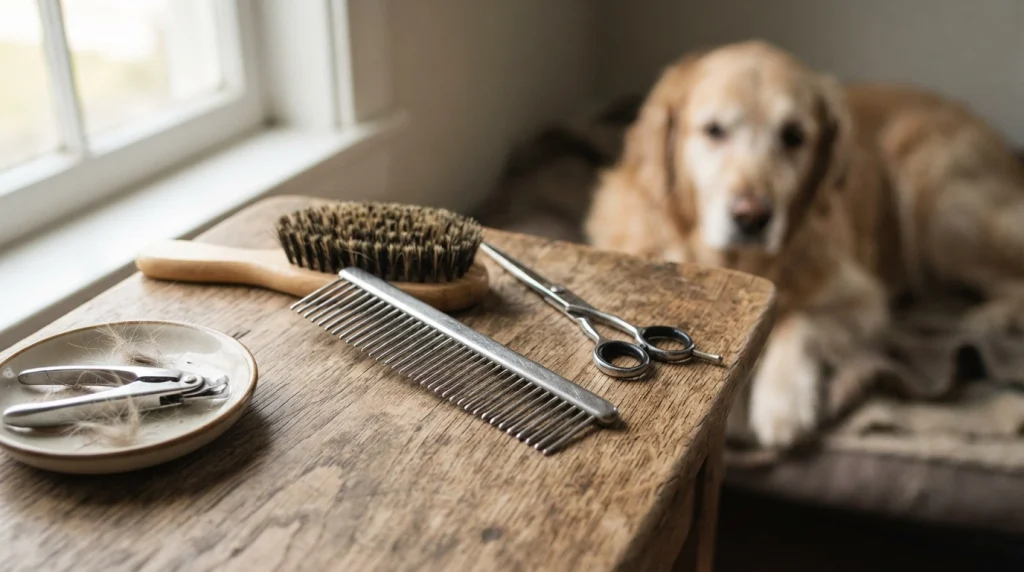
SaveIf you’re choosing tools now, I would match one brush to your dog’s coat and add a comb for the final check. These three real products serve different needs; the fit ratings below are editorial judgments, not customer-review scores.
Affiliate disclosure: As an Amazon Associate, I earn from qualifying purchases made through eligible links.
🏆 Best for dense, long waves
Chris Christensen Big G Slicker Brush
★★★★½ 4.5/5 editorial fit
This long-pin slicker has 27 mm stainless-steel pins and a flexible cushion. I’d shortlist it for thick, long waves where a small, short-pin brush struggles to reach deeper layers; use a light touch.
💡 Best for easy cleanup
Safari by Coastal Dog Self-Cleaning Slicker Brush
★★★★☆ 4/5 editorial fit
This slicker has fine metal pins and a push-button cleaning mechanism. I’d consider it for regular upkeep on manageable wavy coats, while checking whether its pin length suits very dense hair.
🔎 Best finishing check
Andis 7-1/2-Inch Steel Comb
★★★★½ 4.5/5 editorial fit
This 7.5-inch steel comb combines coarse and fine teeth. It would be my companion to either brush because it helps reveal small tangles that a fluffy surface can hide.
Frequently asked questions
Is a slicker brush or a pin brush better for wavy dog hair?
A slicker brush usually works better for dense, long wavy coats that trap loose hair. A pin brush may be gentler for fine, silky waves.
In either case, use a metal comb afterward to check for knots the brush did not remove.
Should I brush wavy dog hair when it is wet or dry?
For everyday grooming, work on a dry or lightly misted coat rather than a soaking-wet one. Use a dog-safe detangler if needed, and avoid tugging on wet knots.
Follow your groomer’s advice for a coat-specific bathing and drying routine.
Do wavy-haired dogs need a deshedding brush?
Not always. Some wavy coats hold loose hair with little visible shedding, while others have a true shedding undercoat.
A harsh deshedding tool can be a poor match, so ask a groomer before adding one to your kit.
Can I use a human hairbrush on my wavy-haired dog?
A human brush may smooth the surface, but it often lacks the right pin layout or depth for dense dog hair. Choose a pet brush suited to the coat, then use a steel comb to check the deeper layers without pulling.
How do I know if I have brushed out every tangle?
Run a metal comb gently through each section from near the skin toward the ends. It should move without snagging or causing discomfort.
If it catches, stop and work on that small area rather than forcing the comb through.
The bottom line
For most thick, wavy dogs, I’d start with a gentle slicker brush and a steel comb. For fine, loose waves, a soft pin brush may be the kinder choice.
Try a short grooming session today, check the easy-to-miss spots, and let your dog’s comfort guide you. If a knot feels tight or painful, leave it to a professional.

Thomas Cutter is a lifelong dog owner and the founder of FindOutAboutDogs.com. With over 10 years of hands-on experience owning multiple breeds, Thomas created this site to provide honest, research-based dog advice that real owners can actually trust.
