How to Brush a Wavy Dog Coat: Step-by-Step Guide
Quick Answer
To brush a wavy dog coat, work in small sections from the ends toward the roots, using gentle strokes that reach through the coat without scraping the skin. A pin brush or soft slicker brush handles most wavy coats, while a metal comb helps you find hidden tangles. The right technique depends partly on your dog’s coat type and density.
Quick brushing steps
- Check the coat: Feel for mats, burrs, tender spots, and compacted hair before brushing.
- Divide into sections: Lift small layers so you brush underneath the visible waves.
- Start at the ends: Loosen tangles before working closer to the skin.
- Brush with growth: Use short, controlled strokes instead of dragging through resistance.
- Comb to check: Run a metal comb through each finished section to catch hidden knots.
- Stop if it hurts: Redness, pulling, flinching, or struggling means you need less pressure or professional help.
My simplest rule
- Don’t judge the grooming session by how much hair fills the brush. Judge it by whether the coat separates comfortably and the comb passes through without pulling.
A wavy dog coat can look easy to maintain until you part the hair. That’s where loose undercoat, small knots, and friction tangles often hide.
I prefer a slow section-by-section routine instead of brushing only the surface. It takes a little longer, but it gives me much better control over pulling and skin pressure.


What Is a Wavy Dog Coat?
A wavy dog coat has hair that forms loose curves or flowing bends instead of lying completely straight or forming tight curls. The exact texture, density, length, and undercoat vary widely between breeds.
Wavy coats appear in breeds such as spaniels, retrievers, water dogs, and mixed breeds. Some are light and silky, while others hide a dense undercoat beneath the waves.
- Loose wavy coat: Soft bends with relatively easy separation between hairs.
- Dense wavy coat: Waves sit over a thicker layer that can trap loose hair.
- Feathered wavy coat: Longer hair around the legs, chest, tail, or ears needs extra attention.
- Wavy hair coat: Continuously growing hair may need both brushing and regular trimming.
The American Kennel Club notes that dog coats vary significantly between breeds, including straight, wavy, curly, silky, dense, and double coats. That’s why I choose tools according to the individual dog’s coat rather than the word “wavy” alone.
What Brush Is Best for a Wavy Dog Coat?
A pin brush, appropriately sized slicker brush, and metal comb make a practical basic kit for many wavy-coated dogs. The exact combination depends on hair length and density.
VCA Animal Hospitals recommends matching grooming tools to coat type and using them gently. Pulling hard through tangles can make grooming uncomfortable and damage hair.
| Tool | Best Use | Coat Reach | Main Caution |
|---|---|---|---|
| Pin brush | Routine detangling and separating waves | Medium | Pins that are too short may skim the surface |
| Slicker brush | Loose hair and small tangles | Medium to high | Too much pressure can scratch skin |
| Metal comb | Checking finished sections | High | Never yank it through a knot |
| Undercoat rake | Loose undercoat in dense double coats | High | Not necessary for every wavy coat |
If your dog has a heavy double coat beneath the waves, the routine changes. My guide to managing loose undercoat and shedding explains why a deeper-reaching tool may be useful.
How Do You Brush a Wavy Dog Coat Step by Step?
 Save
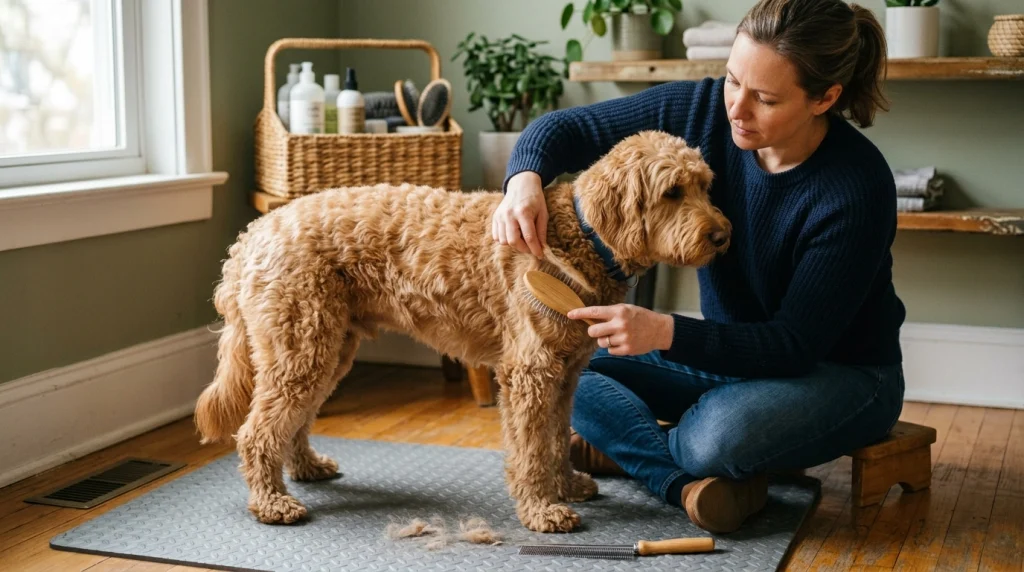
SaveThe safest approach is to inspect first, detangle the ends, and then brush small sections toward the roots. Finish by checking your work with a comb.
I use the following routine because it prevents me from accidentally dragging a brush through a hidden knot.
- Put your dog somewhere stable. Choose a nonslip surface with good lighting and enough room to reach both sides.
- Inspect with your fingers. Feel behind the ears, under the collar, in the armpits, under the chest, around the tail, and behind the legs.
- Separate one small section. Lift the hair so you can see closer to the roots rather than brushing only the top layer.
- Start near the ends. Brush short sections of hair before gradually moving closer to the skin.
- Follow the direction of growth. Use controlled strokes and let the brush do the work.
- Move systematically. I usually work from one rear leg forward so I know which sections are finished.
- Check with a metal comb. The comb should move through without suddenly stopping on a hidden tangle.
- Reward the dog. End while your dog is still reasonably comfortable rather than pushing through a long stressful session.
What Is Line Brushing?
Line brushing means lifting the coat in small horizontal sections and brushing each exposed layer separately. It helps you reach hair beneath the visible surface.
I find this particularly useful on thick wavy coats. A dog can look perfectly brushed from above while still having tangles closer to the skin.
- Lift a narrow layer of coat with one hand.
- Brush the exposed hair beneath it.
- Lower a small amount of hair.
- Brush that new section.
- Continue until you reach the top of the area.
Keep your wrist loose and pressure light. The purpose is separation, not scraping.
Should You Brush a Wavy Dog Wet or Dry?
For routine maintenance, I normally brush a wavy coat when it is dry or lightly conditioned rather than soaking wet. Wet hair can stretch, clump, and hide areas where the brush is pulling.
After bathing, make sure dense areas dry completely before assuming the coat is finished. Moisture can stay trapped underneath long or thick hair.
- Before a bath: Remove obvious tangles and debris.
- During bathing: Avoid rubbing the coat into a tangled pile.
- After rinsing: Blot or squeeze moisture rather than aggressively rubbing with a towel.
- After drying: Brush gently and check again with your comb.
The AKC recommends dog-specific grooming products because coat and skin needs differ from ours. I also avoid using human shampoo as a routine substitute.
How Often Should You Brush a Wavy-Haired Dog?
Many wavy-coated dogs benefit from brushing several times a week, but frequency should follow coat length, density, activity, and how quickly tangles form. Some high-maintenance coats need daily attention.
VCA notes that longer and curlier coats may require frequent or daily grooming to prevent tangles. Shorter wavy coats may need considerably less.
| Coat Situation | Practical Starting Schedule |
|---|---|
| Short, loose waves | About once or twice weekly |
| Medium wavy coat | Several times weekly |
| Long or feathered waves | Every day or every other day as needed |
| Heavy shedding period | Shorter, more frequent sessions |
These are starting points, not rigid rules. As of 2026, I still think the best schedule is the one that prevents knots before they tighten.
Where Do Wavy Dog Coats Tangle Most?
Friction areas deserve the closest attention because movement presses hair together repeatedly. These spots can develop knots even when the dog’s back looks smooth.
- Behind the ears: Soft hair moves constantly against the head and collar area.
- Under the collar: Pressure and movement create friction.
- Armpits: Front-leg movement rubs hair together.
- Chest: Longer feathering can catch moisture and debris.
- Behind the rear legs: Longer hair can knot quickly.
- Tail and tail base: Dense feathering easily hides small tangles.
- Between harness straps: Repeated rubbing can compress the coat.
ASPCA grooming guidance also recommends using brushing time to inspect the skin and coat. That makes a grooming session useful for more than appearance.
How Do You Remove Tangles Without Hurting Your Dog?
 Save
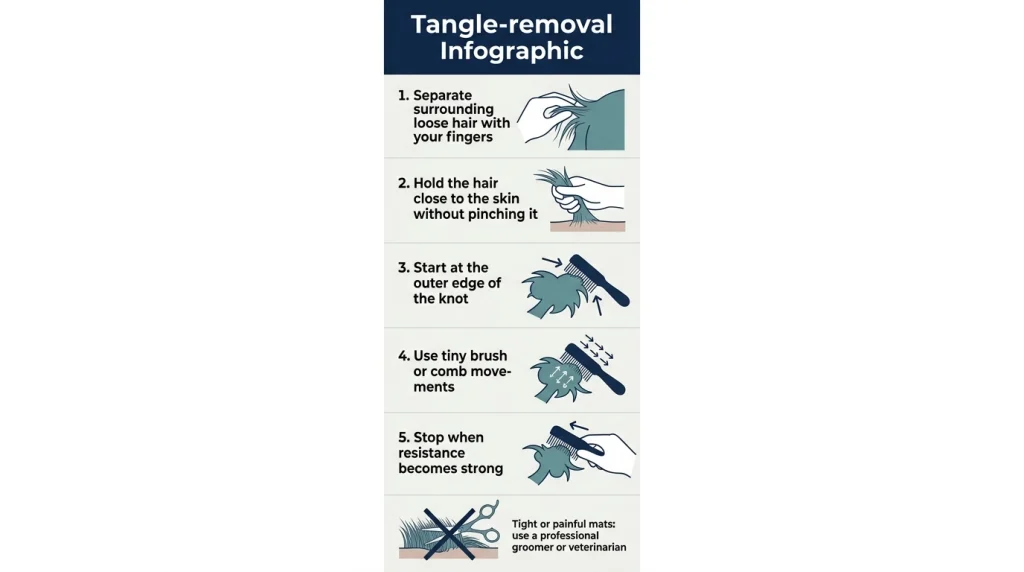
SaveSupport the hair above the tangle, loosen the outer edges first, and work gradually toward the center. Don’t pull a tight knot directly away from the skin.
I hold the hair between the knot and the dog’s body whenever possible. That simple grip reduces how much force reaches the skin.
- Separate surrounding loose hair with your fingers.
- Hold the hair close to the skin without pinching it.
- Start at the outer edge of the knot.
- Use tiny brush or comb movements.
- Stop when resistance becomes strong.
A severe mat is different from a small tangle. Tight matting can sit close to delicate skin, so I don’t recommend blindly cutting beneath it with scissors.
If a mat is tight, painful, widespread, or close to sensitive skin, let a professional groomer or veterinarian handle it.
What Brushing Mistakes Damage a Wavy Coat?
Most brushing problems come from rushing, using the wrong tool, or applying too much pressure. A larger pile of removed hair does not automatically mean a better grooming session.
- Only brushing the top: Hidden tangles remain closer to the skin.
- Starting at the roots: The brush pushes several small tangles into one tighter knot.
- Pulling through resistance: This hurts and can break hair.
- Using excessive pressure: Metal pins can irritate skin.
- Brushing one area repeatedly: More strokes aren’t always better.
- Ignoring discomfort: Turning, flinching, licking, sitting, or trying to leave can signal stress or pain.
- Waiting for matting: Preventive brushing is easier than removing established mats.
The AKC recommends gentle brushing all the way through the coat while checking for mats, plant material, scrapes, and other abnormalities.
How Can You Make Brushing Easier for a Dog That Hates It?
Keep sessions short, pair the brush with rewards, and increase grooming time gradually. Forcing a frightened dog through a long session can make the next one harder.
I prefer ending after a few successful sections if the dog’s patience is fading. Finishing calmly matters more than finishing the entire coat in one sitting.
- Let your dog investigate the brush first.
- Reward calm behavior around grooming tools.
- Begin with an easy area such as the shoulder.
- Use only a few strokes before rewarding.
- Gradually increase the number of sections.
- Stop if fear or defensive behavior escalates.
For dogs that react strongly to grooming, the American Kennel Club’s brushing guidance discusses ways to build a more positive grooming routine.
When Does a Coat Problem Need a Veterinarian?
Brushing can manage normal loose hair and tangles, but it cannot treat a medical skin problem. Contact your veterinarian when coat changes appear with pain, inflammation, or abnormal hair loss.
- Bald or noticeably thinning patches
- Persistent scratching or biting
- Red, inflamed, crusted, or wet skin
- Strong or unusual skin odor
- Open sores or bleeding
- Sudden major coat changes
- Pain when a particular area is touched
VCA Animal Hospitals notes that regular grooming helps owners inspect the skin and coat while removing loose hair, debris, and tangles.
The ASPCA’s dog grooming guidance likewise recommends regular brushing and checking the coat and skin during grooming.
Best Brushes and Tools for Wavy Dog Coats
 Save
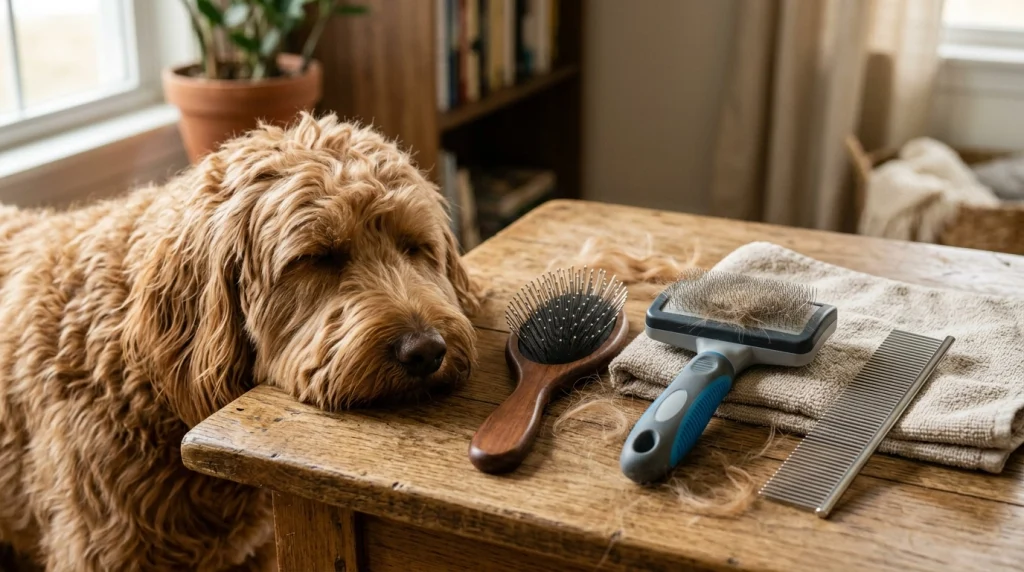
SaveIf you’re ready to build a simple grooming kit, these are three tools I’d consider for different jobs.
🏆 Best Everyday Brush
Chris Christensen Oval Pin Brush
★★★★½
This traditional pin-brush design suits routine coat separation and longer wavy hair. I like a pin brush when I want to work through waves without relying on an aggressive de-shedding edge.
✨ Best for Tangled Areas
Hertzko Self-Cleaning Slicker Brush
★★★★☆
A slicker helps collect loose hair and work through small tangles when used lightly. I’d use it in short strokes rather than pushing hard against the skin.
🔍 Best Finishing Check
Andis Steel Pet Comb
★★★★½
A metal comb exposes small knots that a brush can glide over. I treat it as my final check instead of using it to force difficult tangles apart.
Frequently Asked Questions
Should I use a slicker brush on a wavy dog?
Yes, a slicker brush can work well on many wavy coats when the pins match the coat length and you use light pressure. Use short strokes, work in sections, and stop when you meet strong resistance rather than pulling the brush through a knot.
Does brushing make a dog’s coat less wavy?
Temporary straightening after brushing is normal because the hairs have been separated. The natural wave usually becomes more visible again as the coat settles, especially after normal movement or the next properly managed bath and drying session.
Can I brush my wavy-haired dog every day?
Yes, gentle daily brushing can suit dogs whose coats tangle quickly. Keep sessions comfortable and avoid repeatedly scraping the same skin. A shorter coat with loose waves may not need daily grooming, so adjust the schedule to your individual dog’s coat.
Why does my dog’s coat still feel tangled after brushing?
You may be brushing only the surface. Part the coat into small sections and check each finished area with a metal comb. If the comb repeatedly stops near the skin, hidden tangles or compacted undercoat may still be present.
Should I cut mats out of my dog’s wavy coat?
Don’t blindly place scissors beneath a tight mat because dog skin can be pulled into or hidden underneath it. Small loose tangles may be brushed apart, but tight, painful, or extensive matting is safer for an experienced groomer or veterinarian to handle.
Final Takeaway: Brush the Coat in Layers, Not Just on Top
The most important part of brushing a wavy dog coat is reaching the entire coat gently. Start at the ends, divide the hair into sections, and check your work with a comb.
You don’t need to pull hard or chase every loose hair. Consistent, comfortable grooming prevents far more trouble than an occasional aggressive brushing session.
Spend a few minutes checking your dog’s friction areas today. If your comb passes through comfortably from the ends toward the roots, you’re on the right track.

Thomas Cutter is a lifelong dog owner and the founder of FindOutAboutDogs.com. With over 10 years of hands-on experience owning multiple breeds, Thomas created this site to provide honest, research-based dog advice that real owners can actually trust.
