What Brush Is Best for Wire-Haired Dogs? A Practical 2026 Guide
Quick Answer
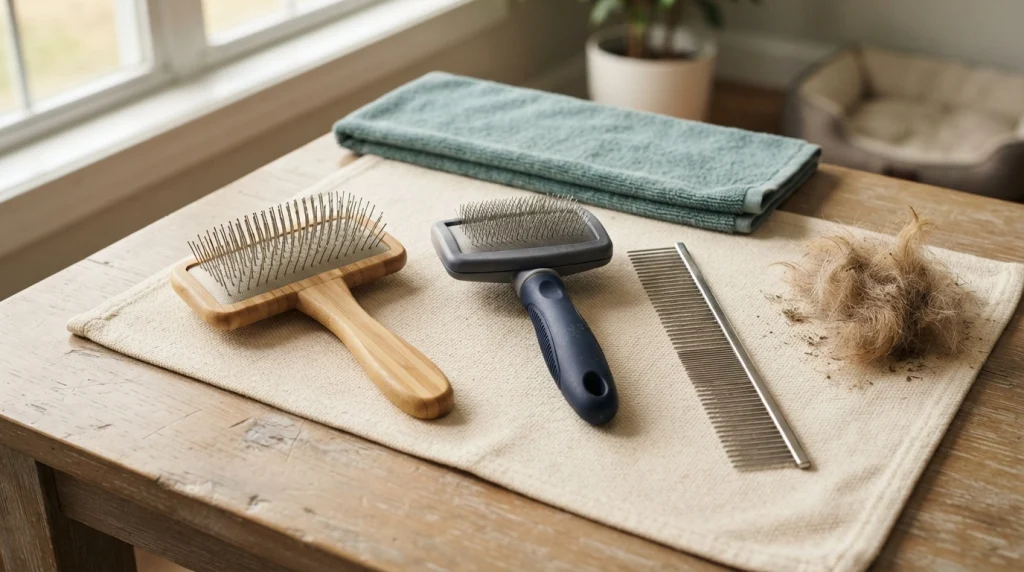
The best brush for wire-haired dogs is usually a pin brush paired with a gentle slicker brush and a metal comb. A pin brush handles routine coat care, while a slicker removes loose hair and small tangles. A steel comb checks areas that brushes miss. The AKC dog brush guide also recommends slicker and pin brushes for wire-coated dogs.
What works best for wire coats
- Pin brush: Best for routine brushing, removing light debris, and separating coarse hair.
- Slicker brush: Best for loose hair, small tangles, and longer leg furnishings.
- Steel comb: Best for checking the beard, legs, and hidden knots.
- Stripping tools: Useful for specialized coat care, but require proper technique.
- Gentle brushing: Use short strokes and avoid scraping the skin.
My simplest grooming setup
- Start: Use a pin brush across the body.
- Follow: Use a slicker where hair is thicker or tangled.
- Finish: Check longer areas with a steel comb.
Wire-haired dogs have a coat that feels quite different from ordinary soft fur. Their rough outer hairs need careful grooming to stay clean and comfortable.
I prefer choosing brushes by the job they perform rather than buying whatever promises the most hair removal. This guide explains which tools help, how to use them, and what to avoid.


Why Do Wire-Haired Dogs Need a Different Brush?
Wire-haired dogs need brushes that work through coarse outer hair without irritating the skin underneath. Many also have a softer undercoat that needs regular attention.
A wire coat often feels stiff or slightly bristly when you run your hand across it. That texture is a normal feature of breeds such as Border Terriers and Wire Fox Terriers.
Wire coat definition: A wire coat is a dog coat with coarse, firm outer hairs. Many wire-coated breeds also have a softer layer of hair beneath the protective outer coat.
The two layers perform different jobs, so brushing only the surface may leave loose hair or tangles underneath.
That is why I wouldn’t judge a brush by how much fur it collects. I would judge it by how comfortably it moves through the coat.
What makes wire coats harder to groom?
- Coarse guard hairs: These create the rough texture that defines many wire-coated breeds.
- Soft undercoat: Some dogs have a dense lower layer that can hold loose hair.
- Long facial hair: Beards and eyebrows can trap food, dirt, and moisture.
- Leg furnishings: Longer hair around the legs can develop tangles.
- Dead outer hairs: Some wire coats benefit from hand-stripping to maintain their characteristic texture.
The American Kennel Club’s hand-stripping guidance explains why coat type matters when choosing professional grooming methods.
Which Type of Brush Is Best for Wire-Haired Dogs?
A pin brush is my preferred starting point for routine grooming on many wire coats. A slicker brush becomes more useful when the coat contains loose hair or small tangles.
I would keep a steel comb nearby rather than relying on either brush alone.
1. Pin brush for everyday coat care
A pin brush has spaced metal pins mounted in a cushioned head. It helps separate hair, lift surface debris, and tidy the coat.
This is the tool I would start with on a fairly clean wire coat that has few tangles.
- Choose smooth, well-finished pins with no sharp edges.
- Use short strokes along the direction of hair growth.
- Keep pressure light, especially over bony areas.
- Choose a head size that suits your dog’s body.
A small pin brush is often easier to control on a Border Terrier than a large grooming brush designed for bigger dogs.
2. Slicker brush for loose hair and tangles
A slicker brush has many fine, angled wire pins. These help lift loose hair and work through light tangles.
I find its main advantage is precision in thicker areas. However, the same fine pins can scratch skin when pressed too hard.
- Short wiry coat: Use a small slicker with gentle pressure.
- Longer furnishings: Choose pins that can reach through the hair without scraping the skin.
- Light tangles: Work from the outer ends toward the roots.
- Sensitive areas: Reduce pressure and switch to a comb when needed.
For me, a slicker is a useful second tool rather than something to drag repeatedly across every part of the dog.
3. Metal comb for hidden tangles
A steel comb helps reveal tangles that a brush may leave behind. It is particularly useful around beards, legs, and longer coat sections.
I prefer a comb with both widely spaced and closely spaced teeth. That provides two options without buying separate combs.
- Start with the wider teeth to check for knots.
- Use finer teeth only when the coat moves freely.
- Hold longer hair near the base to reduce pulling.
- Stop when the comb catches rather than forcing it through.
Pin Brush vs Slicker Brush: Which Is Better?
A pin brush is generally better for routine tidying, while a slicker is better for loose hair and small tangles. Neither completely replaces a metal comb.
Here is how I would compare the main grooming tools.
| Tool | Best use | Main caution |
|---|---|---|
| Pin brush | Routine grooming and debris | May miss deep tangles |
| Slicker brush | Loose hair and small knots | Pins can scrape skin |
| Steel comb | Checking beard and legs | Never pull through knots |
| Rubber brush | Light surface cleaning | Limited undercoat reach |
| Stripping tool | Removing ready-to-release wire hairs | Needs skilled technique |
My choice depends on the coat in front of me. A short, harsh coat needs less detangling than a Schnauzer with long, soft leg hair.
As of 2026, there are plenty of brush designs available, but basic grooming technique still matters more than extra features.
How Do You Brush a Wire-Haired Dog Correctly?
 Save
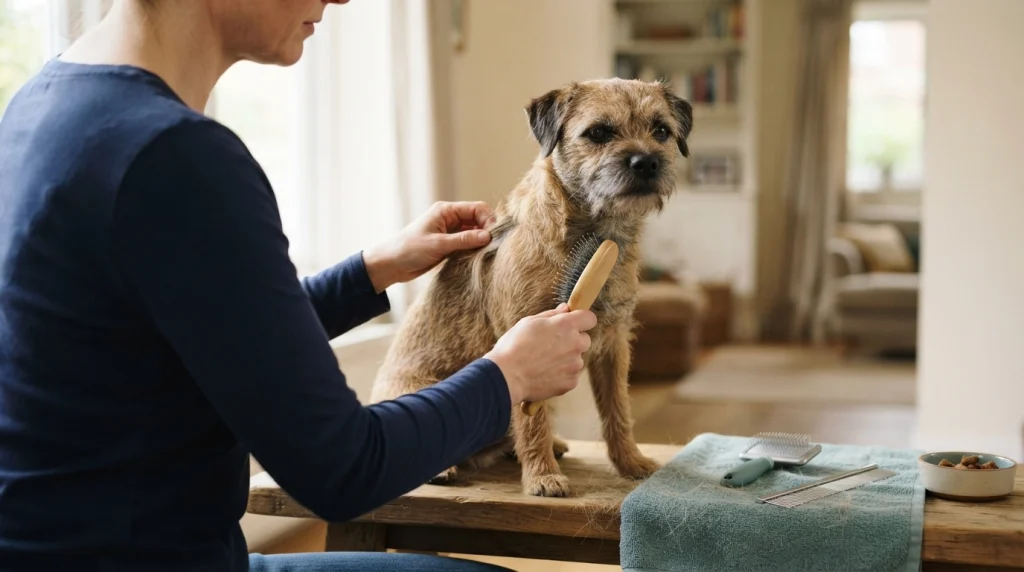
SaveBrush a wire-haired dog in small sections, following the direction of hair growth. Keep the pressure gentle and check for tangles before continuing.
I recommend starting with a calm dog and a coat that is dry enough to work through comfortably.
My recommended step-by-step routine
- Check the skin first. Look for redness, sores, burrs, or areas that hurt when touched.
- Separate a small section. Use your fingers to see whether the hair is tangled near the skin.
- Start with the pin brush. Make short, gentle strokes along the coat.
- Use the slicker where needed. Work carefully through thicker hair or small tangles.
- Check with a steel comb. Pay attention to the beard, legs, and behind the ears.
- Inspect the finished section. Stop if the skin looks red or your dog shows discomfort.
- Reward your dog. End with praise or a small treat before patience runs out.
I like working through one section at a time because it makes hidden knots easier to notice. A quick surface brushing can leave the coat looking tidy while tangles remain underneath.
My stopping rule: If the comb moves through the coat comfortably and the skin looks normal, I wouldn’t keep brushing the same spot just to collect more hair.
How Often Should You Brush a Wire-Haired Dog?
For many wire-haired dogs, a thorough brushing once or twice weekly is a practical starting point. Dogs with longer facial hair or leg furnishings may need more frequent attention.
There is no schedule that suits every wire coat. I would adjust the routine based on hair length, tangles, outdoor activity, and skin sensitivity.
- Short wire coats: Start with one or two gentle sessions weekly.
- Longer furnishings: Check the beard and legs several times weekly.
- After outdoor walks: Look for burrs, grass seeds, and trapped debris.
- During loose-hair periods: Add brief sessions when the coat needs them.
- For puppies: Practice short, positive brushing sessions to build confidence.
A five-minute session may be enough for one dog, while another needs more time. I wouldn’t force a longer session simply to follow a fixed schedule.
Does the Best Brush Change by Wire-Haired Breed?
Yes. Coat length, density, and grooming style can differ between wire-haired breeds.
I would choose the brush based on the individual coat rather than assuming all terriers need the same equipment.
Breed-specific grooming priorities
- Border Terrier: A small pin brush and comb can handle routine care. Professional hand-stripping may help preserve the traditional harsh coat.
- Wire Fox Terrier: A pin brush, slicker, and steel comb help maintain the body coat and longer furnishings.
- Miniature Schnauzer: A slicker and metal comb are useful around the beard and longer leg hair, especially on clipped pet coats.
- Wirehaired Dachshund: A small brush offers control around the body, while a comb helps with facial hair.
- German Wirehaired Pointer: Routine brushing helps lift dirt and loose hair from the weather-resistant coat.
- Wire-haired mixed breed: Choose tools after checking actual coat texture, thickness, and hair length.
A dog with a clipped coat may need a different routine from one maintained through hand-stripping. The coat itself should guide the decision.
Is Hand-Stripping Better Than Brushing?
 Save
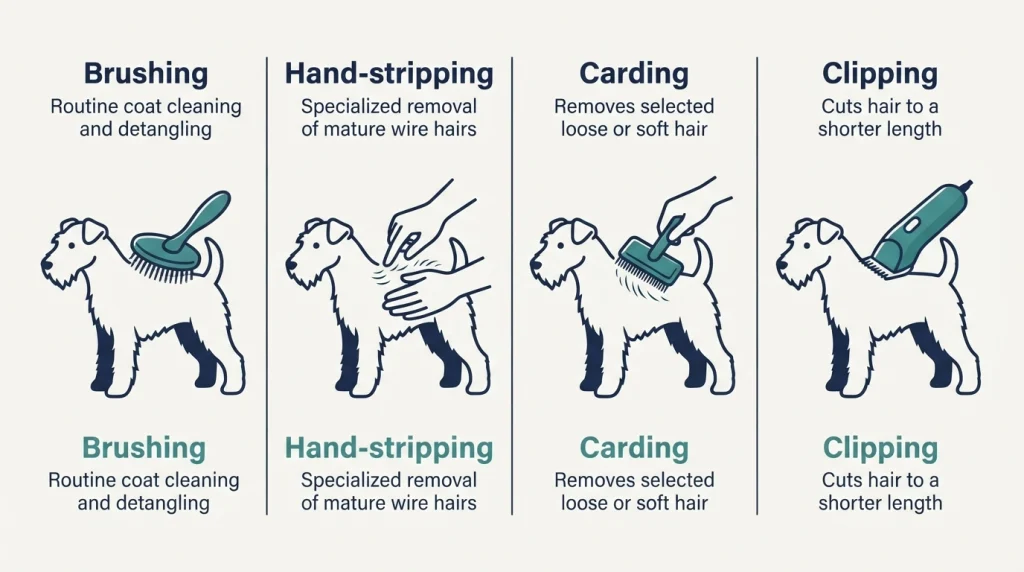
SaveHand-stripping and brushing serve different purposes. Brushing handles dirt, loose hair, and tangles, while hand-stripping removes mature hairs from suitable wire coats.
That distinction matters because normal brushing does not replace specialized coat maintenance.
What exactly is hand-stripping?
Hand-stripping removes old, ready-to-release coat hairs using the fingers or specialized tools. Skilled groomers use this process to help maintain the natural texture of certain wire-haired breeds.
When done correctly on a suitable coat, it should not require forceful pulling. Poor technique can cause discomfort or skin injury.
- Brushing: Routine coat cleaning and detangling.
- Hand-stripping: Specialized removal of mature wire hairs.
- Carding: A grooming technique that removes selected loose or soft hair.
- Clipping: Cutting hair to a shorter length, which may change the coat’s texture over time.
The AKC wire-coat care advice describes a brushing and combing routine that can support traditional coat maintenance.
I would ask a skilled groomer to demonstrate hand-stripping before attempting it myself. Not every wire-haired pet needs the same stripping routine.
Should you use a stripping knife at home?
Not without learning the correct technique. A stripping knife is not an ordinary brush, and some tools can cut hair instead of removing mature hairs properly.
The Wire Fox Terrier Association’s grooming tutorials also emphasize careful handling of grooming equipment.
Important: Stop grooming if your dog has painful skin, sores, severe matting, or repeated discomfort. A veterinarian or qualified groomer should assess the problem before further brushing or stripping.
Can a Slicker Brush Damage a Wire-Haired Dog’s Coat?
A slicker brush can irritate the skin when used with excessive pressure. However, careful brushing with an appropriate slicker is a normal part of wire-coat care.
I pay more attention to technique than to whether a brush is advertised as extra strong.
Common brushing mistakes to avoid
- Pressing too hard: Fine metal pins can scrape or irritate skin.
- Repeated brushing: Too many passes over one spot can cause discomfort.
- Pulling tight knots: This may hurt your dog or damage hair.
- Using oversized tools: Large brush heads can be difficult to control around small dogs.
- Ignoring coat length: Short pins may only skim the surface of longer hair.
- Brushing irritated skin: Inflamed areas need attention before further grooming.
The veterinary guidance from VCA Animal Hospitals recommends gentle grooming and avoiding excessive pulling on tangles.
If a dog flinches, turns away, or tries to escape, I would stop and examine the area. Grooming should not become a fight.
What Should You Look for When Buying a Wire-Haired Dog Brush?
Look for comfortable handling, smooth pins, and a brush head that matches your dog’s size. You do not need the most expensive brush to maintain a healthy coat.
These are the features I would check before buying.
- Pin quality: Metal pins should feel smooth and have no damaged or sharp edges.
- Pin length: Choose enough reach for the actual coat thickness.
- Brush size: Smaller heads offer better control on small breeds.
- Comfortable handle: A secure grip helps you control brushing pressure.
- Cushioned design: A flexible brush pad can make routine grooming easier.
- Cleaning system: Retractable pins may make hair removal more convenient.
I would also check the brush before every session. Bent pins, broken tips, or rough edges are good reasons to replace a grooming tool.
How can you tell whether a brush is working?
A useful brush should move through the appropriate coat section without excessive pulling. Your dog should remain comfortable, and the coat should become easier to comb.
My simple three-part check focuses on comfort, coat condition, and ease of use.
- Comfort: Does the dog remain relaxed during light strokes?
- Coat condition: Does the hair separate without rough pulling?
- Comb check: Can a suitable comb pass through the section afterward?
If the answer is no, I would change the technique before buying another tool.
What If Your Wire-Haired Dog Hates Brushing?
Start with shorter sessions and help your dog associate the brush with positive experiences. Forcing the process can make future grooming harder.
I would begin by touching the shoulder with the back of the brush, then rewarding calm behavior.
A gentle training routine
- Let your dog sniff the brush while you offer a reward.
- Touch a comfortable body area without pulling through the coat.
- Make one gentle stroke and reward calm behavior.
- Add a few more strokes when your dog remains relaxed.
- End the session before your dog becomes frustrated.
A grooming session doesn’t have to cover the entire body. Several pleasant sessions can be more useful than one difficult attempt.
Do Wire-Haired Dogs Need Brushing After a Bath?
Yes, many wire-haired dogs benefit from gentle brushing once the coat is properly dried. This helps separate hair and check for tangles that remain after washing.
I would remove obvious knots before bathing whenever possible. Wet tangles can become harder to manage.
- Before bathing: Check for mats, burrs, and loose debris.
- During washing: Use dog-appropriate shampoo and rinse thoroughly.
- After rinsing: Remove excess water gently with a towel.
- Once dry: Brush carefully and check longer sections with a comb.
There is no need to bathe a wire-haired dog every time it needs brushing. Bath frequency should suit the dog’s skin, coat, and lifestyle.
Best Brushes and Grooming Tools for Wire-Haired Dogs
 Save
SaveIf I were putting together a simple grooming kit, I would focus on three tools that do different jobs. These are established products with designs suited to routine grooming tasks.
The scores below are my editorial suitability ratings for each use case, not verified customer review averages or hands-on test results.
🏆 Best Everyday Pin Brush
Safari by Coastal Wire Pin Dog Brush with Bamboo Handle
★★★★½
Editorial fit: 4.5/5
This brush combines a bamboo handle with a cushioned head and wire pins designed for routine coat care. I would consider it a practical starting choice for regular brushing on a manageable wire coat, with a comb kept nearby for tangles.
✨ Best for Loose Hair and Tangles
Safari by Coastal Dog Self-Cleaning Slicker Brush
★★★★☆
Editorial fit: 4/5
Its stainless-steel pins retract for easier cleaning, and the brush comes in different sizes. I would choose a smaller version for careful work around thicker furnishings, using light pressure to avoid skin irritation.
🐾 Best Finishing Comb
Andis 7-1/2 Inch Steel Comb
★★★★½
Editorial fit: 4.5/5
This 7.5-inch steel comb has both coarse and fine tooth spacing for detangling and finishing. I would keep it in the grooming kit for checking longer facial hair, leg furnishings, and small hidden knots after brushing.
Frequently Asked Questions
Is a slicker brush good for wire-haired dogs?
Yes. A slicker brush can remove loose hair and small tangles from many wire-haired coats. Choose a brush that suits your dog’s size and use gentle pressure. A pin brush and steel comb can help with everyday care and checking longer sections.
Can you use a FURminator on a wire-haired dog?
Some wire-haired dogs have an undercoat, but that doesn’t mean every de-shedding tool is suitable. Aggressive use can damage hair or irritate skin. I would ask a groomer about the individual coat before using a bladed de-shedding tool regularly.
Should wire-haired dogs be brushed every day?
Not necessarily. Many wire-haired dogs do well with thorough brushing once or twice weekly. Dogs with longer beards or leg hair may benefit from brief daily checks. Increase grooming only when the coat needs it and the skin remains comfortable.
Can brushing replace hand-stripping?
No. Brushing removes loose hair, dirt, and tangles, while hand-stripping removes mature hairs from suitable wire coats. Not every pet requires traditional hand-stripping, but dogs maintained for a harsh breed-standard coat may benefit from professional stripping.
What is the best brush for a wire-haired puppy?
Start with a small, gentle pin brush suited to the puppy’s coat and size. Keep sessions short and reward calm behavior. Avoid aggressive de-shedding tools and pulling through knots. A groomer can help determine which tools will suit the mature coat.
Final Takeaway: Choose the Brush That Fits the Coat
For most wire-haired dogs, I would start with a pin brush, add a gentle slicker for tangles, and finish with a steel comb. This simple combination handles everyday grooming without relying on one aggressive tool.
Remember that brushing and hand-stripping are different jobs. If maintaining a traditional wiry texture matters, ask an experienced groomer whether specialized coat care is appropriate.
Start with a short, comfortable brushing session this week. The goal is a clean, manageable coat and a dog that feels relaxed during grooming.

Thomas Cutter is a lifelong dog owner and the founder of FindOutAboutDogs.com. With over 10 years of hands-on experience owning multiple breeds, Thomas created this site to provide honest, research-based dog advice that real owners can actually trust.
