What Brush Should You Use on a German Shepherd?
Quick Answer
For most German Shepherds, choose a rounded-pin undercoat rake plus a gentle slicker brush. Add a metal comb to check longer areas for tangles, following these principles for brushing a thick undercoat.
Match the tool to the job
- Loose undercoat: Use a rounded-pin rake that reaches through the coat without scraping skin.
- Routine brushing: Choose a gentle slicker for loose hair and small, manageable tangles.
- Longer feathering: Finish with a metal comb around the tail and backs of the legs.
- Comfort first: Stop if the tool catches, pulls, or makes your dog flinch.
I’d choose a German Shepherd brush by the coat in front of me, not the biggest pile of fur it removes. A useful grooming kit needs to reach loose undercoat while keeping each session comfortable.
This guide explains which tools deserve a place in that kit and how to use them. The product choices reflect researched features, not claimed hands-on testing.


Why does a German Shepherd need more than one brush?
 Save
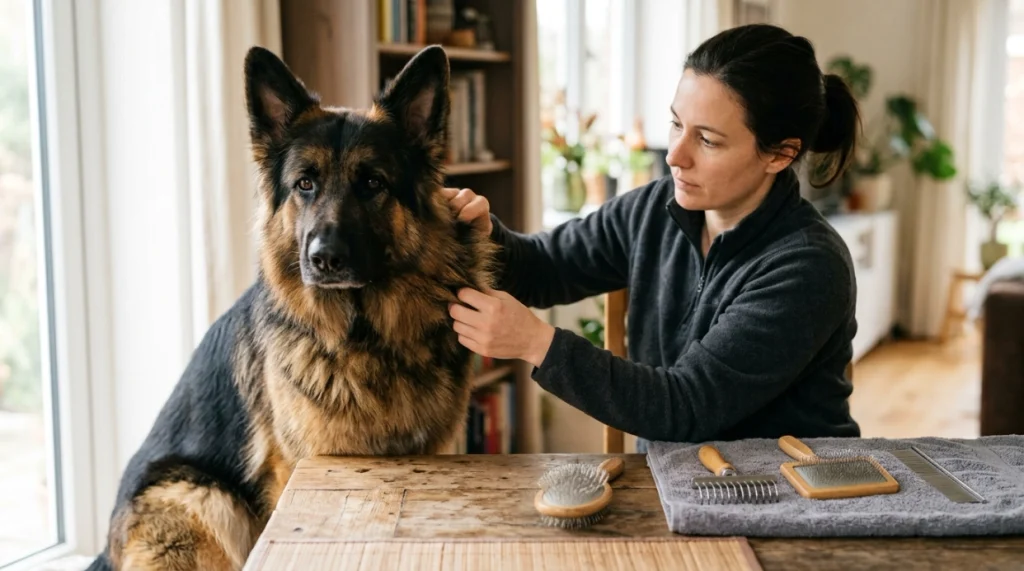
SaveA German Shepherd’s outer coat and soft undercoat create different grooming jobs. One tool may smooth the surface while leaving loose hair or tangles underneath.
Double coat: A double coat has an outer layer of longer guard hairs and a softer undercoat beneath it.
The American Kennel Club’s German Shepherd profile provides the breed context for this dense coat. Individual dogs still differ in coat length and thickness.
- Undercoat rake: Reaches through the outer coat to lift loose undercoat.
- Slicker brush: Works through small sections and gathers loose hair.
- Metal comb: Helps locate remaining snags after brushing.
My buying rule is simple: give each tool a clear job. Two well-chosen tools make more sense than several brushes that all skim the same surface.
Which brush suits your German Shepherd’s coat?
Choose pin length and spacing to suit your dog’s actual coat. Longer teeth are useful only when they improve access without poking the skin.
| Tool | Useful feature | Main job | Limitation |
|---|---|---|---|
| Rounded-pin rake | Spaced metal pins | Loose, dense undercoat | Can pull when forced through knots |
| Slicker brush | Many fine wire pins | Section brushing and light tangles | Repeated pressure can irritate skin |
| Metal comb | Wide and narrow tooth spacing | Checking longer coat sections | Slow for whole-body hair removal |
| Rubber grooming brush | Flexible rubber nubs | Surface hair on shorter areas | Limited reach through dense undercoat |
| Deshedding edge | Closely spaced teeth along an edge | Loose undercoat on suitable coats | Requires careful product-specific use |
For a shorter stock coat
A shorter-coated German Shepherd can still have substantial undercoat. I’d start with a moderate-length rounded-pin rake and choose a gentle brush for routine touch-ups.
- Check that the rake enters the coat without pressing down.
- Use lighter tools on the face and lower legs.
- Keep a rubber brush optional for surface cleanup.
A brush collecting hair doesn’t prove it reaches every layer. Part the coat in a few places to see what remains underneath.
For a long-haired German Shepherd
A longer coat benefits from section-by-section brushing followed by a comb check. A suitable slicker helps you work through feathering instead of sweeping over it.
- Behind the ears: Check gently for small knots.
- Backs of the legs: Separate longer hair into manageable sections.
- Tail: Support the hair while working near the ends.
Our guide to using a dog brush and comb together explains why that final check matters. A smooth-looking surface can hide a snag.
Is an undercoat rake the same as a deshedding tool?
No: a rounded-pin rake and an edge-style deshedding tool have different designs. Sellers sometimes use “rake” loosely, so inspect the working teeth before buying.
- Rounded-pin rake: Has separate pins that move through the coat.
- Deshedding edge: Has closely spaced teeth along a metal edge.
- Dematting rake: May contain sharpened inner edges designed to cut through tangled hair.
I’d choose a plain rounded-pin rake as the starting point for loose undercoat. A cutting dematting tool isn’t an interchangeable upgrade.
FURminator also sells different tool types, so the brand name alone doesn’t identify the function. Check the manufacturer’s grooming and deshedding guidance for the exact model.
When would I consider a deshedding edge?
I’d consider one only for a suitable, healthy, tangle-free coat and after reading its instructions. A groomer can demonstrate pressure and confirm whether the tool suits your dog.
- Choose the appropriate coat-length version.
- Follow the model’s frequency instructions.
- Keep strokes light and controlled.
- Stop before repeated passes irritate one patch.
More collected fur isn’t automatically a better result. Comfort and an intact coat matter more than filling the brush.
How do you brush a German Shepherd without pulling?
 Save
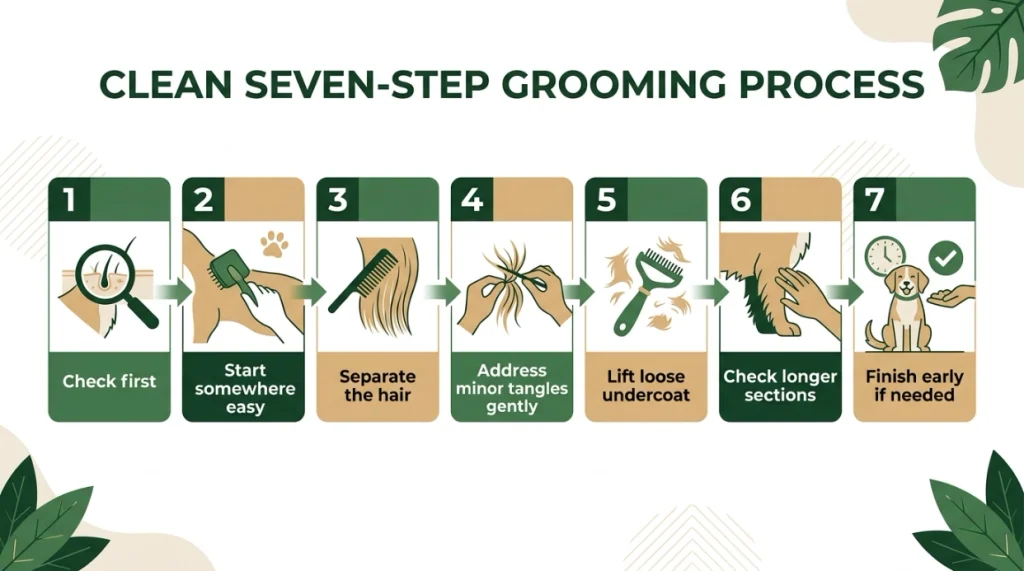
SaveWork in small sections, follow the hair’s direction, and stop at resistance. Don’t pull a rake through a knot to finish a stroke.
Here’s the practical order I’d use for a calm dog with a dry, manageable coat. Adjust the session to your dog’s tolerance.
- Check first. Look through the coat for sore spots, debris, and tangles before using metal tools.
- Start somewhere easy. Try a few light strokes over the shoulder, then pause and reward calm behavior.
- Separate the hair. Lift a small section with your fingers so the brush doesn’t skim only the surface.
- Address minor tangles gently. Work from loose ends inward without pulling the skin.
- Lift loose undercoat. Use the rounded-pin rake where it moves freely through untangled hair.
- Check longer sections. Slide a comb through accessible hair without forcing it toward the skin.
- Finish early if needed. Save another area for later rather than pushing through discomfort.
For example, I’d split a restless dog’s grooming into shoulder work now and hindquarter work later. Completing the whole body isn’t the only useful outcome.
The detailed guide to brushing a German Shepherd expands on the process. Keep your pace slow enough to notice your dog’s response.
How can you tell when to stop?
Stop when the dog shows discomfort or the tool stops moving easily. Don’t use an empty brush as the finishing target.
- Skin movement: A stroke visibly pulls the skin along with the hair.
- Avoidance: Your dog repeatedly turns away or leaves.
- Flinching: One area triggers a sudden reaction.
- Visible irritation: The brushed skin becomes red or scraped.
These signs call for a pause and reassessment. Read more about recognizing brush discomfort before trying a stronger tool.
How often should you brush a German Shepherd?
Several short brushing sessions each week make a reasonable starting routine for many adult German Shepherds. Increase gentle checks during heavy shedding or when longer hair tangles between sessions.
The schedule below is a practical starting point, not a fixed requirement. Coat condition and comfort should guide changes.
- Ordinary maintenance: Try three brief sessions spread across the week.
- Heavy shedding: Check daily and remove loose hair gently as needed.
- Long feathering: Inspect tangle-prone areas each day.
- New puppy: Start with a few comfortable strokes and rewards.
I’d begin with about five minutes for a dog who accepts brushing. Shorten that further if attention or comfort fades.
In 2026, brush packaging still can’t replace an individual coat check. Use a calendar to remember grooming, then let the coat determine the work.
Should you brush before or after a bath?
Remove manageable tangles before bathing, then do routine undercoat work once the coat is dry. Wetting existing tangles can make them harder to resolve.
VCA’s veterinary coat-care guidance also recommends professional help for severe tangles. Avoid cutting mats out with scissors near the skin.
- Check the coat before adding water.
- Use shampoo made for dogs.
- Rinse thoroughly and dry down through the coat.
- Resume gentle brushing when the coat is ready.
What should you check before buying a brush?
 Save
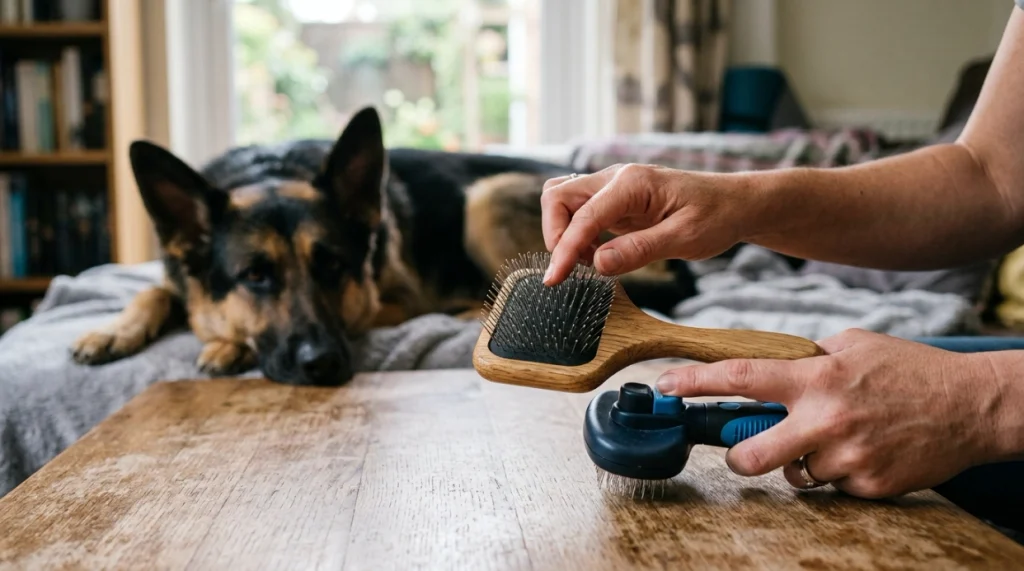
SaveLook for a tool you can control without gripping tightly. The biggest brush head isn’t always easiest around curved or sensitive areas.
- Pin finish: Avoid bent teeth, rough edges, or damaged tips.
- Reach: Match the pins to coat depth, not body weight alone.
- Handle: Choose a grip that stays comfortable in your hand.
- Cleaning: Check whether trapped hair releases easily.
- Instructions: Confirm the intended coat types and use limits.
My preference is a simple kit that’s easy to inspect and clean. Remove trapped fur after use and let washed tools dry fully.
German Shepherd brushes worth considering
If you’re ready to choose tools, these two models cover different jobs. Neither replaces a comb check on longer, tangle-prone areas.
Affiliate disclosure: As an Amazon Associate, I earn from qualifying purchases.
The stars below are editorial suitability scores based on tool design and limitations. They aren’t customer ratings or hands-on test results.
🪮 Undercoat pick
FURminator Grooming Rake
★★★★☆ — Editorial fit: 4/5
Rotating metal teeth help this rake move through thicker coats and collect loose undercoat. I’d shortlist it for an untangled adult coat that needs deeper access.
This is the Grooming Rake, not the brand’s edge-style deShedding Tool. It isn’t a solution for tight mats.
🧹 Easy-clean companion
Safari by Coastal Self-Cleaning Slicker Brush
★★★★☆ — Editorial fit: 4/5
Retractable stainless-steel pins make collected hair easier to remove. I’d consider it for routine section brushing when quick cleanup matters.
Fine pins still require a light touch. Check the size and pin reach against your dog’s coat before choosing it.
Frequently asked questions
Can you use a slicker brush on a German Shepherd?
Yes, a suitable slicker can help remove loose hair and work through minor tangles on a German Shepherd. Use light strokes in small sections, and pair it with a rake or comb when the coat needs deeper access.
Is a rubber brush enough for a German Shepherd?
A rubber brush can collect surface hair, especially on shorter areas, but usually won’t handle dense undercoat by itself. Treat it as an optional finishing tool and choose a rake or suitable comb for deeper coat work.
What brush should you use on a German Shepherd puppy?
Start with a soft brush or another gentle tool suited to the puppy’s current coat. Keep introductions brief and rewarding, then reassess tool choice as the adult coat develops instead of starting with aggressive undercoat removal.
Can you brush a German Shepherd too much?
Yes, repeated brushing can irritate skin, especially with excessive pressure or unsuitable tools. Stop if your dog flinches, avoids the brush, or develops redness, and seek veterinary advice when discomfort persists or the skin looks abnormal.
Will the right brush stop German Shepherd shedding?
No brush stops normal shedding, but regular grooming helps collect loose hair before it spreads around your home. Sudden patchy hair loss, sores, or persistent itching need a veterinary assessment rather than more forceful brushing.
Build a small kit and keep brushing comfortable
For most German Shepherds, I’d start with a rounded-pin undercoat rake and a gentle slicker. Add a metal comb if longer sections need a careful finishing check.
- Match the tool to coat depth.
- Work gently through small sections.
- Stop at resistance or discomfort.
Before buying, part your dog’s coat and identify the job you need the tool to do. That simple check makes the choice much clearer.

Thomas Cutter is a lifelong dog owner and the founder of FindOutAboutDogs.com. With over 10 years of hands-on experience owning multiple breeds, Thomas created this site to provide honest, research-based dog advice that real owners can actually trust.
