What Dog Brush Materials Are Best? A Complete Coat-Care Guide
Quick Answer
The best dog brush materials depend on your dog’s coat and grooming needs. Stainless steel pins work well for detangling and reaching dense coats, natural or nylon bristles suit surface grooming, and flexible rubber or silicone helps remove loose hair from short coats. Choose smooth, well-finished bristles or pins, and prioritize comfort over firmness. The American Kennel Club’s guide to choosing dog brushes explains how brush designs suit different coat types.
Which Materials Work Best?
- Stainless steel: Useful for slicker pins, grooming combs, and suitable undercoat tools.
- Natural bristles: Best for gentle surface grooming and smoothing short coats.
- Nylon: A practical choice for flexible bristles and everyday coat finishing.
- Rubber or silicone: Ideal for many short-haired dogs, loose surface hair, and bath-time massage.
- Plastic: Common in handles and brush bodies, but quality and construction matter more than the material name alone.
Before Choosing a Brush
- Match pin length and spacing to coat thickness.
- Look for smooth tips and a comfortable grip.
- Stop if brushing causes pain, persistent redness, or fear.
Choosing a dog brush can feel surprisingly complicated when every product promises a softer coat and less shedding. The material matters, but its usefulness depends on how it interacts with your dog’s hair and skin.
In this guide, I’ll explain the differences between steel, natural bristles, nylon, rubber, silicone, and plastic. You’ll also learn which combinations make sense for short-haired dogs, long coats, curly fur, and dense double coats.


What Are Dog Brush Materials?
Dog brush materials are the substances used for the bristles, pins, teeth, cushion, and handle of a grooming tool. Each material offers different levels of flexibility, firmness, durability, and ease of cleaning.
However, the material alone doesn’t determine whether a brush is suitable. Pin spacing, tip shape, length, brush-head design, and your grooming technique also affect the result.
For example, a stainless-steel slicker can remove loose hair from a curly coat, while a stainless-steel comb can help identify hidden tangles. Both use metal, but their shapes give them different jobs.
- Bristles: Short, closely arranged fibers used mainly for surface grooming.
- Pins: Longer projections that separate hair and reach farther into a coat.
- Teeth: Wider or narrower projections designed for combing and separating hair.
- Handle and body: The supporting parts that influence grip, control, and durability.
Which Dog Brush Materials Are Best for Different Needs?
 Save
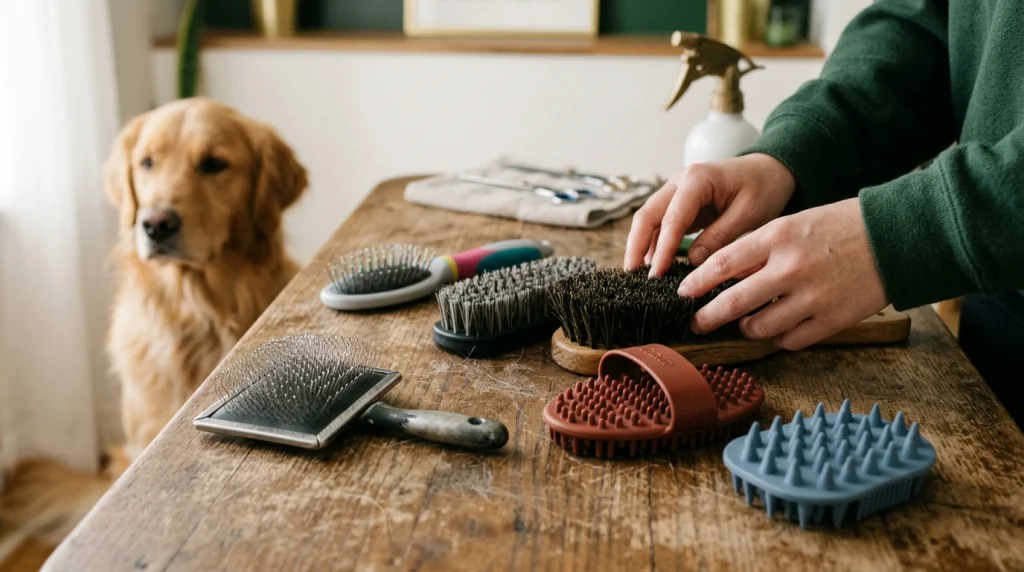
Stainless steel, natural bristles, nylon, and rubber each have useful applications. The best choice depends on whether you need to remove loose undercoat, separate tangles, smooth the surface, or massage a short coat.
| Material | Best Use | Main Advantage | Limitation |
|---|---|---|---|
| Stainless steel | Detangling and suitable dense coats | Firm pins and teeth | Can irritate skin with excessive pressure or poor finishing |
| Natural bristles | Short, smooth coats | Gentle surface grooming | Limited reach into thick undercoats |
| Nylon | Everyday surface grooming and finishing | Flexible bristle options | May not remove deep tangles or dense undercoat |
| Rubber | Short coats and loose surface hair | Flexible, massage-friendly contact | Limited penetration through long, thick fur |
| Silicone | Gentle grooming and bathing | Flexible and easy to rinse | Not a substitute for a suitable detangling tool |
| Plastic | Brush bodies, handles, and some bristles | Lightweight construction | Quality varies; damaged edges or weak parts are undesirable |
These are practical comparisons, not a laboratory durability ranking. Manufacturing quality, brush construction, and maintenance can change how well a particular tool performs.
Are Stainless-Steel Dog Brushes Better Than Nylon Brushes?
Stainless-steel pins are generally more useful when a grooming tool needs to separate longer hair or reach deeper into a suitable coat. Nylon bristles are more commonly used for surface grooming, smoothing, and flexible everyday brushing.
Neither material wins in every situation. A nylon brush can be a sensible finishing tool, while a well-designed steel-pin brush may be more effective for tangles and loose hair in longer coats.
When should you choose stainless steel?
Consider stainless-steel pins or teeth when your dog has a medium-length, long, curly, or dense coat that needs more than surface brushing. The design should match the coat, with suitable pin length and smooth tips.
- Slicker brushes: Fine metal pins help separate hair and remove loose coat from many curly and longer coats.
- Pin brushes: Longer pins can help groom and finish longer hair.
- Undercoat rakes: Properly designed teeth can remove loose undercoat from suitable double-coated dogs.
- Metal combs: Help identify remaining tangles after brushing.
Steel isn’t automatically safer or more effective because it’s metal. Sharp edges, rough tips, excessive pressure, and an unsuitable tool can cause discomfort.
When is nylon the better choice?
Nylon bristles can work well for surface grooming and finishing, especially when a stiff metal tool would be unnecessary for the task. Their flexibility varies by design, so check how the bristles feel rather than assuming every nylon brush is gentle.
For a dog with sensitive skin, introduce any brush carefully. A soft brush can still cause irritation if you repeatedly press it against one area or drag it through a knot.
The American Kennel Club explains the differences between slicker, bristle, pin, and rubber brushes in its dog brush selection guide.
Are Natural Bristles Good for Dog Grooming?
Natural bristles are a good option for gentle surface grooming on many short-haired dogs. They help collect surface debris and loose hair while smoothing the coat.
Some natural-bristle brushes use animal hair, such as boar bristles. Their softness and stiffness depend on the specific product, so the label alone doesn’t guarantee a particular grooming experience.
Benefits of natural bristles
- Surface grooming: Useful for smoothing short coats without long metal pins.
- Finishing: Can help give a smooth appearance after other grooming steps.
- Simple routine: Often suitable for owners who mainly need to remove surface debris and loose hair.
The biggest limitation is reach. A bristle brush generally won’t remove packed undercoat or work through substantial tangles as effectively as a tool designed for those jobs.
For example, a short-coated Boxer may benefit from a bristle brush, while a heavily coated Collie may need a slicker or pin brush and a comb. Choosing natural bristles solely because they sound gentle can leave the second dog’s coat inadequately groomed.
Are Rubber and Silicone Brushes Good for Dogs?
Rubber and silicone brushes are useful for many short-coated dogs because their flexible projections lift loose surface hair and provide a massaging action. Many are also convenient during bathing.
These materials are especially appealing when a dog dislikes the sensation of rigid pins. Still, a flexible brush won’t automatically suit every dog or reach every layer of fur.
Rubber versus silicone
Both materials can make comfortable grooming tools, but their firmness, shape, and flexibility vary between products. The design matters more than assuming one material is always softer.
- Rubber curry brushes: Useful for short, smooth coats and lifting loose surface hair.
- Rubber grooming mitts: Let you collect loose hair with a hand-like motion.
- Silicone bath brushes: Often easy to rinse and convenient for gentle massage during washing.
These tools are not usually the best standalone choice for removing deep tangles or dense undercoat. A dog with a thick double coat may need a coat-appropriate rake or brush instead.
If your dog has irritated skin, open sores, or tender areas, avoid brushing those spots until you understand the cause. A flexible material does not make brushing over an injury safe.
Which Brush Material Is Best for Each Coat Type?
 Save
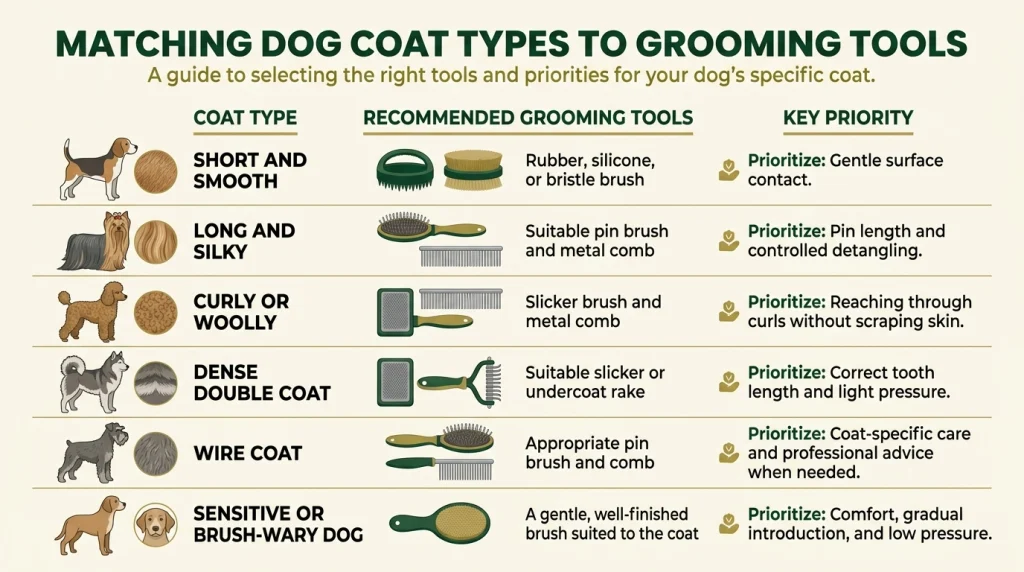
Start with your dog’s coat rather than the material advertised on the package. Coat length, density, curl, and tendency to mat determine how far the brush needs to reach.
| Coat Type | Useful Material or Tool | What to Prioritize |
|---|---|---|
| Short and smooth | Rubber, silicone, or bristle brush | Gentle surface contact |
| Long and silky | Suitable pin brush and metal comb | Pin length and controlled detangling |
| Curly or woolly | Slicker brush and metal comb | Reaching through curls without scraping skin |
| Dense double coat | Suitable slicker or undercoat rake | Correct tooth length and light pressure |
| Wire coat | Appropriate pin brush and comb | Coat-specific care and professional advice when needed |
| Sensitive or brush-wary dog | A gentle, well-finished brush suited to the coat | Comfort, gradual introduction, and low pressure |
These recommendations are starting points rather than breed-specific rules. Individual dogs can have different coat textures, and some need more than one grooming tool.
If your dog has a thick undercoat, see this guide on brushing a dog with a thick undercoat. For longer fur, the guide to brushing a long dog coat explains why section-by-section grooming helps.
What Other Features Matter Besides Brush Material?
Material is only one part of a good grooming tool. The brush should reach the right part of the coat, feel manageable in your hand, and allow you to groom without unnecessary pulling.
- Pin tips: Look for smooth, well-finished tips without burrs or sharp edges.
- Pin length: Choose pins long enough for the coat without repeatedly scraping the skin.
- Spacing: Wider or narrower spacing affects how the tool moves through different coat textures.
- Handle grip: A comfortable, non-slip handle helps you control pressure.
- Brush-head size: A smaller head offers better control around legs and other narrow areas.
- Cleaning design: Removable hair and a washable head can simplify routine maintenance.
- Build quality: Check for loose pins, cracks, rough edges, and parts that bend unexpectedly.
Self-cleaning mechanisms can save time, but they don’t make every brush better. Compare how easily the tool removes hair and whether its construction stays secure during normal use.
For more detail on choosing the right grooming tool, read what a slicker brush is used for.
How Can You Tell Whether a Brush Is Too Harsh?
A suitable brush should let you groom without repeatedly pulling hair or scraping the skin. If your dog flinches, freezes, pulls away, or develops redness, stop and check the tool, technique, and coat.
- Inspect the brush: Check for bent pins, sharp tips, broken teeth, or damaged surfaces.
- Reduce pressure: Use controlled strokes instead of pressing down to force the brush deeper.
- Check for tangles: Knots can pull painfully regardless of the material.
- Try a gentle stroke: Test the tool on an easy, untangled area while watching your dog’s response.
- Stop when discomfort continues: Seek professional grooming or veterinary advice if pain, irritation, or skin problems persist.
Do not assume a dog is being stubborn when grooming becomes difficult. Discomfort, previous painful experiences, or an underlying skin problem may explain the reaction.
The VCA guide to dog grooming and coat care provides additional guidance on matching tools to coat types and checking for skin abnormalities.
How Should You Clean and Maintain Dog Brushes?
 Save
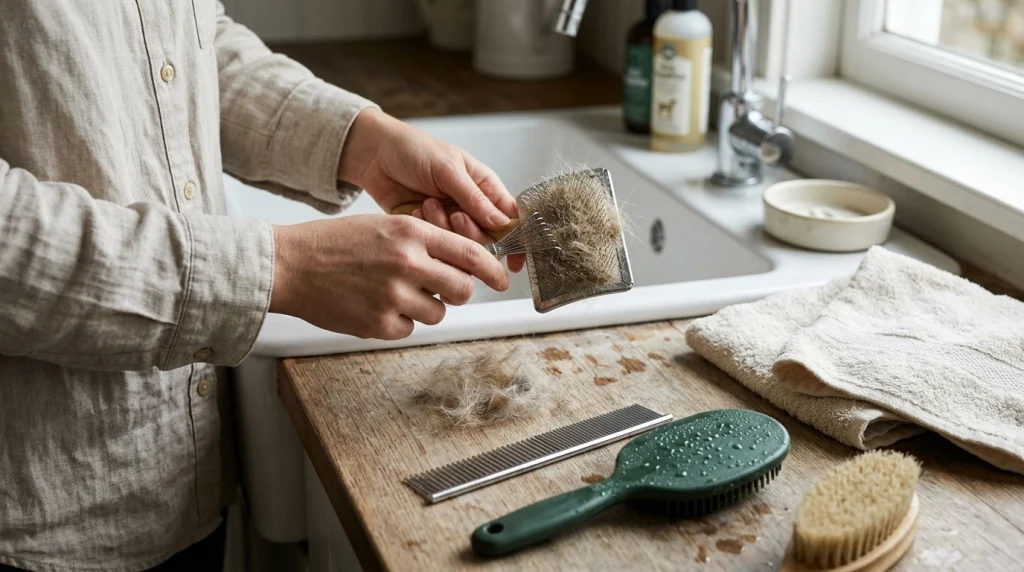
Regular cleaning helps keep a grooming tool usable and prevents collected hair and debris from building up between the bristles or pins. The correct cleaning method depends on the brush’s materials and the manufacturer’s instructions.
- Remove loose hair: Clear hair from the brush after grooming.
- Clean the head: Follow the product’s instructions for removing debris and washing.
- Rinse when appropriate: Wash only parts that the manufacturer identifies as washable.
- Dry thoroughly: Allow washable components to dry before storing them.
- Inspect regularly: Replace brushes with damaged pins, cracked bodies, or deteriorating grips.
Stainless steel is valued for corrosion resistance, but that doesn’t mean every steel brush is rustproof under all conditions. Keep the tool clean and dry, and inspect it for damage.
Natural bristles may require gentler cleaning, while rubber and silicone tools are often straightforward to rinse. Avoid soaking wooden handles or other components unless the manufacturer says it’s safe.
Which Dog Brushes Are Worth Considering?
If you’re choosing a brush, I would start with the grooming task rather than buying a multi-piece kit simply because it contains more tools. The following established product lines illustrate three different approaches to coat care; confirm the exact model and its current features before purchasing.
Best for Dense Coats
Chris Christensen Big G Slicker Brush
A professional-style slicker option to consider for suitable curly, long, and dense coats. Check pin length and brush size carefully, and use light strokes to avoid irritating the skin.
Best for Short Coats
KONG ZoomGroom
A flexible rubber grooming tool designed for gentle massage and loose-hair removal. It is worth considering for many short-coated dogs, but it will not replace a suitable undercoat tool for every dense coat.
Best for Finishing
Safari Bristle Dog Brush
A bristle-style option to investigate for surface grooming on appropriate coats. Confirm the bristle type, firmness, and head size of the specific version, as product designs can vary.
These are examples of different brush styles, not independently tested rankings. I have not verified current prices, customer ratings, or the specifications of every available version, so compare the listing details before deciding.
Frequently Asked Questions
What is the safest material for a dog brush?
No single material is safest for every dog. A properly designed rubber brush can suit many short coats, while smooth, appropriately sized pins can work well on longer fur. Choose a tool that matches the coat, inspect its contact surfaces, and use gentle pressure.
Are metal dog brushes better than plastic brushes?
Metal pins can provide the reach and firmness needed for detangling or suitable dense coats. Plastic brushes may work well for surface grooming, depending on their design. Compare the tool’s purpose, tip finish, strength, and comfort rather than judging it by material alone.
Are silicone brushes better than rubber brushes?
Neither is universally better. Both can provide flexible contact for short coats and bathing, but firmness, projection shape, and construction differ by product. Choose the design your dog tolerates comfortably and that works for the coat’s length and density.
Which brush material is best for dogs with sensitive skin?
Start with a gentle brush that matches your dog’s coat and has smooth contact surfaces. Some dogs tolerate flexible rubber or soft bristles well, while others need a carefully designed pin brush. If grooming consistently causes pain or redness, stop and seek veterinary advice.
Can one dog brush work for every coat type?
One brush can handle basic maintenance for some dogs, but no design is ideal for every coat. Short-haired dogs may need only a rubber or bristle brush, while long, curly, or double-coated dogs often benefit from a suitable brush plus a comb or specialized undercoat tool.
Final Takeaway: Choose the Material That Fits Your Dog
The best dog brush materials are the ones that make grooming effective without causing unnecessary pulling or skin irritation. Stainless steel suits many detangling tasks, natural and nylon bristles help with surface grooming, and rubber or silicone works well for many short coats.
Start by identifying your dog’s coat type, then choose the brush design and material that fit its needs. Inspect the tool, clean it regularly, and let your dog’s comfort guide every grooming session.
If you’re unsure where to begin, a suitable brush and a metal comb can be a practical starting point for many longer coats. For short, smooth fur, a gentle rubber or bristle brush may be all you need.

Thomas Cutter is a lifelong dog owner and the founder of FindOutAboutDogs.com. With over 10 years of hands-on experience owning multiple breeds, Thomas created this site to provide honest, research-based dog advice that real owners can actually trust.
