When Should You Start Brushing a Puppy?
Quick Answer
You can start gently brushing a puppy as soon as they are comfortable in their new home and accept calm handling. Early, short sessions help your puppy learn that a dog grooming routine is safe and positive, rather than something to fear. The goal at first is not a perfect coat—it is building comfort with the brush, touch, and regular handling.
How to start
- Start gently: Let your puppy sniff the brush before using it.
- Keep it short: Begin with a minute or two of calm brushing.
- Choose the right tool: Match the brush to your puppy’s coat type.
- Reward calm behavior: Use praise or a suitable treat after positive sessions.
- Build gradually: Increase brushing time as your puppy becomes comfortable.
One important tip
- Never pull through tangles or force a nervous puppy to continue. Stop and make the next session easier.
One of the easiest mistakes new puppy owners make is waiting until the coat needs serious grooming before introducing a brush.
I prefer to make brushing a normal part of puppy life early. A few gentle strokes now can prevent a much bigger battle later.


Can You Start Brushing a Puppy Right Away?
Yes. In most cases, you can begin introducing gentle brushing as soon as your puppy is settled and comfortable with you.
Veterinary guidance generally supports getting puppies used to grooming and handling from a young age. The important part is making those first experiences calm and positive.
A young puppy does not need a long grooming session. In fact, starting too intensely can create the opposite result.
- Let the puppy investigate: Allow them to see and sniff the brush first.
- Touch before brushing: Get your puppy comfortable with gentle handling across the body.
- Use light pressure: Early sessions should feel comfortable, not like deep coat work.
- Stop while things are going well: A short successful session is better than pushing too far.
What Age Should Puppies Start Getting Used to a Brush?
The best answer is usually as early as practical, provided the brushing is gentle and appropriate for the puppy.
You do not need to wait until your puppy reaches a specific age before showing them a brush. Early handling helps make grooming feel familiar rather than strange.
This matters because puppies learn quickly from repeated experiences. A calm routine can teach them that brushing is simply another normal part of life.
The Royal Veterinary College specifically notes that puppies can be groomed with a suitable brush and that getting them used to grooming at a young age is helpful. :chatgpt-content-reference{index=”2″}
Why Is Early Brushing Important for Puppies?
Early brushing is about more than removing loose hair. It teaches your puppy to accept handling around the body.
That can make future grooming easier, whether you brush your dog at home or use a professional groomer.
- Builds tolerance: Your puppy learns that a brush touching the coat is normal.
- Creates routine: Regular sessions become familiar instead of surprising.
- Helps with coat care: Frequent brushing can remove loose hair and help prevent tangles.
- Encourages body checks: Grooming gives you time to notice changes in the skin or coat.
- Supports future grooming: Puppies that learn calm handling may find later grooming less stressful.
I think of the first few sessions as training rather than grooming. The number of hairs removed is far less important than the puppy’s reaction.
How Do You Introduce a Puppy to Brushing?
 Save
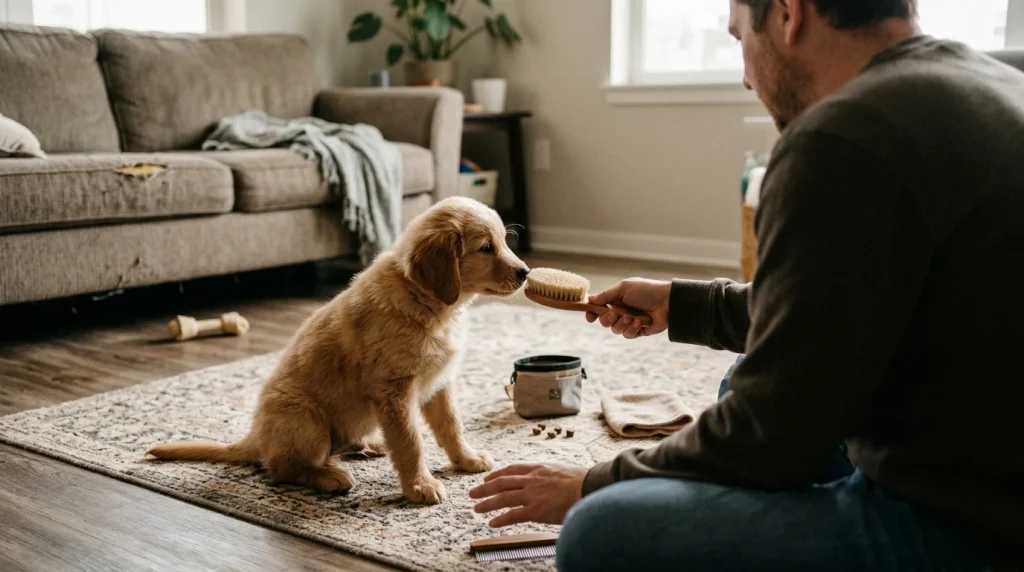
The easiest method is to move slowly and make each step predictable. Do not begin by trying to brush your puppy from head to tail.
1. Let Your Puppy See and Smell the Brush
Place the brush near your puppy and allow natural curiosity to do some of the work. There is no need to wave it around or push it toward their face.
A calm introduction gives the puppy time to investigate the unfamiliar object.
2. Start With Gentle Handling
Before concentrating on the coat, gently touch areas your puppy will eventually need groomed. This includes the back, sides, legs, paws, and belly.
Go slowly around sensitive areas. A puppy that dislikes being touched is unlikely to enjoy immediate full-body brushing.
3. Use Only a Few Gentle Strokes
Start on an easy area such as the back or side. Use light strokes and watch your puppy’s body language.
If your puppy remains relaxed, stop after a brief success rather than extending the session unnecessarily.
4. Reward the Experience
Praise, calm attention, or an appropriate reward can help your puppy connect brushing with something positive.
The reward should support relaxation, not turn every grooming session into an overly exciting event.
5. Gradually Increase the Session
Add more strokes and new body areas over several sessions. Some puppies adapt quickly, while others need more time.
Consistency matters more than rushing.
A simple rule I follow: End the session while the puppy is still comfortable. That leaves the next brushing session with a much better starting point.
How Often Should You Brush a Puppy?
 Save
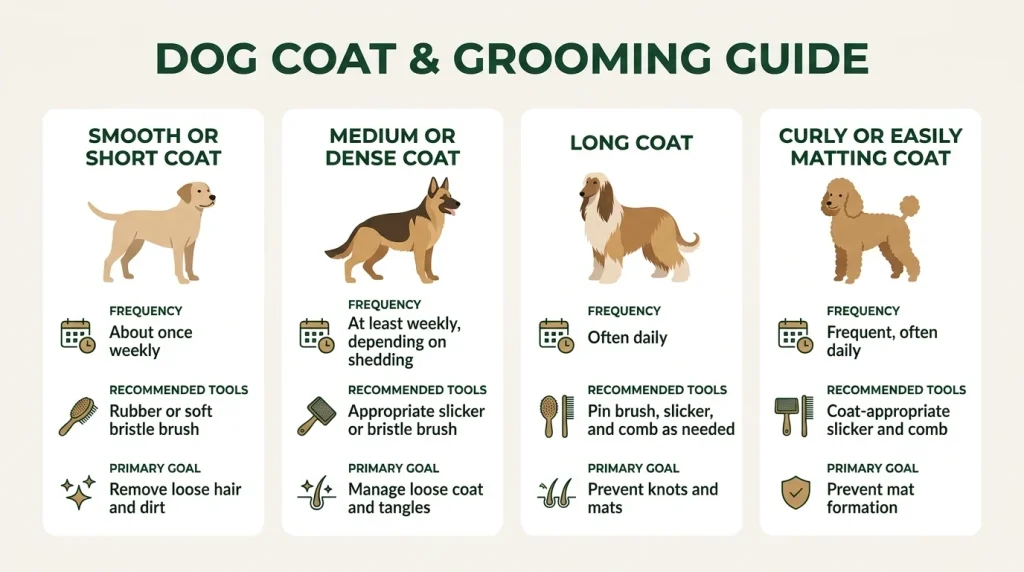
The right frequency depends mainly on your puppy’s coat type. A short-coated puppy usually needs much less brushing than a puppy with long, curly, or dense hair.
The table below gives a practical starting point. Individual breeds and coats can vary.
| Coat type | Typical starting frequency | Useful brush type | Main goal |
|---|---|---|---|
| Smooth or short coat | About once weekly | Rubber or soft bristle brush | Remove loose hair and dirt |
| Medium or dense coat | At least weekly, depending on shedding | Appropriate slicker or bristle brush | Manage loose coat and tangles |
| Long coat | Often daily | Pin brush, slicker, and comb as needed | Prevent knots and mats |
| Curly or easily matting coat | Frequent, often daily | Coat-appropriate slicker and comb | Prevent mat formation |
The ASPCA notes that brushing needs vary by coat type, while regular brushing can help remove dirt, distribute natural oils, and prevent tangles. :chatgpt-content-reference{index=”3″}
Royal Canin similarly distinguishes between close-cropped, medium, and long coats when discussing brushing frequency and tool choice. :chatgpt-content-reference{index=”4″}
What Type of Dog Brush Should You Use for a Puppy?
The best puppy brush is not necessarily the biggest or most aggressive grooming tool available. Your puppy’s coat and comfort should guide the choice.
Soft Bristle Brushes
A soft bristle brush can be a good introduction for puppies with short or smooth coats. It can feel less intimidating than sharper pins or tightly packed wires.
These brushes are generally better for surface grooming than serious detangling.
Rubber Brushes and Grooming Mitts
Rubber grooming tools often work well on short coats. They can help collect loose hair while providing a gentler introduction to the brushing motion.
Many puppies also accept the glove-like feel of a grooming mitt easily.
Pin Brushes
Pin brushes are often useful for longer coats, depending on the coat texture and the brush design. Look for a suitable tool that does not scratch or irritate your puppy’s skin.
Use gentle pressure. Puppy skin should never be treated like a tough adult coat.
Slicker Brushes
Slicker brushes can be useful for certain medium, long, curly, or dense coats. However, they require a gentle hand.
If the pins feel uncomfortable or you repeatedly catch the coat, slow down and reconsider the technique or tool.
Should You Brush a Puppy Every Day?
Some puppies benefit from daily brushing, but not every puppy needs a long daily grooming session.
A short-coated puppy may only need occasional coat care, while a long-haired puppy may need frequent brushing to prevent knots.
Daily practice can still be useful as training. Even a minute of gentle handling and a few comfortable strokes can reinforce the routine.
That is an important distinction: daily grooming practice does not always mean daily intensive brushing.
What If Your Puppy Hates Being Brushed?
Do not assume a struggling puppy simply needs to “get used to it” through longer sessions. Fear or discomfort can get worse when brushing becomes a repeated negative experience.
Instead, reduce the difficulty and rebuild the routine.
- Shorten the session: Try only a few seconds at first.
- Check the tool: A harsh or unsuitable brush may be uncomfortable.
- Brush easier areas first: Begin with the back or shoulder rather than sensitive spots.
- Avoid pulling: Never yank through knots close to the skin.
- Watch body language: Pulling away, freezing, or repeated attempts to escape may signal discomfort.
- Consider pain: If brushing suddenly becomes difficult, speak with a veterinarian about possible skin or health issues.
Veterinary guidance from VCA Animal Hospitals recommends a gradual introduction to brushing and emphasizes helping puppies become accustomed to handling. :chatgpt-content-reference{index=”5″}
Is It Different for Long-Haired Puppies?
Yes. Long-haired puppies usually need earlier and more consistent coat-care habits because tangles can develop more easily.
Waiting until the coat becomes difficult to manage can turn the first serious grooming experiences into unpleasant ones.
Long coats may require daily brushing, while short coats often need less frequent care. The exact routine depends on the breed, coat texture, and how quickly the puppy’s hair tangles. :chatgpt-content-reference{index=”6″}
Pay Extra Attention to Tangle-Prone Areas
Areas where hair rubs together can become more difficult to manage. Check these gently rather than aggressively digging through the coat.
- Behind the ears
- Under the collar or harness area
- Under the front legs
- Along the belly
- Near feathered legs and paws
If you find a knot, hold the hair close to the skin to reduce pulling and work carefully. Severe matting is best handled with professional advice rather than force.
When Should a Puppy Have Its First Professional Groom?
Home brushing and professional grooming are not the same thing. You can introduce a brush early at home even before your puppy has a full professional grooming appointment.
PetMD suggests that, when vaccination requirements are appropriately addressed, many puppies can have their first professional grooming experience around 12 to 14 weeks of age, with some coat types needing earlier attention. :chatgpt-content-reference{index=”7″}
Your veterinarian and groomer can help you choose an appropriate schedule for your puppy’s breed and local requirements.
Common Mistakes When Brushing a Puppy
 Save
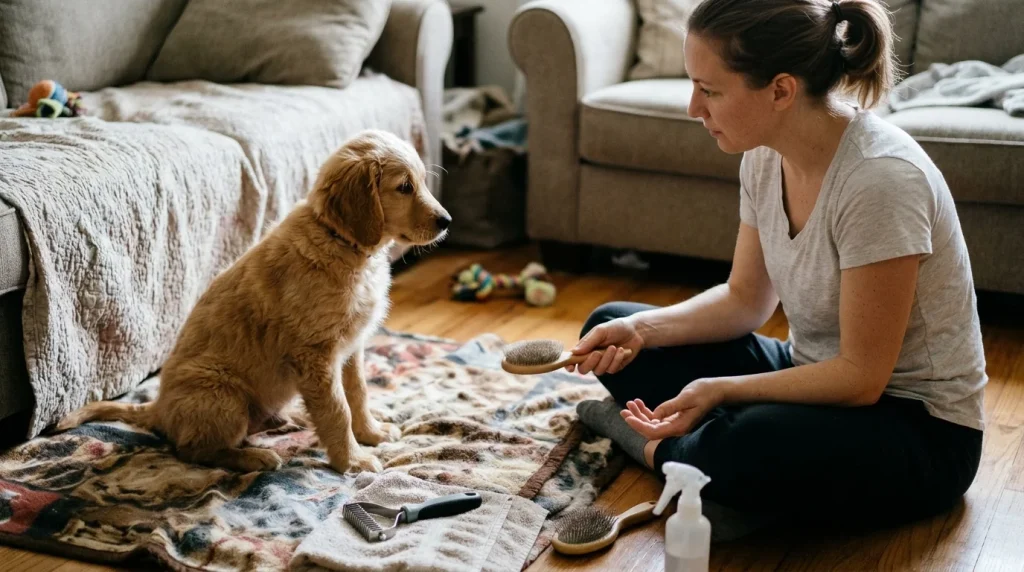
Most brushing problems start with rushing. A puppy does not need to complete a perfect grooming session on day one.
- Using the wrong brush: Match the tool to the coat instead of buying based on appearance alone.
- Brushing too hard: Gentle contact is especially important during early sessions.
- Pulling through tangles: Tugging can make the puppy fear future grooming.
- Making sessions too long: End before your puppy becomes tired or frustrated.
- Ignoring body language: A stressed puppy needs an easier, more gradual approach.
- Only brushing when there is a problem: Routine practice is easier than emergency detangling.
As of 2026: the most useful advice remains simple—start early, keep sessions positive, and choose grooming tools based on the puppy’s actual coat rather than their age alone.
The first goal is confidence. A perfectly brushed puppy can wait a few minutes if that is what it takes to protect the long-term routine.
My Recommended Puppy Brushing Tools
If you’re ready to choose a tool, I’d keep the first setup simple and match it to your puppy’s coat.
🏆 Best for gentle introductions
Soft Bristle Dog Brush
★★★★☆
A soft bristle design can be a straightforward choice for introducing short-coated puppies to brushing. I like starting gently because the first goal is teaching the puppy that grooming feels safe.
💰 Best for short coats
Rubber Dog Grooming Brush
★★★★☆
Rubber grooming tools can work well for puppies with short, smooth coats and seasonal loose hair. I would choose one with a comfortable grip and use light, calm strokes.
🪮 Best for longer coats
Pin Brush and Wide-Tooth Comb Set
★★★★☆
Longer coats often need more than a simple surface brush. A suitable pin brush and wide-tooth comb can give you more flexibility as your puppy’s coat develops.
Frequently Asked Questions
Can you brush an 8-week-old puppy?
Yes, an 8-week-old puppy can usually be introduced to gentle brushing. Keep the session short, use a suitable brush, and focus on making the experience positive rather than trying to complete extensive grooming.
Should I brush my puppy before or after a bath?
For routine coat care, gentle brushing before bathing can help remove loose hair and identify tangles. Avoid aggressively brushing knots, and make sure the coat-care method suits your puppy’s coat type and condition.
How long should a puppy brushing session last?
Start with only a minute or two if necessary. Gradually increase the length as your puppy becomes comfortable, and end the session before they become stressed, restless, or frustrated.
What happens if I never brush my puppy?
The risks depend on the coat. Long or curly coats may develop tangles and mats more easily, while even short-coated dogs benefit from occasional brushing to remove loose hair and help you inspect the skin and coat.
Can I use a human hairbrush on my puppy?
A brush designed for human hair may not suit a dog’s coat or skin. A dog-specific brush selected for your puppy’s coat type is usually the safer and more effective choice.
When should I stop brushing if my puppy gets upset?
Stop when your puppy shows clear signs of distress or discomfort. Reduce the difficulty during the next session, use shorter steps, and consider whether the brush, technique, tangles, or a possible health issue is causing discomfort.
The Bottom Line
You should start introducing your puppy to gentle brushing early, once they are comfortable and settling into daily life with you.
Keep the first sessions short, calm, and positive. The best puppy grooming routine is one your dog can comfortably live with for years.
Choose a brush that suits the coat, avoid pulling or forcing the process, and build the routine gradually. Start small now, and future grooming can become much easier.

Thomas Cutter is a lifelong dog owner and the founder of FindOutAboutDogs.com. With over 10 years of hands-on experience owning multiple breeds, Thomas created this site to provide honest, research-based dog advice that real owners can actually trust.
