Which Brush Is Best for Fine Dog Hair? 2026 Guide
Quick Answer
The best brush for fine dog hair depends on the coat length. A soft bristle brush works well for short, fine coats, while a gentle pin brush is usually better for longer, silky fine hair. For light tangles, I use a soft slicker carefully rather than pressing it into the skin. The AKC dog brush guide also recommends choosing the tool according to coat type rather than using one brush for every dog.
What works best for fine hair
- Short fine hair: Choose a soft natural or synthetic bristle brush.
- Long silky hair: Use a smooth, rounded-tip pin brush to separate hair without excessive pulling.
- Light tangles: A soft slicker can help, but use minimal pressure and short strokes.
- Sensitive skin: Favor softer bristles, flexible pins, and a light hand.
- Final check: Run a metal comb through longer fine coats to find small tangles the brush missed.
My simplest rule
- Use the gentlest tool that can move through the coat comfortably without scratching, snagging, or repeatedly pulling the hair.
Fine dog hair can look easy to groom because it feels light and soft. In practice, it can tangle, snap, flatten, or irritate sensitive skin when the wrong brush is used.
I pay more attention to coat length, texture, and skin sensitivity than to a brush’s marketing label. That simple distinction makes choosing a brush much easier.


What Is Fine Dog Hair?
Fine dog hair is hair with a relatively small, delicate shaft that often feels soft, silky, or lightweight. It may occur in short coats, long flowing coats, or as part of a mixed coat.
Fine doesn’t automatically mean thin-coated. A dog can have plenty of hair while each individual strand remains delicate.
- Short and fine: Hair lies close to the body and usually needs surface grooming rather than deep detangling.
- Long and silky: Hair separates easily but can develop small knots behind the ears, legs, collar, or chest.
- Fine with undercoat: The visible hair may feel delicate while denser hair sits underneath.
- Fine and fragile: Excessive pulling or aggressive de-shedding can cause unnecessary breakage.
This is why I don’t automatically reach for the strongest shedding tool. More aggressive isn’t always more effective.
Which Brush Is Best for Fine Dog Hair?
 Save
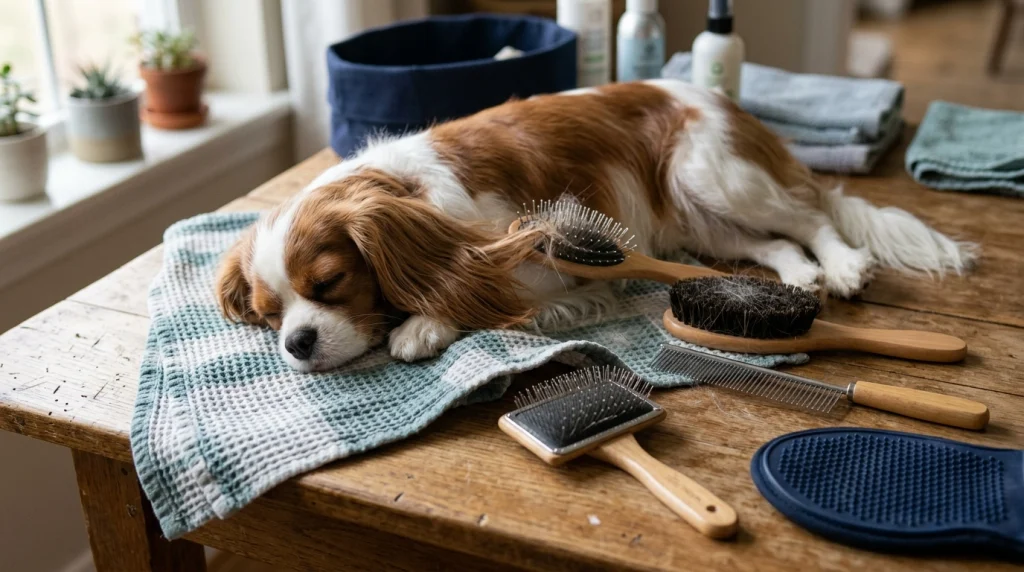
SaveFor most dogs with fine hair, I start with either a soft bristle brush or a rounded-tip pin brush. Short coats favor bristles, while longer silky coats usually favor pins.
A soft slicker becomes useful when tangles are part of the problem. I treat it as a specialized tool rather than the automatic first choice.
| Brush Type | Best For | Gentleness | Main Job |
|---|---|---|---|
| Soft bristle brush | Short, smooth fine hair | High | Loose surface hair, dust, finishing |
| Pin brush | Long, silky fine hair | High when tips are smooth | Separating and smoothing longer hair |
| Soft slicker brush | Fine hair with light tangles | Medium | Removing loose hair and small tangles |
| Grooming mitt | Very short, smooth coats | Very high | Surface hair and gentle massage |
| Metal comb | Long fine coats | High when used gently | Checking for remaining tangles |
Why Does a Soft Bristle Brush Work Well on Short Fine Hair?
A soft bristle brush is one of my first choices for a dog whose fine hair lies close to the body. It removes loose surface hair without needing long metal teeth.
The ASPCA recommends bristle brushing as part of grooming smooth, short coats. The organization also notes that regular brushing helps remove dirt while distributing natural oils through the coat.
- Less scratching: Soft bristles don’t need to dig deeply into a thin coat.
- Good finishing: They collect fine loose hairs sitting near the surface.
- Better shine: Brushing helps move natural skin oils along the hair.
- Simple control: You can feel how much pressure you’re applying.
You can read the broader coat-care recommendations in the ASPCA grooming guidance.
Is a Pin Brush Better for Long, Fine Dog Hair?
Yes, a pin brush is often my preferred everyday tool for long, fine, silky hair. Its separated pins can move between longer strands without packing them together.
The key is choosing smooth pins with rounded or well-finished ends. Rough pins can catch delicate hair and make brushing unpleasant.
What I look for in a pin brush
- Smooth pin finish: Run your fingers across the pins before using the brush.
- Flexible cushion: Some give in the brush head helps reduce harsh pulling.
- Suitable pin length: Pins should reach through the coat without being unnecessarily long.
- Comfortable grip: Fine coats often benefit from slow, controlled brushing instead of hard strokes.
For silky dogs, I often brush a small section and then check it with a comb. If the comb passes through easily, I know I’m finished.
Can You Use a Slicker Brush on Fine Hair?
Yes, but I use a slicker gently on fine hair. Slicker brushes have closely spaced wire pins, so too much pressure can make them uncomfortable.
The AKC describes slickers as useful for loose hair and mats across several coat types. It also specifically recommends maintaining a light touch when using them.
- Use it for: Small tangles, loose hair, and sections where a pin brush isn’t enough.
- Avoid pressing: Let the tips work through the hair instead of scraping the skin.
- Use short strokes: Don’t drag through a knot from root to tip.
- Stop at resistance: Separate the tangle with your fingers before continuing.
If your dog has a much denser double coat rather than a simple fine coat, brushing needs can change. My guide to choosing a brush for a Husky shows why coat structure matters so much.
How Should You Brush Fine Dog Hair Without Breaking It?
 Save
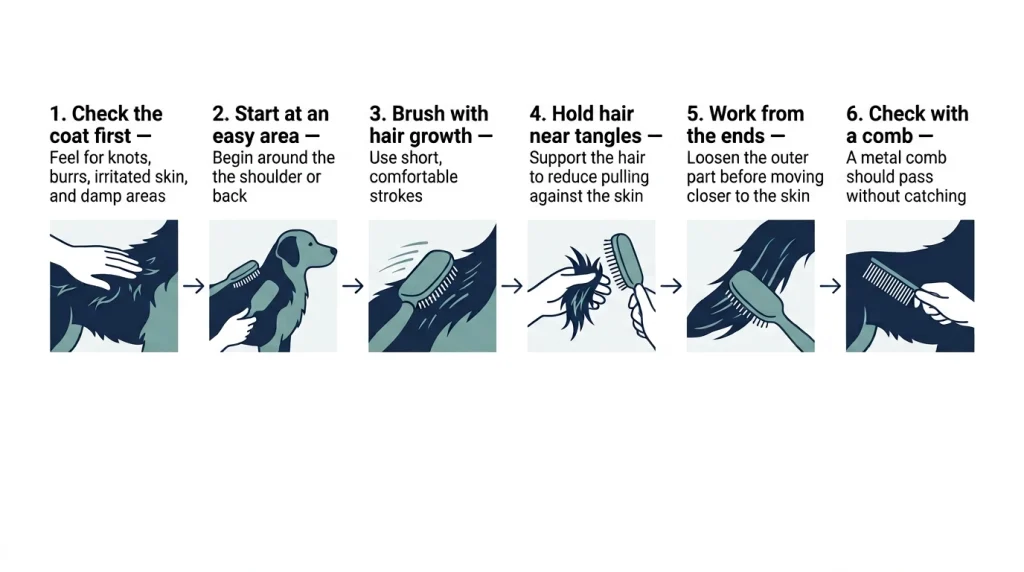
SaveBrush fine hair with light pressure, small sections, and controlled strokes. The goal is to separate and clean the coat without repeatedly pulling on the same hairs.
I use this routine when a coat feels especially silky or delicate.
- Check the coat first. Feel for knots, burrs, irritated skin, and damp areas before brushing.
- Start at an easy area. The shoulder or back is usually calmer than sensitive legs and ears.
- Brush with hair growth. Use short, comfortable strokes instead of forcing the brush through resistance.
- Hold hair near tangles. Supporting the hair reduces pulling against the skin.
- Work from the ends. For longer hair, loosen the outer part of a tangle before moving closer to the skin.
- Check with a comb. A metal comb should pass through longer sections without catching.
VCA also recommends being gentle and avoiding excessive pulling when working through tangles. Its dog grooming and coat-care guide explains that different brush styles suit different haircoat types.
How Often Should You Brush a Fine-Haired Dog?
Brushing frequency depends more on coat length and tangling than on fineness alone. Long, silky coats often need attention far more frequently than short smooth coats.
VCA notes that long, silky, or curly coats may require daily brushing, while short coats can often be brushed less frequently.
- Short fine coat: Start around once weekly and adjust for shedding and dirt.
- Long silky coat: Check daily and brush often enough to prevent knots from forming.
- High-friction areas: Inspect behind the ears, under the collar, armpits, and back legs more often.
- After outdoor activity: Check for grass, seeds, burrs, and debris before they tighten into tangles.
Frequency isn’t a competition. A short, comfortable five-minute session can be more useful than waiting for a difficult hour-long grooming session.
What Brush Should You Avoid on Fine Dog Hair?
I avoid any grooming tool that removes hair aggressively when the coat doesn’t require it. Fine strands can be more vulnerable to unnecessary snagging and breakage.
- Harsh de-shedding blades: Don’t use them automatically on a fine single coat.
- Rough metal pins: Poorly finished tips can scratch skin or catch hair.
- Very stiff slickers: These may be excessive for a thin, delicate coat.
- Tools that repeatedly snag: A brush shouldn’t need force to move through healthy, untangled hair.
- Human brushes by default: Dog-specific tools are easier to match to canine coat structure and grooming needs.
I also avoid chasing every loose strand. If the skin starts looking pink or the dog becomes uncomfortable, that’s my signal to stop.
What Features Matter Most When Buying a Brush for Fine Hair?
The best fine-hair brush isn’t necessarily the most expensive one. I care more about how smoothly the working surface contacts the coat.
- Gentle contact: Soft bristles or smooth pins should move without scratching.
- Correct pin length: Match the brush depth to the dog’s actual coat length.
- Flexible head: Some cushion reduces abrupt tugging on delicate strands.
- Comfortable handle: Good control helps you use less pressure.
- Appropriate size: Small dogs and tight areas benefit from a narrower brush head.
- Easy cleaning: Fine hair can pack between bristles and pins quickly.
As of 2026, there are countless brushes marketed for every coat type. I still choose based on the dog’s coat in front of me, not the number of claims on the package.
Do Fine-Haired Dogs Need a Comb Too?
Long fine-haired dogs often benefit from a comb after brushing. A comb acts like a final inspection tool because it can expose small knots hidden beneath the surface.
I don’t use it to rip out tangles. If it catches, I stop and work that section apart first.
- Wide teeth: Useful for the first check through longer areas.
- Fine teeth: Helpful for confirming that small tangles are gone.
- Rounded teeth: Prefer smooth edges that won’t scrape the skin.
This brush-then-comb approach is especially useful around feathering, ears, legs, and tails.
When Is Fine Hair a Skin or Health Problem Instead of a Grooming Problem?
Normal fine hair shouldn’t automatically worry you. However, a sudden coat change, bald areas, sores, heavy itching, or unusually brittle hair deserves more attention than a new brush.
VCA notes that coat condition can reflect general health as well as grooming. A veterinarian can help when the change looks abnormal for your individual dog.
- Sudden or patchy hair loss
- Red, inflamed, or painful skin
- Persistent scratching or biting
- Greasy, flaky, or strongly odorous skin
- A rapid change in coat texture
Grooming tools can maintain healthy hair. They can’t diagnose the reason a coat has suddenly changed.
Best Brushes for Fine Dog Hair
 Save
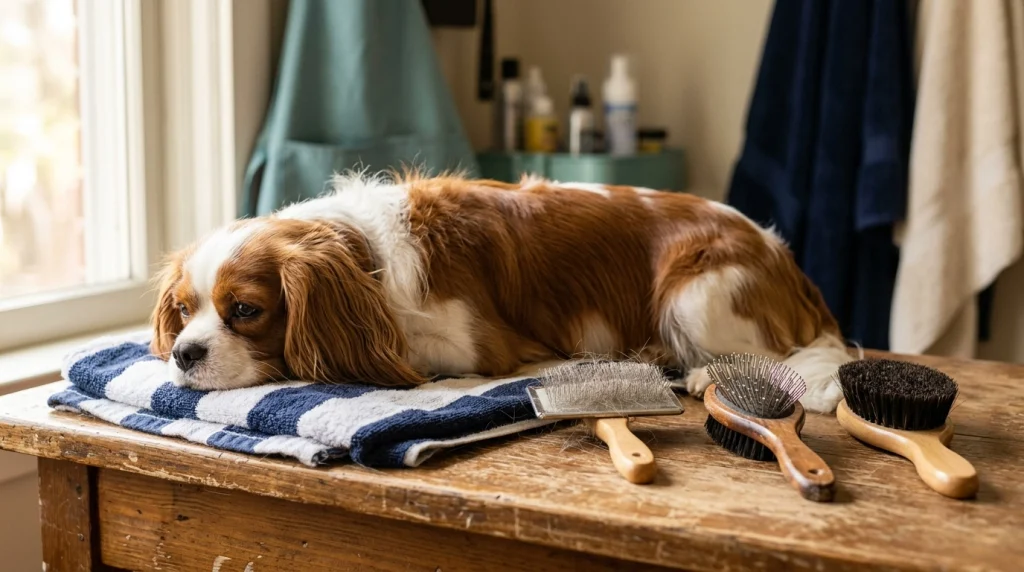
SaveIf you’re ready to choose one, these are the types of brushes I’d consider first for a fine coat.
🏆 Best Versatile Pick
Safari Pin and Bristle Combo Dog Brush
★★★★½
This two-sided brush combines rounded wire pins with a bristle side, so it can handle longer fine hair and lighter finishing work. I like the flexibility because you can switch surfaces instead of forcing one brush type to do every job.
🌿 Best for Short Fine Coats
Safari Bristle Dog Brush
★★★★☆
A traditional bristle brush is a simple choice when the coat is short, smooth, and fine. I prefer this style when the main goal is removing loose surface hair and tidying the coat without deep metal teeth.
✨ Best Gentle Detangler
Millers Forge Extra Soft Slicker Brush
★★★★☆
This softer slicker style makes more sense to me for delicate hair than an aggressively stiff slicker. I’d reserve it for light tangles and loose hair while keeping pressure gentle and checking the skin frequently.
Frequently Asked Questions
Is a bristle brush good for fine dog hair?
Yes. A soft bristle brush is one of the better choices for short, smooth fine hair because it works mainly at the surface. It can collect loose hair, move natural oils through the coat, and avoid the deep contact of longer metal pins.
Is a slicker brush too harsh for fine hair?
Not necessarily, but pressure matters. Choose a softer slicker and use short, light strokes rather than pressing into the skin. I use slickers mainly for loose hair or light tangles on fine coats, not as an excuse to pull hard through knots.
What brush is best for a Yorkie’s fine hair?
A rounded-tip pin brush paired with a metal comb is a practical setup for a Yorkie’s long, silky coat. Work gently through small sections, support tangled hair close to the skin, and use the comb afterward to check that no small knots remain.
Should I brush fine dog hair when it is wet?
I prefer brushing when the coat is dry or only lightly dampened with an appropriate grooming product. Wet tangles can tighten and become harder to separate. Remove obvious knots before bathing whenever possible and avoid pulling on saturated, fragile hair.
How do I know if a brush is scratching my dog?
Watch for flinching, repeated turning toward the brush, trying to move away, redness, or increased sensitivity afterward. Run the tool lightly across your own forearm first. If the pins feel sharp with mild pressure, I wouldn’t press them against a fine-coated dog’s skin.
Final Takeaway: Match the Brush to the Fine Coat
The best brush for fine dog hair isn’t one universal tool. For short fine coats, I’d start with soft bristles; for long silky coats, I’d reach for a smooth pin brush and finishing comb.
Use a soft slicker only when you need extra help with tangles or loose hair. Keep the pressure light, stop when the tool catches, and let your dog’s comfort guide the session.
Once you match the brush to the actual coat, grooming becomes simpler. The goal isn’t to remove the most hair possible—it’s to keep the coat clean, comfortable, smooth, and healthy.

Thomas Cutter is a lifelong dog owner and the founder of FindOutAboutDogs.com. With over 10 years of hands-on experience owning multiple breeds, Thomas created this site to provide honest, research-based dog advice that real owners can actually trust.
