Why Coat Type Matters for Dog Brushes
Quick Answer
Coat type matters because a dog brush must reach and work through the hair without unnecessarily pulling, scratching, breaking the coat, or missing loose undercoat. Smooth, short coats usually need gentler rubber or bristle tools, while longer, curly, dense, and double coats often need tools that can reach deeper; the American Kennel Club’s dog brush guide also recommends choosing brushes according to coat type and grooming needs.
Why the coat changes the brush choice
- Hair length: Longer hair usually needs pins or teeth that can reach through the coat.
- Coat density: Thick coats can hide loose hair beneath the visible top layer.
- Coat texture: Curly, silky, wire, and smooth coats behave differently when brushed.
- Matting risk: Some coats tangle easily and need more frequent, careful detangling.
- Skin comfort: A brush that works for one coat can feel too harsh or ineffective on another.
Best starting point
- Identify whether your dog’s coat is smooth, short, long, curly, wire, dense, or double-coated before choosing the brush.
When people ask me which dog brush is best, my first question is never about the brand. I want to know what kind of coat the dog has.
That’s because why coat type matters for dog brushes comes down to a simple problem: different coats hold loose hair, tangles, dirt, and undercoat in different places. A brush can only work well when its shape, pin length, and firmness match the coat it is trying to groom.


What does coat type mean when choosing a dog brush?
Coat type describes how a dog’s hair grows and behaves, including its length, density, texture, and whether the dog has an undercoat. Those features determine how easily a brush moves through the fur and what grooming problem the brush can actually solve.
Two dogs can look equally fluffy while having completely different grooming needs. One may have a dense undercoat that sheds heavily, while the other may have continuously growing hair that tangles close to the skin.
- Smooth or short coats: Usually sit close to the body and don’t require deep penetration.
- Medium coats: Can collect loose hair and debris while needing more reach than a smooth coat.
- Long coats: Often need careful brushing through multiple layers to prevent tangles.
- Double coats: Have an outer protective layer plus a softer undercoat beneath it.
- Curly coats: Can trap loose hair within the coat and develop tangles or mats.
- Wire coats: Have a harsher texture and may require grooming methods beyond ordinary brushing.
This is why choosing a brush by breed name alone can sometimes be misleading. Coat condition, coat length, and seasonal shedding can change what works best for an individual dog.
Why doesn’t one dog brush work equally well for every coat?
A single brush design cannot reach every type of coat in the same way. Short rubber nubs may work beautifully on a smooth coat but barely reach through a thick double coat.
On the other hand, long metal pins can be unnecessary for a very short coat. Using more aggressive tools than the coat requires can also make grooming uncomfortable.
| Coat Type | Main Grooming Challenge | Common Brush Direction |
|---|---|---|
| Smooth/short | Surface loose hair and dirt | Rubber brush, grooming glove, or soft bristles |
| Medium | Loose hair and minor tangles | Bristle brush, comb, or suitable slicker |
| Long | Tangles and hidden mats | Pin brush, slicker, and comb checks |
| Double | Loose undercoat | Coat-appropriate slicker, rake, and finishing brush |
| Curly | Tangles and trapped shed hair | Gentle slicker followed by a comb check |
The important word here is appropriate. A good brush is not simply the one that removes the most hair in one pass.
It should remove what needs removing while allowing you to work gently and consistently. Regular, comfortable grooming usually beats occasional rough grooming sessions.
How does hair length affect the best dog brush?
 Save
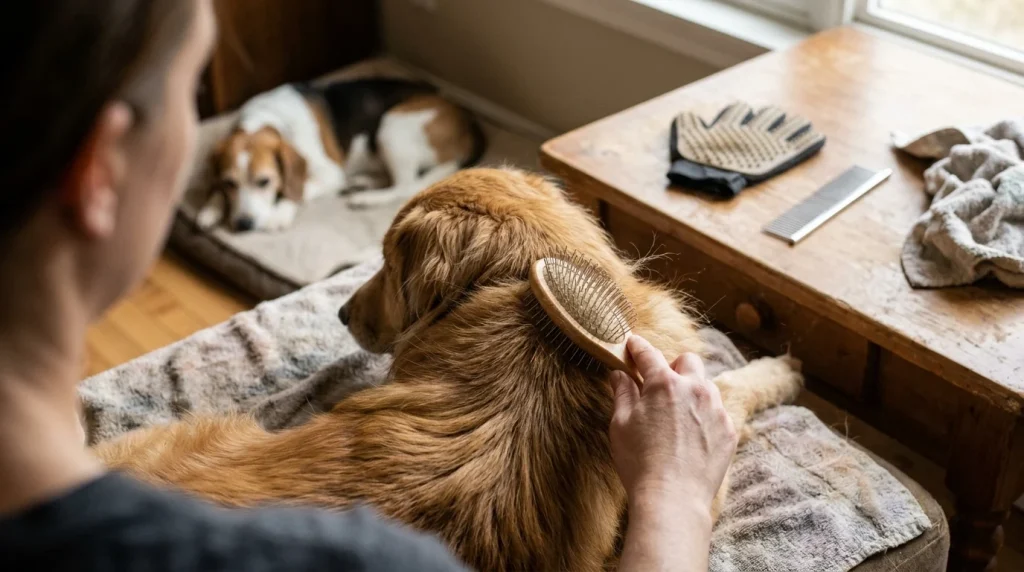
Hair length affects how deeply the brush needs to reach. Longer hair creates more distance between the brush surface and the skin, so short bristles may only groom the outer layer.
That can make a long-haired dog look brushed while leaving tangles underneath. Hidden tangles are especially common in friction areas such as behind the ears, under the legs, and around the collar.
Short-haired dogs need surface grooming
For many smooth-coated dogs, the goal is to lift loose hair and surface dirt without aggressively pulling at the coat. Rubber brushes, grooming mitts, and suitable bristle brushes are often practical choices.
The coat does not usually require long pins to reach through multiple layers. Gentle tools can also make frequent grooming easier for dogs that dislike heavy pressure.
Long-haired dogs need deeper access
Long hair needs a brush that can work through the coat rather than glide only across the top. Pin brushes and slicker brushes may help, depending on the dog’s texture and tendency to tangle.
I also consider a comb an important checking tool for longer coats. If the comb catches repeatedly after brushing, the coat may not be fully worked through yet.
Practical tip: Don’t judge a brush only by how much hair you can see on its surface. Check whether the tool can reach the parts of the coat where loose hair and tangles actually collect.
Why does coat density matter as much as coat length?
A short coat can still be dense, and a long coat can be relatively light. Density changes how much resistance the brush encounters and whether loose hair sits near the surface or deeper inside.
This matters most with dogs that have a substantial undercoat. Their visible outer coat may look neat while large amounts of seasonal shed hair remain underneath.
Understanding double coats
A double-coated dog has two distinct layers: a protective outer coat and a softer insulating undercoat. The grooming challenge is reaching loose undercoat without unnecessarily damaging the outer layer.
Dogs such as many retrievers, shepherds, spitz-type breeds, and other heavy shedders can need different tools during normal maintenance and seasonal shedding periods. The same dog may also need a different grooming routine when shedding increases.
- Outer coat: Helps protect the skin and gives the dog its visible coat appearance.
- Undercoat: Can become packed with loose shed hair during seasonal coat changes.
- Brush reach: Must be sufficient to work through the outer layer without harsh pulling.
- Technique: Gentle section-by-section grooming often works better than repeatedly dragging a tool across the top.
This is one reason I don’t recommend choosing a deshedding tool solely because a dog sheds a lot. Heavy shedding doesn’t automatically mean every aggressive hair-removal tool is appropriate.
How does coat texture change brushing technique?
 Save
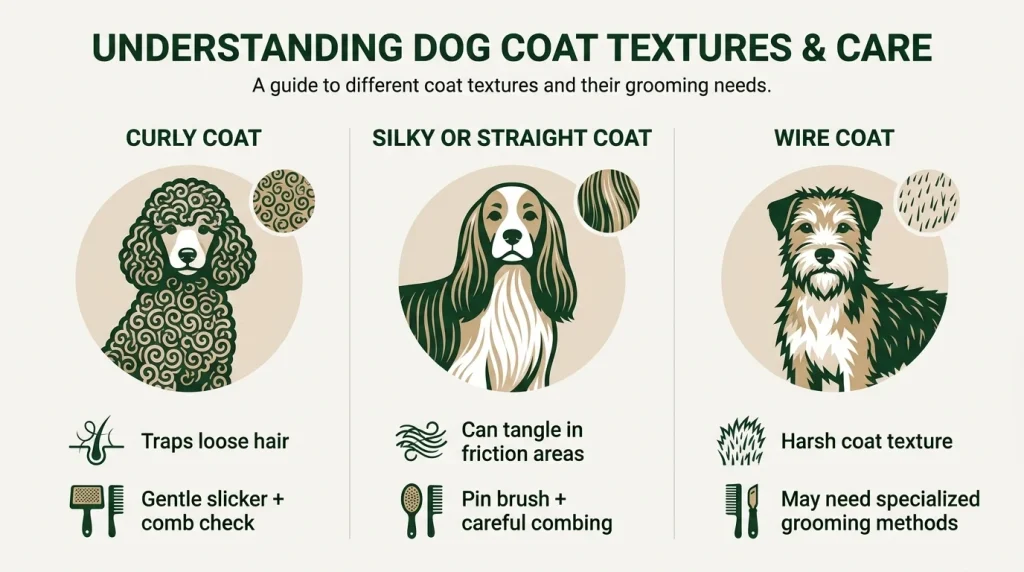
Texture affects how hairs slide against one another. Straight, silky hair behaves differently from tightly curled hair, and a harsh wire coat has different maintenance needs again.
The brush therefore has to match both the structure of the coat and the grooming goal. Removing loose hair, preventing mats, fluffing the coat, and maintaining texture are not always the same job.
Curly and easily tangled coats
Curly coats can hold loose hair inside the coat instead of allowing it to fall away. That trapped hair can contribute to tangles if regular grooming is skipped.
A slicker brush may be useful when handled gently, but I prefer checking the work with a suitable comb. The comb tells you whether tangles remain closer to the skin.
Silky and straight coats
Straighter coats can tangle, particularly where the hair is long and frequently rubs against the body or equipment. A pin brush can help smooth and separate the hair, while a comb can locate smaller tangles.
Pulling quickly through a knot is rarely productive. Hold the coat gently near the skin and work through the tangle gradually instead.
Wire coats
Wire-coated breeds have a different texture and may require specialized grooming methods to maintain the coat correctly. Brushing is only one part of care for some wire-coated dogs.
If you’re unsure about stripping, carding, or other breed-specific grooming methods, ask an experienced groomer or breed professional before experimenting with unfamiliar tools.
What happens when you use the wrong brush for a dog’s coat?
The wrong brush is not always dangerous, but it can be ineffective or uncomfortable. A tool may skim over the coat, snag repeatedly, fail to remove loose hair, or apply more pressure than necessary.
Common signs that the brush may be a poor match include repeated catching, the dog pulling away, little improvement after grooming, or loose hair remaining trapped beneath the top layer.
- Too shallow: The brush only smooths the visible surface.
- Too aggressive: The dog appears uncomfortable or the skin becomes irritated.
- Too widely spaced: Fine tangles and loose hair pass through untouched.
- Too densely packed: The tool may create unnecessary resistance in a coat that doesn’t need it.
- Wrong pin length: The brush either fails to reach the coat properly or reaches farther than needed.
Technique matters too. Even the correct brush can cause discomfort when pressed hard into the skin.
As of 2026, the best approach remains simple: match the tool to the coat, use gentle pressure, and adjust your routine when the dog’s coat condition changes.
How can you identify your dog’s coat before buying a brush?
 Save
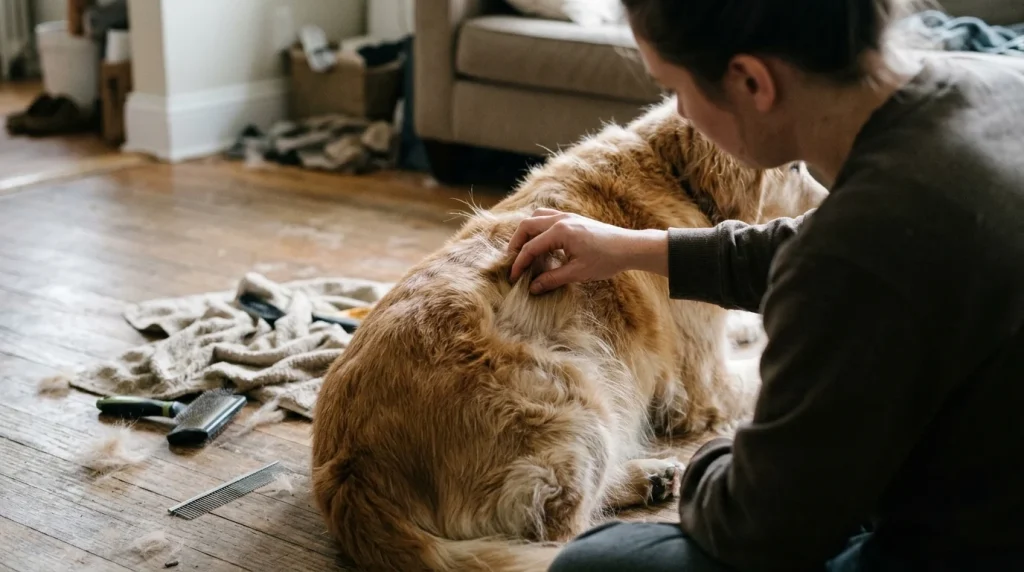
Start by looking beyond the breed description. Run your fingers through the coat and notice how many layers you can feel.
You should also pay attention to where the dog sheds, where tangles form, and whether the hair grows continuously. Those observations often tell you more about your immediate grooming needs than a generic product label.
- Check the length: Is the hair smooth and close to the body, medium length, or long?
- Check the layers: Can you feel a softer, denser undercoat beneath the outer hair?
- Check the texture: Is the hair straight, silky, curly, harsh, or wool-like?
- Check for tangles: Look behind the ears, under the legs, and other friction points.
- Watch shedding: Notice whether loose hair comes off mainly from the surface or in deeper clumps.
- Consider comfort: A useful brush should allow calm, controlled grooming without excessive pulling.
If your dog has a mixed or unusual coat, you may need more than one tool. One brush can remove loose surface hair while another handles deeper coat work or final detangling.
Should you use more than one dog brush?
Yes, many dogs benefit from a small grooming toolkit rather than one universal brush. This is particularly true for long, dense, double, or curly coats.
I think of the tools as having separate jobs. One may loosen hair, another may detangle, and a comb may confirm that the coat is clear down to the skin.
- Maintenance brush: Used for routine loose hair and general coat care.
- Detangling tool: Used carefully when knots begin to form.
- Comb: Used to check for hidden tangles and work smaller areas.
- Finishing tool: Used to smooth the visible coat after deeper grooming.
You don’t need every grooming tool on the market. Start with the tools that match your dog’s actual coat problems.
That approach also makes buying easier. Instead of searching for the “best dog brush,” you’re looking for the best tool for a specific grooming task.
Dog brush recommendations by coat need
If you’re ready to choose a brush, I would focus on the tool type first and the brand second. These are practical starting points for common coat needs.
Best for smooth coats
KONG ZoomGroom
★★★★☆
A flexible rubber-style grooming tool designed to help lift loose hair while massaging the coat. I’d consider this type of brush a sensible starting point for many short, smooth-coated dogs because it doesn’t need deep pin penetration.
Best for longer coats
Safari Wire Pin Brush
★★★★☆
A pin-brush style tool can provide more reach for longer coats that need regular separation and smoothing. I’d use this category of brush as part of a routine that also includes careful comb checks for hidden tangles.
Best for tangles
Safari Self-Cleaning Slicker Brush
★★★★☆
A slicker brush uses closely spaced pins to work through loose hair and developing tangles in suitable coat types. I’d choose a slicker carefully and use light pressure, especially on dogs with sensitive skin.
Frequently asked questions about coat type and dog brushes
Does every dog need a different type of brush?
Not necessarily, but every dog needs a brush appropriate for its coat. Dogs with similar coat structures can often use similar tools, while dogs with long, dense, curly, or double coats may need more than one grooming tool.
What brush is best for a short-haired dog?
Many short-haired dogs do well with a rubber grooming brush, grooming mitt, or suitable bristle brush. The best choice depends on coat density and shedding, so a short but heavily shedding double-coated dog may need different care than a smooth-coated dog.
Why does my dog still shed after brushing?
Brushing cannot stop the natural shedding process. It helps remove loose hair before it ends up around your home, but heavy seasonal shedding and a dense undercoat can require more frequent grooming with tools suited to the coat.
Can a slicker brush be used on every dog?
A slicker brush can be useful for several coat types, but it isn’t automatically the best choice for every dog. Smooth, short coats may not need its deeper pin action, and excessive pressure can make grooming uncomfortable.
How often should I brush my dog?
Brushing frequency depends largely on coat type, coat condition, and shedding. Some short coats may need only occasional maintenance, while long or easily tangled coats can require frequent grooming to prevent knots from becoming difficult to remove.
The bottom line: match the brush to the coat
Coat type matters because your dog’s hair determines what the brush needs to reach, remove, and avoid. Length, density, texture, and undercoat structure all change the grooming job.
My simplest advice is to stop looking for one universal “best” brush. Identify your dog’s coat first, choose the tool for the specific grooming task, and use gentle technique consistently.
A brush that suits your dog’s coat can make grooming faster, more comfortable, and more effective. That’s the real reason coat type should always come before brand, handle design, or marketing claims.

Thomas Cutter is a lifelong dog owner and the founder of FindOutAboutDogs.com. With over 10 years of hands-on experience owning multiple breeds, Thomas created this site to provide honest, research-based dog advice that real owners can actually trust.
