Why Goldendoodles Need Regular Brushing
Quick Answer
Goldendoodles need regular brushing because loose hair can get caught in their coats and form tangles. Brushing helps prevent painful mats and keeps debris from building up; PetMD’s Goldendoodle care guide recommends brushing at least several times weekly, while long or curly coats often need daily attention.
Signs your brushing routine needs attention
- Comb catches: Resistance beneath the fluffy surface can reveal hidden knots.
- Clumped hair: Small tangles gather behind the ears or beneath harness straps.
- Trapped debris: Leaves and dirt stay caught after outdoor play.
- Handling discomfort: Pulling away may signal tenderness that needs assessment.
Check before you finish
- Verify gently: Part the coat and check small sections with a metal comb; stop at resistance instead of pulling.
A Goldendoodle can look freshly brushed while knots hide underneath. I’d judge a grooming session by how comfortably the coat separates, rather than how fluffy the back looks.
This guide explains why brushing matters and how to build a manageable routine. You’ll also learn which tools help and when a tangle needs professional care.


Why does a Goldendoodle’s coat tangle so easily?
 Save
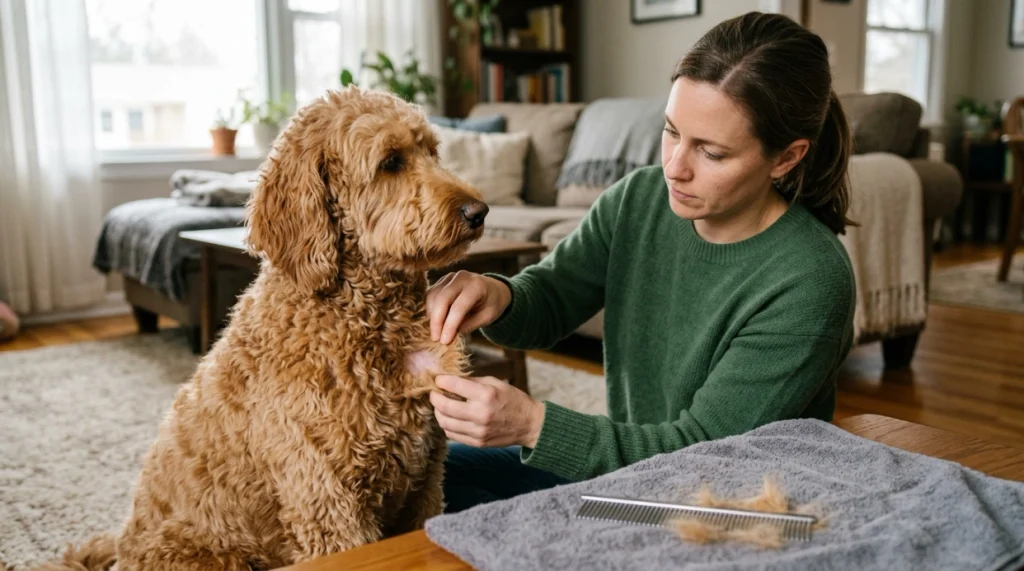
SaveGoldendoodle hair can twist together as the dog moves, especially when the coat grows long. Loose strands caught among curls add to those tangles.
Coat matting is the formation of tightly tangled clumps of hair. A mat is more compact than a loose knot and may sit close to the skin.
Goldendoodles inherit coat traits from both Poodles and Golden Retrievers. Coat texture varies, so two dogs with the same breed label may need different grooming routines.
- Curly coats: Check beneath the curls, where loose hair can remain hidden.
- Wavy coats: Watch longer areas that rub against equipment or neighboring hair.
- Straighter coats: Inspect feathering and dense patches even when the back looks smooth.
A low-shedding coat still needs maintenance. Finding little hair on the sofa doesn’t tell you whether the coat is free of knots.
Why the fluffy surface can fool you
A brush can skim over the ends without separating the hair underneath. That leaves an attractive finish above an untouched tangle.
My practical recommendation is to treat brushing and checking as separate jobs. The brush works through the coat, and the comb helps assess the result.
- Lift a small section instead of pressing harder.
- Look at the hair near its base.
- Check several areas, not just the easiest patch.
For a closer inspection routine, follow this guide to checking a dog’s coat for hidden mats.
What does regular brushing do besides prevent mats?
 Save
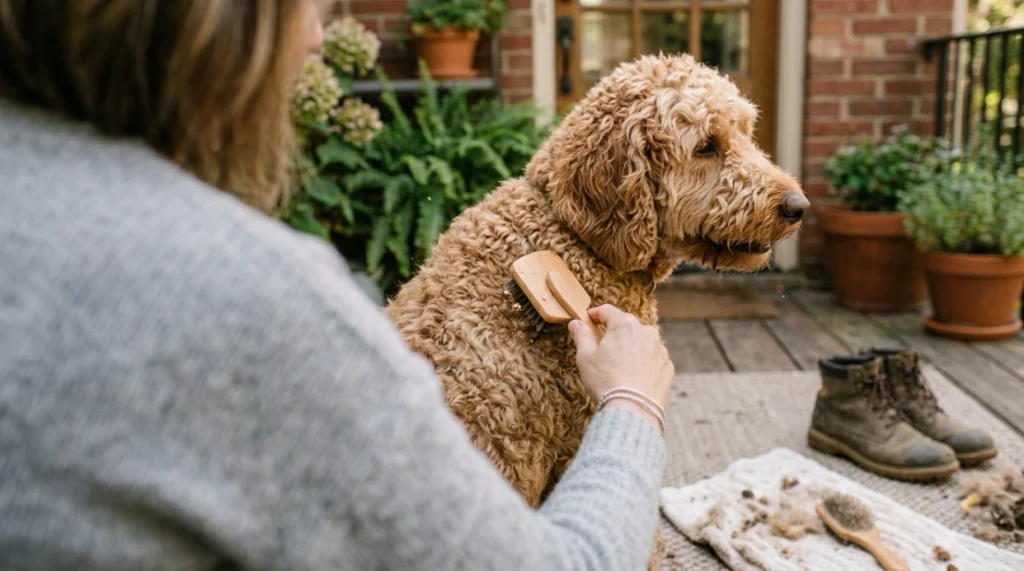
SaveBrushing removes loose material and gives you a regular chance to inspect your dog’s skin. It also helps distribute natural oils along the hair.
VCA’s coat-care guidance supports daily brushing for long or curly coats and regular checks for unusual skin changes.
- Cleaner hair: Remove loose dirt before it stays buried in the coat.
- Earlier observations: Notice a new bump or sore patch during gentle handling.
- More manageable grooming: Address loose tangles before they become compact.
- Handling practice: Pair comfortable brush contact with rewards.
Brushing doesn’t diagnose a skin condition or replace parasite prevention. A change you discover is a reason to investigate, not a reason to brush harder.
How often should you brush a Goldendoodle?
Plan daily attention for a long, curly Goldendoodle coat. A shorter, easier coat may need fewer full sessions, with brief checks between them.
The schedule below is a practical starting point, not a tested rule for every dog. Ask your groomer to adjust it to your dog’s current haircut.
| Coat or situation | Starting routine | What changes the plan |
|---|---|---|
| Long, curly coat | Brush and comb daily | Repeated snags suggest a technique or haircut review |
| Medium, wavy coat | Start daily; adjust with your groomer | Longer growth may increase upkeep |
| Short maintenance trim | Check daily; start with 3 brushing sessions weekly | Long ears, tails, and legs may need extra attention |
| After outdoor play | Add a brief coat inspection | Remove loose debris and assess new tangles |
Use results rather than the calendar alone
I’d keep a simple seven-day note of where the comb catches. That makes a vague problem, such as “constant tangles,” easier to discuss with a groomer.
- Record the location of each snag.
- Note whether the coat was recently wet.
- Write down any discomfort during handling.
- Review whether the same area keeps causing trouble.
For example, repeated knots beneath one harness strap suggest checking that area after walks. They don’t automatically mean the whole dog needs longer brushing sessions.
How do you brush deeply without hurting your dog?
Work through small sections with light pressure, then check each section gently. Reaching the hair near the skin does not mean scraping the skin.
Line brushing means parting the coat and working through one narrow layer at a time. This approach helps you keep track of what you’ve covered.
- Prepare a stable space. Use a nonslip surface where your dog can stand or rest comfortably.
- Check before brushing. Look for sore skin or compact mats that should stop the session.
- Choose an easy area. Start with a comfortable patch on the body rather than a sensitive knot.
- Lift a thin layer. Hold the surrounding hair aside so you can see the section clearly.
- Use short strokes. Work gently through the free ends, gradually approaching the base of the hair.
- Check with a comb. Guide it through the section without dragging it across the skin.
- Move methodically. Release another layer and repeat while your dog remains comfortable.
A snag means pause and inspect. Increasing force defeats the purpose of a gentle check.
For the full sequence, see how to brush a Goldendoodle.
Give the awkward areas their own checklist
Easy-to-reach body hair can take most of your attention. Use a checklist so less visible areas don’t disappear from the routine.
- Behind each ear.
- Where the collar or harness rests.
- Under the front legs.
- Along the backs of the legs.
- Around longer tail hair.
Keep limbs in a comfortable position when checking underneath. Ask a groomer to demonstrate safe handling if access feels awkward.
Which tools do you need for regular brushing?
A suitable slicker brush and a metal comb make a useful starting pair. Brush choice should reflect coat depth and your dog’s comfort.
- Slicker brush: Fine wire pins help separate hair in small sections.
- Metal comb: Use it to check whether the brushed section is clear.
- Dog-safe conditioning spray: An optional aid for loose tangles when used according to its label.
A spray cannot turn a tight mat into a safe brushing project. Avoid collecting stronger tools simply because one troublesome patch won’t release.
This explanation of why a dog brush and comb work together covers their different roles.
Check the tool before blaming the technique
Inspect grooming tools regularly for bent or damaged teeth. Replace anything that feels rough or catches unexpectedly.
- Remove collected hair after use.
- Clean tools according to the manufacturer’s directions.
- Let cleaned tools dry before storing them.
- Ask your groomer whether the brush reaches your dog’s coat depth.
For a more detailed selection guide, compare brush options for Goldendoodle coats.
What if your Goldendoodle dislikes brushing?
Start with brief, comfortable contact and reward your dog before asking for more. Sudden resistance also deserves a check for pain or tangled hair.
I’d set the first goal as one relaxed brush stroke. Finishing a whole leg can wait until that small step feels easy.
- Let your dog see the brush without immediately using it.
- Reward calm interest with a small treat.
- Touch an easy body area briefly.
- Try one light stroke and reward again.
- Build gradually across later sessions.
Pause when your dog repeatedly turns away or tries to leave. Holding the dog still for a long session can make the next attempt harder.
Practical goal: Keep the session easy enough that your dog can stay relaxed. If necessary grooming cannot happen comfortably, ask your groomer or veterinarian for help.
When should you stop brushing and call a professional?
 Save
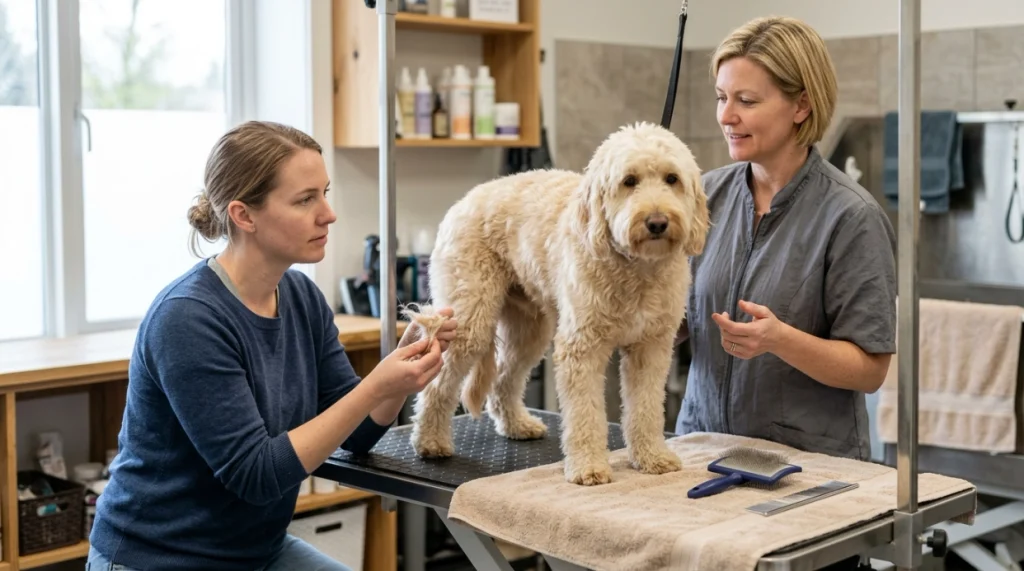
SaveStop when hair forms a tight clump, the skin moves with the knot, or your dog shows pain. Compact mats may need professional clipping.
PetMD’s guidance on matted fur explains that severe matting can damage skin and warns against cutting mats with scissors.
- Groomer: Seek help with firm mats on otherwise healthy-looking skin.
- Veterinarian: Arrange assessment for bleeding, swelling, sores, or marked tenderness.
- Bath delay: Resolve matting before washing, since water can tighten existing mats.
Don’t slide scissors beneath a mat, even if you think you can see a gap. Skin can be caught within the tangled hair.
Choose a haircut you can maintain
A shorter style can make regular care more manageable. Tell the groomer how much brushing your household can realistically maintain.
For your 2026 grooming plan, pair the haircut with a repeatable home routine. Many Goldendoodles need professional appointments around every four to eight weeks, adjusted individually.
- Ask which areas need attention between appointments.
- Bring your brush and comb for a demonstration.
- Discuss a shorter style if knots keep returning.
Two tools worth considering
If you’re putting together a basic kit, I’d start with these two tool types. The specific products below serve different jobs rather than replacing each other.
Affiliate disclosure: As an Amazon Associate, I earn from qualifying purchases.
The stars below are editorial suitability scores based on tool design and intended use, not customer ratings or hands-on testing. Confirm brush suitability with your groomer.
🪮 For section brushing
Andis Medium Firm Slicker Brush
★★★★☆ — Editorial suitability: 4/5
This is a medium-size slicker with firm bristles. I’d consider it for routine section work when a groomer confirms the firmness and reach suit the coat.
🔎 For checking finished sections
Andis 7.5-Inch Steel Comb, Item 68550
★★★★☆ — Editorial suitability: 4/5
This 7.5-inch steel comb combines coarse and fine tooth spacing. I’d choose it for checking brushed sections, with a smaller tool potentially easier around a tiny dog’s face.
Frequently asked questions
Do Goldendoodles need brushing if they barely shed?
Yes, low shedding doesn’t remove the need for regular brushing. Hair can remain caught within the coat, so check beneath the surface and set the routine around coat length and texture rather than hair on furniture.
Can you brush a Goldendoodle too much?
Yes, repeated scraping or forceful strokes can irritate the skin. Daily grooming should involve gentle, useful work rather than repeatedly brushing the same patch; stop if the skin looks irritated or your dog appears uncomfortable.
Should you brush a Goldendoodle before a bath?
Check and gently brush the coat before bathing to identify tangles. If you find compact mats, get professional advice before washing, because wetting matted hair can worsen the problem and make removal more difficult.
Does a short haircut mean brushing is unnecessary?
No, a short haircut reduces the amount of hair to maintain but doesn’t eliminate coat checks. Longer ears or tail hair may still tangle, so ask your groomer which areas need attention after the trim.
How can you tell whether brushing was thorough enough?
Check small sections with a metal comb after brushing, including less visible areas. The comb should move through without pulling; a snag means that section needs inspection, not extra force or an assumption that the whole coat is clear.
Make comfortable brushing part of the routine
Regular brushing helps keep a Goldendoodle’s coat manageable between grooming appointments. The useful habit is careful coverage, followed by a gentle check.
- Start with a schedule that suits the haircut.
- Work through small sections with light pressure.
- Stop when you find pain or compact matting.
At the next grooming appointment, bring your tools and ask for one demonstrated section. Knowing what a comfortable, finished section feels like makes the daily job much clearer.

Thomas Cutter is a lifelong dog owner and the founder of FindOutAboutDogs.com. With over 10 years of hands-on experience owning multiple breeds, Thomas created this site to provide honest, research-based dog advice that real owners can actually trust.
