What Is a Dog Grooming Glove? Uses, Benefits, and How It Works
Quick Answer
A dog grooming glove is a wearable grooming tool with soft rubber or silicone tips that lift loose fur, dirt, and surface debris while you pet your dog. It works especially well on short, smooth coats and can make brushing feel more comfortable for dogs that dislike traditional brushes. According to the American Kennel Club’s dog brush guide, grooming mitts help remove loose hair and dirt, although thicker coats may require additional tools.
What a Dog Grooming Glove Does
- Removes Loose Fur: Flexible tips collect some shed hair before it spreads around your home.
- Loosens Surface Dirt: Soft brushing helps lift dust, dander, and small debris from the coat.
- Provides Gentle Contact: The petting motion can feel less intimidating than a rigid brush.
- Supports Bathing: Water-safe gloves can help distribute dog shampoo across the coat.
- Helps Skin Checks: Close contact makes unusual bumps, tenderness, or irritated areas easier to notice.
Important Limitation
- Not a Detangling Tool: Grooming gloves cannot reliably remove tight mats or reach deep undercoat buildup.
If your dog runs away when you pick up a brush, a grooming glove may offer a gentler introduction to coat care. I like the simplicity of a tool that follows your hand movements rather than forcing you to hold another grooming instrument.
However, grooming gloves have limitations that many product descriptions overlook. This guide explains how they work, which coats benefit, and when a conventional brush remains necessary.


What Is a Dog Grooming Glove?
A dog grooming glove is a hand-shaped grooming accessory designed to remove loose hair and surface debris through gentle stroking. Most models feature flexible silicone or rubber projections across the palm and fingers.
Unlike a traditional brush, the glove follows your hand’s natural movement. This makes it easier to adjust pressure while working around your dog’s body.
Common names include pet grooming glove, grooming mitt, shedding glove, rubber grooming glove, and dog hair removal glove.
What Are Dog Grooming Gloves Made Of?
Most grooming gloves combine a textured grooming surface with a fabric or flexible backing. The materials determine how comfortably the glove fits and whether it works during bathing.
- Silicone tips: Flexible projections that help lift loose hair without rigid metal teeth.
- Rubber nodules: Rounded grooming surfaces that create gentle friction against the coat.
- Breathable mesh: Lightweight backing that helps reduce moisture buildup around your hand.
- Adjustable wrist strap: A fastening system that keeps the glove secure during movement.
- Water-resistant materials: Components that allow certain models to function during bathing.
Some gloves have individual finger sections, while others resemble a mitten. Fingered designs generally provide greater control around curved body areas.
However, a mitten can be simpler to put on. The better choice depends on your hand size and preferred grooming technique.
How Does a Dog Grooming Glove Work?
A grooming glove uses gentle friction between its flexible tips and your dog’s coat. As you stroke the fur, the tips loosen and collect some dead hair.
The process resembles petting, but the textured surface does additional work. Loose hairs may gather on the glove or fall away for easy collection.
How the Grooming Process Works
- Contact: The silicone or rubber tips touch the outer coat.
- Movement: Your hand follows the natural direction of hair growth.
- Friction: Flexible tips loosen surface hair and small debris.
- Collection: Some loose fur gathers around the textured projections.
- Removal: You peel or rinse away the collected hair.
Short-coated dogs usually show the clearest results because the grooming tips can contact more of the coat. Long or dense fur may prevent them from reaching trapped hair underneath.
My preferred way to judge a grooming tool is simple: look beyond the amount of hair collected. Check whether the coat remains comfortable, smooth, and free of hidden tangles.
What Are the Benefits of Using a Dog Grooming Glove?
Grooming gloves provide an accessible way to maintain many short-haired dogs. Their strongest advantages involve convenience, gentle handling, and routine coat maintenance.
1. Helps Manage Everyday Shedding
Regular grooming removes hair that is already loose. Collecting some of that hair before it falls can reduce the amount accumulating on furniture and clothing.
However, a grooming glove cannot stop normal shedding. Seasonal coat changes and natural hair growth continue regardless of the tool you use.
2. Makes Grooming Feel More Familiar
Some dogs become nervous around conventional brushes, especially when bristles catch their fur. A glove allows you to begin with a familiar petting motion.
This approach can help introduce grooming gradually. A nervous dog still needs positive reinforcement and the freedom to move away.
3. Helps Remove Surface Debris
Rubber and silicone grooming surfaces can loosen light dust, dead skin flakes, and small particles. They also help smooth short coats after routine grooming.
The ASPCA’s grooming recommendations explain that regular brushing supports coat cleanliness and helps distribute natural oils.
4. Makes Bathing More Convenient
A suitable waterproof grooming glove can help spread dog shampoo using gentle hand movements. It may also lift some loose fur while the coat is wet.
Always follow the manufacturer’s care instructions. Not every grooming glove is designed for prolonged water exposure.
5. Encourages Regular Skin Inspection
Close grooming contact gives you opportunities to notice changes beneath the fur. This is especially helpful when checking commonly overlooked areas.
- Unexpected lumps or bumps
- Red or irritated patches
- Fleas, ticks, or flea dirt
- Sensitive areas that cause flinching
- Unusual hair loss or bald spots
These observations are not a diagnosis. Contact your veterinarian when changes appear unusual, painful, or persistent.
Are Grooming Gloves Good for Every Dog Coat Type?
 Save
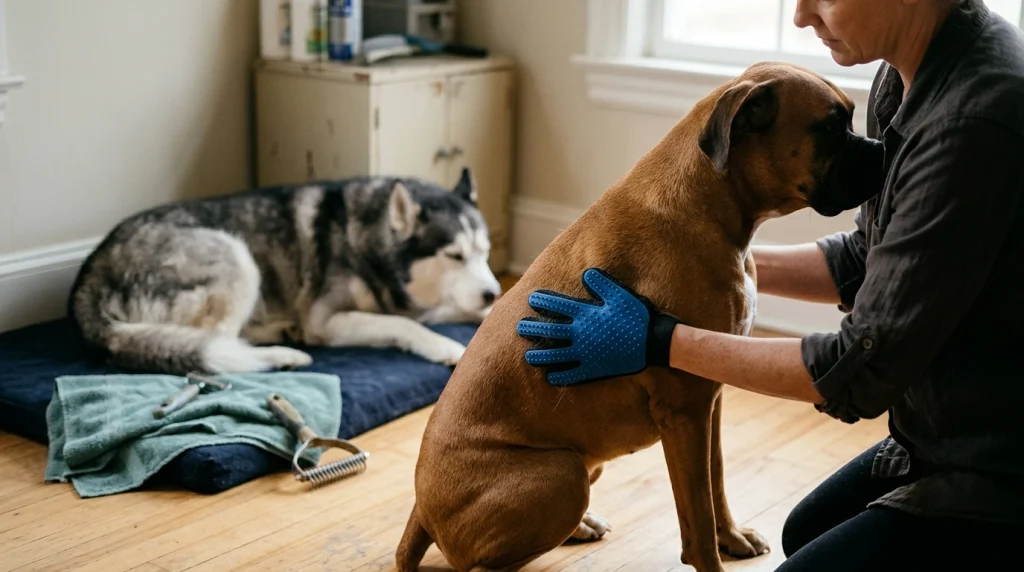
No. Grooming gloves work best on short and smooth coats because their flexible tips generally cannot penetrate dense or tangled fur.
Coat thickness matters as much as length. A short double coat can require substantially different grooming tools than a thin, smooth coat.
Dog Grooming Glove Suitability by Coat Type
| Coat Type | Glove Suitability | Additional Tool |
|---|---|---|
| Short, smooth | Excellent for routine loose-hair removal | Soft bristle brush |
| Short, dense | Useful for surface grooming | Suitable slicker or undercoat tool |
| Long, silky | Limited finishing use | Pin brush and metal comb |
| Curly or woolly | Poor for detangling | Slicker brush and comb |
| Thick double coat | Supplementary surface grooming | Undercoat rake and suitable brush |
For example, a Boxer may benefit from gentle glove grooming several times during the week. A Siberian Husky requires additional tools to reach loose hair trapped beneath the outer coat.
The VCA Animal Hospitals coat care guide also identifies flexible grooming gloves as useful for smooth-coated dogs. It recommends other brushes and combs for thicker or longer coat types.
For a more detailed routine, see our dog brushing schedule by coat type.
Dog Grooming Glove vs. Regular Brush: Which Is Better?
Neither tool is universally better. A grooming glove is convenient for gentle surface grooming, while traditional brushes handle a wider range of coat-maintenance tasks.
The right decision depends on whether your priority is comfort, loose-hair removal, or detangling.
| Feature | Grooming Glove | Traditional Brush |
|---|---|---|
| Main purpose | Loose surface hair | Varies by brush design |
| Handling | Natural petting motion | Handheld grooming tool |
| Detangling | Very limited | Effective with suitable brush |
| Dense undercoat | Limited penetration | Specialized tools available |
| Bathing | Useful if water-safe | Depends on brush type |
I recommend treating a grooming glove as one part of a grooming kit. It can make daily maintenance easier without replacing specialized tools.
For dogs with dense undercoats, follow a dedicated thick-undercoat brushing guide rather than relying on a glove alone.
How Do You Use a Dog Grooming Glove Correctly?
 Save
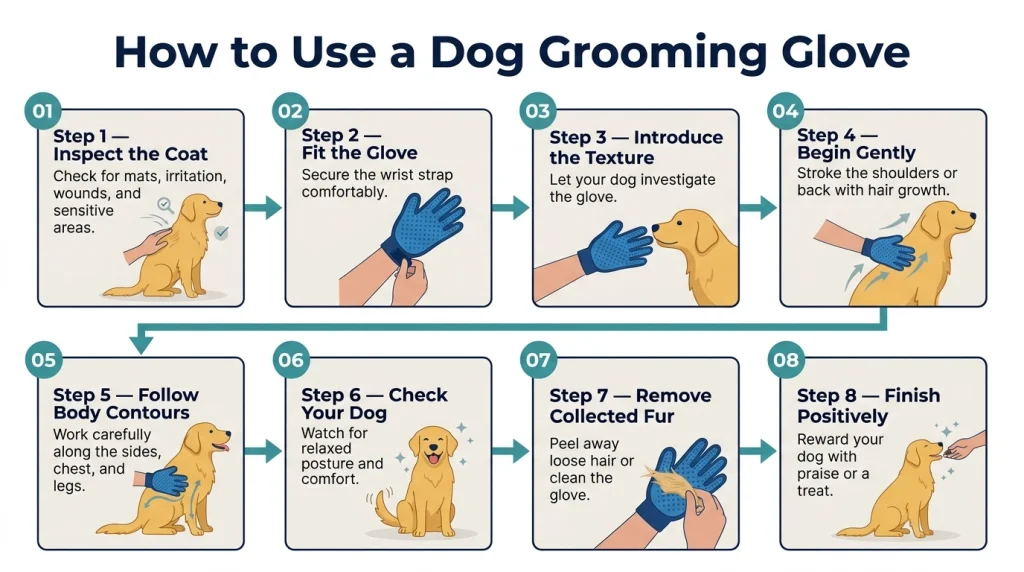
Put the glove on securely, introduce it calmly, and stroke your dog in the direction of hair growth. Use minimal pressure and stop whenever your dog becomes uncomfortable.
Begin with a relaxed dog and a clean, untangled section of coat. Keep the first session short.
Step-by-Step Grooming Instructions
- Inspect the coat: Look for mats, skin irritation, wounds, and sensitive areas.
- Fit the glove: Secure the wrist strap without restricting your movement.
- Introduce the texture: Let your dog investigate the glove before grooming.
- Begin gently: Stroke the shoulders or back in the direction of hair growth.
- Follow body contours: Work carefully along the sides, chest, and legs.
- Check your dog: Watch for relaxed posture and willingness to continue.
- Remove collected fur: Peel away loose hair or clean the glove as directed.
- Finish positively: End with praise, a small treat, or another reward your dog enjoys.
For a dog unfamiliar with grooming, even a few comfortable strokes count as progress. I would prioritize a calm ending over finishing the entire coat.
If your dog has never experienced brushing, use our first-time dog brushing guide to build confidence gradually.
Can You Use a Grooming Glove on Wet Fur?
Yes, if the manufacturer specifically approves wet use. A suitable glove helps massage shampoo through the coat while loosening surface debris.
During bathing, use slow movements and avoid delicate areas. Never scrub inflamed skin or force the glove through knots.
- Use shampoo formulated for dogs.
- Keep shampoo and water away from the eyes, nose, and ear openings.
- Massage gently without scraping the skin.
- Rinse thoroughly to remove shampoo residue.
- Clean and dry the grooming glove afterward.
Bathing is an area where gloves can be particularly convenient. A Whole Dog Journal grooming glove review also found these tools more useful during bathing than as complete replacements for dry brushing.
How Often Should You Use a Dog Grooming Glove?
For a healthy, smooth-coated dog, start with one or two gentle grooming sessions weekly. Increase frequency when loose hair becomes noticeable and your dog comfortably tolerates grooming.
The glove can be used more often, but additional sessions are not always necessary. Coat condition matters more than maintaining an exact schedule.
A Practical Starting Routine
- Short, smooth coat: Try one or two weekly sessions and adjust to shedding.
- Seasonal shedding: Add brief sessions when loose hair increases.
- Long or curly coat: Use the glove only as a supplement to regular brushing and combing.
- Grooming-sensitive dog: Begin with a few comfortable strokes and gradually increase.
- After outdoor activity: Check for burrs, debris, insects, and skin irritation before brushing.
Five comfortable minutes can be more useful than an extended session that leaves your dog frustrated. Stop earlier if repeated strokes cause irritation.
How Do You Choose the Right Dog Grooming Glove?
Choose a glove that matches your dog’s coat, your hand size, and your intended use. Flexible tips and comfortable handling matter more than an impressive-looking bristle count.
Important Features to Consider
- Tip flexibility: Soft, rounded silicone or rubber projections are preferable for gentle grooming.
- Hand fit: A secure glove allows accurate control without slipping.
- Wrist adjustment: Look for a strap that stays comfortable throughout a session.
- Wet-use compatibility: Confirm that the product supports bathing if you need that feature.
- Cleaning requirements: Choose a surface that releases trapped hair without excessive effort.
- Construction quality: Inspect stitching, seams, and textured surfaces for durability.
Do not assume that more silicone tips guarantee better results. Their spacing, flexibility, and suitability for the coat also affect performance.
For me, ease of control comes first. A glove that fits poorly makes consistent pressure harder to maintain.
What Are the Limitations and Common Mistakes?
Dog grooming gloves are useful, but they cannot solve every grooming problem. Understanding their limitations prevents unnecessary discomfort and incomplete coat care.
Common Mistakes to Avoid
- Using excessive pressure: Repeated hard rubbing can irritate the skin.
- Brushing over mats: A glove cannot safely separate tight, tangled hair.
- Ignoring the undercoat: Dense coats may hide loose hair beneath a smooth surface.
- Continuing through resistance: Pulling away, freezing, or growling means grooming should stop.
- Grooming damaged skin: Avoid direct contact with sores or inflamed areas.
- Skipping cleaning: Accumulated fur and residue make the glove less pleasant to use.
Watch your dog’s body language throughout every session. Repeated discomfort is a reason to reassess the tool or technique.
Our guide to recognizing dog brushing discomfort explains the warning signs in greater detail.
Are Dog Grooming Gloves Safe for Puppies and Sensitive Dogs?
Soft grooming gloves can be suitable for puppies and some sensitive dogs when used carefully. Choose a gentle texture, use minimal pressure, and make early sessions positive.
However, sensitive skin is not a reason to ignore redness or pain. Ask your veterinarian about appropriate grooming tools if your dog has an active skin condition.
When Should You Stop Grooming?
- Your dog repeatedly moves away or tries to escape.
- The skin becomes red or increasingly irritated.
- Your dog flinches or reacts painfully to touch.
- You discover sores, unusual swelling, or tight mats.
- Your dog freezes, growls, or shows defensive behavior.
Stop and investigate the cause before continuing. Seek professional help when pain, severe matting, or unexplained skin changes are present.
How Do You Clean and Maintain a Dog Grooming Glove?
 Save
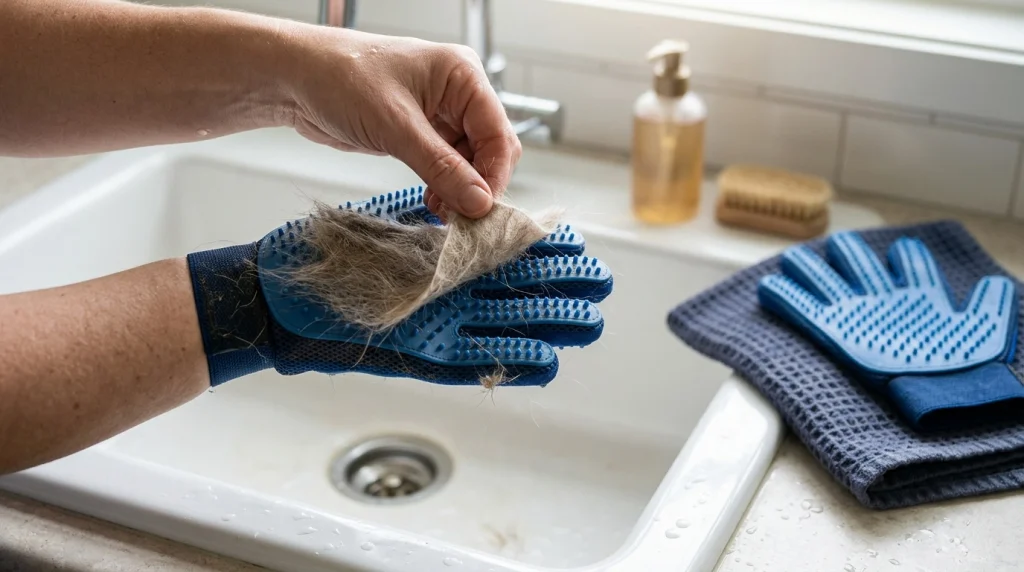
Remove loose fur after each session and clean the glove according to its manufacturer’s instructions. Proper drying helps keep the material in usable condition.
Simple Cleaning Steps
- Peel accumulated hair away from the silicone or rubber surface.
- Remove any remaining visible dirt and debris.
- Wash with mild soap and water if the product allows it.
- Rinse thoroughly to remove cleaning residue.
- Allow the glove to air-dry completely before storage.
- Inspect for damaged tips, loose stitching, or deteriorating material.
A damp glove stored in a closed container may develop unpleasant odors. Make sure both the grooming surface and fabric backing are dry.
Which Dog Grooming Gloves Are Worth Considering?
If you’re ready to choose a glove, start with established models that provide clear product specifications. These three options address different grooming priorities.
The suitability scores below are editorial, feature-based assessments rather than customer ratings or claims of independent hands-on testing. Confirm current specifications and availability before purchasing.
🏆 Best Versatile Option
HandsOn Animal Grooming Gloves
★★★★☆ 4.5/5 editorial fit
HandsOn gloves use flexible rubber nodules across the fingers and palms, with multiple glove sizes available. They are designed for both bathing and routine grooming.
I favor this design for owners who want greater hand control and a tool suitable for wet or dry coat maintenance.
💰 Best Simple Silicone Design
DELOMO Zoe Pet Grooming Gloves
★★★★☆ 4.3/5 editorial fit
The DELOMO Zoe features 255 soft silicone tips and an adjustable wrist fastening. Its textured surface is intended to collect loose fur through gentle stroking.
I consider it a practical starting option for owners who want straightforward coat maintenance without complicated equipment.
🛁 Best Flexible Grooming Mitt
Ancol Ergo Grooming Glove
★★★★☆ 4.1/5 editorial fit
The Ancol Ergo uses textured rubber-style nodules and supports wet or dry grooming. Its flexible design can be worn on either hand.
I would consider this option when easy handling and occasional bath-time grooming matter more than deep coat penetration.
Frequently Asked Questions About Dog Grooming Gloves
Do dog grooming gloves actually remove hair?
Yes. Dog grooming gloves can collect loose surface hair, especially on short-coated dogs. Their flexible rubber or silicone tips create friction that loosens hair during stroking, but they generally cannot remove deeply packed undercoat or tight mats as effectively as specialized grooming tools.
Can a dog grooming glove replace a regular brush?
A grooming glove may provide sufficient basic surface grooming for some smooth-coated dogs. However, dogs with thick, curly, long, or frequently tangled coats generally need appropriate brushes and combs for effective maintenance and mat prevention.
Are grooming gloves good for dogs that hate brushing?
They can be helpful because grooming with a glove resembles ordinary petting. Introduce the glove gradually, reward calm behavior, and keep sessions short, but remember that a glove will not automatically eliminate grooming-related fear or discomfort.
Can I use a grooming glove every day?
Daily use may be acceptable for a healthy dog that enjoys gentle grooming, but it is not necessary for every coat. Watch for irritation, avoid excessive pressure, and adjust the routine according to shedding, coat type, and your dog’s comfort.
Do grooming gloves work on long-haired dogs?
Grooming gloves may remove some loose surface hair from long coats, but they do not reliably separate tangles or reach dense undercoat. Long-haired dogs generally need a suitable pin or slicker brush and a comb as part of regular coat maintenance.
Final Verdict: Is a Dog Grooming Glove Worth Using?
A dog grooming glove is a useful addition to a grooming routine, particularly for short-haired dogs and owners who prefer gentle, hands-on handling. It can lift loose surface hair, assist with bathing, and make ordinary grooming sessions more approachable.
Its main limitation is depth. A glove cannot replace the tools needed to remove mats or maintain dense undercoats.
My recommendation is to choose a comfortable, flexible glove and use it as part of a coat-specific grooming routine. Begin with short sessions, watch your dog’s reactions, and prioritize comfort over the amount of fur collected.
Ready to get started? Choose a glove that fits your hand and suits your dog’s coat, then introduce it gradually with gentle strokes and positive rewards.

Thomas Cutter is a lifelong dog owner and the founder of FindOutAboutDogs.com. With over 10 years of hands-on experience owning multiple breeds, Thomas created this site to provide honest, research-based dog advice that real owners can actually trust.
