Best 10 Dog Breeds for Babies — Gentle Family Dogs Chosen by Real Experience
Quick Answer
The best 10 dog breeds for babies are calm, gentle, and easy to train. Top choices include Golden Retriever, Labrador Retriever, Cavalier King Charles Spaniel, Bulldog, Newfoundland, Bernese Mountain Dog, Beagle, Pug, Boxer, and Clumber Spaniel. The safest breed still needs adult supervision.
| Breed | Best Baby Fit | Main Caution |
|---|---|---|
| Golden Retriever | Most families | Heavy shedding |
| Cavalier King Charles Spaniel | Small calm homes | Fragile body |
| Newfoundland | Large gentle homes | Huge size |
Choose a baby-friendly dog breed if:
- You can supervise every dog and baby moment.
- You want a calm, patient family dog.
- You can train the dog before baby contact.
- You can match breed needs to your home.
Your baby is on the floor, waving tiny hands near a dog’s face.
Your heart wants the sweet photo. Your head wants safety first.
I’m Thomas Cutter, a lifelong dog owner and founder of FindOutAboutDogs.com. I’ve seen one truth hold up in real homes.
The right breed helps. But training and supervision matter more.
For parents with slightly older children, my guide to best dog breeds for families with toddlers goes deeper on rough play.
- No dog should ever stay alone with a baby.
- Calm, trained dogs are safer than cute dogs.
- Large gentle breeds can be safer than tiny breeds.
- Energy level matters as much as breed temperament.
- The best match fits your home, time, and routine.


What Makes a Dog Breed Good Around Babies?
A baby-friendly dog breed has a calm nature, low reactivity, steady confidence, and strong trainability. Babies make sudden sounds, wave hands, drop food, crawl oddly, and grab without warning. So the best breed is not just “friendly.” It must stay relaxed when life feels strange. Most experts agree that safe baby-dog homes rely on supervision, early training, and calm routines. Breed helps you start well, but daily habits keep everyone safe. If your dog growls, freezes, hides, or guards toys, pause baby contact and call a trainer.
Here’s why that matters. Babies cannot read dog body language.
A dog may look quiet but feel stressed. Quiet stress can still become a bite.
The CDC dog safety guide says young children need supervision around dogs. That includes family pets.
You might be thinking a gentle breed solves the risk. It helps, but it does not replace adults.
Never leave any dog alone with a baby. Not even for one minute.
When I see baby-dog problems, the issue is often missed warning signs. That taught me to value calm space.
Now let’s look at the breeds that fit best.
What Are the Best 10 Dog Breeds for Babies?
The best 10 dog breeds for babies are breeds with gentle temperaments, stable nerves, and family-focused habits. Golden Retrievers and Labrador Retrievers suit most active homes. Cavaliers, Pugs, and Bulldogs suit calmer homes. Newfoundlands and Bernese Mountain Dogs suit families with more space. Beagles, Boxers, and Clumber Spaniels work well when parents train them early. No breed is perfect for every baby. The best choice depends on size, grooming, energy, noise, and your daily time. Use this list as a short list, then meet real dogs before you choose.
Most experts agree that breed is only one part. The dog’s age and training matter too.
A calm adult dog can be easier than a wild puppy. Puppies bite, jump, and chew.
Golden Retriever — Baby-Friendly Dog Breed With Gentle Patience
 Save
Save| Weight | 55–75 pounds |
| Height | 21.5–24 inches |
| Lifespan | 10–12 years |
| Energy Level | High |
| Grooming Need | Moderate |
| Shedding | Heavy seasonal shedding |
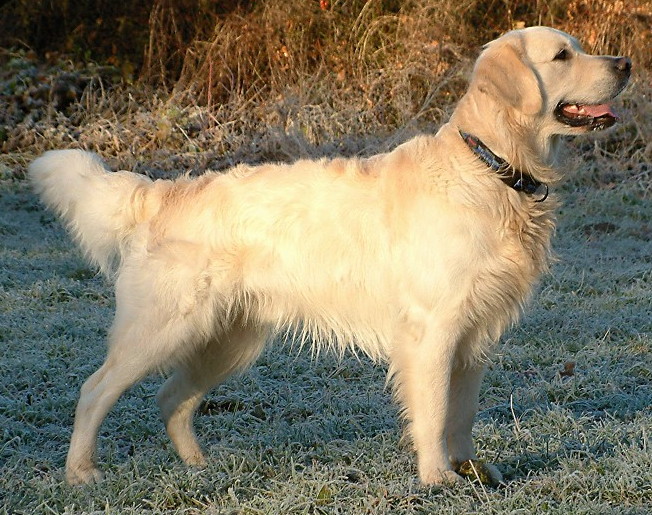
The Golden Retriever is a gentle family dog known for patience and soft handling. This medium-large breed weighs 55–75 pounds and has a warm, steady nature. Goldens often adapt well to baby noise and family change. They suit active homes that can manage exercise and shedding.
Golden Retrievers have soft eyes, feathered tails, and dense golden coats. Their faces often look kind before they even move.
Most people expect a happy dog. What surprises many parents is their careful mouth.
“Our Golden pauses before stepping near the baby mat. He waits like he knows it matters.”
— Rachel M., Golden Retriever owner for 6 years
- Very patient with family noise
- Easy to train early
- Strong bond with children
- Sheds heavily in season
- Needs daily outdoor exercise
- Puppies mouth during play
Best for: Active parents · First-time owners · Homes with yards
Labrador Retriever — Baby-Friendly Dog Breed With Playful Stability
| Weight | 55–80 pounds |
| Height | 21.5–24.5 inches |
| Lifespan | 11–13 years |
| Energy Level | High |
| Grooming Need | Low |
| Shedding | Moderate to heavy |
The Labrador Retriever is a sturdy baby-friendly dog breed known for warmth, play, and trainability. Labs weigh 55–80 pounds and have short coats that are easy to brush. They love family routines and learn rules fast. They suit active homes that can handle puppy energy.
Labs have broad heads, kind eyes, and thick otter-like tails. Their coats come in black, yellow, and chocolate.
You expect Labs to play. The wow part is how fast they learn family rhythm.
“Our Lab brings toys to the baby gate, then drops them. He never jumps near her.”
— James T., Labrador Retriever owner for 5 years
- Strong and steady body
- Quick learner with rules
- Short coat needs less care
- Puppies chew for months
- Strong tail can hit babies
- Needs firm food control
Best for: Active families · Outdoor homes · Parents wanting easy grooming
Cavalier King Charles Spaniel — Baby-Friendly Dog Breed for Calm Homes
| Weight | 13–18 pounds |
| Height | 12–13 inches |
| Lifespan | 12–15 years |
| Energy Level | Low to moderate |
| Grooming Need | Moderate |
| Shedding | Moderate |
The Cavalier King Charles Spaniel is a small baby-friendly dog breed known for soft manners. Cavaliers weigh 13–18 pounds and love close human contact. They are calm, sweet, and easy to manage indoors. They suit gentle homes where adults protect their small bodies.
Cavaliers have silky ears, round eyes, and soft feathered coats. Their face gives them a gentle toy-like look.
Most small dogs can feel sharp around babies. Cavaliers often default to cuddling instead.
“Our Cavalier lies beside the crib during naps. He waits for us before moving closer.”
— Laura B., Cavalier owner for 4 years
- Calm in small homes
- Loves gentle close contact
- Low exercise demand
- Small body needs care
- Can develop heart issues
- Dislikes long alone time
Best for: Apartment families · Calm parents · Gentle baby routines
Bulldog — Baby-Friendly Dog Breed With Low-Energy Patience
| Weight | 40–50 pounds |
| Height | 14–15 inches |
| Lifespan | 8–10 years |
| Energy Level | Low |
| Grooming Need | Low coat care, daily fold care |
| Shedding | Moderate |
The Bulldog is a low-energy baby-friendly dog breed known for patience and calm indoor life. Bulldogs weigh 40–50 pounds and have a sturdy, low body. They often enjoy slow family time more than wild play. They suit parents who want a mellow companion.
Bulldogs have wide heads, thick shoulders, and loose facial folds. Their funny rolling walk makes babies stare.
You may expect a tough dog. The surprise is how much they love slow naps.
“Our Bulldog sleeps through bottle feeds. The baby can cry, and he just sighs.”
— Priya K., Bulldog owner for 5 years
- Calm in small spaces
- Needs short daily walks
- Hard to knock over
- Overheats in warm weather
- Face folds need cleaning
- Vet costs can rise
Best for: Calm homes · Apartment parents · Low-exercise families
Newfoundland — Baby-Friendly Dog Breed With Giant Gentleness
 Save
Save| Weight | 100–150 pounds |
| Height | 26–28 inches |
| Lifespan | 9–10 years |
| Energy Level | Moderate |
| Grooming Need | High |
| Shedding | Heavy seasonal shedding |
The Newfoundland is a giant baby-friendly dog breed known for calm, watchful gentleness. Newfoundlands weigh 100–150 pounds and move slowly around family members. They were bred for hard water work and rescue. They suit large homes that can manage drool, coat care, and size.
Newfoundlands look like soft bears with deep coats and huge heads. Their eyes often seem calm and wise.
You expect the size to feel risky. The wow factor is their slow careful movement.
“Our Newfie backs away when the baby crawls toward her. She gives space first.”
— Sandra L., Newfoundland owner for 8 years
- Very calm around noise
- Protective without sharpness
- Gentle with small children
- Drool needs daily cleanup
- Huge body needs space
- Heavy coat mats fast
Best for: Large homes · Calm families · Parents wanting gentle giants
Bernese Mountain Dog — Baby-Friendly Dog Breed With Soft Strength
| Weight | 70–115 pounds |
| Height | 23–27.5 inches |
| Lifespan | 7–10 years |
| Energy Level | Moderate |
| Grooming Need | Moderate to high |
| Shedding | Heavy |
The Bernese Mountain Dog is a large baby-friendly dog breed known for soft strength. Berners weigh 70–115 pounds and often bond deeply with family. They are calm, steady, and gentle indoors when trained. They suit homes with space, time, and grooming patience.
Berners have thick tri-color coats with rust, white, and black markings. Their chest blaze looks bright and bold.
You expect a working dog to be busy. Many Berners become calm house shadows.
“Our Berner checks the nursery, then lies by the door. She never crowds the baby.”
— Megan R., Bernese Mountain Dog owner for 4 years
- Soft nature with family
- Calm after puppy years
- Strong but not frantic
- Shorter average lifespan
- Heavy shedding year-round
- Needs cool weather care
Best for: Spacious homes · Gentle routines · Cool-climate families
Beagle — Baby-Friendly Dog Breed With Pack-Loving Joy
| Weight | 20–30 pounds |
| Height | 13–15 inches |
| Lifespan | 10–15 years |
| Energy Level | Moderate to high |
| Grooming Need | Low |
| Shedding | Moderate |
The Beagle is a cheerful baby-friendly dog breed known for social pack behavior. Beagles weigh 20–30 pounds and have sturdy bodies for family life. They love being near people and often enjoy busy homes. They suit parents who can manage barking and scent chasing.
Beagles have soft ears, bright eyes, and short tricolor coats. Their face often looks curious and sweet.
Most people know Beagles follow scents. Many miss how much they need people.
“Our Beagle sits outside bath time. If the baby splashes, he tilts his head.”
— Nina F., Beagle owner for 5 years
- Sturdy medium-small body
- Very social with families
- Short coat stays simple
- Howls when bored
- Follows scents outdoors
- Needs secure fencing
Best for: Social homes · Families with yards · Parents who like hounds
Pug — Baby-Friendly Dog Breed for Small Cozy Homes
| Weight | 14–18 pounds |
| Height | 10–13 inches |
| Lifespan | 13–15 years |
| Energy Level | Low to moderate |
| Grooming Need | Low coat care, fold cleaning |
| Shedding | Moderate to heavy |
The Pug is a small baby-friendly dog breed known for charm, calm play, and close family bonds. Pugs weigh 14–18 pounds and adapt well to apartments. They enjoy people more than hard exercise. They suit families that can prevent heat stress and weight gain.
Pugs have round heads, curled tails, and deep facial wrinkles. Their wide eyes give them comic timing.
You expect a lap dog. The surprise is how well many Pugs read mood.
“Our Pug follows the stroller inside the house. He acts like tiny security.”
— Carla J., Pug owner for 6 years
- Great for apartments
- Loves close family time
- Needs short walks
- Overheats very fast
- Can gain weight easily
- Eyes need extra care
Best for: Small homes · Calm parents · Low-walk households
Boxer — Baby-Friendly Dog Breed for Active Families
| Weight | 50–80 pounds |
| Height | 21.5–25 inches |
| Lifespan | 10–12 years |
| Energy Level | High |
| Grooming Need | Low |
| Shedding | Low to moderate |
The Boxer is an active baby-friendly dog breed known for playful loyalty and family focus. Boxers weigh 50–80 pounds and need strong daily exercise. They can be sweet around babies when trained early. They suit active parents who set clear rules from day one.
Boxers have square heads, strong chests, and short shiny coats. Their brows make every look seem funny.
You expect chaos from a Boxer. The wow is their watchful family instinct.
“Our Boxer learned the baby blanket boundary fast. He drops toys outside it now.”
— Mark D., Boxer owner for 7 years
- Very loyal to family
- Low grooming burden
- Fun with growing kids
- Too bouncy without training
- Needs hard daily play
- Heat can stress breathing
Best for: Active parents · Yard homes · Families planning long-term play
Clumber Spaniel — Baby-Friendly Dog Breed With Slow Calm
 Save
Save| Weight | 55–85 pounds |
| Height | 17–20 inches |
| Lifespan | 10–12 years |
| Energy Level | Low to moderate |
| Grooming Need | Moderate |
| Shedding | Moderate to heavy |
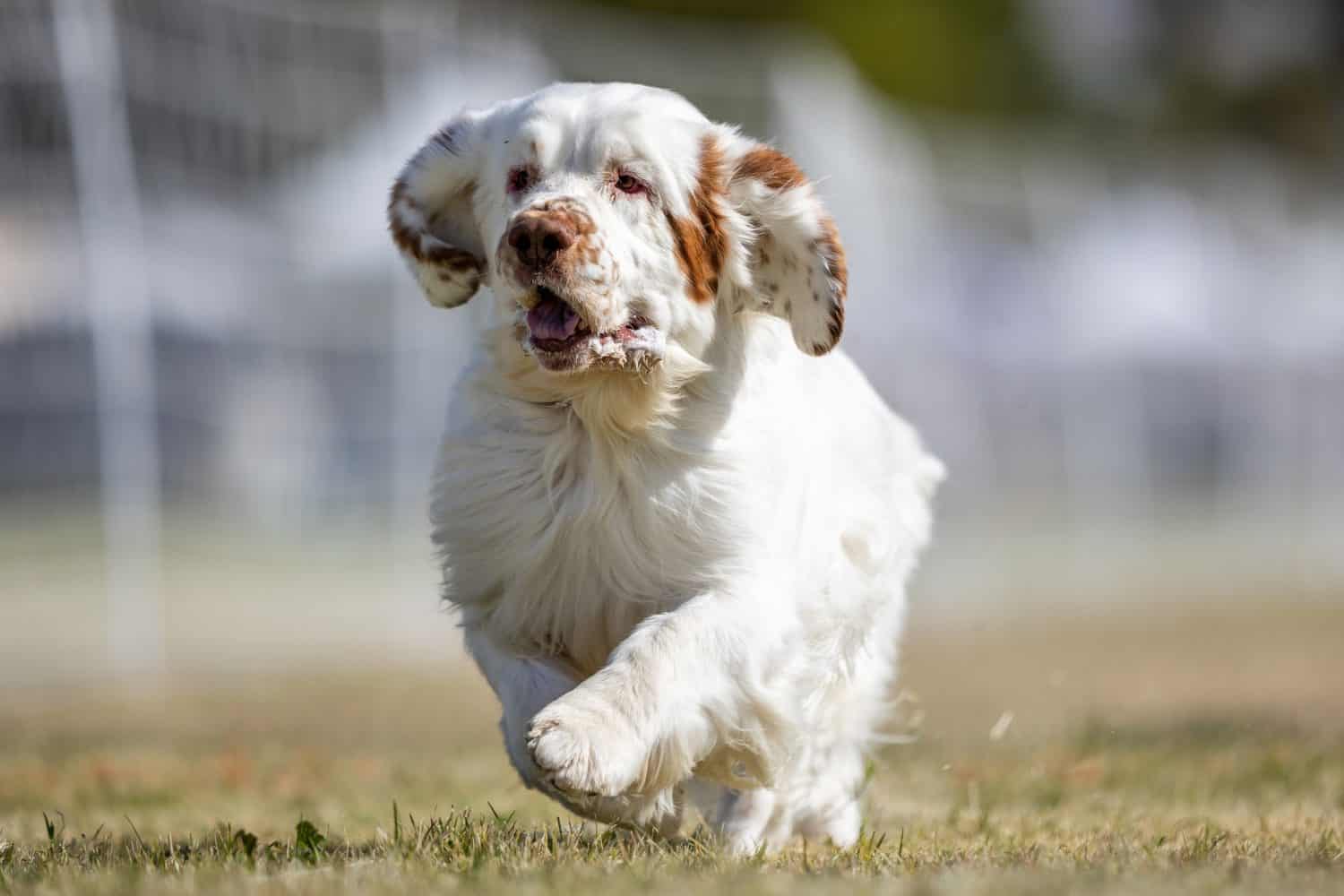
The Clumber Spaniel is a calm baby-friendly dog breed known for slow movement and steady affection. Clumbers weigh 55–85 pounds and have a low, heavy body. They enjoy gentle family life more than wild exercise. They suit homes that can handle drool and shedding.
Clumbers have white coats with lemon or orange markings. Their heavy brows give them a sleepy look.
You may expect a spaniel to race. Clumbers often stroll like old souls.
“Our Clumber moves slowly near the baby swing. He seems to know his body is heavy.”
— Helen B., Clumber Spaniel owner for 6 years
- Slow and gentle indoors
- Sturdy around family life
- Lower exercise needs
- Drools more than expected
- Sheds on soft furniture
- Can gain weight fast
Best for: Calm homes · Patient parents · Families wanting slow dogs
How Do These Baby-Friendly Dog Breeds Compare?
The easiest way to compare baby-friendly dog breeds is by size, energy, grooming, and risk points. Golden Retrievers and Labradors are the best all-rounders for active homes. Cavaliers, Pugs, and Bulldogs fit smaller homes better. Newfoundlands and Berners bring huge gentleness but need space. Beagles bring joy but more noise. Boxers need the most exercise and training. Clumber Spaniels are slow and calm but messy. Use this table as your first filter. Then meet the dog’s parents or foster home before you decide.
| Breed | Size | Energy | Best Fit | Watch For |
|---|---|---|---|---|
| Golden Retriever | Large | High | Most active homes | Shedding |
| Labrador Retriever | Large | High | Outdoor families | Chewing |
| Cavalier | Small | Low | Apartments | Fragility |
| Bulldog | Medium | Low | Calm homes | Heat |
| Newfoundland | Giant | Moderate | Large homes | Drool |
| Bernese Mountain Dog | Large | Moderate | Cool climates | Shorter lifespan |
| Beagle | Small-medium | Moderate-high | Social homes | Howling |
| Pug | Small | Low | Cozy homes | Breathing |
| Boxer | Large | High | Active homes | Jumping |
| Clumber Spaniel | Medium-large | Low-moderate | Calm homes | Drool |
You might be thinking the “best” breed is the top row. Here’s why that is too simple.
The best dog is the one your home can manage daily. A tired parent needs calm, not chaos.
Which Baby-Friendly Dog Breed Is Right for You?
The right baby-friendly dog depends on your home size, baby age, dog experience, grooming time, and energy level. If you want the safest all-round family pick, start with a Golden Retriever or Labrador Retriever. If you live in an apartment, look at a Cavalier, Pug, or Bulldog. If you want a giant calm dog, consider a Newfoundland or Bernese Mountain Dog. If you want a smaller social dog, Beagles can work well. If you need low chaos, skip high-energy puppies.
If you have a newborn, choose calm adult temperament first. Puppy cuteness can wait.
- If you are a first-time parent with space → Golden Retriever is safest.
- If you are active and outdoorsy → Labrador Retriever fits well.
- If you live in an apartment → Cavalier or Pug works better.
- If you want low energy → Bulldog or Clumber Spaniel fits.
- If you want a giant calm dog → Newfoundland is best.
- If allergies matter → see my guide to dog breeds for families with allergies.
When families choose by looks, trouble often follows. That taught me to match routine first.
Next, let’s fix the biggest myths parents hear online.
What Do Most People Get Wrong About Dogs and Babies?
Most people get one thing wrong about dogs and babies: they think breed alone decides safety. Breed matters, but it does not make a dog “baby-proof.” Any dog can bite when scared, hurt, trapped, or shocked. Babies pull, fall, scream, and grab. A good dog still needs space, training, rest, and adult help. The safest home uses baby gates, calm intros, reward-based training, and clear zones. Research and vet groups widely agree that supervision is the key safety rule.
But here’s the thing. A “good with kids” label can mislead parents.
That label often means older kids, not babies. Babies move and sound very different.
The AVMA dog bite prevention guide stresses supervision and careful child-dog contact. That advice should guide every breed choice.
You might be thinking your dog has never snapped before. A new baby can still change stress.
Here is the honest scope. This article covers breed choice for family planning.
If your dog guards food, growls, or has bitten before, get professional help first.
How Should You Introduce a Dog to a Baby Safely?
You should introduce a dog to a baby slowly, calmly, and with full adult control. Start before the baby comes home by teaching place, leave it, gentle, and calm leash walking indoors. Bring home baby smells first. Keep the first meeting short and quiet. Reward calm behavior, then give the dog space. Never force sniffing, posing, licking, or close contact. Most experts agree that safe introductions happen in small steps, not one emotional first meeting.
- Train calm place before birth.
- Bring home baby scent first.
- Keep the dog leashed indoors.
- Reward quiet relaxed behavior.
- End the meeting before stress.
- Use gates for daily space.
When parents rush the first meeting, dogs can feel trapped. That taught me to keep it boring.
Boring is good. Boring means safe, calm, and easy to repeat.
If your child is older too, this guide to best family dog breeds for kids helps with later stages.
What Safety Rules Should Every Baby-Dog Home Follow?
Every baby-dog home should follow 5 rules: supervise, separate, train, manage food, and protect rest. Supervision means your eyes stay on both baby and dog. Separation means gates, crates, and closed doors create safe breaks. Training gives the dog clear jobs. Food management prevents guarding. Rest protection stops stress from building. The safest homes do not wait for a growl. They set rules before stress appears.
- Keep dog beds away from baby play zones.
- Feed the dog behind a gate.
- Never let babies crawl into crates.
- Reward calm dog behavior near baby gear.
- Stop contact when the dog turns away.
- Ask a trainer before problems grow.
You might be thinking gates feel strict. Here’s why they help.
Gates give dogs choice and babies safety. Choice lowers stress fast.
When I see calm dog-baby homes, space is usually planned. That taught me that management is kindness.
Conclusion
The best dog breeds for babies are calm, trainable, and steady.
Golden Retrievers, Labs, Cavaliers, Bulldogs, and Newfoundlands are strong starting points.
But no breed replaces training, gates, and adult eyes.
Right now, write down your home size, daily free time, and grooming limit. I’m Thomas Cutter, and that 2-minute list will narrow your best breed fast.
Frequently Asked Questions
What is the safest dog breed for a baby?
The safest dog breed for a baby is usually a calm, trained Golden Retriever or Labrador Retriever. Both breeds are gentle, sturdy, and easy to train. Still, no breed is safe without adult supervision, clear space, and slow baby introductions.
Are small dogs better for babies?
Small dogs are not always better for babies. Many small breeds feel fragile and defensive around grabbing hands. Calm small breeds like Cavaliers and Pugs can work well, but adults must protect them from rough baby contact.
Should I get a puppy when I have a baby?
A puppy can work, but it often adds stress. Puppies bite, jump, chew, and need potty training. Many families with babies do better with a calm adult dog that already has stable manners and known temperament.
Can any dog be trusted alone with a baby?
No dog should be trusted alone with a baby. Even a gentle family dog can react if startled, hurt, or trapped. The safest rule is simple: if an adult cannot watch, separate the dog and baby.
What dog breeds should I avoid with babies?
Avoid breeds or individual dogs that show guarding, fear, high prey drive, or poor bite control. Also avoid any dog with a bite history until a trainer assesses it. Temperament, training, and management matter more than breed name alone.
Thomas Cutter is a lifelong dog owner and the founder of FindOutAboutDogs.com. With over 10 years of hands-on experience owning multiple breeds, Thomas created this site to provide honest, research-based dog advice that real owners can actually trust.
