10 Best Brush for Dense Curly Coats for 2026: Mat-Free Results
The best brush for dense curly coats is the Chris Christensen Big G Slicker Brush — its long pins reach the skin through thick curls. We evaluated 10 brushes and combs, scoring each on detangling power, coat comfort, and durability. Most brushes look identical on paper but skim the surface and leave mats at the skin. Whether you need daily maintenance, mat rescue, or a finishing tool, this guide gives you one clear answer.


Quick Comparison: All 10 Products Ranked
| # | Product | Best For | Rating | Badge | |
|---|---|---|---|---|---|
| 1 | Chris Christensen Big G Slicker Brush | Large dense coats | 4.9/5 | Best Overall | Buy → |
| 2 | Hertzko Self-Cleaning Slicker Brush | Beginners, small to medium dogs | 4.7/5 | Best Budget | Buy → |
| 3 | Chris Christensen Mark VII Curved Slicker Brush | Show-style finishing, sensitive skin | 4.7/5 | Best Premium | Buy → |
| 4 | Safari Self-Cleaning Slicker Brush | Daily short sessions | 4.6/5 | Best Self-Cleaning | Buy → |
| 5 | Chris Christensen 7.5-Inch Greyhound Style Comb | Final tangle check | 4.6/5 | Best Finishing Comb | Buy → |
| 6 | GoPets Dematting Comb | Emergency mat work | 4.4/5 | Best Mat Removal | Buy → |
| 7 | Chris Christensen Oval 38 Pin Brush | Fluffing and styling | 4.4/5 | Best Pin Brush | Buy → |
| 8 | FURminator Undercoat deShedding Tool | Shedding doodle mixes | 4.3/5 | Best for Shedding Mixes | Buy → |
| 9 | Four Paws Magic Coat Professional Series Slicker Brush | Everyday curly mixes | 4.3/5 | Best Value Pick | Buy → |
| 10 | KONG Zoom Groom Multi-Use Brush | Sensitive dogs, wet grooming | 4.3/5 | Best Bath Brush | Buy → |
How We Chose These Brushes
What we evaluated
We compared 10 tools on pin or tooth design, head size, cleanup features, and the coat types each is built for, using manufacturer details and groomer guidance.
Our 3 scoring criteria
Detangling power, coat comfort, and durability. Each is scored out of 5 and averaged into the overall rating shown on every card.
Expert guidance reviewed
We cross-checked picks against NBC Select’s expert-sourced dog brush roundup and professional groomer guides. No individual expert is quoted here.
What we cut, and why
We left out stiff human-style hairbrushes and short bristle brushes, because they skim the surface of dense curls and leave tangles at the skin.
What to Look for When Buying a Brush for Dense Curly Coats
Dense curls hide tangles from the surface, so the wrong tool can look like it is working while mats form underneath. These four factors separate brushes that reach the skin from brushes that only polish the top.
1. Pin Length and Density
Long, fine pins are what let a brush travel through thick curls to the base of the coat. Short pins ride on top and leave the undercoat tangled. Match pin length to coat depth, and read our guide on how coat density affects brush choice if you are unsure how dense your dog really is.
2. Tool Type: Slicker, Pin, or Comb
A slicker brush detangles, a pin brush finishes, and a comb verifies. Dense curly coats usually need a slicker plus a comb, with a pin brush as an optional extra for styled trims.
3. Comfort and Skin Safety
Fine wire pins can scratch if the pressure is wrong, especially on thin-skinned dogs. Polished pin tips, a curved head, and a cushioned base all reduce the risk. Sensitive dogs often do better with a gentler rubber or pin option.
4. Handle and Cleanup
Curly coats clog brushes fast. A comfortable handle matters for long sessions, and a self-cleaning button saves time when the pins fill up. Heavier grooming tools are worth it only if you will actually use them often.

Chris Christensen Big G Slicker Brush — Groomer-grade reach for thick curls
Best for: Large, thick curly and doodle coats
If your dog’s coat is thick enough to swallow a standard brush, the Big G is built for you. The oversized head and long pins are designed to reach the skin through dense curls instead of skimming the surface, which is where most tangles start. Groomers who work on poodles and doodles favor this style because one pass covers more coat. It suits large and standard-size curly dogs best, and the wider head makes quick work of legs and bodies. The trade-off is size: the head feels clumsy around faces and paws, so pair it with a small slicker for detail work.
- Oversized head covers large bodies quickly
- Long pins reach through dense curls
- Professional groomer-style build
- Head too big for faces and paws
- Premium cost; overkill for small dogs
4.9/5
4.8/5
4.9/5

Hertzko Self-Cleaning Slicker Brush — Easy cleanup and a low-risk starter
Best for: New owners and everyday maintenance
Most dense-coat owners do not want to buy a groomer-grade brush just to find out whether their dog tolerates brushing. The Hertzko self-cleaning slicker is the low-risk starting point: fine bent pins loosen tangles, and a retractable button releases the collected hair in one push. That cleanup feature matters with curly coats, where trapped fur clogs a normal slicker within minutes. It works well for small to medium curly dogs and everyday maintenance. The limitation is pin stiffness on very thick coats; heavy mats need a comb first, and pressing too hard can scratch sensitive skin.
- Self-cleaning button clears hair instantly
- Fine bent pins loosen everyday tangles
- Low-risk entry point for new owners
- Pins can feel stiff on thick curls
- Not built for heavy mats
4.8/5
4.7/5
4.6/5

Chris Christensen Mark VII Curved Slicker Brush — Curved head built for curly contours
Best for: Finishing curly coats on sensitive skin
Curly coats punish flat brushes because the head cannot follow the body. The Chris Christensen Mark VII Curved Slicker has a gently curved head with polished pin tips, so it follows the contour of ribs and haunches while staying kind to skin. NBC Select’s expert-sourced roundup named it best for curly-haired dogs, and professional groomers use this style for finishing work. It rewards patience and a line-brushing routine. The catch is cost: it sits at the premium end, and the pins are less forgiving than self-cleaning models if you brush with a heavy hand.
- Curved head follows ribs and haunches
- Polished pin tips are gentler on skin
- Named top curly-dog pick by NBC Select
- Premium cost
- Pins unforgiving under heavy pressure
4.6/5
4.9/5
4.7/5

Safari Self-Cleaning Slicker Brush — Fast daily detangling with easy cleanup
Best for: Daily brushing of small curly dogs
Dense curly coats shed little into the air, which means loose hair stays trapped in the coat and in the brush. The Safari self-cleaning slicker pairs fine wire pins with a push-button release, so you can clear the brush without picking at it. It suits owners who brush in short daily sessions and want fast cleanup between sections. Expect good everyday detangling on poodle mixes and bichon types. The drawback is that the compact head covers less ground on large dogs, and stubborn mats close to the skin still need a comb or dematting tool.
- Push-button release for quick cleanup
- Fine wire pins detangle daily knots
- Compact head suits small to medium dogs
- Small head slow on large dogs
- Struggles with mats near the skin
4.6/5
4.6/5
4.5/5

Chris Christensen 7.5-Inch Greyhound Style Comb — The comb that exposes missed tangles
Best for: Checking every section after brushing
A slicker brush can leave tangles behind in thick curls, and a comb is how you find them. The Chris Christensen 7.5-inch Greyhound-style comb is a professional staple, and NBC Select’s experts named it their best dog comb for its rounded teeth and smooth glide. Run it through each section after the slicker; if it snags, you have missed a tangle. It works on dogs of any size but shines on legs, ears, and beards. The limitation is that it will not break up real mats, and the tooth spacing is less helpful in a very thick undercoat.
- Rounded teeth glide through curls
- Reveals tangles the slicker missed
- Handles legs, ears, and beards well
- Will not break up real mats
- Struggles in very thick undercoat
4.4/5
4.7/5
4.8/5

GoPets Dematting Comb — Rescue tool for stubborn tangles
Best for: Breaking up tangles before they become mats
Every owner of a dense curly dog eventually meets a tangle that no slicker will touch. The GoPets dematting comb is a two-sided tool with sharp-edged teeth designed to split tangles before they become pelts. Use it only on dry coat, holding the hair at the base so the skin is not pulled. It is a rescue tool for armpits, behind the ears, and the collar line, not a daily brush. The risk is real: the blades can cut coat or skin if you rush, so work in short strokes and stop at tight mats.
- Splits stubborn tangles before they harden
- Two-sided teeth suit different tangle sizes
- Effective on armpits and behind ears
- Blades can cut skin if rushed
- Not designed for daily use
4.8/5
4.0/5
4.4/5
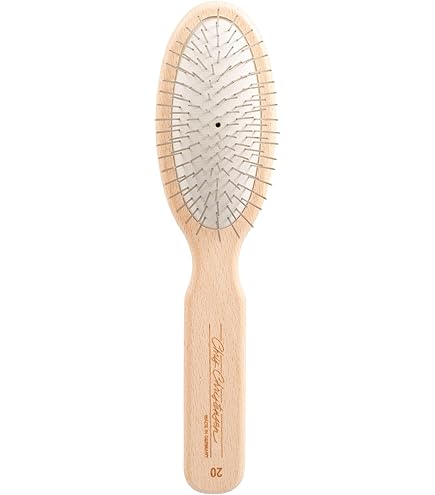
Chris Christensen Oval 38 Pin Brush — Finishing brush that keeps curls fluffy
Best for: Styled or show-trim curly coats
Slickers do the heavy lifting, but a pin brush finishes a curly coat without flattening it. Chris Christensen’s Oval 38 Pin Brush is a professional-style pin brush with a cushioned oval head that spreads pressure across the coat. Use it after detangling to fluff the curls and spot any remaining knots. It suits owners who style their dog and want volume rather than just tangle removal. The trade-off is that pins alone cannot dislodge tangles close to the skin, so treat it as a finisher rather than a detangler.
- Cushioned oval head spreads pressure evenly
- Fluffs curls without flattening them
- Great finishing tool for styled coats
- Cannot detangle close to the skin
- Pins alone miss tight knots
4.0/5
4.6/5
4.6/5

FURminator Undercoat deShedding Tool — For curly mixes with a shedding undercoat
Best for: Doodle mixes with retriever-type undercoat
Not every dense curly coat is purely curly; many doodle mixes inherit a shedding undercoat from a retriever parent. For those dogs, the FURminator undercoat deShedding tool pulls loose underfur that a slicker leaves behind. NBC Select’s experts recommend FURminator’s deShedding line for heavy shedders, and the stainless steel edge is designed to avoid cutting the topcoat. Use it lightly and only on a mat-free coat. The caution: on true poodle-type curls it is unnecessary and can pull healthy hair, so skip it if your dog barely sheds.
- Pulls loose underfur slickers often miss
- Stainless steel edge, rubber-grip handle
- Useful for doodles with shedding undercoat
- Unneeded for low-shedding poodle-type curls
- Can pull healthy hair if overused
4.2/5
4.0/5
4.6/5
Four Paws Magic Coat Professional Series Slicker Brush — Dependable everyday slicker for curly mixes
Best for: Multiple brushing sessions every week
A dependable middle-ground slicker is worth having for anyone who brushes several times a week. The Four Paws Magic Coat Professional Series slicker has an ergonomic handle and bent wire pins designed to remove tangles and loose hair in medium to long coats. It handles most curly mixes comfortably and is easy to find. Choose it if you want solid daily performance without a specialty-grooming investment. The limit is pin length: thick, deep curls may need a longer-pinned model, and the pins are not as polished as the premium Christensen brushes.
- Ergonomic handle suits frequent brushing
- Bent wire pins lift tangles and loose hair
- Widely available and easy to replace
- Deep curls may need longer pins
- Pins less polished than premium brushes
4.3/5
4.4/5
4.2/5
 Save
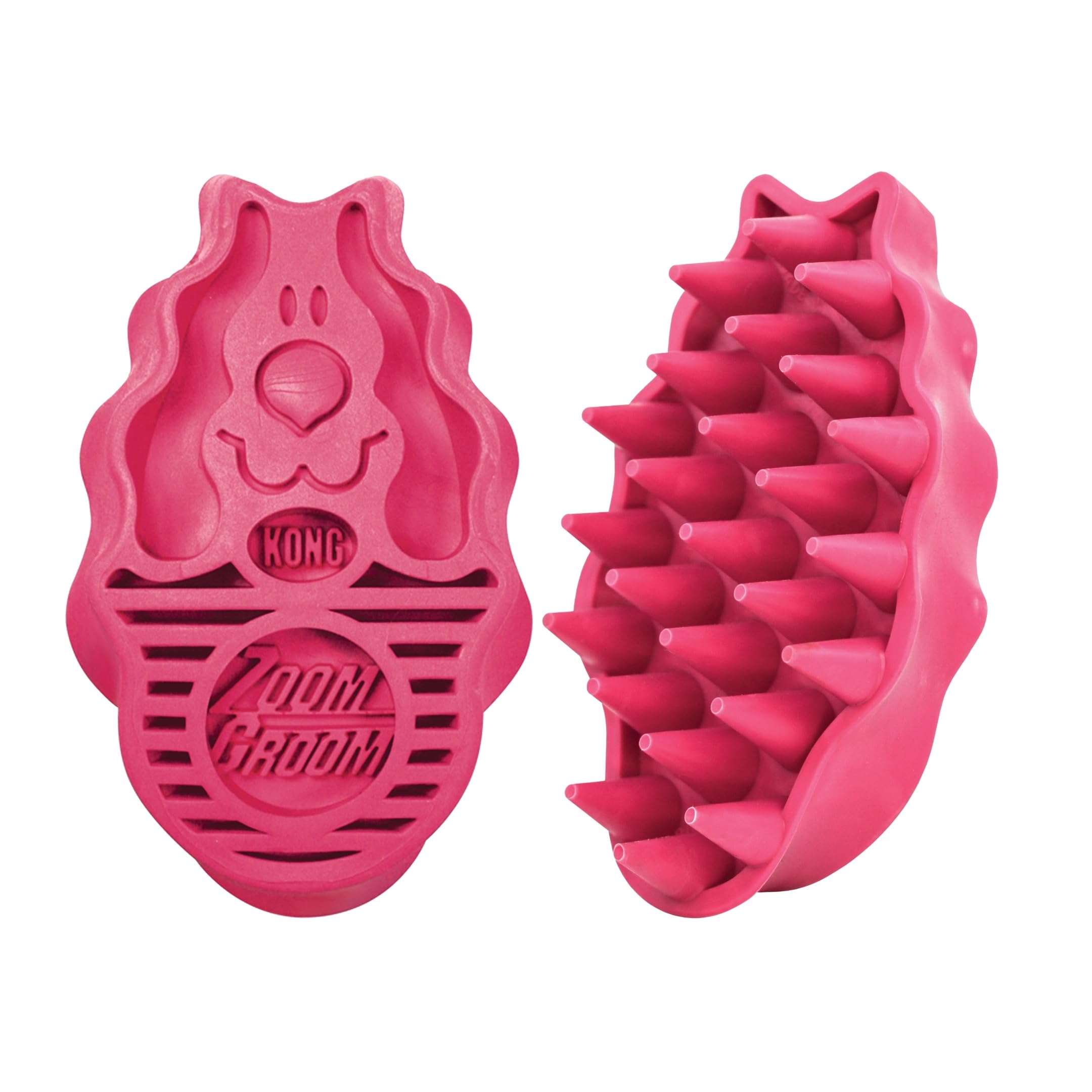
KONG Zoom Groom Multi-Use Brush — Gentle rubber brush for sensitive dogs
Best for: Bath-time grooming and sensitive skin
Dense curly coats do not always need steel. KONG’s Zoom Groom is a rubber brush that NBC Select’s experts flagged for short, soft, curly, and wavy coats up to about three inches. The soft, wide bristles clean and massage during bath time, helping lift loose hair and dirt without scraping skin. It is the best tool here for sensitive dogs, bath-time brushing, and owners who want a gentle everyday option. The limitation: it will not pull tangles out of long, thick curls, so it complements a slicker rather than replacing one.
- Soft rubber bristles are gentle on skin
- Doubles as a bath-time massage brush
- Good for sensitive or short curly coats
- Will not detangle long thick curls
- Not a replacement for a slicker
3.6/5
4.8/5
4.4/5
Top 3 Head-to-Head: Big G vs Hertzko vs Mark VII
These three slickers are the common final choices because they cover the main buyer types: large thick coats, a low-risk starter, and a premium finishing brush.
| Feature | #1 Big G Slicker | #2 Hertzko Slicker | #3 Mark VII Slicker |
|---|---|---|---|
| Detangling power | 4.9/5 — Best | 4.8/5 | 4.6/5 |
| Coat comfort | 4.8/5 | 4.7/5 | 4.9/5 — Best |
| Durability | 4.9/5 — Best | 4.6/5 | 4.7/5 |
| Choose if… | Your dog is large with a thick coat | You want an easy, low-risk starter | You want a curved, skin-friendly finisher |
Who These Brushes Are NOT For
Brushes maintain a healthy curly coat; they do not rescue a neglected one.
They are also not the right pick for short, smooth-coated dogs, which need a rubber curry or bristle brush instead, or for dogs with open skin irritation, where brushing should wait until a vet gives the all-clear.
Common Mistakes to Avoid
Even the best tool fails if the technique is wrong. These four errors cost curly-coat owners the most.
Frequently Asked Questions About Brushes for Dense Curly Coats
What is the best brush for curly dog hair?
A long-pinned slicker brush is the best all-round choice for curly dog hair because it reaches through the curls to the skin and lifts tangles before they harden into mats. Follow it with a metal comb to check your work. Choose a curved or polished-pin design for sensitive skin, and a larger head for big dogs. Pin brushes work well as finishers but rarely detangle thick curls alone.
Is a slicker brush or comb better for curly coats?
Use both, because they do different jobs. A slicker brush loosens surface tangles and lifts the coat, while a comb confirms the hair is clear down to the skin. If the comb snags, keep working that section. Our slicker brush versus comb comparison explains the order in detail. If you can only buy one, buy the slicker.
How often should you brush a dog with curly hair?
Most dense curly coats need brushing several times a week, and many need it daily. Brush more often during coat changes, after swimming, and when the hair is long. Short, light sessions work better than one long weekly marathon. Our curly coat brushing schedule guide breaks frequency down by coat type. Skipping days is what lets mats form near the skin.
Should you brush a curly dog wet or dry?
Brush a curly coat while it is dry, or only slightly damp with a detangling spray. Brushing a soaking wet coat can stretch and break hair, and tangles tighten as curls dry. Always brush out knots before bathing, because water and shampoo turn small tangles into mats. After the bath, dry the coat fully and comb through it again.
How do you brush a dog with thick curly hair without hurting them?
Work in small sections using line brushing: lift the hair, brush the layer closest to the skin first, then release the next layer. Use light pressure and stop at tight tangles rather than pulling. Our line brushing guide for curly hair walks through each step. Keep sessions short, reward calm behavior, and use a comb to confirm each line is clear.
Can you use a regular brush on a curly-coated dog?
A regular bristle brush will glide over the surface of dense curls and leave tangles underneath, so it is rarely enough. It can still help for polishing or for light brushing on very short curls. For thicker coats, choose a slicker brush and comb instead. Human hairbrushes are a poor substitute because they lack the pin length and flexibility needed.
Our Final Verdict
Dense curly coats reward long-pinned slickers, a finishing comb, and a steady routine more than any single gadget. Our ranking favors tools that reach the skin without scratching it. If you buy only one, start with the Big G slicker, then add a comb to catch what it misses.

Thomas Cutter is a lifelong dog owner and the founder of FindOutAboutDogs.com. With over 10 years of hands-on experience owning multiple breeds, Thomas created this site to provide honest, research-based dog advice that real owners can actually trust.
