How Often Should Curly Haired Dogs Be Brushed? A Complete Guide
Quick Answer
Most curly-haired dogs benefit from daily brushing, especially when their coats are long, thick, or prone to matting. Dogs with short, well-maintained curls may need thorough brushing three to four times weekly, with daily tangle checks. The key is reaching beneath the surface without pulling the skin. This curly coat brushing guide explains the gentle technique.
Recommended brushing schedule
- Long, dense curls: Brush and comb thoroughly every day.
- Medium curly coats: Start with five to seven sessions weekly.
- Short, trimmed curls: Try three to four thorough sessions weekly, plus daily checks.
- Curly puppies: Practice gentle daily handling and increase brushing during coat changes.
- After wet activities: Check for knots and dry the coat properly.
How to know you’re brushing enough
- Do the comb test: A metal comb should move through gently separated hair without snagging.
- Check hidden areas: Look behind ears, beneath the collar, and around the armpits.
Curly dogs can look fluffy and clean while hiding tangles close to their skin. That’s why I focus on brushing quality as much as brushing frequency.
In this guide, I’ll explain how to build a schedule, choose suitable tools, and prevent painful mats. The goal is simple: comfortable grooming that fits everyday life.


Why Do Curly Haired Dogs Need Frequent Brushing?
Curly coats need regular attention because their hair bends, overlaps, and traps loose strands. Those trapped hairs can gradually form knots that become harder to remove.
A curly dog coat has hair that grows in waves, spirals, or tight curls. Its texture, thickness, and length determine how easily tangles form.
Unlike many smooth-coated dogs, curly-coated breeds may leave relatively little loose hair around the house. That doesn’t mean the coat has stopped shedding hair.
What makes curly coats prone to matting?
- Trapped loose hair: Released strands remain caught among surrounding curls.
- Friction: Collars, harnesses, and normal movement rub the hair together.
- Coat length: Longer strands have more opportunities to intertwine.
- Moisture: Rain, swimming, and bathing can complicate existing tangles.
- Incomplete brushing: Surface grooming leaves knots hidden near the roots.
The problem often begins where you can’t see it. I recommend understanding why curly coats mat before trying to fix recurring tangles.
Mats aren’t merely a cosmetic concern. They can pull against the skin, trap debris, and make normal movement uncomfortable.
How Often Should You Brush Different Curly Dog Coats?
 Save
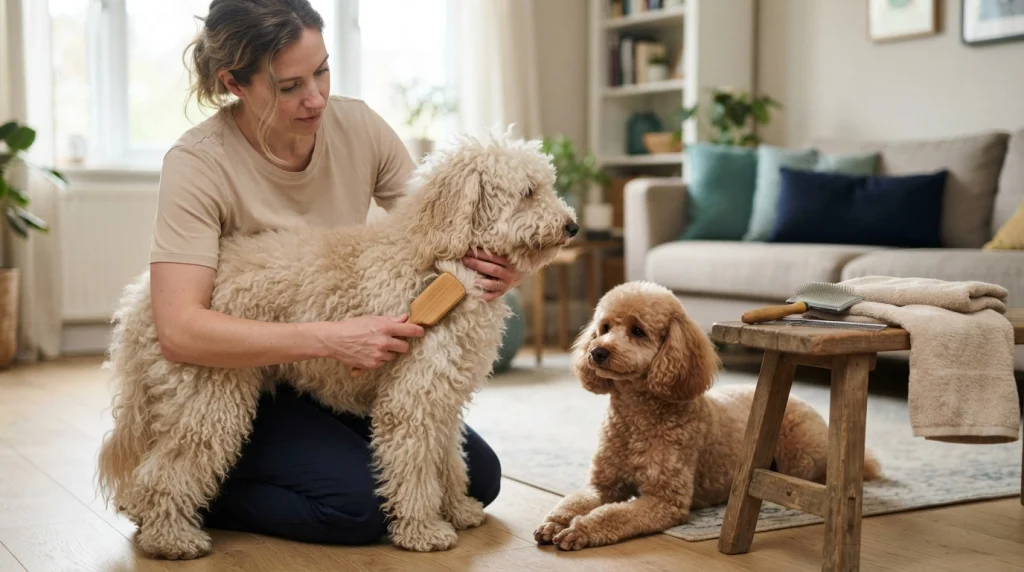
SaveBrushing frequency depends more on coat condition than breed name alone. Two Poodles may need different routines if one has long curls and the other wears a short trim.
I use the following schedule as a practical starting point. These are care recommendations, not fixed veterinary rules or measured matting rates.
| Coat condition | Suggested frequency | Main focus |
|---|---|---|
| Long, dense curls | 7 days weekly | Complete line brushing and comb checks |
| Medium-length curls | 5–7 days weekly | Prevent hidden knots and trapped hair |
| Short, maintained curls | 3–4 days weekly | Thorough brushing plus daily spot checks |
| Loose, wavy coat | 2–4 days weekly | Remove loose hair and check friction areas |
| Puppy changing coats | Daily checks; brush as needed | Catch developing tangles and build tolerance |
Start with the routine matching your dog’s hair, then watch how quickly tangles return. Increase the frequency when the comb begins catching between sessions.
Short hair is often easier to maintain, but it isn’t automatically tangle-free. A professional groomer can help adjust the schedule for your dog’s actual coat.
Do Poodles, Bichon Frises, and Doodles Need Daily Brushing?
Many Poodles, Bichon Frises, and curly-coated Doodles benefit from daily brushing. Their grooming needs still vary with coat length, texture, and individual matting patterns.
Poodles
Long Poodle coats generally need daily brushing and combing to prevent mats near the skin. The American Kennel Club’s Poodle guidance also emphasizes daily care for full coats.
A shorter pet trim can make maintenance more manageable. For technique, use this Poodle coat brushing guide as a starting point.
Bichon Frises
Bichons have dense coats that need consistent maintenance between grooming appointments. Their fluffy appearance can conceal knots beneath the outer hair.
The Bichon Frise Club of America recommends regular brushing, comb checks, and professional grooming. Coat changes may require increased daily attention.
Goldendoodles and Labradoodles
Doodle coats vary from loose waves to dense curls. That variation means one universal brushing schedule won’t suit every Doodle.
Dense, longer coats may need thorough daily brushing, while shorter coats can sometimes follow a lighter routine. Pay close attention to harness areas and behind the ears.
Other curly-coated breeds
Portuguese Water Dogs and Lagotto Romagnolos also need coat maintenance tailored to their texture and trim. Ask a groomer familiar with the breed before choosing specialized tools.
- Longer coat: Expect more frequent comb checks and section brushing.
- Thicker coat: Watch for tangles hidden beneath the surface.
- Active outdoor dog: Check for grass, burrs, mud, and moisture.
- Short professional trim: Adjust brushing based on actual knot formation.
How Long Should You Brush a Curly Haired Dog Each Day?
Many owners can begin with five to fifteen minutes of gentle grooming daily. A large dog with a long, dense coat may need considerably longer.
I prefer judging a session by complete coverage rather than a timer. Five careful minutes can help, but they won’t replace a thorough coat check when deeper tangles remain.
A practical daily grooming routine
- First two minutes: Inspect the ears, collar area, legs, and armpits.
- Next five minutes: Brush small sections using gentle, controlled strokes.
- Following three minutes: Check brushed areas with a stainless-steel comb.
- Final minute: Praise your dog, offer a reward, and inspect any remaining problem spots.
These times are examples rather than strict limits. A thick coat may require several short sessions or a longer appointment.
Stop before your dog becomes distressed. Comfortable daily practice is more useful than forcing a long grooming session.
How Do You Brush Curly Dog Hair Without Causing Pain?
The safest approach is gentle line brushing followed by a metal comb check. Line brushing means separating the coat into narrow layers and working through each exposed section.
This method helps reach hair near the roots without repeatedly scraping the skin. It also makes hidden tangles easier to spot.
Step 1: Gather suitable tools
Choose a slicker brush appropriate for your dog’s size and coat thickness. Keep a stainless-steel comb nearby to check your work.
The VCA Animal Hospitals grooming guide identifies slicker brushes as useful for curly, low-shedding coats. It also stresses gentle handling.
Step 2: Inspect the skin and coat
Use your fingers to feel for knots, tender areas, or trapped debris. Don’t begin brushing forcefully over a suspicious clump.
Step 3: Separate a small section
Lift the upper hair and expose a narrow strip beneath it. Keep the remaining curls out of your way.
Step 4: Brush with light pressure
Work through the section using short, controlled movements. Let the brush separate the hair without pressing its pins into the skin.
Step 5: Check with a metal comb
Move the comb gently through the brushed section, from near the roots toward the ends. Never force it through resistance.
Step 6: Continue across the coat
Repeat the process until you’ve covered the needed areas. Give your dog breaks whenever handling becomes uncomfortable.
Step 7: Reward calm behavior
Finish with praise or a suitable treat. Positive grooming experiences help your dog become more comfortable with regular handling.
Which Areas of a Curly Dog Need the Most Brushing?
The highest-risk areas often experience frequent rubbing or movement. I check these locations first because small hidden knots can develop between full grooming sessions.
- Behind the ears: Hair rubs together when the dog scratches or moves its head.
- Under the collar: Repeated contact can compress the coat.
- Armpits: Leg movement encourages hidden knots.
- Chest and shoulders: Harness straps create friction.
- Inner thighs: Movement and overlapping hair can cause tangles.
- Tail base: Dense hair may bunch together during activity.
- Feet and lower legs: Outdoor debris can become caught in curls.
Check these areas daily even when you don’t perform a complete brushing session. Be especially gentle near sensitive skin and body openings.
Remove collars or harnesses when appropriate and safe so you can inspect the hair beneath them. Don’t use sharp grooming tools around sensitive areas without proper training.
How Can You Tell If You’re Brushing Your Curly Dog Enough?
Your dog’s coat should separate comfortably without persistent knots or tight pulling. The best check isn’t how fluffy the hair looks, but whether a comb moves through it safely.
Signs your brushing routine is working
- The metal comb passes through checked sections without snagging.
- You rarely discover new knots between sessions.
- The skin looks comfortable, without redness or scraping.
- Your dog remains relaxed during routine brushing.
- Areas beneath collars and harnesses stay reasonably tangle-free.
Signs you need to adjust the routine
- Small knots return soon after brushing.
- The brush moves over the surface but the comb catches underneath.
- The coat develops dense clumps in friction areas.
- Your dog becomes uncomfortable when certain spots are touched.
- Grooming sessions keep getting longer because tangles accumulate.
My preferred checkpoint is simple: comb access matters more than surface appearance. If deeper sections stay tangled, change the technique or schedule instead of pressing harder.
Can You Brush a Curly Haired Dog Too Often?
Yes, excessive or aggressive brushing can irritate the skin and damage hair. Daily brushing can be appropriate, but every session should remain gentle.
The main concern is repeated pressure, scraping, or pulling. Brushing a sensitive area many times doesn’t make the process safer.
Common mistakes to avoid
- Brushing too hard: Slicker pins can scratch sensitive skin.
- Repeating one spot: Too many strokes may cause irritation.
- Forcing through knots: Pulling can hurt and increase grooming resistance.
- Using the wrong tool: A stiff or unsuitable brush may be uncomfortable.
- Skipping breaks: Long, stressful sessions can create negative associations.
- Brushing irritated skin: Existing sores need appropriate care, not repeated grooming.
If the skin becomes red or your dog flinches, stop and inspect the area. Seek veterinary advice for persistent irritation, wounds, or unexplained sensitivity.
Should You Brush Curly Dog Hair Before or After Bathing?
 Save
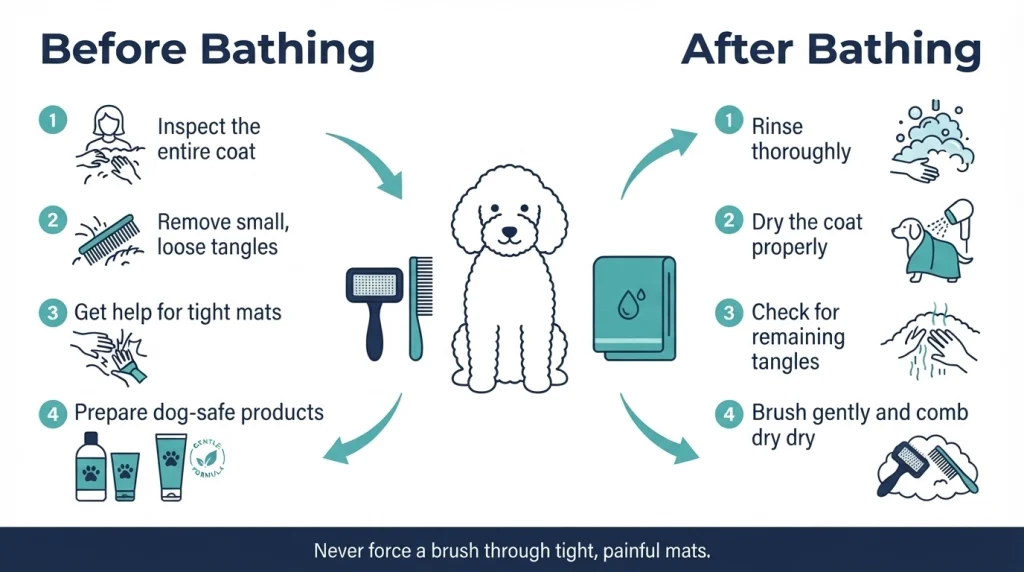
SaveCheck curly hair for tangles before bathing, and brush appropriately after the coat has been safely cleaned and dried. Never assume shampoo will loosen a tight mat.
Water and handling can make existing knots more difficult to manage. A heavily matted dog may need professional help before a routine bath.
Before bathing
- Inspect the entire coat for tangles.
- Gently remove small, loose knots when safe.
- Arrange professional removal of painful or tight mats.
- Prepare a shampoo and conditioner made for dogs.
After bathing
- Rinse thoroughly to remove product residue.
- Dry the coat using a method suitable for your dog.
- Check for tangles once the coat is ready for brushing.
- Use gentle section brushing and a final comb check.
Dog-safe detangling products may help with ordinary grooming. Follow the label instructions, especially regarding wet or dry coat use.
What If Your Curly Haired Dog Already Has Mats?
Small, loose tangles may respond to careful finger separation and gentle grooming. Tight, painful, or widespread mats should be assessed by a professional.
The veterinary-reviewed PetMD matting guide explains why severe mats can damage skin. It also warns against cutting mats with household scissors.
What you can try with a small, loose knot
- Check that the surrounding skin looks healthy.
- Support the hair close to its base to reduce pulling.
- Use a suitable dog-safe detangler if appropriate.
- Loosen the outer strands gently with your fingers.
- Stop if the knot remains firm or causes discomfort.
For Doodle owners, this gentle Doodle detangling guide covers the process in greater detail. Severe matting isn’t something to solve with extra brushing force.
When professional help is necessary
- Mats are tight against the skin.
- Several knots connect across a large area.
- Your dog cries, snaps, or pulls away in pain.
- The skin looks swollen, red, moist, or injured.
- You notice unusual odor, bleeding, or discharge.
A groomer may recommend careful clipping when brushing would be painful. A veterinarian should assess suspected infections or significant skin injuries.
How Often Should Curly Haired Dogs Visit a Professional Groomer?
Many curly-coated pet dogs benefit from professional grooming approximately every four to eight weeks. The interval depends on breed, coat length, home care, and desired haircut.
Some Bichons benefit from appointments around every four weeks, while short-trimmed Poodles may follow a longer schedule. Your groomer can recommend an appropriate interval.
Professional grooming doesn’t replace brushing at home. Hair can tangle between visits, particularly behind the ears and underneath harnesses.
What regular grooming appointments can include
- A bath with suitable coat products.
- A haircut or coat trim.
- Thorough brushing and combing.
- Nail care and basic hygiene maintenance.
- Inspection for developing tangles or skin concerns.
As of 2026, my practical recommendation remains to choose a trim you can maintain comfortably. A shorter haircut is often preferable to a long coat that repeatedly becomes matted.
What Is the Best Brush for Curly Haired Dogs?
 Save
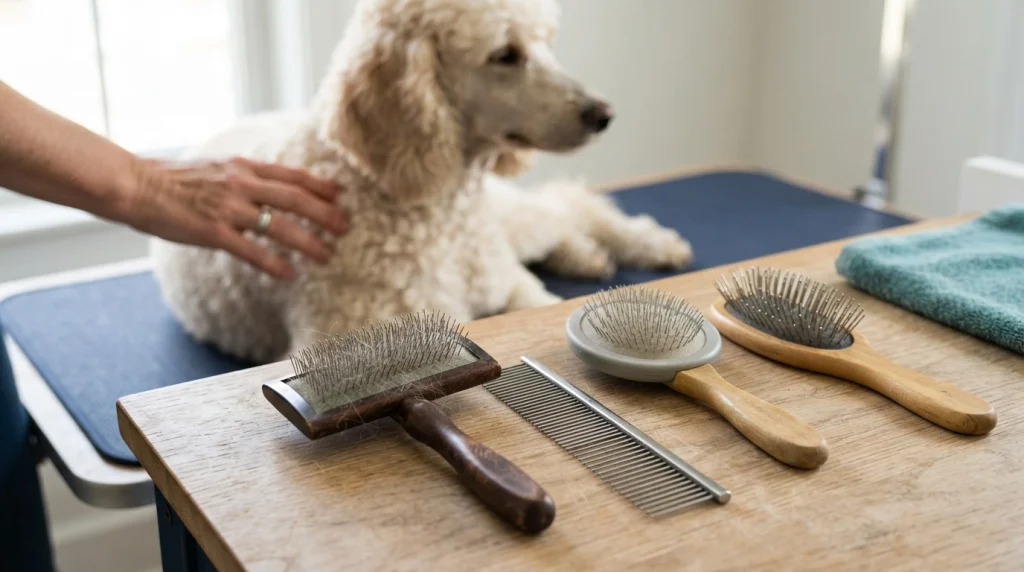
SaveA suitable slicker brush paired with a stainless-steel grooming comb works well for many curly coats. The brush helps separate hair, while the comb checks for remaining tangles.
Not every curly dog needs the same pin length or brush head. Choose tools according to coat density, dog size, and skin sensitivity.
Compare the main grooming tools
| Tool | Best use | Limitation |
|---|---|---|
| Long-pin slicker | Dense, longer curly coats | Can irritate skin if pressed too hard |
| Soft slicker | Lighter coats and gentle maintenance | May miss deep tangles in thick hair |
| Metal comb | Checking hidden knots | Must not be forced through mats |
| Pin brush | Some loose waves and longer coats | May not clear deep tangles |
A soft brush isn’t always effective enough for dense curls. Likewise, a long-pin slicker may be excessive for a very short or sensitive coat.
For more detailed tool selection, read this curly dog brush guide.
Recommended Grooming Tools for Curly Haired Dogs
If you’re putting together a basic grooming kit, I recommend choosing tools that serve different purposes. One suitable slicker and one reliable comb can cover much of your regular maintenance.
The scores below reflect editorial suitability for the stated use cases, not verified customer ratings or hands-on product testing. Always choose the correct brush size for your dog.
🏆 Best for Dense Curly Coats
Chris Christensen Big G Slicker Brush
★★★★★ 4.8/5
This premium slicker has long, angled metal pins and a cushioned pad for working through dense coats. It’s my preferred type of brush for long Poodle and Doodle curls, provided it’s used gently and followed by a comb check.
💰 Best for Easy Cleanup
Hertzko Self-Cleaning Slicker Brush
★★★★☆ 4.3/5
This brush uses a retractable-pin mechanism to make collected hair easier to remove. I consider it a practical option for routine maintenance on manageable coats, though dense curls may require longer pins.
🔍 Best for Hidden Tangle Checks
Andis Stainless-Steel Pet Comb
★★★★★ 4.7/5
This metal grooming comb offers coarse and fine tooth sections for different finishing tasks. I recommend keeping one alongside a slicker because it helps reveal tangles hidden beneath a fluffy surface.
Frequently Asked Questions
Should I brush my curly haired dog every day?
Daily brushing is recommended for many dogs with long or dense curls, especially those prone to matting. Shorter, professionally maintained coats may need thorough brushing several times weekly. Check friction areas daily, and use a metal comb to confirm the coat remains free of hidden tangles.
How often should I brush my Goldendoodle?
Many Goldendoodles benefit from daily brushing, particularly with longer or thicker coats. Dogs with short, loose waves may need less intensive maintenance. Watch how quickly knots form beneath the collar, behind the ears, and around the legs, then adjust the schedule with your groomer.
Can I brush my curly dog’s hair while it is wet?
Brushing damp hair requires extra care because pulling can become uncomfortable. Use a dog-safe conditioning product only as directed, and avoid forcing brushes through existing knots. Check for mats before bathing, and ask your groomer about safe brushing and drying methods for your dog’s coat.
What happens if I don’t brush my curly haired dog?
Loose hair, dirt, and friction can cause small tangles to develop into tight mats. Severe mats may pull on the skin and hide irritation or injury. Regular brushing helps prevent these problems, but a professional should handle tight or painful mats rather than attempting forceful home removal.
Does a short haircut mean my curly dog needs less brushing?
A shorter haircut often reduces the time needed for coat care because there’s less hair available to tangle. However, short curls can still develop knots around collars, legs, and ears. Continue checking those areas daily and adjust thorough brushing based on the coat’s condition.
Final Takeaway: Keep Curly Dog Grooming Simple
Most long, curly dog coats benefit from daily brushing, while some shorter trims can be maintained with three or four thorough sessions weekly. What matters most is regular, gentle grooming that reaches beneath the surface.
Start with a suitable slicker brush, finish with a metal comb, and watch for hidden knots. If brushing becomes painful or mats sit tightly against the skin, seek professional help.
Choose a schedule your dog can tolerate and you can maintain consistently. A comfortable, tangle-free coat is the goal.

Thomas Cutter is a lifelong dog owner and the founder of FindOutAboutDogs.com. With over 10 years of hands-on experience owning multiple breeds, Thomas created this site to provide honest, research-based dog advice that real owners can actually trust.
