How to Use Line Brushing on Curly Hair: A Step-by-Step Dog Grooming Guide
Quick Answer
To use line brushing on a curly-haired dog, lift a thin layer of fur, part it until you can see the skin, and gently brush the exposed hair from its base toward the ends. Move through the coat in small rows, checking each finished section with a metal comb. This method helps prevent hidden mats in Poodles, Doodles, and Bichon Frises. Follow veterinary coat-care guidance when choosing tools and handling tangles.
Five steps for effective line brushing
- Prepare the coat: Check for mats and lightly mist the fur with a dog-safe grooming spray if needed.
- Lift one layer: Hold the upper hair aside to expose a narrow row near the skin.
- Brush gently: Use short slicker-brush strokes through the exposed hair without scraping the skin.
- Check with a comb: Confirm the section is tangle-free before moving upward.
- Repeat in rows: Continue across manageable sections, stopping whenever your dog becomes uncomfortable.
The most important rule
- Never force a snag: Tight mats, painful pulling, or irritated skin require a professional assessment rather than harder brushing.
Curly dog hair can look fluffy while hiding knots underneath. That’s why brushing only the surface often fails to prevent matting.
I prefer line brushing because it gives each section a clear starting and finishing point. In this guide, I’ll explain the technique, the tools I recommend, and how to keep grooming comfortable.


What Is Line Brushing, and Why Do Curly-Haired Dogs Need It?
Line brushing is a grooming technique that separates a dog’s coat into thin layers. Each layer gets brushed and combed before you move to the next one.
Unlike surface brushing, this method works through the hair near the skin. That matters because hidden tangles often develop beneath an otherwise tidy-looking coat.
Definition: Line brushing means parting a dog’s coat into narrow rows and gently brushing each exposed section from near the roots toward the tips, followed by a comb check.
Why do curly coats mat so easily?
Loose hair often stays trapped inside curls instead of falling away. As the dog moves, those hairs can twist around neighboring strands.
Poodles, Bichon Frises, and many Doodle mixes need extra attention because their coat texture can hide tangles. The risk increases when the coat grows longer.
- Dense curls: Loose hairs can remain trapped beneath the surface.
- Coat friction: Collars, harnesses, and movement encourage tangles.
- Moisture: Wet curls can tighten around existing knots as they dry.
- Long hair: More length gives loose strands greater opportunity to intertwine.
- Missed sections: Surface brushing may leave the coat near the skin untouched.
The ASPCA’s dog grooming tips explain why regular brushing helps prevent tangles and maintain healthy skin.
What Tools Do You Need for Line Brushing Curly Hair?
You don’t need a large collection of grooming equipment. I recommend starting with a suitable slicker brush and a metal comb.
A light coat-conditioning spray can help with mild tangles. However, no spray makes painful mats safe to pull apart.
Essential grooming tools
- Slicker brush: Separates curly hair and lifts loose strands from small sections.
- Metal grooming comb: Checks whether the brushed section is free of hidden knots.
- Dog-safe detangling spray: Adds light lubrication when the coat needs it.
- Nonslip grooming surface: Gives your dog steady footing while you work.
- Small treats: Help build a calm, positive association with grooming.
Slicker brush vs. metal comb: Which does what?
A slicker brush and a comb serve different purposes. The brush works through the hair, while the comb checks your progress.
| Tool | Specific feature | Best use | Main caution |
|---|---|---|---|
| Chris Christensen Big G Slicker | 27 mm stainless-steel pins | Long, dense curly coats | Avoid heavy pressure |
| Andis Soft-Tooth Slicker | Soft, flexible teeth | Light tangles and gentle routine care | May not reach through long, dense coats |
| Andis Steel Pet Comb | 7.5-inch, coarse-and-fine tooth design | Checking roots and finishing | Never pull through resistance |
Pin length matters, but longer isn’t always better. A brush should match your dog’s coat depth and your ability to control it gently.
The Andis line-brushing demonstration provides a useful visual reference for combining a slicker brush and metal comb.
How Do You Line Brush a Curly-Haired Dog Step by Step?
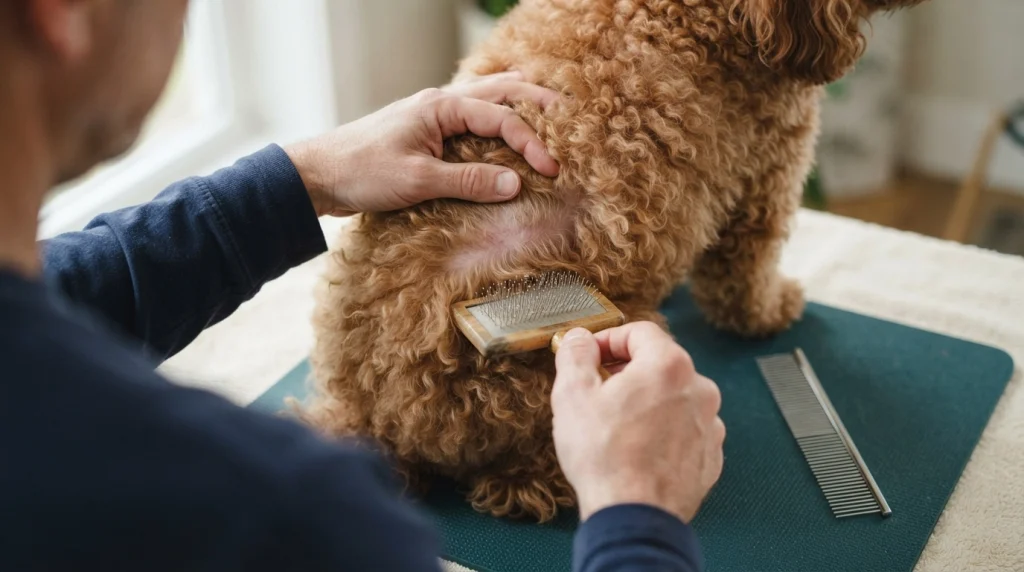 Save
SaveStart on an easy, comfortable section of the body. I suggest the side or shoulder before attempting sensitive areas such as the ears or armpits.
Work methodically and keep your movements light. You’re trying to separate the coat, not scrub the skin.
Step 1: Check the coat before brushing
Run your fingers gently through the hair. Look for firm knots, burrs, sores, redness, or areas where your dog reacts to touch.
If the coat contains tight mats, don’t start pulling. Arrange professional grooming before the problem becomes worse.
Step 2: Lightly prepare the hair
A small amount of dog-safe grooming spray can help a mildly tangled coat move through the brush. Follow the product instructions and avoid soaking the hair.
I would skip scented products on irritated skin. Ask your veterinarian which products are suitable if your dog has skin sensitivities.
Step 3: Separate a thin horizontal row
Use your fingers or a comb to create a parting. Lift the upper hair until you can see a narrow strip of skin.
Start with a row about half an inch to one inch wide if that is manageable for the coat. Very dense curls may need smaller sections.
Step 4: Brush the exposed section
Hold the lifted hair out of the way. Use a suitable slicker brush on the exposed layer with short, gentle strokes.
Work the hair from near the base toward the ends without pressing the pins into the skin. If a small tangle is present, carefully loosen its tips first.
- Keep your wrist relaxed and your strokes controlled.
- Support the hair above a mild tangle to reduce skin pulling.
- Brush in the direction that allows the strands to separate comfortably.
- Stop immediately if the brush catches firmly or your dog flinches.
Step 5: Check the section with a metal comb
After brushing, gently pass the wider-spaced comb teeth through the section. Start near the skin only when the hair can move freely.
If the comb catches, stop and inspect the obstruction. A finished section should allow the comb to pass without painful resistance.
Step 6: Move upward to the next row
Lift another thin layer directly above the finished area. Repeat the same brushing and combing sequence.
Continue from lower sections toward the top, keeping the completed coat organized. This helps prevent missed patches.
Step 7: Work around the body
Once the side is finished, continue to other comfortable areas. Approach the legs, chest, and tail in smaller sections.
For the face, ear edges, groin, and other delicate areas, use appropriate tools and professional guidance. These spots need more care than the broad body coat.
Step 8: Finish with a gentle full-coat check
Use your comb to check the areas you’ve completed. Look for places where the teeth stop or where the coat still feels tightly packed.
Reward your dog and end before either of you becomes frustrated. You can finish another section during the next session.
My practical tip: Think of line brushing as checking a series of small windows into the coat. If you cannot clearly see or access the section you’re working on, make the parting smaller rather than pushing harder.
Should You Brush Curly Dog Hair Toward or Away From the Skin?
Brush the exposed hair from near its base toward the tips. Never aim the slicker pins into the skin or use pressure to force the brush deeper.
The goal is to reach the root-side coat without scraping the body. Hold the brush at a comfortable angle and use controlled strokes.
Some professional grooming methods adjust the direction of brushing to lift the coat. For home care, comfort and correct sectioning are more important than forcing a particular direction.
- Near the roots: Use light contact and avoid scraping.
- Along the hair: Separate strands using short strokes.
- At the ends: Loosen minor tangles before moving closer to the base.
- At a snag: Stop, inspect, and never pull the brush through.
Brushing harder is not a shortcut. Repeated friction can irritate the skin and damage the coat.
Which Areas of a Curly-Haired Dog Need Extra Line Brushing?
Areas exposed to movement and rubbing often develop tangles first. I would check these places even when the rest of the coat looks tidy.
- Behind the ears: Soft hair can become tangled as the ears move.
- Under the collar: Constant rubbing may create dense knots.
- Armpits: Leg movement and thin skin make grooming delicate.
- Chest and belly: Longer hair may trap moisture and debris.
- Inside the hind legs: Friction can encourage tangling.
- Tail and tail base: Curly hair can conceal small mats.
- Paws and leg furnishings: Outdoor dirt and dampness may contribute to knots.
Use smaller sections near these locations. If skin folds, joints, or tender areas make brushing difficult, have a groomer demonstrate safe handling.
What Should You Do When the Comb Finds a Mat?
Stop pulling as soon as the comb meets firm resistance. A snag may be loose hair, a minor tangle, or a tight mat attached close to the skin.
Small, loose tangles may respond to careful handling. Tight mats are different because pulling them can hurt the dog.
How to handle a minor tangle
- Stop brushing and find the exact tangled area.
- Check whether the hair and skin can move freely.
- Support the hair close to the skin without pulling it tight.
- Use your fingers to separate loose strands from the outer edge.
- Apply a suitable detangling spray if appropriate.
- Gently brush the loosened ends, then check again with a comb.
- Stop if the tangle does not release easily.
When is professional mat removal necessary?
A mat needs professional attention when it is tightly attached, widespread, painful, or impossible to separate gently. Groomers may recommend clipping the coat shorter to protect the dog’s comfort.
The ASPCA’s advice on severe matting specifically warns against cutting mats out with scissors. Skin can become trapped inside tangled hair, making accidental injury easy.
Safety warning: Don’t use household scissors against a tight mat. If you find redness, open sores, swelling, discharge, or clear pain, contact your veterinarian rather than continuing to brush.
How Often Should You Line Brush a Poodle or Doodle?
Many curly-coated dogs need brushing and combing daily or every other day, especially with longer hair. The correct schedule depends on coat length, density, activity, and how quickly tangles return.
As of 2026, I would still treat grooming frequency as a starting point, not a fixed rule for every breed. The comb should help decide whether your current schedule works.
| Coat condition | Suggested starting routine | Main priority |
|---|---|---|
| Short, regularly clipped curly coat | Check daily; thorough brushing several times weekly as needed | Prevent new tangles |
| Medium-length curly coat | Daily checks and brushing about every other day or more | Keep the coat combable |
| Long, dense, mat-prone curls | Daily line brushing and comb checks | Catch root-side tangles early |
These are practical maintenance estimates, not guaranteed intervals. A dense Doodle coat may need more work than a shorter Poodle trim.
I would rather schedule ten comfortable minutes each day than attempt an exhausting weekly session. If the coat repeatedly mats between appointments, discuss a shorter haircut with your groomer.
Should You Line Brush Before or After Bathing?
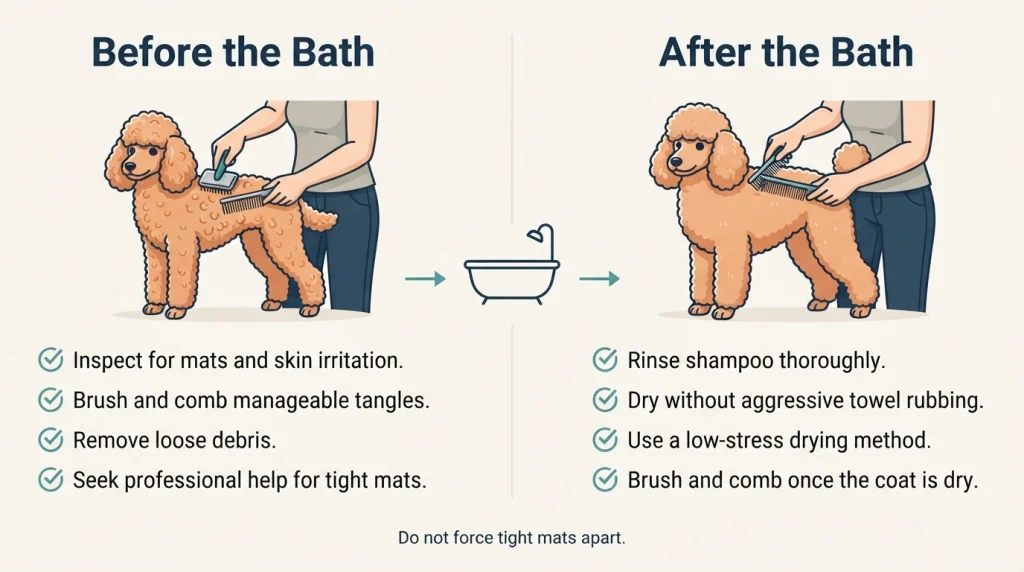 Save
SaveCheck and remove manageable tangles before bathing. Washing a tangled coat can make existing knots harder to handle afterward.
However, don’t attempt painful dematting simply because a bath is scheduled. A heavily matted dog should receive a professional coat assessment first.
Before the bath
- Inspect the coat for mats and skin irritation.
- Brush and comb through sections that separate comfortably.
- Remove loose debris and minor tangles.
- Arrange professional help for tight or widespread matting.
After the bath
- Rinse dog shampoo thoroughly according to its directions.
- Dry the coat carefully without aggressive towel rubbing.
- Use a low-stress drying method appropriate for the dog’s coat.
- Once the coat is dry, gently brush and comb sections that remain free of tight mats.
Do not use high heat close to the skin. If the coat is dense enough to trap moisture, ask your groomer about safe and thorough drying.
What Common Line-Brushing Mistakes Should You Avoid?
Most problems come from rushing, missing the hair near the skin, or treating a mat like a normal tangle. Better technique usually matters more than buying another brush.
- Brushing only the surface: The curls may look fluffy while hidden tangles remain.
- Taking sections too large: Large sections prevent the brush from reaching the deeper coat evenly.
- Using too much pressure: Hard strokes can irritate skin and make the dog fear brushing.
- Skipping the comb: A smooth surface does not prove the deeper coat is free of knots.
- Pulling through mats: Force can cause pain and skin injury.
- Ignoring friction areas: The ears, collar, armpits, and legs may mat before the main body.
- Making sessions too long: Tired dogs may become restless or resistant.
- Using unsuitable tools: Pins that are too harsh, short, or poorly matched can make grooming harder.
My favorite checkpoint is simple: stop when the dog loses comfort, not when the clock says the session should finish. Consistent short sessions are much easier to maintain.
How Can You Teach a Puppy to Accept Line Brushing?
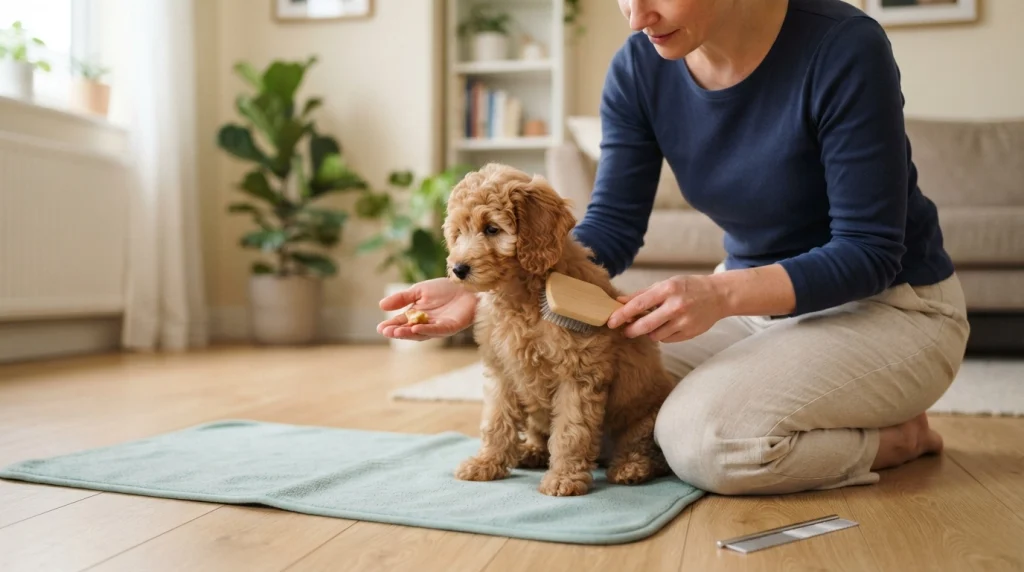 Save
SavePuppies should learn that grooming is predictable and rewarding. Start by introducing the brush before attempting a full coat.
For the first sessions, focus on cooperation rather than perfectly brushed hair. Even a minute or two of relaxed handling can be useful.
- Let your puppy sniff the brush and reward calm curiosity.
- Touch the shoulder gently before making a brushing motion.
- Use one soft stroke and offer a treat.
- Lift a tiny layer of hair when the puppy stays comfortable.
- Finish with praise and a break before frustration starts.
Increase the work gradually over later sessions. A professional puppy grooming appointment can also teach you how to handle sensitive areas safely.
Which Grooming Tools Are Worth Considering for Curly Dogs?
If you’re building a line-brushing kit, I would prioritize one suitable slicker brush and a reliable metal comb. These three products cover different coat needs and budgets.
The star scores below are editorial estimates of tool suitability for the stated use, not verified customer-review ratings.
🏆 Best for Dense Curly Coats
Chris Christensen Big G Slicker Brush
★★★★½ 4.5/5
This premium slicker uses 27 mm stainless-steel pins and a cushioned brush pad. I would consider it for longer Poodle or Doodle coats where shorter pins struggle to reach the deeper hair. Careful pressure is still essential.
🐾 Best for Gentle Routine Brushing
Andis Soft-Tooth Slicker Brush
★★★★☆ 4/5
Soft, flexible teeth make this a reasonable option for gentle everyday maintenance and light tangles. I would choose it for comfortable brushing where a firmer long-pin slicker isn’t needed.
🔍 Best for Checking Hidden Tangles
Andis 7.5-Inch Steel Pet Comb
★★★★½ 4.5/5
The 7.5-inch steel comb has coarse and fine teeth for checking finished sections. This is the tool I would pair with either slicker because it helps locate tangles a brush may miss.
Frequently Asked Questions About Line Brushing Curly Hair
Can I line brush my curly-haired dog every day?
Yes, many dogs with long, dense curly coats benefit from gentle daily line brushing. The goal is to prevent tangles, not repeatedly scrape the skin. Use light pressure, inspect the coat, and shorten sessions if your dog becomes uncomfortable.
Is a slicker brush enough for a Poodle?
A slicker brush is useful, but I recommend pairing it with a metal comb. The slicker separates the hair, while the comb checks for knots near the skin. Without that final check, a Poodle’s coat can look fluffy while hiding mats.
Can I line brush a Goldendoodle with a wavy coat?
Yes. Line brushing also works for many wavy Goldendoodle coats, especially when longer hair traps loose strands. Adjust the section size and brush type to your dog’s coat density. Some mixed coats need a different approach, so ask your groomer for an individual demonstration.
Should I brush curly dog hair when it’s wet or dry?
Routine line brushing is generally easier on a clean, dry, or lightly conditioned coat. A small amount of suitable grooming spray may reduce friction. Avoid pulling a brush through soaking wet tangles or trying to force apart mats after bathing.
How do I know if line brushing is working?
Your dog’s coat should separate comfortably into small sections, and a metal comb should move from near the skin through the hair without catching. You should also notice fewer small tangles between sessions. Redness, pulling, or repeated resistance means you need to reassess the technique.
Final Takeaway: Make Line Brushing Gentle and Consistent
Learning how to use line brushing on curly hair is mostly about patience and sectioning. Lift a thin layer, brush gently, and use a metal comb to confirm your progress.
Don’t try to finish a difficult coat by pulling harder. Keep sessions comfortable, check mat-prone areas often, and seek professional help for tight tangles.
Start with one small, manageable section today. A regular routine can help keep your dog’s curly coat clean, comfortable, and easier to maintain.

Thomas Cutter is a lifelong dog owner and the founder of FindOutAboutDogs.com. With over 10 years of hands-on experience owning multiple breeds, Thomas created this site to provide honest, research-based dog advice that real owners can actually trust.
