How to Prevent Mats in Curly Dog Hair: Easy Grooming Tips
Quick Answer
To prevent mats in curly dog hair, brush the coat regularly with a suitable slicker brush, work through small sections near the roots, and finish with a metal comb. Check high-friction areas daily, remove small tangles early, and keep the coat clean and dry. Understanding why curly coats mat also makes prevention easier.
Six steps to prevent mats
- Brush consistently: Groom long, dense curls daily or as often as their condition requires.
- Work in layers: Separate the coat and gently brush each section from near the roots outward.
- Check with a comb: Use a stainless-steel comb to locate tangles the brush missed.
- Inspect friction areas: Check behind the ears, beneath collars, under the legs, and around the chest.
- Manage moisture: Check for knots before bathing and dry the coat thoroughly afterward.
- Maintain a suitable trim: Arrange regular professional grooming before the coat becomes difficult to manage.
One important safety rule
- Never force tight mats: Painful or skin-level matting needs professional attention, not aggressive brushing or household scissors.
Curly dog hair can look soft and fluffy while hiding stubborn tangles underneath. That is often what makes matting so frustrating for owners of Poodles, Doodles, and other curly-coated breeds.
I prefer preventing those knots through a simple grooming routine rather than dealing with painful mats later. Here is how I would build that routine without making brushing stressful for the dog.


Why Does Curly Dog Hair Get Matted So Easily?
Curly dog hair mats because loose strands become trapped among neighboring curls. Friction and movement gradually twist those strands into tighter knots.
A mat is a compact clump of tangled hair that may pull against the skin. Unlike a loose tangle, a tight mat can be difficult or painful to separate.
Several everyday conditions make mats more likely:
- Trapped loose hair: Curly coats often retain shed strands instead of releasing them onto furniture.
- Longer coat length: More hair creates additional opportunities for strands to twist together.
- Friction: Harnesses, collars, bedding, and normal movement repeatedly rub the same areas.
- Moisture: Bathing or swimming with existing tangles can make grooming more difficult.
- Surface brushing: A smooth outer coat may conceal knots close to the skin.
This is why a fluffy appearance does not prove that a coat is free of mats. I would check the hair beneath the visible curls before calling a grooming session complete.
What Is the Best Daily Routine to Prevent Mats?
 Save
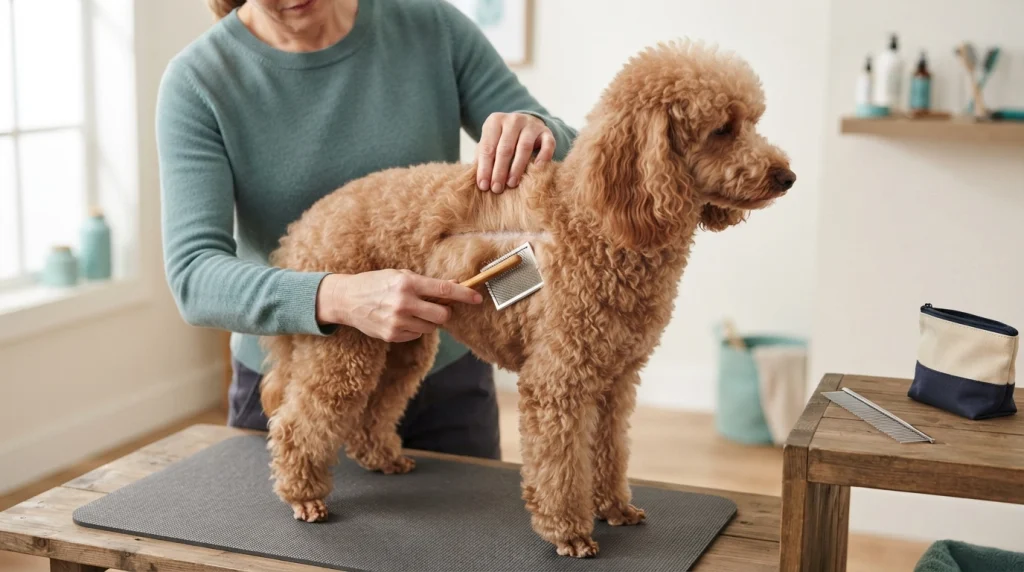
SaveThe best routine combines gentle line brushing, a metal comb check, and attention to sensitive areas. Consistency matters more than brushing harder.
I recommend starting with a few calm minutes and building the dog’s tolerance gradually. The goal is comfortable grooming, not finishing as quickly as possible.
Step 1: Inspect the coat before brushing
Run your fingers gently through the coat and look for small knots. Pay attention to any area that feels unusually dense or sensitive.
Check for redness, sores, or tight mats before using a brush. Stop and seek professional guidance if grooming appears painful.
Step 2: Use a suitable slicker brush
Choose a slicker brush with flexible pins suited to your dog’s coat length. Long, dense curls often need longer pins than a short coat.
The American Kennel Club’s brush guide explains why slicker brushes suit many curly coats. Use light pressure because metal pins can irritate skin when handled roughly.
Step 3: Divide the coat into small sections
Lift the outer hair with one hand until you can inspect a narrow layer underneath. Gently brush through that section before moving upward.
This method is called line brushing. It helps prevent the surface-only grooming that leaves hidden tangles near the roots.
For a more detailed demonstration of the method, see the curly coat brushing guide.
Step 4: Brush gently from near the roots outward
Use short, controlled strokes while keeping the brush from scraping the skin. Hold nearby hair gently if you encounter a small, loose knot.
Never drag a brush through strong resistance. Separate an ordinary tangle carefully or ask a professional to assess it.
Step 5: Finish with a stainless-steel comb
Move a suitable grooming comb through each finished section without forcing it. If the comb catches, stop and inspect the hair beneath it.
I consider this the most useful final check because brushing can miss hidden knots. A smooth-looking coat is not always completely detangled.
Step 6: Reward calm grooming
Finish with praise, a small treat, or another reward your dog enjoys. Positive sessions help build a predictable routine.
If your dog becomes restless, take a break. Two calm sessions are better than one long struggle.
How Often Should You Brush a Curly-Haired Dog?
Many long or dense curly coats benefit from daily brushing and combing. Shorter trims may need less work, although regular checks remain important.
The ideal schedule depends on coat density, length, lifestyle, and individual tolerance. These are practical starting points rather than guaranteed requirements.
| Coat condition | Suggested routine | Main priority |
|---|---|---|
| Long, dense curls | Daily thorough brushing | Prevent hidden root-level tangles |
| Short, maintained curls | Daily checks; brush several times weekly as needed | Catch small knots early |
| Curly puppy coat changing | Daily checks and frequent gentle brushing | Manage changing textures |
| After swimming or rain | Inspect and dry after the activity | Avoid moisture-related tangles |
| Easily matted coat | Daily care plus a groomer-approved schedule | Reduce recurring knots |
For longer Poodle coats, the AKC’s Poodle care guidance recommends daily brushing and notes that many owners visit groomers every four to six weeks.
I would adjust the schedule when the comb begins catching more frequently. Waiting for visible mats means the routine may already need improvement.
Where Do Mats Form Most Often on Curly Dogs?
Mats commonly appear in areas where hair rubs against skin, clothing, or grooming accessories. These spots deserve a quick daily inspection.
- Behind the ears: Scratching, head movement, and fine hair encourage knots.
- Under the collar: Constant rubbing compresses curls around the neck.
- Armpits: Walking repeatedly brings hair-covered surfaces together.
- Chest and shoulders: Harness straps can disturb longer hair.
- Inner thighs: Movement and moisture can create tangles.
- Tail base: Longer curls can become packed during movement.
- Feet and legs: Mud, water, and outdoor debris can catch in the coat.
I would check these areas before spending extra time on the easy-to-brush back. Small knots in friction zones can become troublesome quickly.
Can a collar or harness cause matting?
Yes. Repeated rubbing beneath a collar or harness can encourage curly strands to tangle.
Remove the equipment during appropriate grooming checks and gently inspect the contact areas. Never compromise the dog’s safety or secure fit simply to prevent tangles.
How Do You Prevent Mats After Bathing or Swimming?
Check for tangles before bathing and dry the coat carefully afterward. Water does not remove existing mats and can make some knots harder to manage.
I would avoid turning bath time into an emergency detangling session. A properly prepared coat is easier to wash and dry.
Before the bath
- Inspect the coat for loose tangles, tight mats, and skin problems.
- Gently brush and comb manageable sections before wetting the hair.
- Arrange professional removal of tight mats instead of bathing over them.
- Choose a shampoo and conditioner suitable for dogs.
After the bath
- Rinse the shampoo and conditioner thoroughly.
- Blot the coat with a towel instead of rubbing vigorously.
- Dry the coat thoroughly using a safe method suitable for your dog.
- Gently brush and comb the dry coat to check for remaining tangles.
A dog-specific conditioner may help with ordinary coat maintenance. However, it cannot safely dissolve a tight, painful mat.
The VCA Animal Hospitals grooming guidance also recommends removing tangles before bathing.
Which Grooming Tools Help Prevent Curly Dog Mats?
A slicker brush and stainless-steel comb are the two tools I would prioritize. They handle different jobs and work best together.
As of 2026, specialized long-pin slickers remain available for dense curly coats. The best choice depends on your dog’s coat length and sensitivity, not just the brand.
- Long-pin slicker brush: Separates dense curls and removes loose hair during regular brushing.
- Stainless-steel comb: Finds hidden tangles and checks sections after brushing.
- Pin brush: Can help maintain certain loose, wavy, or longer coats.
- Dog-safe detangling spray: May reduce friction when working through small, loose knots.
- Professional clippers: Used by trained groomers when mat removal requires clipping.
For a deeper comparison, see this guide to brushes for curly dogs.
I would not rely on a rubber grooming mitt or short bristle brush for dense curls. These tools may smooth the surface without reaching hair underneath.
How Can You Prevent Mats During a Puppy’s Coat Change?
 Save
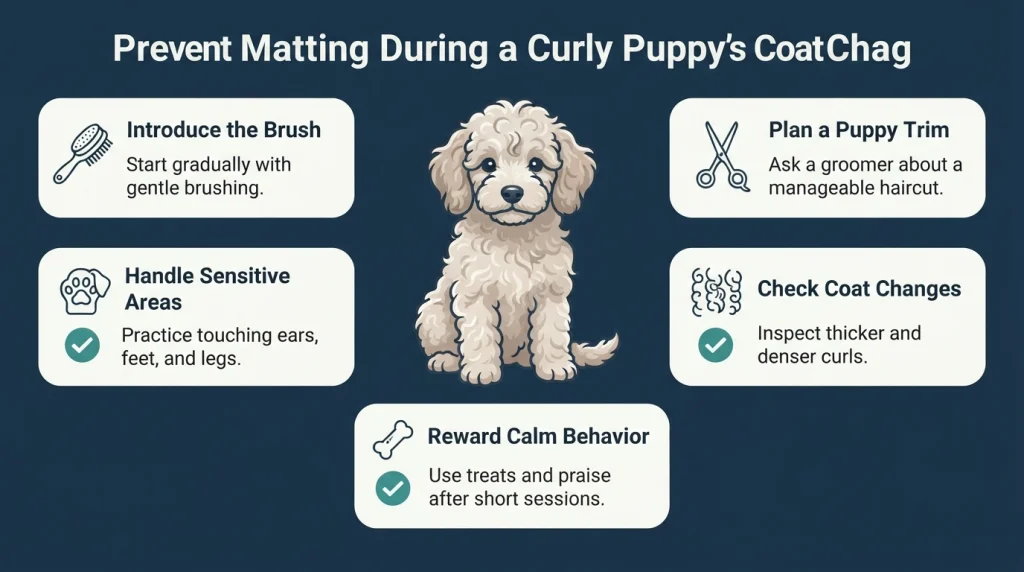
SaveCurly puppies can become more prone to tangling as their adult coat develops. Changing hair textures may create additional friction within the coat.
The timing varies by breed and individual dog. I would focus on gentle grooming habits rather than waiting for the first serious mat.
Make puppy grooming easier
- Introduce a soft, appropriate brush gradually.
- Practice gentle handling around the ears, feet, and legs.
- Reward relaxed behavior after brief grooming sessions.
- Check areas where puppy hair becomes thicker or denser.
- Ask a professional groomer about a manageable puppy haircut.
Never hold a frightened puppy down to force brushing. Positive practice now can make adult grooming considerably easier.
Can You Remove Small Tangles Before They Become Mats?
Small, loose tangles may be manageable at home when the skin remains comfortable. Tight mats attached to the skin require greater caution.
First, determine whether the hair moves freely or pulls on the skin. If your dog flinches or the knot feels tightly packed, stop.
For a small, loose tangle
- Gently hold the hair near its base to reduce pulling.
- Separate the loose ends with your fingers.
- Apply a suitable dog-safe detangler if needed.
- Use a gentle brush or comb without forcing resistance.
- Stop if the knot remains firm or your dog becomes uncomfortable.
For coat-specific instructions, see the guide to detangling Doodle hair.
When professional help is safer
Seek professional grooming help when mats are large, tight, or close to sensitive skin. A veterinarian should assess painful mats or signs of skin disease.
Veterinary guidance from PetMD’s matting guide explains how dense mats may pull on skin and conceal problems underneath.
- Several mats have joined into a broad, felted area.
- The knot sits tightly against the skin.
- Your dog cries, flinches, or resists touch.
- The skin looks red, swollen, broken, or moist.
- The mat is near the eyes, ears, genitals, or another sensitive area.
Never cut close-fitting mats with household scissors. Folded skin can become trapped inside the hair and suffer serious injury.
What Grooming Mistakes Make Curly Dog Hair Mat Faster?
Most preventable matting problems involve incomplete grooming or missed warning signs. Brushing more aggressively is rarely the answer.
- Brushing only the surface: Deep tangles remain beneath fluffy outer curls.
- Skipping several grooming days: Loose strands have more time to intertwine.
- Ignoring the ears and armpits: High-friction areas can mat before the back does.
- Bathing a tangled coat: Existing knots may become harder to remove.
- Using unsuitable tools: Very short pins may not reach dense hair.
- Pulling through knots: Force creates discomfort and can injure the skin.
- Delaying haircuts: Longer hair may exceed the owner’s available grooming time.
- Relying only on sprays: Conditioning products cannot replace thorough brushing.
My preferred rule is to stop when the dog becomes uncomfortable, not when I have finished a predetermined number of strokes. A grooming routine should protect comfort first.
Does Keeping Curly Dog Hair Short Prevent Matting?
A shorter professional trim often makes mat prevention easier. Less hair generally means fewer opportunities for curls to twist into dense knots.
However, short coats still need regular inspection and brushing. Hair can tangle again as it grows.
For owners with busy schedules, a manageable pet trim may be more realistic than a long, elaborate coat. There is no benefit in maintaining extra length if it repeatedly causes painful matting.
If you own a Poodle, this Poodle coat brushing guide explains how to adjust technique for that breed’s curls.
What Does a Simple Weekly Mat Prevention Plan Look Like?
A weekly plan makes grooming easier to remember. I would use it to organize coat checks, not as a substitute for daily care when the coat needs it.
For a dog with long curls, continue full brushing as needed each day. Add these small priorities throughout the week.
- Monday: Perform a thorough line-brushing session and comb check.
- Tuesday: Give extra attention to the ears, collar line, and chest.
- Wednesday: Inspect the legs, armpits, paws, and inner thighs.
- Thursday: Check areas beneath the harness and around the tail.
- Friday: Review any small tangles noticed earlier in the week.
- Saturday: Perform a careful whole-coat comb check.
- Sunday: Clean grooming tools and review whether the haircut remains manageable.
Even five calm minutes can be useful for a small-area inspection. Dense or longer coats may require substantially more grooming time.
I would also check the coat after swimming, heavy rain, or outdoor play. These events create additional chances for moisture and debris to become trapped.
When Should You Call a Groomer or Veterinarian?
 Save
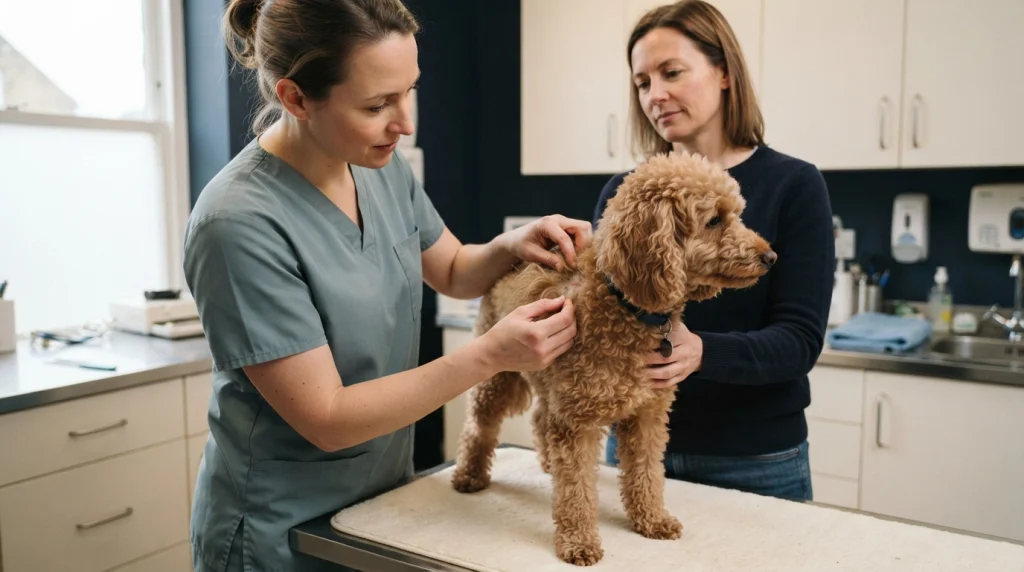
SaveContact a professional groomer when matting repeatedly returns despite suitable home care. Pain, wounds, or concerning skin changes call for veterinary assessment.
Regular grooming also provides an opportunity to notice skin problems early. The ASPCA’s dog grooming advice recommends checking skin and coat condition during routine brushing.
Warning signs that deserve attention
- Persistent scratching, licking, or biting.
- Redness, swelling, or broken skin.
- Unpleasant odor or unusual moisture beneath the coat.
- Sudden hair loss or bald patches.
- Severe pain when touching a matted area.
- Rapid changes in coat texture or condition.
Do not keep brushing an irritated area to see whether it improves. A veterinarian can check whether infection, parasites, or another condition needs treatment.
Recommended Tools for Preventing Mats in Curly Dog Hair
If I were building a practical grooming kit, I would start with one suitable slicker brush and one quality metal comb. They complement each other without adding unnecessary equipment.
The ratings below are editorial suitability scores based on product features and intended uses, not customer review averages or claims of hands-on testing.
🏆 Best for Dense Curly Coats
Chris Christensen Big G Slicker Brush
★★★★½ 4.5/5 Editorial Fit
The Big G features 27 mm stainless-steel pins and a flexible cushioned pad. I would choose it for longer, dense curls that need careful layer-by-layer brushing, while keeping pressure light and checking results with a comb.
🔍 Best for Finding Hidden Tangles
Andis 7.5-Inch Steel Comb
★★★★★ 5/5 Editorial Fit
This 7.5-inch steel comb has coarse and fine tooth sections for grooming and finishing. I recommend it as a final check after brushing because it helps reveal hidden resistance without relying on coat appearance alone.
Frequently Asked Questions
Can you completely prevent mats in curly dog hair?
You can prevent many mats with consistent brushing, regular comb checks, and a suitable haircut. However, no grooming routine guarantees a completely tangle-free coat. Friction, moisture, and coat changes can still create knots, so inspect problem areas regularly and remove small tangles early.
Should you brush curly dog hair every day?
Daily brushing is often appropriate for long, dense curly coats, especially Poodles and Doodles. Shorter trims may require less intensive care. The important point is to reach beneath the surface without irritating the skin and adjust the routine to your dog’s coat condition.
Is it better to brush curly dog hair wet or dry?
For routine maintenance, many owners find dry or lightly conditioned hair easier to brush carefully. Avoid dragging tools through tightly tangled wet hair. Check the coat before bathing, follow product directions, and dry dense curls thoroughly to reduce moisture-related grooming problems.
Why does my Doodle get mats even though I brush regularly?
Regular brushing may miss knots when the brush only smooths the outer hair. Dense or mixed coat textures can hide tangles near the skin. Try gentle line brushing, check with a metal comb, and pay extra attention to friction areas beneath collars and harnesses.
Can a groomer remove severe mats without shaving?
Sometimes small, loose tangles can be worked apart safely. Severe mats may require professional clipping because prolonged detangling can cause pain or skin damage. A groomer should assess the coat, while a veterinarian should examine painful mats, wounds, or signs of infection.
Final Takeaway: Prevent Mats Before They Become Painful
Preventing mats in curly dog hair comes down to gentle brushing, regular comb checks, and a manageable grooming schedule. Focus on the hair near the roots and pay attention to areas that experience frequent rubbing.
Start with a suitable slicker brush and metal comb, then make grooming a calm part of your dog’s routine. If tight mats develop, choose professional help rather than forcing them apart.
A comfortable, well-maintained coat matters far more than keeping every curl long and fluffy.

Thomas Cutter is a lifelong dog owner and the founder of FindOutAboutDogs.com. With over 10 years of hands-on experience owning multiple breeds, Thomas created this site to provide honest, research-based dog advice that real owners can actually trust.
