10 Best Brush for Dogs With Curly Fur in 2026: Picks That Beat Mats
The best brush for dogs with curly fur is the Chris Christensen Mark VII Curved Slicker, pairing polished tips with a large surface. We evaluated 10 curly-coat brushes on detangling power, skin comfort, and durability, using published specs and groomer guidance. Most brushes look identical online but snag curls or miss mats underneath, and that gap shaped every pick here. Whether you need a budget slicker, a gentle option, or a finishing comb, this guide gives one clear answer.


Quick Comparison: All 10 Products Ranked
| # | Product | Best For | Rating | Badge | |
|---|---|---|---|---|---|
| 1 | Chris Christensen Mark VII Curved Slicker Dog Brush | Big curly dogs | 4.8/5 | Best Overall | Buy → |
| 2 | Chris Christensen Big G Dog Slicker Brush | Doodles | 4.7/5 | Best for Doodles | Buy → |
| 3 | Dog by Dr. Lisa Slicker Brush | Small curly dogs | 4.6/5 | Best for Small Dogs | Buy → |
| 4 | Chris Christensen 7.5-Inch Greyhound Style Comb | Mat checks | 4.5/5 | Best Finishing Comb | Buy → |
| 5 | Pet Republique Self-Cleaning Slicker Brush | Easy cleanup | 4.5/5 | Best Self-Cleaning | Buy → |
| 6 | #1 All Systems Slicker Brush for Dogs | Long coats | 4.4/5 | Best for Long Curls | Buy → |
| 7 | Artero Dematting Slicker | Tangle-prone | 4.4/5 | Best for Tangles | Buy → |
| 8 | FURminator Soft Slicker Brush for Large Dogs | Sensitive skin | 4.3/5 | Best Soft Touch | Buy → |
| 9 | Paw Brothers Flat Slicker Brush for Dogs | Tight budgets | 4.2/5 | Best Budget | Buy → |
| 10 | Hartz Groomer’s Best Combo Dog Brush | Light upkeep | 4.0/5 | Best Combo | Buy → |
How We Chose These Brushes
What we compared
10 brushes and combs aimed at curly coats, compared on design, pin style, sizing, handle comfort and cleanup. Ratings are editorial scores, not lab results.
Our 3 scoring criteria
Detangling power, skin comfort and durability. Every product is scored out of 5 on all three, and the overall rating is the average.
Where our information comes from
Published groomer and retailer guidance, manufacturer descriptions and owner feedback. Check each listing for the latest specs before you buy.
What we cut and why
Undercoat rakes and shedding blades. They are built for double coats, and they can tear through curls and cause breakage.
What to Look for When Buying a Brush for Curly Fur
Curly hair mats from the skin outward, so the wrong brush gives you a smooth top coat and a tangled base. Four things separate a brush that works on curls from one that just looks busy.
1. Pin Type and Tip Finish
A slicker with fine, angled pins reaches through curls to the base of the hair, which is where mats begin. Polished or rounded tips matter because they glide over skin instead of scratching it. Most curly coats need a slicker for the bulk of the work and a steel comb for the check, as our guide to the slicker brush versus comb choice explains.
2. Head Size and Handle Comfort
Match the head to the dog. A large head covers a doodle quickly but is clumsy on a Bichon’s face and legs, while a small head makes a big coat tedious. A non-slip, comfortable handle matters more than it sounds, since curly coats need long sessions. If you are still learning the technique, start with our walkthrough on how to brush a curly-coated dog.
3. Self-Cleaning or Manual
A self-cleaning slicker has a button that clears hair from the pins in one push. That saves real time when a thick curly coat packs the brush every few strokes. The trade-off is moving parts that can wear, and flexible bristles that are gentler but less forceful on stubborn knots.
4. Pairing a Brush With a Comb
No slicker catches everything. A steel comb run through the coat after brushing shows you any mat the brush skipped, especially behind the ears, under the legs and along the belly. Buying both tools together costs little and prevents most of the matting that sends curly dogs to the groomer for a shave.

Chris Christensen Mark VII Curved Slicker Dog Brush — Gentle pins, roomy head
Best for: Poodles, doodles and other big curly dogs
Curly coats hide tangles close to the skin, so a brush that skips the root only moves the problem around. The Mark VII Curved Slicker is built for that job, with polished tips that help prevent scratching and a large curved surface that covers a big dog quickly. It suits poodles, doodles and other dense curly breeds that need regular line brushing. The trade-off is a premium price tier, which is harder to justify for a small dog with a light coat. If you want one brush for most curly coats, start here.
- Polished tips help protect skin
- Large curved head covers big dogs
- Gentle on curly coats
- Premium price tier
- Large head awkward on small dogs
4.8/5
4.8/5
4.7/5

Chris Christensen Big G Dog Slicker Brush — Built for dense doodle coats
Best for: Goldendoodles, labradoodles and thick curly coats
Doodle coats often mix wavy and curly hair in dense layers, and a surface-level brush leaves the tangles underneath untouched. The Big G is a Chris Christensen slicker that groomer-focused reviewers single out for doodles and curly coats. Daily brushing keeps these coats knot-free, so a well-made tool pays off over months of use. It is not a bargain brush, and the large size is overkill for toy breeds. For a goldendoodle, labradoodle or similar dog that you brush often, it is the model to choose.
- Singled out for doodle coats
- Well-made for daily brushing
- Reaches dense layers
- Premium price tier
- Oversized for toy breeds
4.7/5
4.6/5
4.8/5

Dog by Dr. Lisa Slicker Brush — Right-sized for smaller curly dogs
Best for: Bichons, Cockapoos and small poodles
Small curly dogs get overlooked by guides that assume a big head and a big arm. This slicker comes in two sizes, so you can match the brush to a Bichon, Cockapoo or small poodle instead of fighting an oversized tool. Reviewers note that it removes loose hair easily and helps spread natural oils through the coat. The limitation is that it runs smaller than other slickers, so grooming a large doodle with it would be slow and tiring. For small and medium curly dogs, the sizing options make it an easy fit.
- Two sizes available
- Helps distribute natural coat oils
- Easily removes loose hair
- Small head slow on large dogs
4.6/5
4.7/5
4.5/5

Chris Christensen 7.5-Inch Greyhound Style Comb — The mat-check after brushing
Best for: Checking for hidden mats after slicker work
A slicker can make a curly coat look finished while tangles survive close to the skin. A steel comb is how groomers check, and this greyhound-style comb is built for the job, with rounded corners that reduce friction and break fewer hairs. It glides through a properly brushed coat and stops dead at anything that still needs work. It is not a replacement for a slicker, because it will not lift loose fur on its own. Use it as the second step on every session, especially on legs, ears and armpits.
- Rounded corners reduce friction
- Glides through brushed fur
- Exposes hidden mats fast
- Cannot replace a slicker
- Snags in tight mats
4.4/5
4.5/5
4.7/5

Pet Republique Self-Cleaning Slicker Brush — Easy cleanup after every session
Best for: Owners tired of pulling hair off the pins
Brushing a curly dog produces a lot of loose hair, and picking it off the pins can take longer than the brushing itself. This slicker has flexible bristles that gently work through tangles and smooth the coat, plus a one-push button that clears the hair in seconds. The ergonomic rubber handle keeps your wrist comfortable during longer sessions. Flexible bristles are kinder to skin but less forceful on dense mats, so pair it with a comb for the stubborn spots. It suits owners who brush often and hate the cleanup.
- One-push button clears hair
- Flexible bristles detangle gently
- Ergonomic rubber handle
- Flexible bristles struggle with dense mats
- Moving parts can wear over time
4.6/5
4.4/5
4.4/5

#1 All Systems Slicker Brush for Dogs — Extra-long pins reach the root
Best for: Long, thick curly and wavy coats
On a long, thick curly coat, standard pins stop short of the skin and leave the base of the hair tangled. This slicker is known for extra-long pins that reach deeper, which makes line brushing a dense coat far more practical. It is a good match for long-haired curly dogs and fluffy doodles that carry real length. The long pins need a careful, patient technique, because pressing hard on thin-skinned areas can cause discomfort. On a short, cropped coat it is more tool than you need, and a standard slicker will serve better.
- Extra-long pins reach deep
- Suits long, thick coats
- Practical for line brushing
- Needs careful, gentle technique
- Overkill on short clips
4.6/5
4.2/5
4.4/5

Artero Dematting Slicker — Pro-style help on tangled curls
Best for: Dogs that tangle faster than you can brush
Some curly dogs tangle so quickly that a basic slicker feels like it is losing the race. This dematting-style slicker is aimed at that problem and is recommended in groomer-led guides for long, tangle-prone hair. It gives you more bite on early tangles, which can save a trip to the groomer when you catch them in time. It is also easier to misuse, because aggressive pulling on a tight mat hurts the dog. Use it gently on small knots only, and send serious mats to a professional rather than forcing them.
- More bite on early tangles
- Recommended for long hair
- Pro-style detangling help
- Easy to overuse on mats
- Not for serious mats
4.6/5
4.1/5
4.4/5
 Save
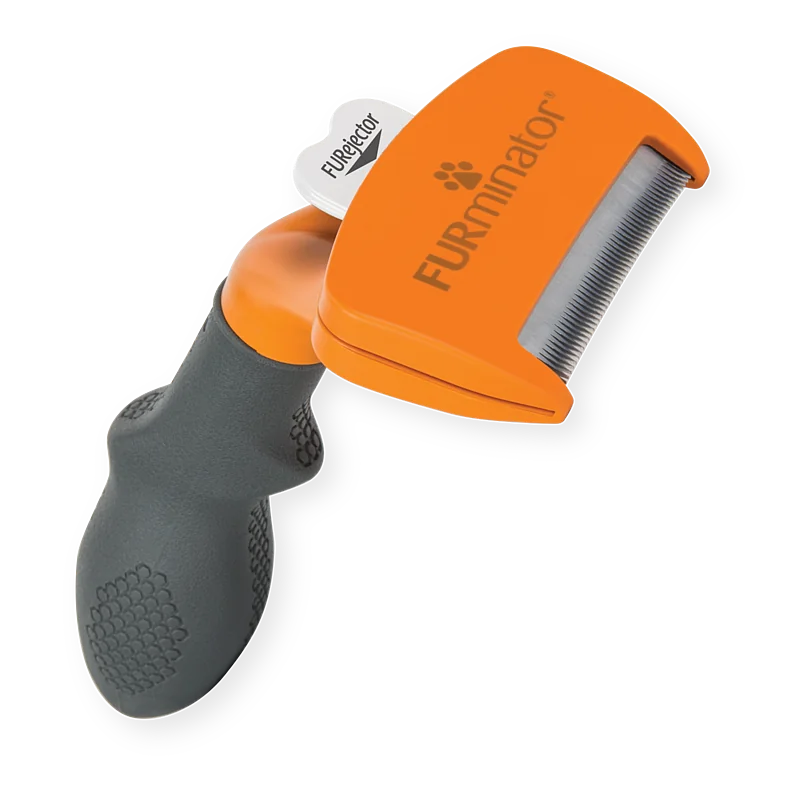
FURminator Soft Slicker Brush for Large Dogs — Gentle slicker for sensitive skin
Best for: Large curly dogs with sensitive skin
If your curly dog flinches the moment a slicker comes out, a softer touch can turn grooming around. This soft slicker is made for large dogs and uses gentler pins than a standard firm slicker, so it feels kinder on sensitive skin. That comfort makes it a good tool for nervous dogs, puppies learning to accept brushing, and daily maintenance of coats that are already mostly tangle-free. The softer pins are slower on thick curls and dense mats, so it will not be the only tool for a heavy coat.
- Gentler pins for sensitive skin
- Sized for large dogs
- Good for nervous brushing
- Slower on thick curls
- Large-dog size only
4.1/5
4.7/5
4.2/5
 Save
Paw Brothers Flat Slicker Brush for Dogs — Easy entry-level slicker
Best for: First-time owners on a budget
If you are new to curly coats and not ready to invest in a premium tool, this flat slicker gets you started. It has different pin types on each side, which helps with both loose fur and tangles, and a rubber handle that is comfortable to hold. Groomer reviews note that very curly coats may do better with a firmer slicker, so expect to move more slowly through dense areas. It is also on the large side for small dogs. For a medium coat with light tangles, it does the basics well.
- Budget-friendly slicker
- Different pin types each side
- Comfortable rubber handle
- Very curly coats may need firmer pins
- Too large for small dogs
4.2/5
4.1/5
4.2/5

Hartz Groomer’s Best Combo Dog Brush — Simple two-sided brush for light coats
Best for: Light upkeep between groomer visits
Not every curly dog needs a full grooming kit, and a two-sided brush can cover light upkeep for a short or lightly curled coat. This combo brush pairs two brushing surfaces in one tool, so you can tidy and smooth without buying separate brushes. It is simple, familiar and easy to find. The compromise is power: a combo brush is not a true slicker, so it will not reach deep tangles or break up mats in a dense curly coat. Treat it as maintenance between salon visits, not your main detangler.
- Two brushing surfaces in one
- Simple and easy to find
- Good for light upkeep
- Not a true slicker
- Weak on mats and dense curls
3.9/5
4.2/5
4.0/5
Top 3 Head-to-Head: Mark VII Slicker vs Big G Slicker vs Dr. Lisa Slicker
These three slickers are the ones most curly-dog owners end up choosing between, because each is the right size for a different dog. The gap comes down to head size, build and price tier.
| Feature | #1 Mark VII Slicker | #2 Big G Slicker | #3 Dr. Lisa Slicker |
|---|---|---|---|
| Detangling power | 4.8/5 — Best | 4.7/5 | 4.6/5 |
| Skin comfort | 4.8/5 — Best | 4.6/5 | 4.7/5 |
| Durability | 4.7/5 | 4.8/5 — Best | 4.5/5 |
| Choose if… | You have a big curly dog and want the safest all-round brush. | You brush a doodle often and want a tool made for dense layers. | You have a small or medium curly dog that needs a smaller head. |
Who These Brushes Are NOT For
A brush is a maintenance tool, and it cannot fix a coat that has already gone wrong.
These picks also suit curly and wavy coats only. Double-coated dogs such as huskies and German shepherds need an undercoat rake, and short-coated breeds do better with a rubber curry brush.
Common Mistakes to Avoid
Most curly-coat problems come from technique, not from the brush you bought.
Frequently Asked Questions About Brushes for Curly Dogs
What is the best brush for a dog with curly hair?
A slicker brush is the best all-round choice for curly hair. Its fine, angled pins reach through the coat to the skin and pull out tangles before they harden into mats. Choose polished tips for comfort and a head size that fits your dog. Add a steel comb to check for hidden knots after every brushing session.
Should you use a slicker brush or a comb on curly dog hair?
Use both, in that order. A slicker brush removes loose hair and works out surface tangles, while a steel comb checks that nothing remains near the skin. If the comb catches, go back to the slicker on that spot. Relying on either tool alone leaves mats behind in a curly coat.
How often should you brush a curly-haired dog?
Most curly-haired dogs need brushing several times a week, and many benefit from a short daily session. Curly coats tangle quickly because loose hair stays trapped in the curls. Dogs with long or very dense coats need the most attention. If your dog has just had a trim, you can usually brush a little less often.
How do you brush a curly dog without hurting them?
Brush in small sections, starting at the ends of the hair and working toward the skin. Hold the hair near the root so the brush does not pull. Use light pressure and stop at any knot that will not release. Short, calm sessions with treats help nervous dogs accept the routine.
Should you brush a curly dog before or after a bath?
Brush thoroughly before the bath. Water tightens curls and turns small tangles into stubborn mats, so you want the coat clear before it gets wet. After the bath, dry the coat fully and brush again lightly to keep the curls from tangling as they dry. Skipping the pre-bath brush is one of the most common reasons curly dogs end up with mats.
How do I stop my curly dog’s fur from matting?
Brush regularly, brush to the skin, and check problem areas with a comb. Behind the ears, under the legs and around the collar mat first. For a full routine, read our guide on how to prevent mats in curly dog hair, and book regular trims if the coat is long.
Do curly-haired dogs shed?
Curly-haired dogs usually shed less loose hair into your home, but the hair does not disappear. It stays trapped in the curls and can form mats if you skip brushing. That is why curly breeds like poodles and doodles need regular brushing even when you rarely see fur on the floor.
Our Final Verdict
Curly coats punish the wrong tool, so the slicker you pick matters more than how many brushes you own. The Chris Christensen Mark VII Curved Slicker is our top choice for most owners, with the Big G close behind for doodles. Add a finishing comb to catch the mats your brush misses.
Thomas Cutter is a lifelong dog owner and the founder of FindOutAboutDogs.com. With over 10 years of hands-on experience owning multiple breeds, Thomas created this site to provide honest, research-based dog advice that real owners can actually trust.
