What Brush Is Best for a Pomeranian? 2026 Grooming Guide
Quick Answer
The best brush for a Pomeranian is a soft, long-pin slicker brush that can reach through the breed’s dense double coat without harsh scraping. I also recommend a smooth pin brush for everyday maintenance and a metal comb for checking hidden tangles, because the Pomeranian’s double coat includes both a dense undercoat and longer outer guard hairs.
What to look for
- Long flexible pins: They should reach into the undercoat rather than only brushing the surface.
- Gentle cushion: A flexible brush pad makes it easier to control pressure on a small dog.
- Smooth tips: Rough or poorly finished pins can snag hair and irritate skin.
- Small-to-medium head: This gives better control around the chest, legs, ears, and tail.
- Metal finishing comb: Use it after brushing to find tangles the brush missed.
My simple rule
- If the comb cannot glide through a section after brushing, that section is not finished yet.
Pomeranians look like tiny clouds, but that fluffy appearance creates a grooming challenge. Their coat is thick enough for a brush to glide over the top while leaving tangles underneath.
That is why I would not choose a Pomeranian brush by price or popularity alone. The brush must reach the undercoat gently and still give you enough control for a three-to-seven-pound dog.


Why Does a Pomeranian Need a Special Type of Brush?
A Pomeranian has a double coat: a short, dense undercoat covered by longer, harsher guard hairs. That structure creates the breed’s characteristic stand-off, fluffy appearance.
A brush that only smooths the outer hairs can make the coat look finished while small knots remain near the skin. Those hidden tangles can tighten as more loose undercoat collects around them.
- Undercoat: Soft, dense hair that provides much of the coat’s volume.
- Guard hairs: Longer outer hairs that create texture and protect the undercoat.
- High-friction areas: Behind the ears, under the front legs, chest, rear legs, and under the tail need extra checking.
The American Kennel Club’s brush guide explains that slicker brushes are useful for removing loose hair and helping prevent mats in longer and denser coats.
What Type of Brush Is Best for a Pomeranian?
For a full adult coat, my first choice is a soft long-pin slicker brush. The longer pins have a better chance of reaching into the coat instead of polishing only the surface.
I would pair it with a pin brush and metal comb rather than expecting one tool to handle every grooming job.
| Tool | Best Use | Pomeranian Fit | Main Caution |
|---|---|---|---|
| Long-pin slicker | Loose undercoat, small tangles, line brushing | Best all-around choice | Do not press hard against skin |
| Pin brush | Routine brushing, separating and fluffing coat | Excellent secondary brush | Choose smooth polished pins |
| Metal comb | Checking work and locating hidden knots | Essential finishing tool | Never rip through a tight mat |
| Bristle brush | Surface smoothing and puppies | Useful but not enough alone | Usually cannot reach dense undercoat |
Is a Slicker Brush Good for a Pomeranian?
Yes. A soft slicker brush is one of the most useful tools for an adult Pomeranian because its fine pins can separate dense hair and lift loose undercoat.
The important word is soft. A harsh slicker combined with heavy pressure can make brushing uncomfortable and may scrape sensitive skin.
Tip: Hold the brush lightly. If you feel the need to force it through a knot, stop and work on a smaller section instead.
Is a Pin Brush Good for a Pomeranian?
Yes, especially for routine maintenance and fluffing. Look for long, smooth metal pins with polished ends and a cushioned base.
A pin brush is also useful when you want to separate coat without pulling out large amounts of loose hair. The AKC recommends pin brushes for many long-coated dogs in its at-home grooming guidance.
Do You Need a Comb After Brushing?
Yes. I consider the metal comb the final quality check rather than an optional extra.
Run it gently through each finished section. If it catches, separate that area and return to the brush instead of dragging the comb through the resistance.
How Should You Brush a Pomeranian Without Damaging the Coat?
 Save
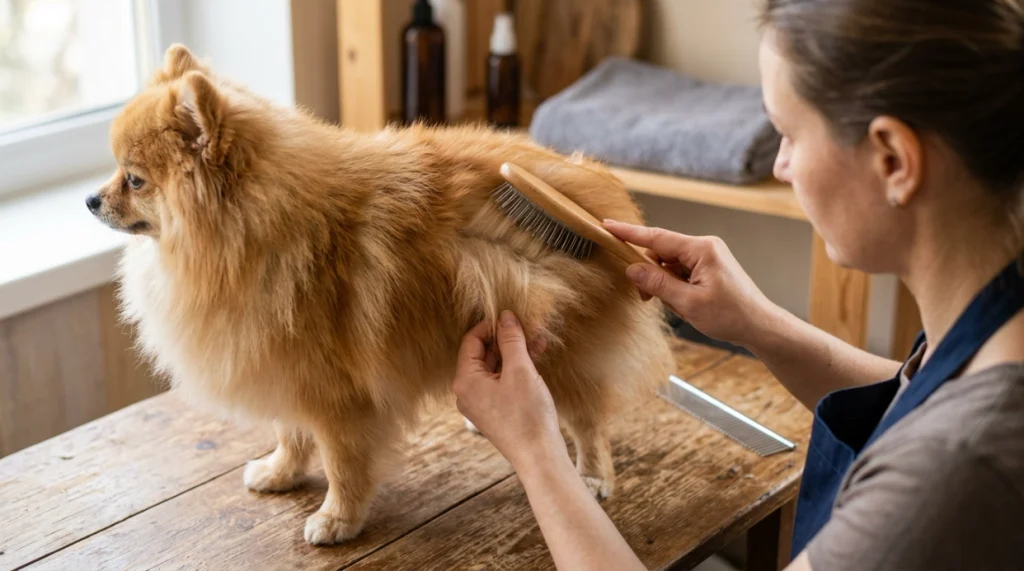
SaveThe safest approach is line brushing, which means working through the coat in small layers instead of making long strokes over the entire body.
This method helps you see whether the brush is reaching close to the roots. It also makes hidden tangles much easier to locate.
- Start with a calm dog. Put your Pomeranian on a stable surface and let them see the brush.
- Separate a narrow line of coat. Use your free hand to lift the surrounding hair away.
- Brush the exposed section gently. Work from near the skin toward the ends without scraping the skin.
- Move to the next small section. Continue across the body instead of jumping between areas.
- Check with a metal comb. The comb should pass through without catching when the section is finished.
I pay the most attention to friction zones. Behind the ears and under the front legs can look fine from the outside while a tight little knot forms underneath.
The AKC also recommends checking for mats, debris, cuts, and other skin abnormalities while brushing. That makes grooming useful for more than appearance.
How Often Should You Brush a Pomeranian?
Most Pomeranians benefit from several short brushing sessions each week, with extra attention during periods of heavier shedding. The exact schedule depends on coat density, lifestyle, age, and how quickly your dog’s coat tangles.
A short, careful session is better than waiting until the entire coat needs a long rescue job. Consistency keeps loose undercoat from building up.
- Light maintenance: Check problem areas between full sessions.
- Full brushing: Work section by section through the whole coat several times weekly as needed.
- Heavy shedding: Increase grooming frequency when loose undercoat becomes noticeable.
- After outdoor play: Check the coat for burrs, leaves, and small tangles.
If grooming workload matters while choosing a companion dog, our guide to indoor dog breeds for families compares coat-care needs across several popular breeds.
What Brushes Should You Avoid on a Pomeranian?
Avoid choosing tools because they promise to remove the largest possible amount of hair. A Pomeranian’s coat should be managed carefully, not stripped aggressively.
I am especially cautious with sharp or blade-style de-shedding tools. They may cut healthy coat along with loose hair when used incorrectly.
- Sharp slickers: Poorly finished pins can scratch skin.
- Rubber-tipped pin brushes: Bulb tips may catch in long hair.
- Aggressive de-shedding blades: These can remove or cut more coat than intended.
- Very short pins: They may skim across a full adult coat without reaching the undercoat.
- Human hairbrushes: They are usually designed for a different hair structure and grooming purpose.
The AKC notes that dense double-coated dogs need tools capable of reaching trapped undercoat. Its dog-shedding guidance also emphasizes working carefully instead of rushing.
What Size Slicker Brush Is Best for a Pomeranian?
 Save
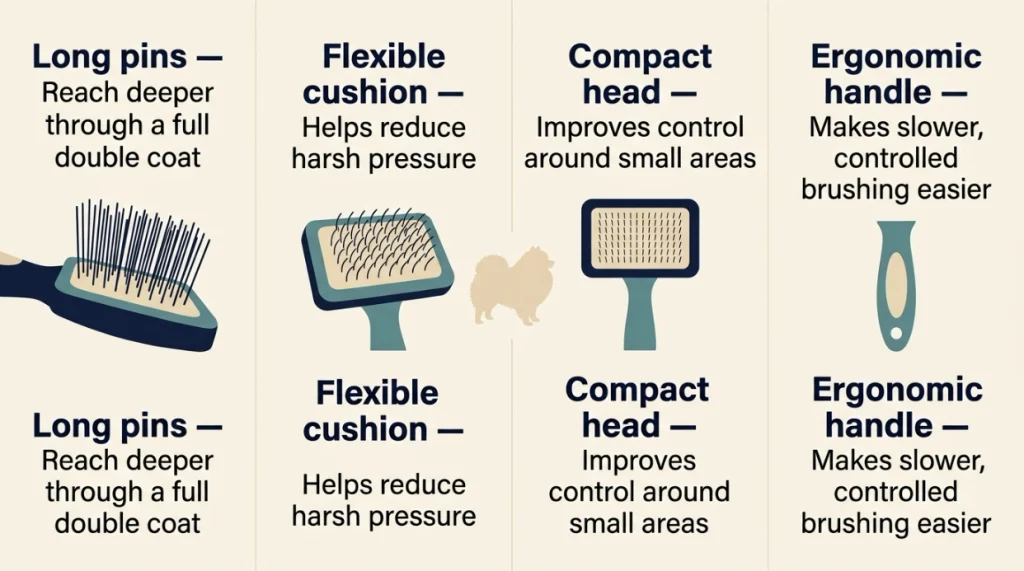
SaveA small or medium brush head is usually easier to control on a Pomeranian than a large professional brush. However, pin length matters just as much as head size.
For example, the current Chris Christensen Big G uses 27 mm stainless-steel pins across its sizes. The smaller versions give you those long pins with a head that is easier to maneuver around a toy-sized dog.
| Feature | Why It Matters |
|---|---|
| Long pins | Reach deeper through a full double coat |
| Flexible cushion | Helps reduce harsh pressure |
| Compact head | Improves control around small areas |
| Ergonomic handle | Makes slower, controlled brushing easier |
What About Pomeranian Puppies?
A puppy’s coat can be shorter and less developed than a mature Pomeranian coat. That means grooming sessions should focus as much on building good habits as removing loose hair.
Start gently with a soft pin or bristle brush, then introduce other tools gradually as the coat changes. Keep the first sessions short and reward calm behavior.
My approach: A five-minute calm session that a puppy accepts is more useful than a twenty-minute battle. Grooming needs to become normal before the adult coat arrives.
If you’re still comparing small dogs for limited living space, our best dog breeds for apartments guide includes grooming requirements alongside size and activity needs.
How Do You Know When Brushing Is Finished?
The coat should feel separated and airy rather than packed together. More importantly, your finishing comb should move through the coat without stopping at hidden knots.
Do not judge the result only by appearance. Pomeranian fur can hide trouble surprisingly well.
- The comb reaches through each section smoothly.
- No tight knots remain behind the ears.
- The armpit and chest areas feel separated.
- The rear furnishings are free from compacted loose hair.
- Your dog’s skin is not red from excessive brushing pressure.
Owners looking for breeds with simpler day-to-day routines may also find our guide to easy-going dog breeds useful.
My Recommended Pomeranian Brush Kit
 Save
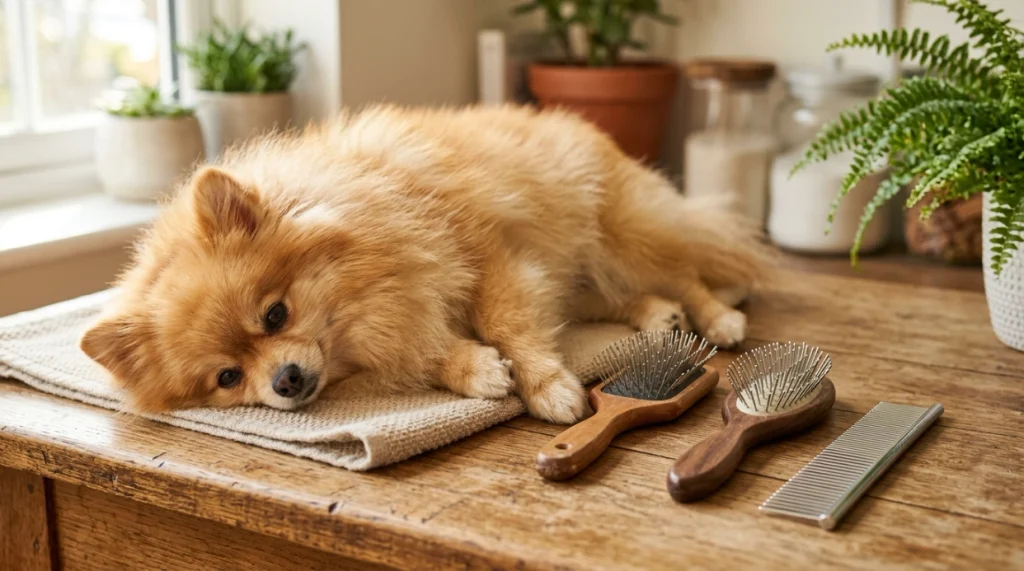
SaveIf you’re ready to choose your tools, I would build the kit around three jobs: reaching the undercoat, maintaining the coat, and checking the finished result.
🏆 Best Overall
Chris Christensen Big G Slicker Brush
★★★★½ 4.8/5 editorial rating
The Big G uses 27 mm stainless-steel pins, a flexible cushion, and a curved head designed for dense coats. For a full-coated Pomeranian, this is the tool I would choose when reaching loose undercoat is the main priority.
✨ Best for Daily Maintenance
Chris Christensen Original Series Oval Pin Brush
★★★★½ 4.6/5 editorial rating
This brush uses polished stainless-steel pins set in a cushioned pad, with multiple pin lengths available. I like a quality pin brush for separating, fluffing, and maintaining coat between more thorough slicker sessions.
🔎 Best Finishing Check
Chris Christensen 7.5″ Buttercomb #003
★★★★½ 4.7/5 editorial rating
The #003 combines fine and extra-coarse teeth with rounded, finished tips. I would use it after brushing to confirm that hidden tangles are gone rather than trying to force the comb through mats.
Frequently Asked Questions
What is the single best brush for a Pomeranian?
A soft, long-pin slicker brush is the best single brush for most adult Pomeranians. It can reach into the dense undercoat better than a surface-only brush, but you should use light pressure and check the coat afterward with a metal comb.
Can I use a regular slicker brush on a Pomeranian?
You can if the pins are smooth, flexible, and long enough for your dog’s coat. Avoid stiff or sharp slickers, and never press the brush firmly into the skin just to reach deeper.
Should I use a de-shedding brush on a Pomeranian?
I would be cautious with blade-style de-shedding tools because they can cut or remove healthy coat when used aggressively. For routine home grooming, a gentle slicker, pin brush, and metal comb give you much more control.
Should you brush a Pomeranian wet or dry?
A completely soaked coat is difficult to brush safely, but many groomers prefer a light dog-safe grooming mist rather than working through brittle, static-filled hair. Whatever you use, work slowly and stop when you meet resistance.
How do I remove mats from a Pomeranian?
Separate the mat into the smallest workable section and loosen it gently from the ends rather than pulling from the skin. If the mat is tight against the skin, large, or painful, let an experienced professional groomer handle it instead of cutting blindly with scissors.
The Bottom Line
If you ask me what brush is best for a Pomeranian, I would start with a soft long-pin slicker brush. Then I would add a polished pin brush and a quality metal comb.
The tools matter, but technique matters just as much. Work in small sections, use light pressure, and let the comb tell you whether you truly reached the undercoat.
That simple routine protects the fluffy look people love while making regular grooming much easier to manage.

Thomas Cutter is a lifelong dog owner and the founder of FindOutAboutDogs.com. With over 10 years of hands-on experience owning multiple breeds, Thomas created this site to provide honest, research-based dog advice that real owners can actually trust.
