Which Brush Is Best for Short Dog Coats? 2026 Guide
Quick Answer
For most short-coated dogs, the best brush is a rubber curry brush, grooming glove, or soft bristle brush. Rubber tools are excellent for loosening dead hair, while bristle brushes collect surface fur and smooth the coat. The AKC dog brush guide also recommends bristle and rubber brushes for short coats.
What usually works best
- Rubber curry brush: Best for loosening short dead hairs while gently massaging the skin.
- Grooming glove: Useful for nervous dogs that prefer being stroked instead of brushed.
- Soft bristle brush: Good for removing surface debris and giving the coat a smooth finish.
- Short-hair de-shedding tool: Helpful for heavier shedders when used gently and only as directed.
- Avoid overly sharp tools: Short hair gives metal pins less cushioning from the skin.
My simple setup
- Start with rubber to loosen hair, then finish with a soft bristle brush if you want a cleaner, smoother coat.
Short coats look easy to maintain, but they can shed far more than their length suggests. Tiny hairs from breeds like Beagles, Boxers, Pugs, and pointers can work their way into sofas, clothing, and carpet surprisingly fast.
The good news is that you usually don’t need an aggressive grooming tool. Choosing a brush that matches the coat makes the job faster and more comfortable.


What Kind of Brush Is Best for a Short-Haired Dog?
A rubber curry brush is my first choice for most short-haired dogs. Its flexible teeth grab loose hair without relying on sharp metal pins.
A soft bristle brush comes second when the goal is polishing the coat and lifting light debris.
Definition: A short dog coat is a coat where the hair lies relatively close to the body and usually does not form long feathers, curls, or flowing sections.
- Smooth single coats: Often respond well to rubber brushes, grooming mitts, and soft bristles.
- Short dense coats: May need rubber grooming plus occasional de-shedding during heavier shedding.
- Short double coats: Need more care because loose undercoat can sit beneath the visible hair.
- Sensitive skin: Usually calls for softer, more flexible grooming tools and lighter pressure.
That last distinction matters. Hair length alone doesn’t tell you everything about the coat.
A Labrador Retriever and a Boxer both look short-haired, for example, yet their coat density and shedding behavior can feel quite different during grooming.
Rubber Brush vs Bristle Brush: Which Is Better?
Rubber brushes are better for loosening dead hair, while bristle brushes are better for finishing. Many short-coated dogs benefit from using both in that order.
I don’t see these tools as competitors. They perform different jobs.
| Brush Type | Best Use | Short-Coat Fit | Main Caution |
|---|---|---|---|
| Rubber curry brush | Loose hair and massage | Excellent | Avoid excessive rubbing in one spot |
| Grooming glove | Loose hair and nervous dogs | Excellent | May not reach dense undercoat |
| Soft bristle brush | Finishing and surface debris | Excellent | Limited deep hair removal |
| Short-hair de-shedding tool | Heavy loose undercoat | Good when appropriate | Too many passes can irritate skin |
| Slicker brush | Tangles and longer coats | Usually unnecessary | Pins can feel harsh on exposed skin |
VCA Animal Hospitals also recommends flexible grooming gloves or short-bristled brushes for smooth-coated dogs. That fits what I look for in a simple short-coat routine.
The gentler tool often does the better job.
Is a Slicker Brush Good for Short-Haired Dogs?
A slicker brush usually isn’t my first choice for a genuinely short, smooth coat. Slickers are better known for removing loose hair and tangles from medium, long, curly, or thicker coats.
Short coats provide less hair between the wire pins and the dog’s skin. That makes pressure especially important.
- Use caution: Never press a slicker firmly against a smooth coat.
- Check pin length: Long pins designed for thick coats are unnecessary for many short-haired dogs.
- Watch the skin: Stop if you see redness or your dog repeatedly moves away.
- Choose rubber first: A curry brush usually provides enough hair removal with less risk of scratching.
Slicker brushes make much more sense once coat length, curls, or density increases. That’s why a double-coated breed may need a completely different grooming setup.
For comparison, my guide to choosing a brush for a Husky shows why thick undercoat changes the tool choice.
How Do You Brush a Short-Haired Dog Properly?
 Save
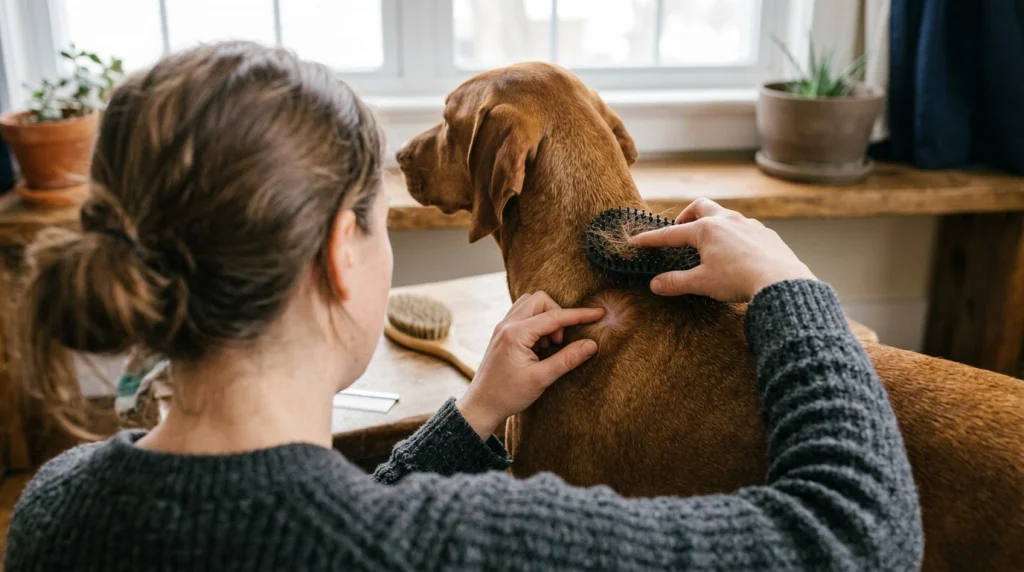
SaveBrush gently in short sessions and pay attention to the direction of hair growth. The goal is to collect loose coat without repeatedly scraping the same skin.
As of 2026, I still prefer a simple routine over aggressive de-shedding.
- Inspect the skin first. Look for sores, redness, lumps, ticks, or painful areas before brushing.
- Loosen loose hair. Use a rubber curry brush or grooming glove with controlled strokes.
- Work section by section. Cover the shoulders, back, sides, chest, and hindquarters without lingering too long.
- Use lighter pressure underneath. The belly, legs, and chest may be more sensitive.
- Finish with the coat direction. A bristle brush can collect loosened hair and smooth everything down.
- Check the skin again. Stop if brushing causes redness or obvious discomfort.
The VCA coat-care guidance also emphasizes choosing grooming tools according to coat type and avoiding excessive pulling.
One practical rule helps me judge pressure: the skin shouldn’t look scraped or irritated when the session ends.
Should You Brush Against the Direction of the Hair?
A brief pass against hair growth can help loosen dead hair on some short coats. Follow it by brushing in the natural direction to remove the loosened fur and smooth the coat.
The AKC describes this technique for shorter coats such as those on Beagles, Pugs, and German Shorthaired Pointers.
Don’t scrub aggressively backward on sensitive skin. Gentle movement matters more than speed.
How Often Should You Brush a Short-Haired Dog?
Weekly brushing works well for many short-coated dogs, but heavier shedders may benefit from several short sessions per week. Individual coat density and season matter more than a rigid schedule.
Some smooth coats need surprisingly little maintenance. Others shed steadily throughout the year.
- Light shedding: About once weekly may be enough.
- Moderate shedding: Two or three short sessions can help control loose hair.
- Heavy seasonal shedding: Increase brushing temporarily as loose coat builds.
- After outdoor activity: Check for dirt, burrs, ticks, or skin irritation.
- Before a bath: Brush loose hair out first whenever practical.
The AKC’s home grooming guidance recommends regular brushing even for short-haired breeds.
Consistency beats marathon grooming sessions.
What About Short-Haired Dogs With an Undercoat?
 Save
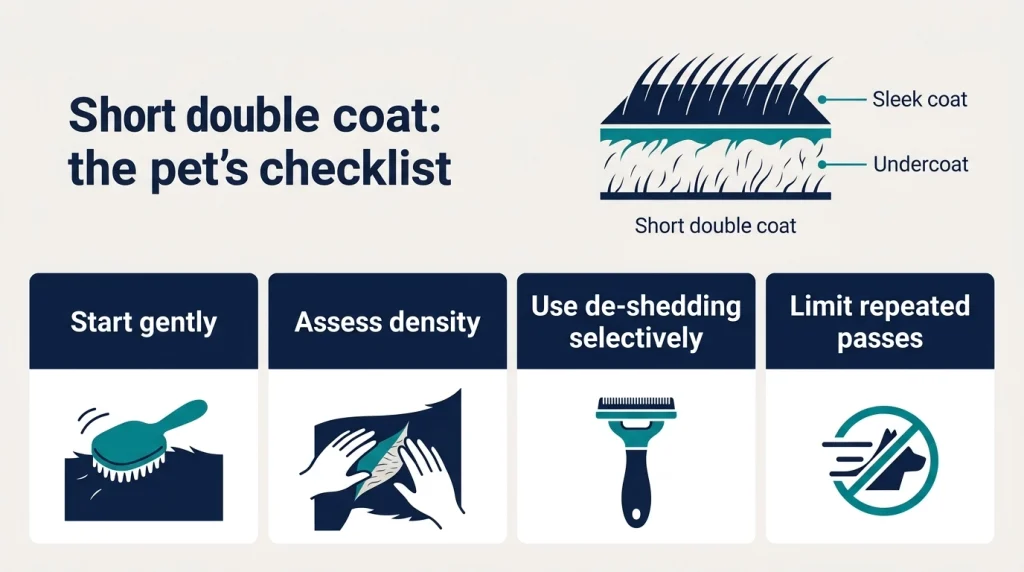
SaveA short double coat may need more than a soft surface brush. Dense undercoat can shed underneath the visible topcoat even when the outer hair looks sleek.
Labradors, Pugs, and several other short-coated dogs can release impressive amounts of loose hair.
- Start gently: Use rubber or a grooming mitt for routine loose hair.
- Assess density: Part the coat and see whether a softer undercoat sits underneath.
- Use de-shedding selectively: A tool designed specifically for short hair can help during heavier shedding.
- Limit repeated passes: More hair coming out does not mean you should keep scraping one area.
This is different from a long, dense double coat. For a deeper example, see my guide to managing shedding in a Siberian Husky.
Short hair changes the surface, but undercoat still changes the grooming job.
What Should You Look for When Buying a Short-Coat Dog Brush?
Choose comfort and coat compatibility before flashy shedding claims. A simple rubber brush that your dog tolerates can be more useful than an aggressive tool that stays in a drawer.
- Flexible teeth: Rubber or silicone-style teeth should bend instead of digging into skin.
- Comfortable grip: A secure handle makes pressure easier to control.
- Appropriate size: Large heads work quickly on bigger dogs, while smaller tools give better control around legs and shoulders.
- Easy cleaning: Short hairs can pack tightly between bristles and rubber teeth.
- Wet-use option: Some rubber brushes can help work shampoo through the coat during bathing.
- Smooth construction: Avoid rough seams or sharp edges that touch the skin.
I also pay attention to how the dog reacts during the first few strokes. A grooming tool should make coat maintenance easier, not turn every session into a struggle.
The AKC shedding guide likewise recommends matching the grooming tool to the dog’s specific coat.
Common Short-Coat Brushing Mistakes
The biggest mistake is assuming short hair can handle rough grooming. In reality, less coat can mean less cushioning between the tool and the skin.
- Pressing too hard: More pressure doesn’t automatically remove more useful loose hair.
- Overusing metal tools: Repeated passes can irritate the same skin.
- Brushing sore skin: Stop and investigate redness, sores, or painful spots first.
- Ignoring coat density: A short double coat behaves differently from a fine single coat.
- Chasing every hair: Normal shedding continues after grooming.
- Skipping tool cleaning: A brush packed with fur becomes less effective.
Another mistake is judging effectiveness by the largest pile of fur. Comfort and coat condition matter more than dramatic hair removal.
Gentle, repeatable grooming wins over time.
Best Brushes for Short Dog Coats
 Save
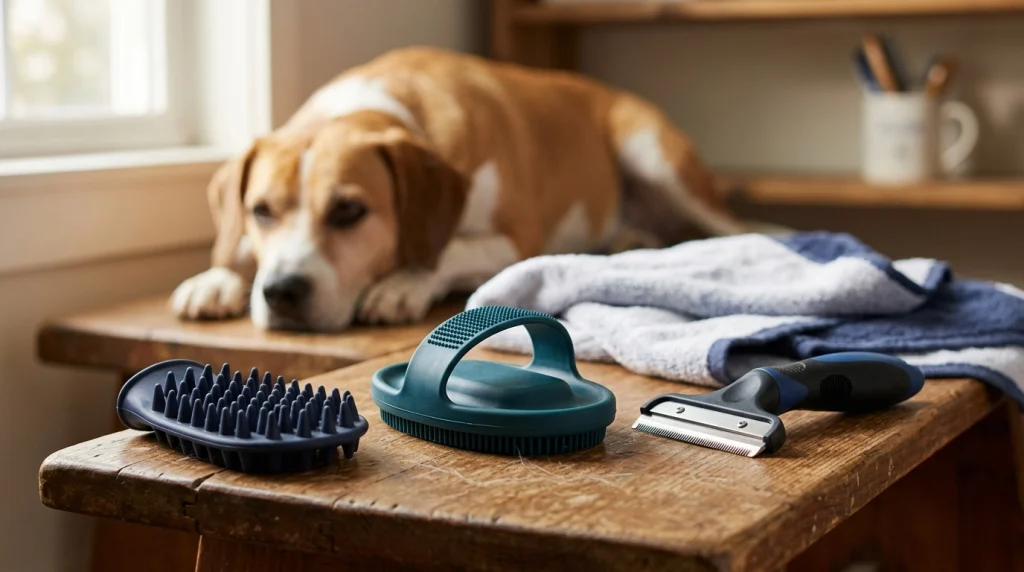
SaveIf you’re ready to choose one, these are three short-coat tools I’d consider for different grooming needs:
🏆 Best Overall
KONG ZoomGroom Dog Brush
★★★★½
The ZoomGroom uses flexible 3/4-inch rubber fingers and works on dry coats or during shampooing. I like this style for everyday short-coat grooming because it loosens hair while staying simple and easy to control.
🐾 Best for Daily Grooming
FURminator Curry Comb
★★★★½
Its molded rubber teeth are specifically intended for short and medium coats, with a hand strap for control. I’d choose it for frequent loose-hair removal when I want a softer tool instead of exposed metal teeth.
🧹 Best for Heavy Shedding
FURminator Short Hair deShedding Tool
★★★★☆
This tool uses a stainless-steel edge designed to reach loose undercoat beneath short topcoat. I’d reserve it for heavier shedders and use controlled passes rather than treating it like an everyday rubber brush.
Frequently Asked Questions
Can I use a human hairbrush on a short-haired dog?
A human hairbrush may move loose surface hair, but it isn’t designed specifically for canine coat density or skin. A rubber curry brush, grooming mitt, or soft dog bristle brush usually gives you better control and more effective loose-hair removal.
Is a rubber brush good for dogs that shed a lot?
Yes. Rubber brushes can be excellent for short-haired shedding because flexible teeth grip loose hair while massaging the coat. If your dog also has a dense undercoat, you may occasionally need a short-hair de-shedding tool during heavier shedding periods.
Can you brush a short-haired dog every day?
You can brush many short-coated dogs frequently with a gentle rubber tool or grooming glove, provided the skin stays comfortable. Keep sessions short, use light pressure, and reduce frequency if you notice redness, sensitivity, or your dog becoming uncomfortable.
Why does my short-haired dog still shed after brushing?
Brushing removes hair that is already loose, but it doesn’t stop the normal hair-growth cycle. New hairs can loosen after the session, especially during seasonal shedding. Continued shedding is normal unless it becomes patchy or comes with itching, sores, or other skin changes.
Should I use a de-shedding blade on a short-haired dog?
Only when the tool is designed for that coat and you follow its directions carefully. Short coats leave less cushioning over the skin, so repeated aggressive passes can cause irritation. For routine grooming, I prefer rubber or soft-bristle tools first.
Final Takeaway: Keep Short-Coat Grooming Simple
For most short dog coats, start with a rubber curry brush or grooming glove. Add a soft bristle brush when you want a smooth finish and cleaner surface coat.
Use stronger de-shedding tools only when the dog’s coat density and shedding level justify them. Gentle technique matters more than removing the biggest possible pile of hair.
Pick one comfortable brush and build a regular routine. Your dog’s skin, your furniture, and your vacuum cleaner will all benefit.

Thomas Cutter is a lifelong dog owner and the founder of FindOutAboutDogs.com. With over 10 years of hands-on experience owning multiple breeds, Thomas created this site to provide honest, research-based dog advice that real owners can actually trust.
