10 Best Dog Brush for Husky in 2026: Our Top Picks for Shedding Control
Our top pick among the 10 best dog brush for Husky options is the FURminator Undercoat deShedding Tool, built to reach dense undercoat. We evaluated 10 brushes against Husky coat needs, scoring each on undercoat removal, skin comfort, and durability. Most brushes look alike on paper but skip a Husky’s dense undercoat, and that gap shaped every ranking here. Whether you need shedding-season relief, daily upkeep, or mat removal, this guide gives you one clear answer.


Quick Comparison: All 10 Brushes Ranked
| # | Product | Best For | Rating | Badge | |
|---|---|---|---|---|---|
| 1 | FURminator Undercoat deShedding Tool for Large Dogs | Seasonal shedding | 4.8/5 | Best Overall | Buy → |
| 2 | Hertzko Self-Cleaning Slicker Brush | Weekly upkeep | 4.7/5 | Best Budget | Buy → |
| 3 | Safari Dual-Sided Undercoat Rake for Dogs | Thick undercoat | 4.6/5 | Best Undercoat Rake | Buy → |
| 4 | Chris Christensen Big G Slicker Brush | Premium finishing | 4.6/5 | Best Premium Slicker | Buy → |
| 5 | Raw Paws Double-Sided Dematting Dog Comb | Spot mats | 4.5/5 | Best for Mats | Buy → |
| 6 | Pat Your Pet Deshedding Brush for Dogs | Shedding on a budget | 4.4/5 | Best Value | Buy → |
| 7 | Four Paws Magic Coat Professional Series Slicker Brush | Everyday upkeep | 4.3/5 | Best Everyday Slicker | Buy → |
| 8 | KONG ZoomGroom Multi-Use Brush | Bath time | 4.2/5 | Best for Bath Time | Buy → |
| 9 | Friends Forever Dual Side Pin Bristle Dog Brush | Finishing polish | 4.1/5 | Best Finishing Brush | Buy → |
| 10 | DakPets Deshedding Brush | Long sessions | 4.0/5 | Best Comfort Grip | Buy → |
How We Chose These Brushes
What we evaluated
10 brushes across 4 tool types: deshedding tools, slickers, rakes, and dematting combs. We compared design, coat reach, and handling for large double-coated dogs.
Our 3 scoring criteria
Undercoat removal, skin comfort, and durability. Each is scored out of 5, and the overall rating is the average.
Guidance we followed
We cross-checked each recommendation against published veterinary and professional-groomer guidance on double-coat care. No individual expert is quoted on this page.
What we cut, and why
Single-purpose grooming gloves and fine-pin brushes. They skim a Husky’s topcoat and miss the undercoat where shedding starts.
What to Look for When Buying a Dog Brush for a Husky
A Husky has two coats: a dense, insulating undercoat and a straighter layer of guard hairs. The right brush depends on which layer you are working on.
1. Brush Type and Coat Fit
Deshedding tools and rakes work the undercoat, while slickers and pin brushes handle the topcoat. Most Husky owners need one of each. If you are unsure where to start, our guide on which brush works best for Huskies walks through the choice by coat condition.
2. Tooth and Pin Length
Longer teeth reach deeper into dense fur, but they also pull harder on tangles. Short pins are fine for upkeep and poor for blowouts. For a clear explanation of how the two tool families differ, read brush versus rake for double coats.
3. Skin Comfort and Safety
Metal edges and sharp pins can scratch skin if you press hard, especially on the belly and inner legs. Rounded tips and rubberized heads are kinder to sensitive dogs. Always check the skin for redness after a session.
4. Handle Comfort and Easy Cleaning
A Husky blowout can fill a bag with fur, so a grip that stays secure and a cleaning method that does not take long both matter. Self-cleaning heads and push-button releases save time, while simple rakes are easier to rinse and last longer.
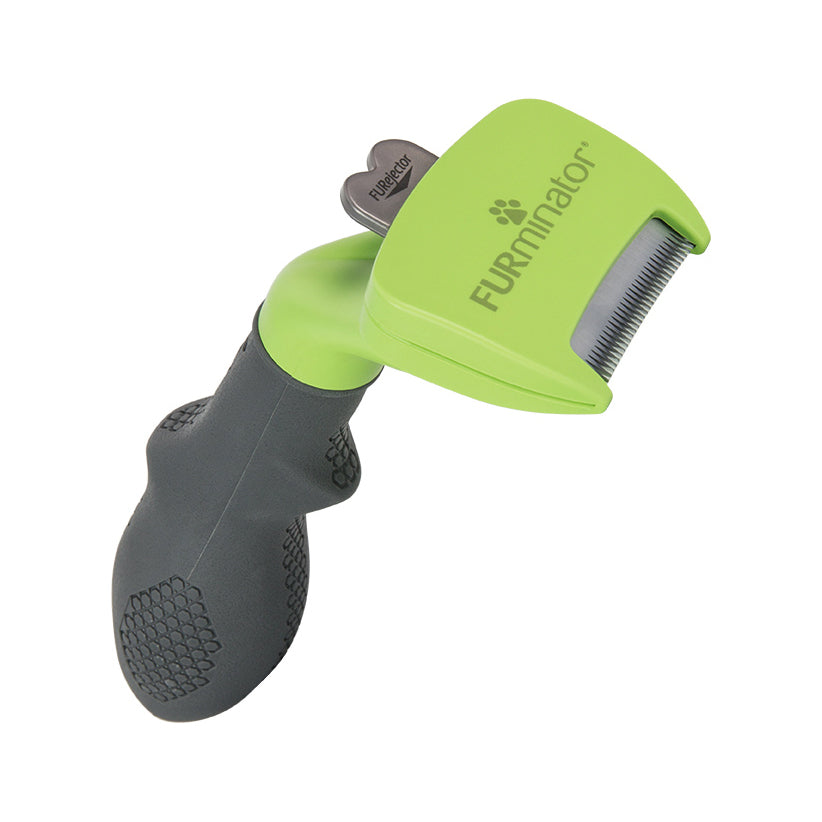
FURminator Undercoat deShedding Tool for Large Dogs — The undercoat remover Huskies actually need
Best for: Heavy seasonal shedding and blowouts
Huskies blow their undercoat twice a year, and most brushes only skim the guard hairs on top. This large-size FURminator uses a fine stainless steel edge to lift loose undercoat that a slicker leaves behind, which is why it anchors our list for shedding season. A push-button release clears trapped fur quickly, and the grip suits larger hands. The trade-off is technique: pressing hard or overusing it can irritate skin or thin the topcoat, so owners should use light strokes and limit sessions. It is a seasonal specialist, not an everyday finishing brush.
- Reaches loose undercoat slicker brushes miss
- Push-button release clears fur fast
- Sized properly for a Husky’s frame
- Overuse can irritate skin or thin topcoat
- Not meant for daily brushing
4.9/5
4.6/5
4.9/5

Hertzko Self-Cleaning Slicker Brush — Budget-friendly slicker with one-press cleanup
Best for: Weekly upkeep and light tangles
Owners watching their budget still need something that handles tangles around a Husky’s ruff, britches, and tail. This slicker uses fine angled pins to work through loose hair and light snags, and the retractable pins release collected fur with one press, which saves the messy cleanup a Husky’s volume demands. It is gentle enough for weekly upkeep on most coats and easy for beginners. The limitation is reach: the pins are short for deep undercoat, so it will not replace a rake during a full shedding blowout and works best as a finishing partner.
- One-press retractable pins ease cleanup
- Gentle on skin for weekly use
- Budget-friendly entry into proper grooming
- Pins too short for deep undercoat
- Needs a rake during blowouts
4.2/5
4.9/5
4.9/5
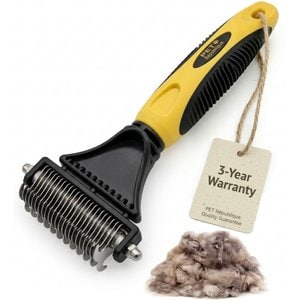
Safari Dual-Sided Undercoat Rake for Dogs — Wide-toothed rake that digs into thick fur
Best for: Thick undercoat on a double-coated dog
A Husky’s undercoat packs tight against the skin, and a rake is the classic way to pull loose fur out without clipping the coat. This dual-sided Safari rake gives you two tooth spacings, so you can start on the wider side through dense areas like the shoulders and britches, then switch to the finer side for lighter spots. Its teeth glide through a clean coat without scraping when used with light pressure. The downside is that it can tug if mats are present, so detangle first with a comb or slicker before raking.
- Two tooth spacings cover thick and light areas
- Pulls loose undercoat in long, easy strokes
- Simple design with nothing to break
- Tugs hard on existing mats
- Fur must be pulled from teeth manually
4.8/5
4.4/5
4.6/5
 Save
SaveChris Christensen Big G Slicker Brush — Professional slicker for finishing and feathering
Best for: Owners who want a groomer-grade finisher
Groomers often reach for this slicker when they want clean finishing on feathering without raking through skin. The Big G is built larger than typical pet-store slickers, so it covers a Husky’s flank and ruff in fewer passes, and the pins are designed to glide through tangles rather than snag. It makes a strong companion to an undercoat rake, smoothing the coat after loose fur has been pulled. The trade-off is cost and care: it sits in the premium tier, and a slicker alone will not clear a heavy undercoat blowout.
- Large head covers a Husky quickly
- Groomer-grade build feels solid in hand
- Smooths and polishes after raking
- Premium tier for a finishing tool
- Cannot clear heavy undercoat alone
4.5/5
4.7/5
4.6/5

Raw Paws Double-Sided Dematting Dog Comb — Two-in-one comb for stubborn tangles
Best for: Spot mats behind ears and in britches
Huskies rarely mat like poodles, but the soft fur behind the ears, around the collar, and in the britches can still knot, especially during a coat blow. This double-sided comb pairs a coarse side for breaking up tangles with a finer side for smoothing, and it handles loose undercoat as a bonus. It is a precise tool for small trouble spots rather than a full-body brush. The limitation is speed: using it across an entire Husky is slow, and pulling too hard on a tight mat can hurt, so work gradually.
- Breaks up tangles without cutting the coat
- Two sides handle coarse and fine work
- Targets trouble spots behind ears precisely
- Slow for full-body work
- Tight mats need patience, not force
4.6/5
4.4/5
4.5/5

Pat Your Pet Deshedding Brush for Dogs — Value deshedding tool for blowout season
Best for: Shedding season on a tighter budget
If a premium deshedding tool feels like too much, this model offers a similar approach for blowout season at a friendlier tier. It uses a metal-edged head to pull loose undercoat and a rubberized grip to keep control through long sessions on a large dog. Owners get most of the shedding relief of the name brands without stepping into the top price bracket. The caution is edge pressure: a metal-edged head can feel scratchy on sensitive skin, so stay with short, light strokes and avoid thin-coated areas like the belly and inner legs.
- Metal edge pulls loose undercoat effectively
- Rubberized grip stays secure in long sessions
- Good value for blowout season
- Edge can feel scratchy on sensitive skin
- Overuse can thin the topcoat
4.6/5
4.2/5
4.4/5

Four Paws Magic Coat Professional Series Slicker Brush — Dependable everyday slicker for upkeep
Best for: Between-session upkeep and light tangles
Between heavy shedding sessions, a Husky still needs regular brushing to keep the topcoat clean and the tangles away. This slicker handles that everyday job without fuss, using fine pins to lift loose hair and smooth the coat on the back, flanks, and legs. It is easy for beginners to use and works well for maintaining a thick coat between deshedding sessions. The limitation is depth: slicker pins skim the surface of a Husky’s dense undercoat, so you will still want a rake or deshedding tool for blowout season.
- Easy for beginners to use correctly
- Smooths the topcoat between rake sessions
- Good for daily or weekly maintenance
- Skims surface of dense undercoat
- Manual cleaning takes extra time
4.0/5
4.6/5
4.3/5
 Save
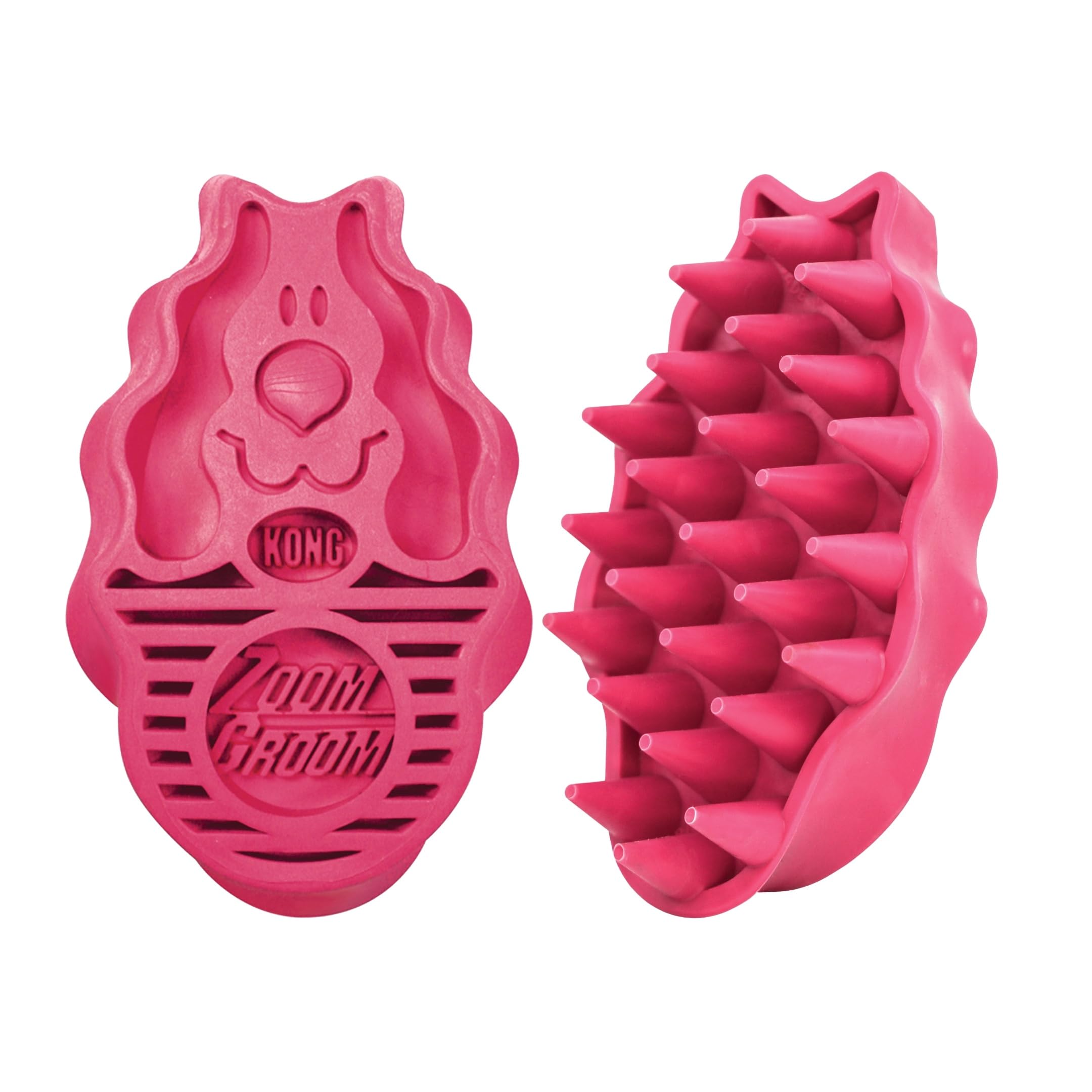
SaveKONG ZoomGroom Multi-Use Brush — Rubber brush that makes baths easier
Best for: Bath time and sensitive-skin dogs
Plenty of Huskies dislike metal pins but happily lean into a massage, which makes this rubber curry brush a useful tool for the bath. The flexible nubs work shampoo into a dense coat, loosen surface dirt and hair, and feel like a scratch rather than a scrape. Rinsing it clean takes seconds under running water. It is not a substitute for a rake or deshedding tool, though, because rubber nubs cannot reach a Husky’s undercoat in any meaningful way. Treat it as a bath-time helper and gentle surface loosener for sensitive dogs.
- Gentle massage feel Huskies tend to enjoy
- Rinses clean under running water
- Works wet or dry for surface hair
- Cannot reach deep undercoat
- Not suited to heavy blowouts
3.6/5
4.9/5
4.1/5

Friends Forever Dual Side Pin Bristle Dog Brush — Two sides for polishing a clean coat
Best for: Final polish after raking
After the heavy lifting is done, a Husky’s coat still benefits from a final pass that smooths guard hairs and spreads natural oils. This dual-sided brush gives you pins on one side for working through the topcoat and bristles on the other for polishing, so one tool covers two finishing jobs. It is gentle and comfortable for dogs that dislike scratchy tools. The limitation is clear: neither side is designed to pull dense undercoat, so it works best after a rake or deshedding session rather than as a primary shedding solution.
- Two finishing jobs in one tool
- Gentle enough for dogs that dislike pins
- Spreads natural oils across guard hairs
- Neither side pulls dense undercoat
- Hair collects between pins by hand
3.9/5
4.4/5
4.0/5
 Save
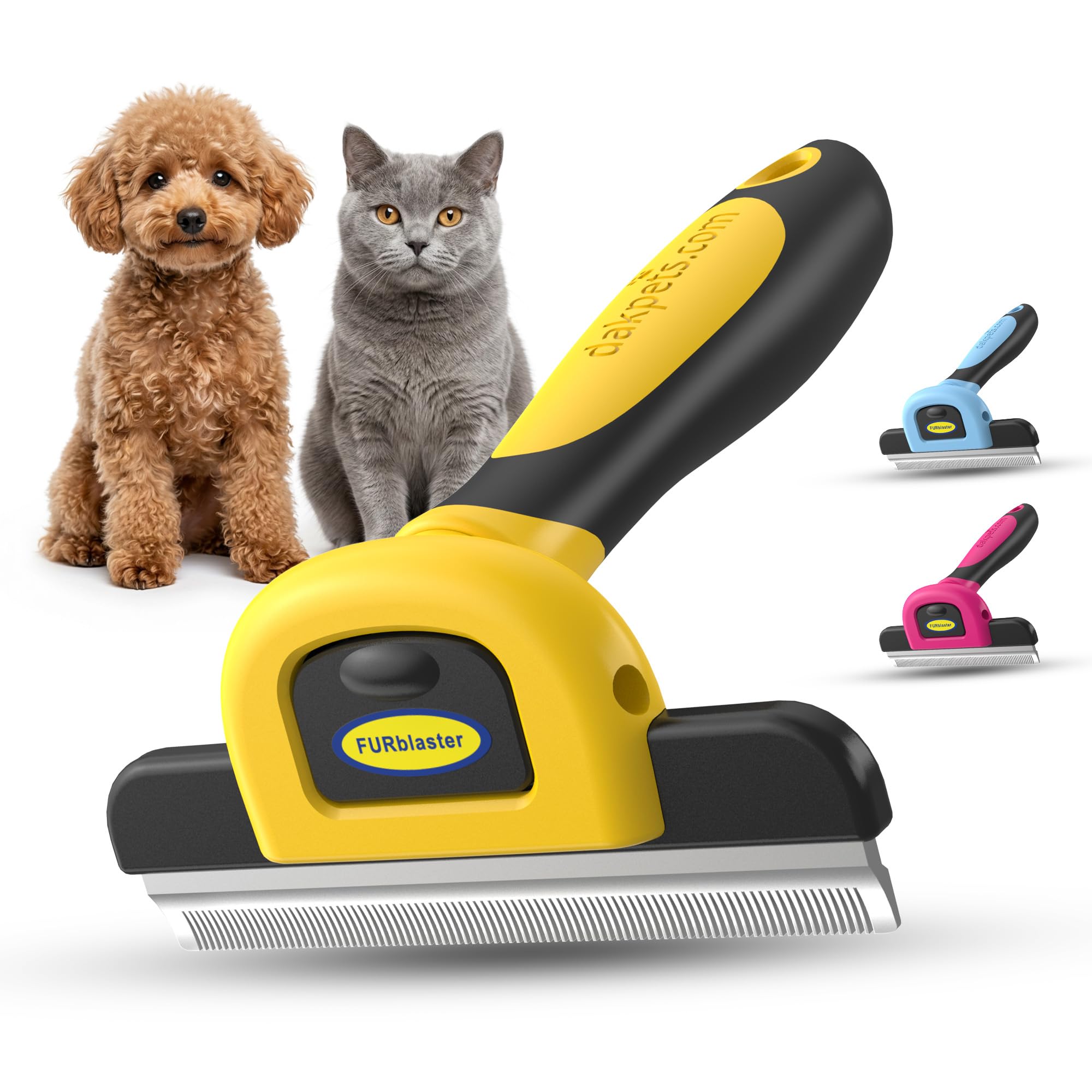
SaveDakPets Deshedding Brush — Comfortable grip for long shedding sessions
Best for: Owners with long blowout sessions ahead
A Husky’s blowout can take an hour or more per session, so hand comfort matters more than most buyers expect. This deshedding brush has a non-slip handle that stays secure when your hands get fur-covered, and its edge pulls loose undercoat from the coat without much fuss. It is a straightforward option for owners who want a comfortable tool they can use through a full seasonal clear-out. The limitation is longevity: reviews of budget deshedding tools often mention edges wearing down with heavy use, so inspect it periodically and replace when the edge dulls.
- Non-slip handle stays secure with fur-covered hands
- Pulls loose undercoat during blowouts
- Comfortable through long sessions
- Edge may wear with heavy use
- Needs gentle pressure to protect skin
4.2/5
3.9/5
3.9/5
Top 3 Head-to-Head: FURminator vs Hertzko vs Safari Rake
These three cover the choices most Husky owners face: a dedicated deshedding tool, an affordable slicker, or a classic rake. Each solves a different part of the coat problem.
| Feature | #1 FURminator | #2 Hertzko | #3 Safari Rake |
|---|---|---|---|
| Undercoat reach | Deep reach — Best | Surface only | Good reach |
| Everyday gentleness | Moderate | Gentle — Best | Moderate |
| Cleanup ease | Push-button release | One-press retract — Best | Manual |
| Choose if… | You face heavy seasonal blowouts | You want weekly upkeep on a budget | You want a rake for thick undercoat |
Who These Brushes Are NOT For
These picks target Huskies and similar double-coated dogs, so they are the wrong fit for several situations.
If you share your home with a mixed double-coated breed, check our guide to the best brush for double-coated dogs for options by coat length. For a dog with painful skin, open sores, or sudden heavy hair loss, skip the brush and see your vet first.
Common Mistakes to Avoid
Most Husky grooming problems come from technique, not tools.
Frequently Asked Questions About Dog Brushes for Huskies
What is the best brush for a Husky?
The best brush for a Husky is a deshedding tool or undercoat rake, paired with a slicker for upkeep. The rake reaches the dense undercoat that sheds heavily twice a year, while the slicker smooths the topcoat and clears light tangles. Using both covers each layer of the coat and keeps loose fur out of your home.
How often should you brush a Husky?
Brush a Husky at least once a week and daily during the two seasonal sheds, which each last a few weeks. Frequent sessions pull loose undercoat before it clumps and mats. Keep sessions short and gentle if your dog is new to grooming, and reward calm behavior.
Can you use a slicker brush on a Husky?
Yes, a slicker brush is fine for a Husky, but only for the topcoat. Its short pins skim the surface and do not reach the undercoat where most shedding comes from. Use it for light tangles and finishing after a rake or deshedding tool, not as your only brush.
Is a FURminator good for Huskies?
A large-size deshedding tool like the FURminator suits Huskies when used correctly, because its fine edge lifts loose undercoat. Use light strokes, brush only a few minutes per area, and avoid thin skin on the belly. Overuse can irritate skin or thin the topcoat, so limit it to shedding seasons.
Should you brush a Husky wet or dry?
Brush a Husky when the coat is dry, or after a bath once it is mostly dry. Brushing wet fur can pull and stretch hair, and wet undercoat clumps against the skin. For heavy sheds, many owners brush before the bath to remove loose fur, then again after drying.
Should you shave a Husky in summer?
No, shaving a Husky is not recommended. The double coat helps regulate temperature and shields skin from sun, and shaved fur may grow back unevenly. Brushing out the loose undercoat improves airflow without removing the protective guard hairs. Provide shade, fresh water, and cool resting spots instead.
How do you stop a Husky from shedding so much?
You cannot stop shedding completely, but you can control it with regular brushing, baths, and good nutrition. Rake out loose undercoat during blowouts and bathe every few months. For a full routine, see our tips to manage Husky shedding at home. See a vet if shedding seems sudden or patchy.
Our Final Verdict
A Husky’s coat needs two jobs done: an undercoat tool for shedding season and a gentler brush for upkeep. Most owners do best starting with one dedicated deshedding tool, then adding a slicker. If you buy only one, choose the model below and use it with light, patient strokes.

Thomas Cutter is a lifelong dog owner and the founder of FindOutAboutDogs.com. With over 10 years of hands-on experience owning multiple breeds, Thomas created this site to provide honest, research-based dog advice that real owners can actually trust.
