How to Brush a Husky: Step-by-Step Coat Care Guide
Quick Answer
To brush a Husky, work in small sections and brush in the direction the coat grows. Start by loosening dead undercoat, follow with a slicker or pin brush, then check your work with a metal comb. The Siberian Husky Club of America coat standard explains why this breed’s dense undercoat and protective outer coat need careful maintenance rather than aggressive trimming.
How to brush a Husky in 6 steps
- Check the coat: Look for tangles, sore skin, burrs, or sensitive areas before you start.
- Work in sections: Separate the coat so your tool reaches loose undercoat instead of skimming the surface.
- Rake gently: Use an undercoat rake during heavy shedding without digging into the skin.
- Slicker the coat: Use light strokes in the direction of hair growth to collect loosened fur.
- Comb-check: Run a metal comb through the coat to find areas you missed.
- Reward and stop: End before your Husky gets frustrated, especially while building a grooming routine.
The most important rule
- Use light pressure: Brushing should remove loose fur without scraping skin or repeatedly pulling healthy coat.
If you have ever brushed a Husky and wondered where all that fur came from, you are not imagining it. Their coat is built differently from a simple short-haired coat.
The trick is not brushing harder. I get better results by choosing the right tool for each layer and working methodically from one section to the next.


Why Is Brushing a Husky Different From Brushing Other Dogs?
A Siberian Husky has a double coat, meaning there are two distinct layers of hair. The soft undercoat sits close to the skin, while longer guard hairs form the protective outer layer.
Definition: A double coat is a two-layer coat made from a dense insulating undercoat plus an outer layer of guard hairs that helps protect the skin from weather and environmental exposure.
The undercoat can loosen dramatically during seasonal shedding. That is why a Husky can look perfectly brushed on top while still holding handfuls of dead coat underneath.
The AKC recommends regular brushing for Siberian Huskies and notes heavier shedding periods during the year. You can read its Siberian Husky grooming overview for more breed-specific background.
- Outer coat: Straighter guard hairs that protect the dog and give the coat its finished appearance.
- Undercoat: Soft, dense fur that can loosen heavily during seasonal coat changes.
- Your goal: Remove loose undercoat while keeping healthy guard hairs intact.
If you are comparing the grooming burden of different dogs, our guide to easy-going dog breeds also shows how coat maintenance can vary widely between breeds.
What Is the Best Brush for a Husky?
No single brush does every Husky grooming job well. I prefer a small tool kit because an undercoat rake, slicker brush, and comb each solve a different problem.
The AKC’s guide to choosing dog brushes also emphasizes matching the grooming tool to the dog’s coat type.
| Tool | Main Job | Best Time to Use It | Pressure |
|---|---|---|---|
| Undercoat rake | Lifts loose undercoat | Heavy seasonal shedding | Light |
| Slicker brush | Collects loose fur and separates coat | Routine brushing and after raking | Light to moderate |
| Pin brush | Finishes and straightens the coat | Regular maintenance | Light |
| Metal comb | Checks for remaining tangles | Final pass | Very light |
A rubber curry brush alone usually cannot reach enough of a Husky’s dense undercoat. I consider it an optional finishing or massage tool rather than the main shedding tool.
How Do You Brush a Husky Step by Step?
 Save
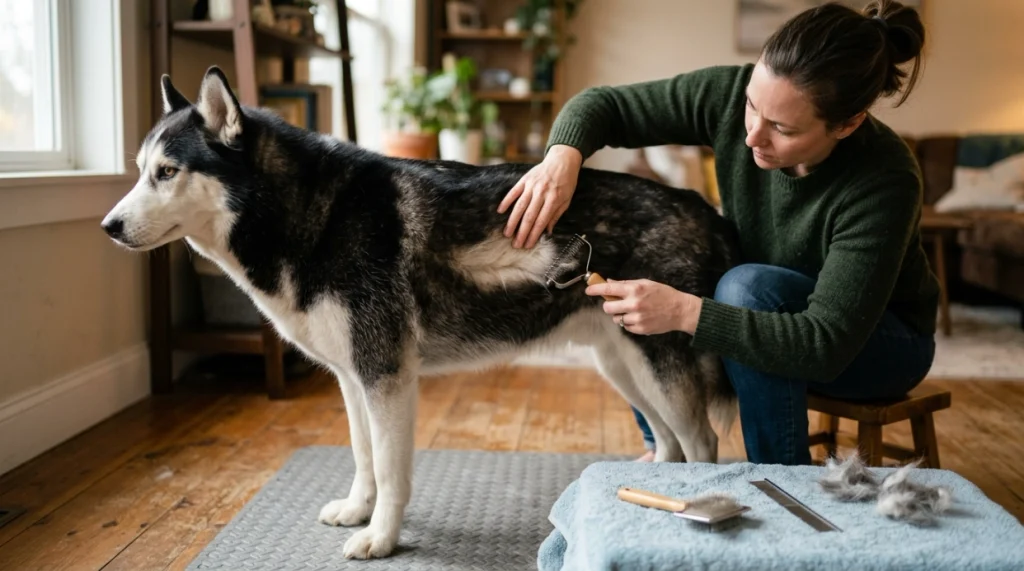
SaveThe easiest method is to treat the coat like a series of small zones rather than attacking the entire dog at once. I usually work from the rear toward the shoulders, then finish the chest, neck, and tail.
- Choose a calm location. Put your Husky on a non-slip surface and keep treats nearby if they are still learning to tolerate grooming.
- Inspect the skin and coat. Feel for lumps, tender spots, wounds, mats, ticks, or anything that should not be brushed over.
- Separate the coat with your hand. Lift a small section so you can see whether dense undercoat is packed underneath the guard hairs.
- Use the undercoat rake gently. Pull in the direction of coat growth with short, controlled passes instead of repeatedly scraping one area.
- Follow with a slicker or pin brush. This collects loosened fur and smooths the coat after the rake has done the deeper work.
- Check with a metal comb. If the comb catches, return to that small section rather than forcing the comb through resistance.
- Brush sensitive areas last. Use extra care around the belly, legs, tail base, ears, and areas where skin is thinner.
- End while the dog is still comfortable. A shorter successful session is better than creating a dog that hides whenever the brush appears.
One useful technique is sometimes called line brushing. You part the fur into narrow sections and brush from near the skin outward, exposing a new line of coat after each section is clear.
This technique makes it harder to miss compacted undercoat. It also discourages the common mistake of brushing only the visible surface.
How Often Should You Brush a Husky?
For normal maintenance, a thorough brushing about once a week is a sensible baseline for many adult Huskies. During a major coat blow, you may need shorter sessions much more frequently.
| Coat Situation | Practical Brushing Schedule | Main Tool |
|---|---|---|
| Normal coat | About weekly | Slicker or pin brush |
| Seasonal coat blow | Short sessions every day or two as needed | Undercoat rake plus slicker |
| After outdoor debris | Check immediately | Comb or pin brush |
As of 2026, the basic recommendation has not changed: consistency matters more than one marathon grooming session. Waiting until the undercoat is badly packed makes the job harder for both you and your dog.
Heavy-coated working breeds share some of these challenges. Our guide to guard dog breeds for first-time owners includes other substantial seasonal shedders such as German Shepherds and Akitas.
How Do You Brush a Husky During Shedding Season?
 Save
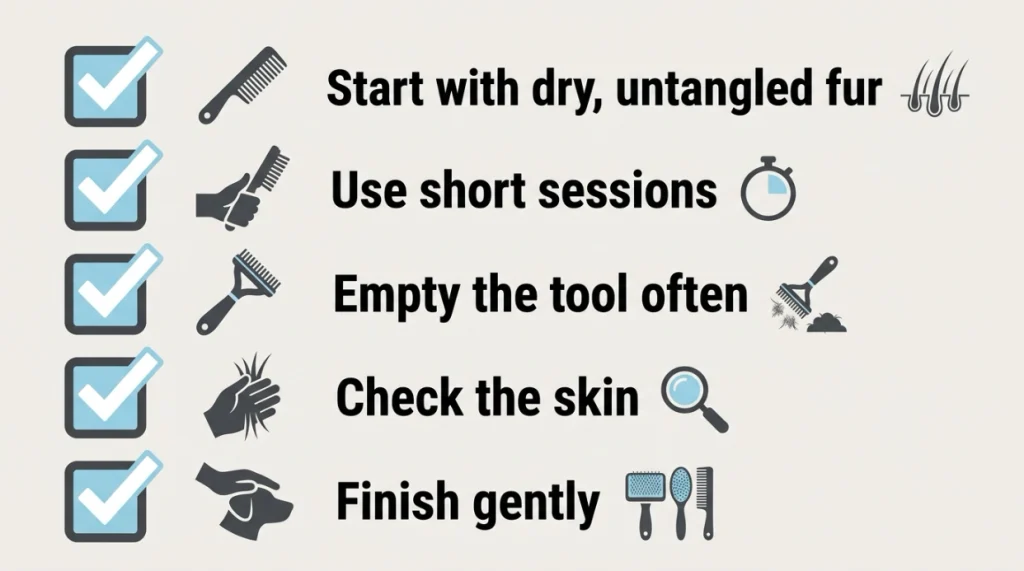
SaveWhen a Husky starts blowing coat, loose undercoat can appear in soft clumps that pull away easily. This is when an undercoat rake becomes much more useful than simply brushing the top layer harder.
- Start with dry, untangled fur: Heavy tools work more predictably when they are not fighting wet, compacted coat.
- Use short sessions: Work one side or body zone at a time if your Husky becomes restless.
- Empty the tool often: A brush packed with hair stops reaching the coat effectively.
- Check the skin: Stop if you see redness, irritation, or repeated flinching.
- Finish gently: Use a slicker, pin brush, or comb after removing the bulk of loose undercoat.
A clean grooming area also helps during coat blow. If shedding inside the home is becoming the bigger issue, our guide to apartment-friendly dog breeds shows how widely indoor shedding and grooming needs differ by breed.
What Husky Brushing Mistakes Should You Avoid?
The biggest mistakes usually come from trying to finish faster. Dense coats reward patience more than force.
- Do not shave a healthy double coat for routine shedding control. Double-coated dogs normally rely on both coat layers, and shaving can interfere with normal protection and regrowth.
- Do not scrape repeatedly in one spot. Metal grooming teeth can irritate skin when used with excessive pressure.
- Do not yank through a mat. Hold the hair near the skin, work slowly, or ask a professional groomer for help with severe matting.
- Do not ignore pain. Sudden resistance may signal a tender joint, skin irritation, wound, or another problem.
- Do not assume more fur means more success. Your goal is loose dead coat, not healthy attached guard hairs.
The AKC explains the risks of routinely shaving in its guide to double-coated dog care. Medical procedures or severe coat problems are different situations and should be handled with veterinary or professional grooming guidance.
If you notice sores, unusual hair loss, persistent dandruff, or significant skin changes while grooming, stop and investigate. VCA’s coat-care guidance explains why changes in a dog’s skin or coat can sometimes deserve veterinary attention.
What If Your Husky Hates Being Brushed?
 Save
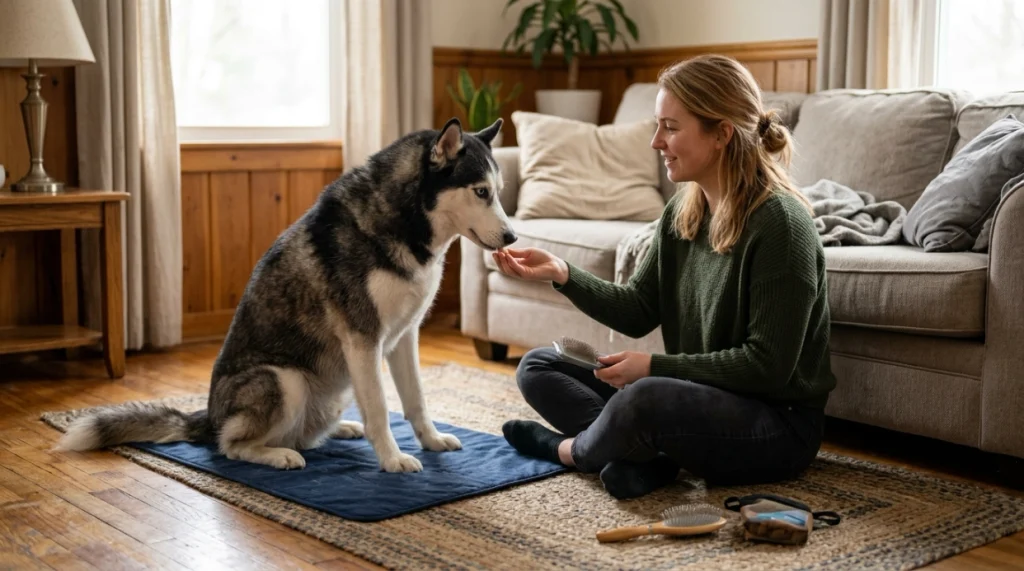
SaveDo not turn grooming into a wrestling match. A dog that learns the brush predicts discomfort will usually become harder to groom over time.
- Show the brush first: Reward calm investigation before touching the coat.
- Start with seconds, not minutes: Make several gentle strokes and stop on a good note.
- Use high-value rewards: Pair calm brushing with a treat your dog does not receive all day.
- Protect sensitive areas: Do not begin with the tail, belly, paws, or known problem spots.
- Build duration gradually: Add more brushing only when your dog remains relaxed.
The AKC’s guidance on dogs that dislike brushing also recommends creating positive grooming experiences and considering professional help when fear or biting becomes serious.
Which Grooming Tools Would I Choose for a Husky?
If you are ready to assemble a simple Husky grooming kit, these are three tools I would look at first. You do not need all three immediately, but each fills a different role.
💰 Best Budget Undercoat Tool
Safari Double Row Undercoat Rake
★★★★½
The double-row design is made for thick, dense undercoats, with varying pin lengths reaching beneath the surface coat. I like this style for seasonal Husky shedding because it is simple, targeted, and does not require aggressive pressure.
🏆 Best for Controlled Deshedding
FURminator Undercoat deShedding Tool
★★★★½
Its stainless-steel edge is designed to reach loose undercoat beneath the topcoat, and the curved edge follows the dog’s body. Choose the correct size for your Husky’s weight, use gentle passes, and avoid repeatedly working the same patch of skin.
✨ Best Premium Slicker
Chris Christensen Big K Slicker Brush
★★★★★
The Big K uses 27 mm pins and a relatively open pin pattern designed to penetrate dense coats. The manufacturer specifically lists extremely thick coats such as Siberian Huskies among the types this design suits, making it my premium choice for careful line brushing.
Frequently Asked Questions About Brushing a Husky
Should you brush a Husky when the coat is wet or dry?
For routine de-shedding, I prefer working on a clean, fully dry coat because you can separate the layers and feel resistance more accurately. Certain grooming routines include bathing and force-drying first, but do not aggressively rake through a soaking-wet or tangled coat.
Can you use a FURminator on a Husky?
Yes, an undercoat de-shedding tool can be used on many Huskies when you choose the correct size and follow its directions. Keep the pressure light, work in the direction of hair growth, avoid repeated strokes in one spot, and stop if you see redness or discomfort.
Should you shave a Husky to stop shedding?
No, shaving is not a good routine solution for Husky shedding. The breed’s undercoat and outer guard hairs form a functional double coat, so regular brushing and undercoat removal are better approaches unless a veterinarian or qualified groomer recommends clipping for a specific medical or severe matting problem.
When should you start brushing a Husky puppy?
Start gentle grooming while your Husky is young so brushing becomes a normal part of handling. Use a soft, comfortable tool, keep sessions short, reward calm behavior, and focus more on building positive associations than removing large amounts of coat.
How do I know when I have removed enough undercoat?
Stop when loose fur decreases sharply, your comb moves through the coat without repeatedly catching, and the coat lies naturally without dense loose clumps underneath. You do not need to keep brushing until the tool comes away completely clean, especially if the skin is becoming sensitive.
The Bottom Line
Learning how to brush a Husky is mostly about respecting the double coat. Work in sections, use gentle tools for the undercoat, smooth the coat afterward, and check your progress with a comb.
Keep the routine consistent instead of waiting for a mountain of loose fur. Your Husky’s coat will be easier to manage, grooming will feel calmer, and far more of that seasonal fluff will end up in the brush instead of across your home.

Thomas Cutter is a lifelong dog owner and the founder of FindOutAboutDogs.com. With over 10 years of hands-on experience owning multiple breeds, Thomas created this site to provide honest, research-based dog advice that real owners can actually trust.
