10 Best Dog Brush for Irish Wolfhound in 2026: Coat-Safe Picks for Harsh Coats
The best dog brush for Irish Wolfhound coats is the Hertzko Self-Cleaning Slicker Brush — its fine bent pins reach undercoat without scratching thin skin. We evaluated 10 brushes and combs against the breed’s harsh double coat, scoring each on coat fit, comfort, and durability. Most brushes look identical on paper but fail on a giant, wiry coat — and that gap is exactly what we set out to expose. Whether you need weekly upkeep, shedding-season relief, or mat control, this guide gives you one clear answer.


Quick Comparison: All 10 Products Ranked
| # | Product | Best For | Rating | Badge | |
|---|---|---|---|---|---|
| 1 | Hertzko Self-Cleaning Slicker Brush | Weekly upkeep on a giant frame | 4.8/5 | Best Overall | Buy → |
| 2 | Safari Professional Slicker Brush | Owners who want a simple slicker | 4.4/5 | Best Budget | Buy → |
| 3 | Chris Christensen Big G Slicker Brush | Frequent groomers with fuller coats | 4.8/5 | Best Premium | Buy → |
| 4 | Andis Steel Greyhound Comb | Checking for hidden tangles | 4.6/5 | Best Comb | Buy → |
| 5 | Mars Coat King Stripping Comb | Keeping the wiry jacket tidy | 4.5/5 | Best for Harsh Coat Upkeep | Buy → |
| 6 | Safari Pin Brush with Wooden Handle | Smoothing after the rake or slicker | 4.4/5 | Best Finishing Brush | Buy → |
| 7 | FURminator Undercoat deShedding Tool Large | Heavy seasonal undercoat release | 4.3/5 | Best for Shedding Season | Buy → |
| 8 | Pat Your Pet Dematting Comb | Problem spots behind elbows | 4.1/5 | Best for Mats | Buy → |
| 9 | KONG Zoom Groom Brush | Bathing and gentle massage | 4.4/5 | Best for Bath Time | Buy → |
| 10 | Bass Brushes Style and Detangle Pin Brush | Long-term finishing brush owners | 4.6/5 | Best Splurge | Buy → |
How We Chose These Brushes
What we tested
10 tools across 4 types: slickers, pin brushes, combs, and stripping or deshedding tools, all judged against a harsh, wiry coat over soft undercoat.
Our 3 scoring criteria
Coat fit (does it suit a harsh double coat), comfort (skin feel and handling on a giant dog), and durability. Each is scored out of 5.
Breed guidance used
Tool types follow Irish Wolfhound Club of America grooming basics, which pair an undercoat rake or slicker, a pin brush, and a metal comb.
What we cut — and why
Toy-breed brushes with small heads were dropped as too slow for a dog over 32 inches tall. Heavily curved soft-bristle brushes were cut because they skim over harsh coat.
What to Look for When Buying a Brush for an Irish Wolfhound
An Irish Wolfhound has a harsh outer coat over a softer undercoat, so the wrong brush either skims the top or flattens the texture. These four factors decide whether a brush earns a place in your grooming kit.
1. Coat Match
Wiry, harsh coats need tools that lift dead hair without softening the jacket. Slickers and combs do this better than soft bristle brushes. For a deeper look at tool choice, see our guide to the best brush for wire-haired dogs.
2. Size and Reach
Wolfhounds stand at least 32 inches at the shoulder, so a small-head brush turns a ten-minute job into a long one. A larger head covers the body faster, while a small tool is still handy for the face and paws. Most owners end up with one large and one small tool.
3. Pin and Tooth Quality
Look for smooth, rounded pin tips and teeth that flex slightly rather than snag. Combs with mixed tooth spacing help you check the beard and feathering where tangles hide. Not sure whether you need a brush or a comb first? Read our breakdown of dog brush vs dog comb.
4. Comfort and Handle
Grooming a giant breed takes time, so a handle that fits your hand matters as much as the head. A comfortable grip lets you use lighter pressure, which protects both your dog’s skin and the coat texture.

Hertzko Self-Cleaning Slicker Brush
Irish Wolfhound owners need a brush that reaches the soft undercoat beneath the harsh outer jacket without scratching a giant frame’s thin skin. This large-head slicker does that with fine bent pins and a retractable-pin release that clears trapped hair in one press, which matters on a dog this size. It handles weekly maintenance, beard tangles, and the feathering behind the legs. Use light, short strokes, because pressing hard softens the coat texture you want to keep. The trade-off is that the push-button mechanism adds moving parts, so rinse it occasionally and check the release slides cleanly.
- Self-cleaning release saves minutes per session
- Large head covers body quickly
- Bent pins reach undercoat gently
- Button mechanism needs occasional cleaning
- Too soft for dense mats
4.8/5
4.7/5
4.8/5
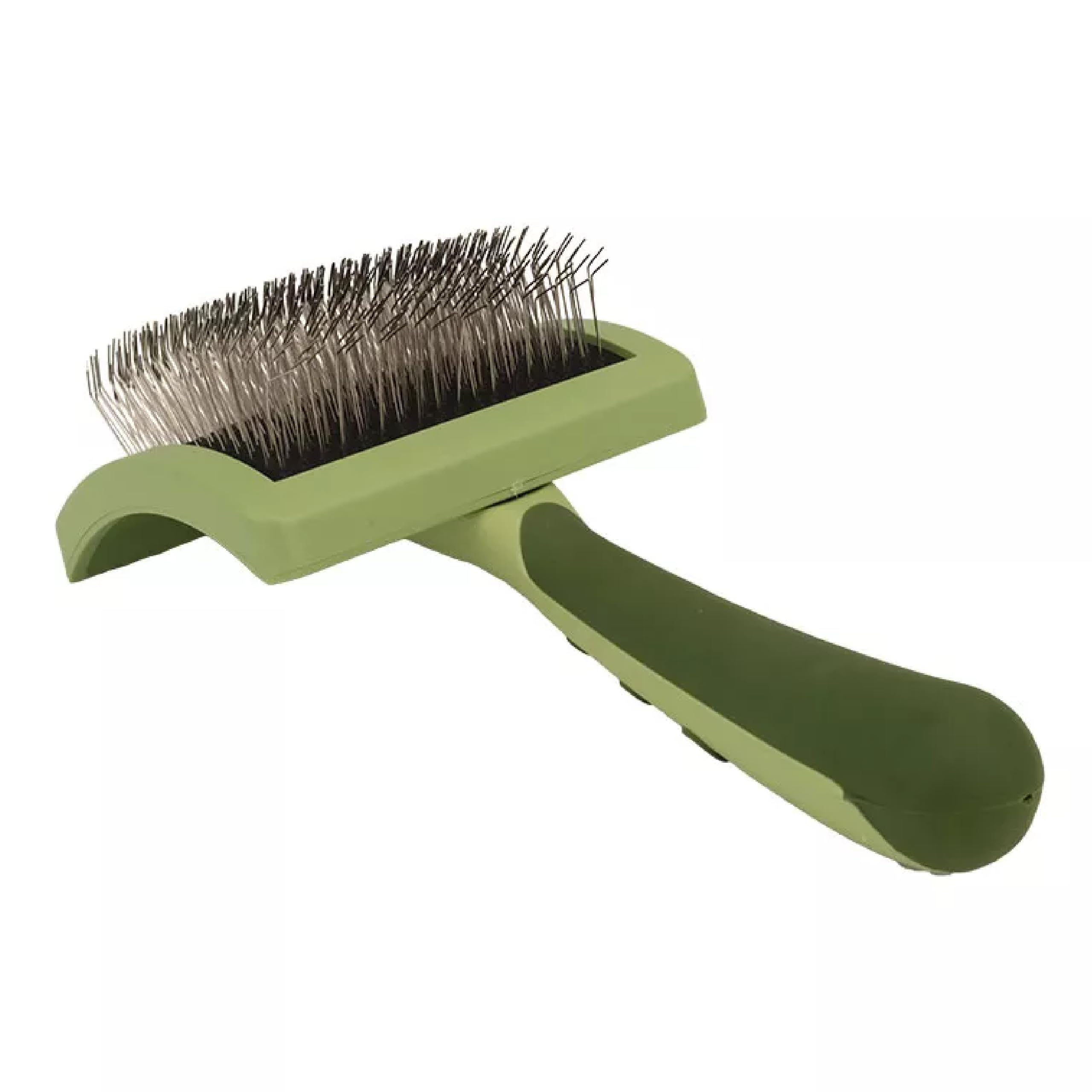
Safari Professional Slicker Brush
If you want a dependable slicker without paying for a show-grooming tool, this one covers the basics. The angled wire pins pull loose undercoat and break up small tangles in the beard, chest, and thighs, which are the spots Wolfhounds mat first. The wooden handle stays comfortable through the longer sessions a giant breed needs. It suits owners who brush weekly and want a simple, replaceable tool. Expect to clean it by hand, since hair packs between the pins quickly on a coat this long. The pins are also less forgiving than premium versions, so keep pressure gentle.
- Budget-friendly slicker that does the basics
- Wooden handle feels comfortable
- Good for beard and chest tangles
- Hair packs between pins quickly
- Pins less forgiving than premium
4.4/5
4.5/5
4.4/5

Chris Christensen Big G Slicker Brush
Grooming a dog that stands at least 32 inches at the shoulder is slow work with a small brush, and the Big G solves that with a wide head and long pins. It covers more coat per stroke and reaches deep into thicker areas like the neck, chest, and rear. Professional groomers favor it because the pins flex without bending out of shape. Choose it if you groom often or keep your Wolfhound in fuller coat. The downside is cost and size, since the large head is awkward around the face, paws, and ears, so pair it with a smaller tool.
- Wide head speeds up big-dog grooming
- Long pins reach dense neck coat
- Pins flex without losing shape
- Premium cost
- Head too big for face work
4.9/5
4.6/5
4.9/5

Andis Steel Greyhound Comb
A metal comb is the honest test of whether your brushing actually reached the skin. This steel comb has both fine and medium teeth, so you can check the beard, behind the ears, armpits, and feathering where a brush glides over mats. Breed-care guidance for the Irish Wolfhound commonly pairs a brush with a metal comb for exactly this reason. It is light and easy to rinse clean. It will not remove undercoat by itself, and its length makes work on the back slower, so treat it as a finishing and checking tool rather than your only brush.
- Fine and medium teeth in one comb
- Finds mats brushes skip over
- Lightweight and easy to clean
- Does not remove undercoat
- Slow for large body areas
4.5/5
4.6/5
4.7/5

Mars Coat King Stripping Comb
The Irish Wolfhound’s harsh coat holds dead hair that a normal brush leaves behind, and that is what this tool is for. Its serrated blades pull dead outer hair in short strokes, helping the jacket stay wiry and tidy instead of fluffy. It works well for the twice-yearly coat refresh many breed owners do at home. Choose it if you are comfortable learning a stripping technique or have a groomer to show you. The learning curve is real, because a heavy hand removes too much hair and can irritate skin. It is also not a daily brush.
- Removes dead outer hair effectively
- Helps preserve harsh coat texture
- Suits seasonal coat refreshes
- Real learning curve
- Heavy hand strips too much
4.6/5
4.2/5
4.6/5

Safari Pin Brush with Wooden Handle
After the rake or slicker has done the heavy lifting, a pin brush smooths the coat and lifts loose hair without flattening the harsh texture. This wooden-handled pin brush has widely spaced pins that glide through the leg furnishings, beard, and long body coat of an Irish Wolfhound. Breed grooming guides often use a pin brush for this finishing stage. It is gentle on the skin and good for dogs that dislike sharper tools. It will not cut through dense tangles or mats, so it works best as a weekly maintenance brush used after a comb check.
- Gentle on sensitive skin
- Glides through legs and beard
- Comfortable wooden handle
- Cannot handle dense tangles
- Does not pull dead undercoat
4.3/5
4.7/5
4.3/5

FURminator Undercoat deShedding Tool Large
During heavy seasonal shedding, an Irish Wolfhound can drop a surprising amount of soft undercoat, and this tool removes it fast. The large stainless steel edge pulls loose undercoat from the neck, flanks, and haunches in fewer passes than a slicker. It suits pet owners who care more about a tidy home than a show-ring jacket. Use it sparingly, because repeated passes can strip the harsh guard hairs and leave the coat looking thin. Limit sessions to the shedding window and stop at the first sign of skin redness. It is not an everyday brush for this breed.
- Removes loose undercoat in few passes
- Large edge suits big dogs
- Comfortable grip for long sessions
- Can thin harsh guard hairs
- Overuse irritates skin
3.9/5
4.4/5
4.5/5

Pat Your Pet Dematting Comb
Even careful owners find the occasional mat behind the elbows, in the armpits, or under the collar of a long-legged hound. This two-sided dematting comb uses sharpened teeth to split tangles lengthwise so you can comb them out instead of pulling. It works best on small, dry mats caught early. Hold the skin flat while you work, and always cut away from the body. That sharpness is also the main risk. Rushing, or using it on large tight mats near the skin, can nick your dog. Keep it for problem spots, not full-body brushing.
- Splits small mats without pulling
- Two sides for different tangles
- Handy for armpits and elbows
- Sharp teeth can nick skin
- Not for large tight mats
4.2/5
3.9/5
4.3/5

KONG Zoom Groom Brush
Bath day is a good time to loosen dead hair, and a rubber brush lets you do it while shampooing. The Zoom Groom’s flexible nubs massage the skin and lift loose hair without tugging, which suits Wolfhounds that tolerate gentle touch better than wire pins. It rinses clean in seconds and works on wet or dry coats. Owners often use it to work shampoo evenly through a big frame. It will not remove undercoat or handle tangles in the beard and feathering. Think of it as a bathing and massage tool that supports, rather than replaces, your slicker and comb.
- Rinses clean in seconds
- Gentle massage lifts loose hair
- Works on wet or dry coats
- Cannot remove undercoat
- Useless on beard tangles
3.8/5
4.7/5
4.6/5

Bass Brushes Style and Detangle Pin Brush
If you groom regularly and want a brush that will last for years, this handcrafted pin brush is the splurge. Bass builds it with a wooden handle and a cushioned pad with sturdy pins, giving a smooth, even stroke through the Wolfhound’s long leg and beard hair. The brush is made for detangling without snagging. Choose it as a long-term finishing tool if you like quality gear. The trade-off is value, since a basic pin brush performs similarly on a pet coat. Check the pin size before buying, as some versions run smaller than a giant breed ideally needs.
- Built to last for years
- Smooth, snag-resistant stroke
- Cushioned pad feels gentle
- Basic pin brushes perform similarly
- Some sizes run small
4.4/5
4.6/5
4.8/5
Top 3 Head-to-Head: Hertzko vs Safari vs Big G
These three slickers are the common final choices because they all suit weekly upkeep. They differ mainly in head size, cleaning, and cost.
| Feature | #1 Hertzko | #2 Safari Slicker | #3 Big G |
|---|---|---|---|
| Cleaning ease | One-press release — Best | Hand clean | Hand clean |
| Cost level | Mid-range | Budget-friendly — Best | Premium |
| Reach on big coat | Good | Good | Excellent — Best |
| Choose if… | You want the best all-round pick | You want to spend less | You groom often in fuller coat |
Who These Brushes Are NOT For
These tools are built for the Irish Wolfhound’s harsh coat, so they are a poor match for some situations.
Show-ring owners aiming for a specific jacket should also learn stripping from a breeder or groomer rather than relying on any single tool here.
Common Mistakes to Avoid
Most coat problems on this breed come from technique, not equipment.
Frequently Asked Questions About Irish Wolfhound Brushes
What kind of brush is best for an Irish Wolfhound?
A slicker brush with fine bent pins, paired with a metal comb and an optional pin brush, suits the breed best. The slicker lifts undercoat, the pin brush smooths the coat, and the comb checks for hidden tangles. Avoid soft bristle brushes alone, because they skim the surface of a harsh coat and leave the undercoat untouched.
How often should you brush an Irish Wolfhound?
Brush an Irish Wolfhound at least once a week to remove loose hair and dirt. Check the beard, behind the ears, armpits, and under the tail, since those spots tangle first. During seasonal shedding you may brush more often, but keep sessions short and gentle so you protect the coat’s harsh texture.
Do Irish Wolfhounds need to be hand-stripped?
Many owners hand-strip or rake the coat about twice a year to remove dead hair and keep the jacket wiry. It is not mandatory for pet dogs, and a groomer or breeder can demonstrate the technique. A stripping comb helps at home, but heavy pressure removes too much hair and irritates skin.
Can you use a FURminator on an Irish Wolfhound?
You can use one occasionally during heavy shedding, but it is not ideal for this breed. Repeated passes can strip the harsh guard hairs and thin the coat. Stop at any sign of skin redness. For a closer look at the trade-offs, read our guide to dog brush vs deshedding tool.
How do you remove mats from an Irish Wolfhound?
Work on small, dry mats early using your fingers first, then a dematting comb or metal comb, holding the skin flat to avoid pulling. Never cut toward the body. Large or tight mats near the skin should go to a professional groomer, because rushing can nick your dog’s thin skin.
How do you brush a wiry coat properly?
Part the coat and brush in short strokes in the direction of hair growth, working from the neck to the tail in sections. Use a rake or slicker first, then a pin brush, and finish with a comb. Keep pressure light so the harsh texture is preserved.
How often should you bathe an Irish Wolfhound?
Bathing every month or two is usually enough unless your dog gets visibly dirty. More frequent baths soften the coat and strip natural oils. Brush before the bath to remove loose hair and tangles, since water tightens mats, and use a rubber brush while shampooing to loosen dead hair.
Our Final Verdict
Irish Wolfhounds need tools that lift undercoat without wrecking a harsh jacket. Start with a quality slicker, add a metal comb to check your work, and keep deshedding tools for peak shedding. For most owners, the Hertzko covers weekly upkeep without fuss.

Thomas Cutter is a lifelong dog owner and the founder of FindOutAboutDogs.com. With over 10 years of hands-on experience owning multiple breeds, Thomas created this site to provide honest, research-based dog advice that real owners can actually trust.
